On October 24, 2026, the "NEXT FOUNDERS 02" event, jointly initiated byMankun Law Firm and CAI Building,was successfully held at CAI Building in Hong Kong.
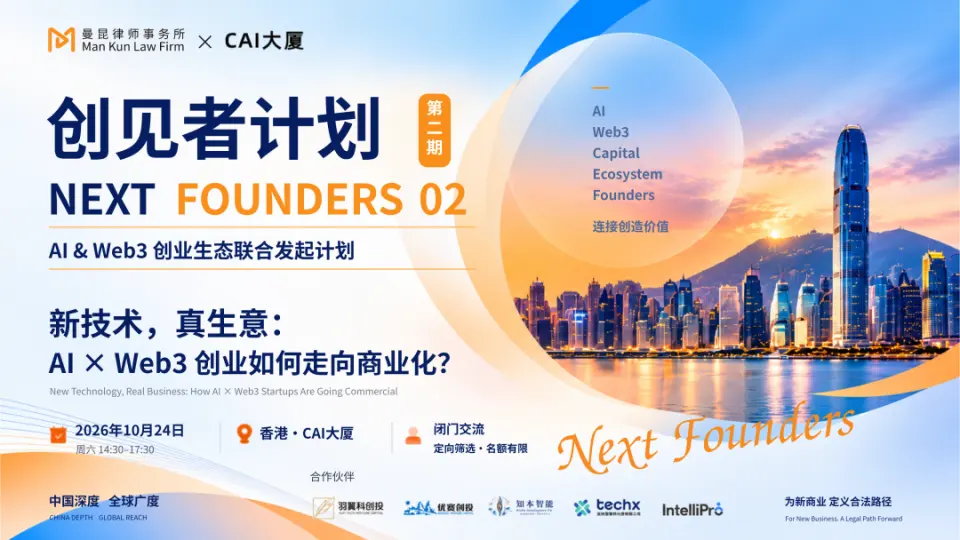
This edition of the event took as its theme"New Technology, Real Business: How AI × Web3 Startups Move Toward Commercialization?"and brought together entrepreneurs, investors and industry partners from fields including AI, Web3, crypto payments, fintech and digital infrastructure.
LIKWID、CardlyPay、POPWIZ、Leviathan GroupFour projects took the stage in turn, sharing their insights on technological innovation, business models and growth paths.
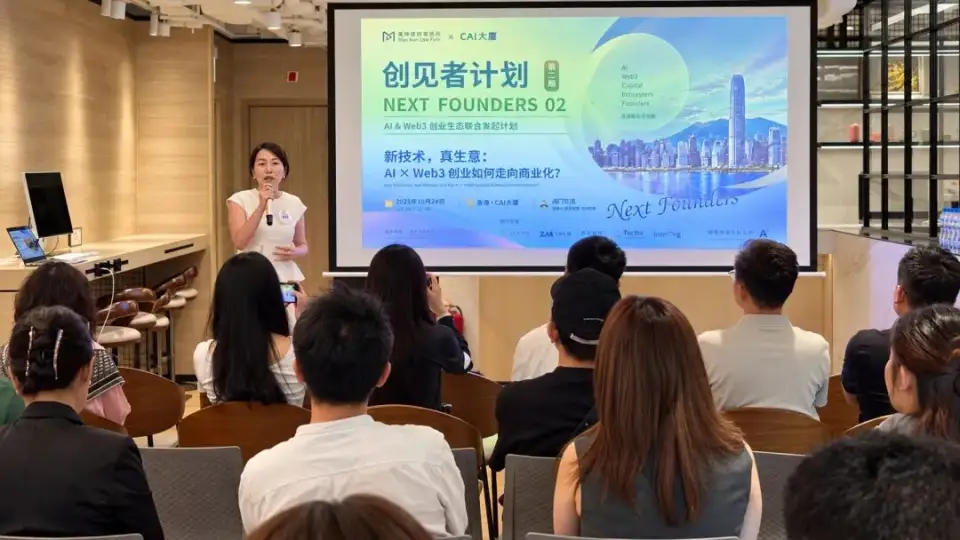
The event was moderated byYang Hong, a senior lawyer at Mankun Law Firm,who in her opening remarks introduced the original purpose behind launching the "NEXT FOUNDERS" initiative, the theme of this edition and the event schedule.
Compared with the first edition, the second edition further refined the event format by adding a professional dialogue session after the project presentations, inviting investors and lawyers to provide feedback from different perspectives, and through a founders' roundtable extended the discussion to market opportunities, business validation, investment returns, growth challenges and startup opportunities in Hong Kong,making the exchanges more closely aligned with the practical needs of entrepreneurs.
From Technological Innovation to Commercial Validation
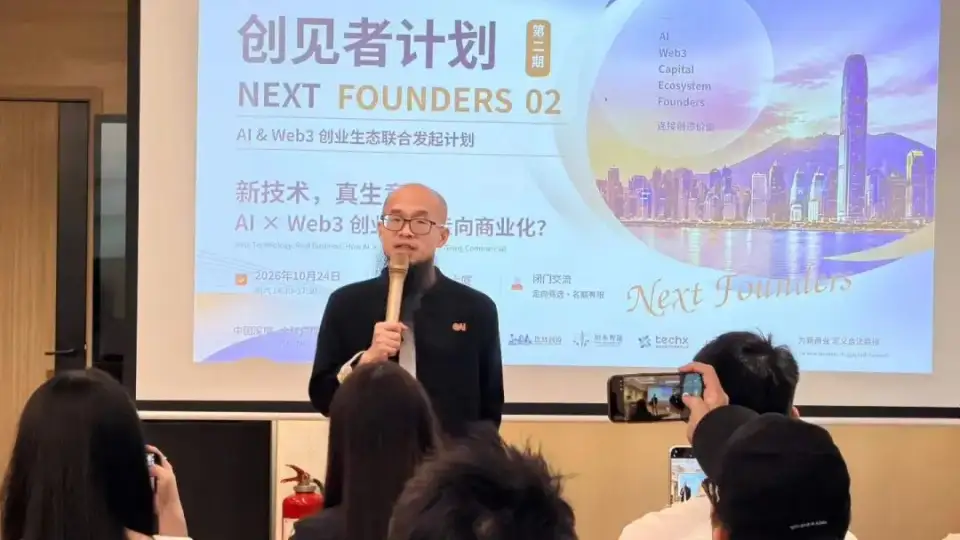
At the start of the event,Mr. Mog Koo, Head of CAI Building,opened this session and welcomed the entrepreneurs, investors and partners from various sectors who were present.As a co-initiator of the "Visionary Program," CAI Building continues to provide entrepreneurial teams with space for exchange and resource support,and also hopes that, through face-to-face communication, more promising projects will gain attention and connections.
For AI and Web3 entrepreneurial teams,once a product truly enters the market, the questions that need to be answered are often more specific:Why do customers need it? Who is willing to keep paying? How much value does a new technological pathway actually create? And once a project enters the growth stage, how should it handle financing, resource allocation and legal compliance issues?
Four entrepreneurial projects, four different paths to commercialization
PROJECT 01
LIKWID: All finance will ultimately go on-chain, and Margin is the missing piece of the puzzle
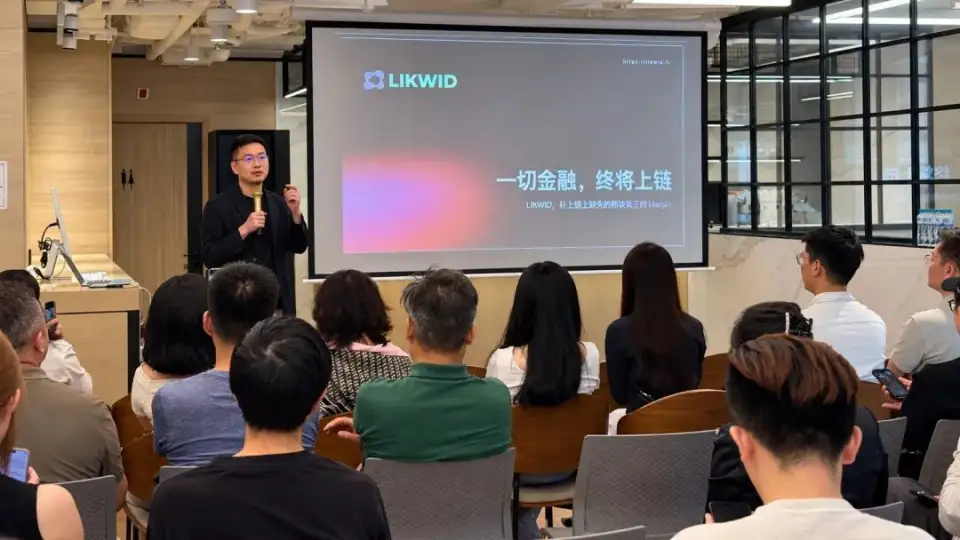
LIKWID Founder Sky speaking at the event
LIKWID Founder SkyWith“All Finance Will Eventually Go On-Chain: LIKWID and the Era of On-Chain Margin”as the title, the team introduced its exploration in the field of on-chain margin trading.
Sky believes that an important driver of bringing financial activities on-chain is reducing trust costs and reliance on intermediaries through open, verifiable technical mechanisms, thereby improving the efficiency of financial operations. Today, from stablecoins and decentralized trading to lending, asset management and derivatives, corresponding on-chain products have emerged for the main business forms of traditional finance, but on-chain spot margin trading still leaves room for further optimization.
LIKWID chose to address this need by reworking the automated market maker mechanism, attempting to integrate spot trading and leveraged trading within the same liquidity pool, allowing borrowed funds to participate directly in the spot market and creating new sources of return for liquidity providers.
When demand already exists in the market but existing solutions are still not efficient enough, this is often an innovation opportunity worth attention.
PROJECT 02
CardlyPay: Making Stablecoin Payments a Deliverable Commercial Service
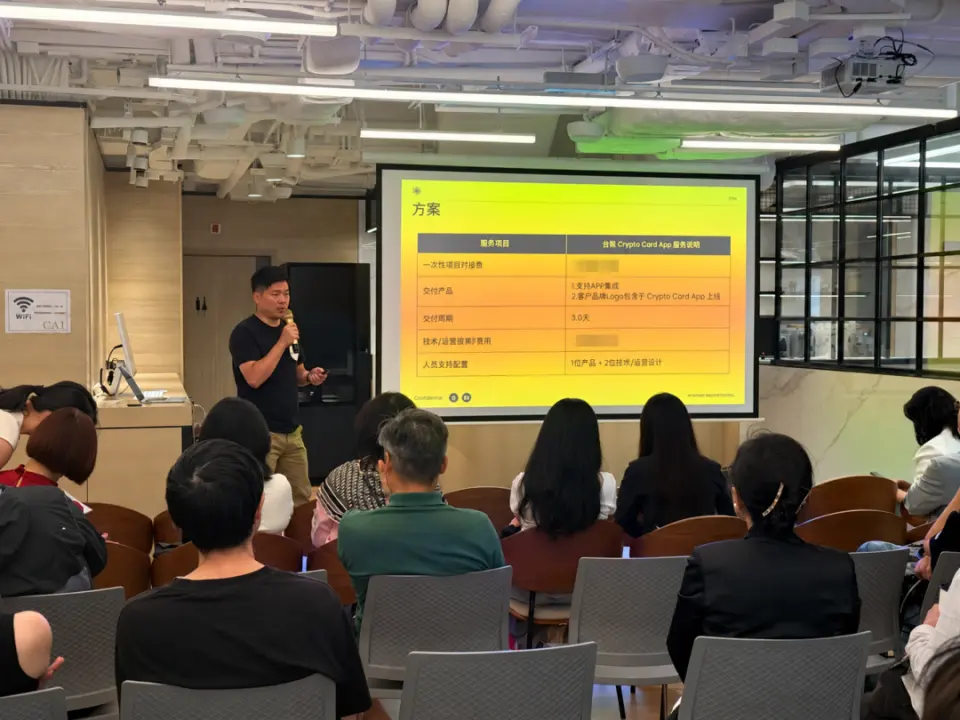
CardlyPay Founder Andrew sharing on site
CardlyPay Founder AndrewThe presentation focused on white-label Crypto Card applications and business models, introducing how the team helps small and medium-sized enterprises establish their own branded crypto payment services.
As stablecoins continue to expand in cross-border payments and everyday consumption scenarios, some international travel service providers, asset management institutions and other enterprises have begun exploring payment tools that connect crypto assets with everyday consumption for their customers.
However, for enterprises lacking a technical team, everything from integrating card issuance services and developing wallets to user identity verification and ongoing maintenance often requires significant time and cost.
Andrew introduced that the project has established revenue sources through white-label application deployment, technical maintenance and cooperative services, and has expanded overseas customers through channels such as LinkedIn and industry events.
When client demand already exists, the entrepreneurial opportunity sometimes lies not in creating entirely new technology, but in making complex technology easier to use in actual business operations.
PROJECT 03
POPWIZ: Rebuilding Commercial Photography with AI — Why Are Clients Willing to Keep Paying?
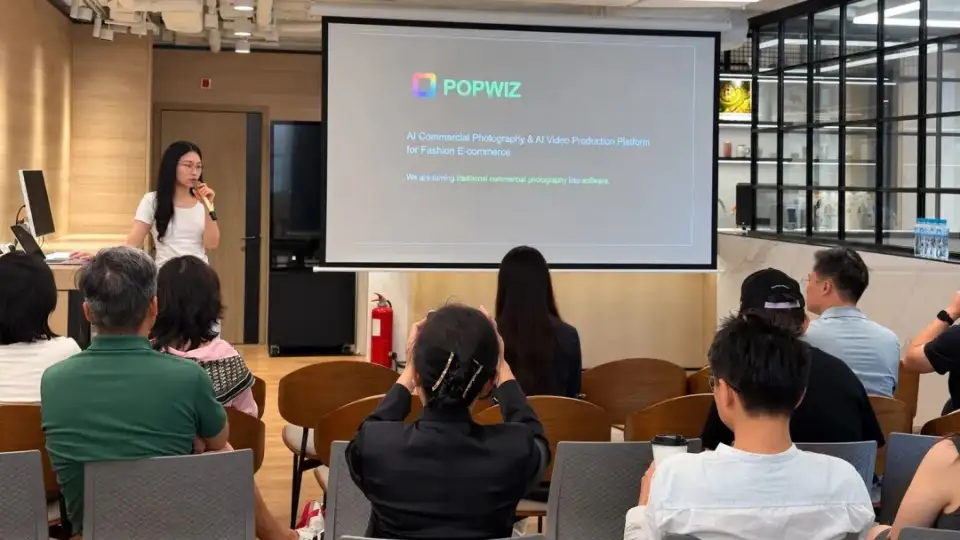
POPWIZ CEO Luo Hongyi sharing on site
Luo Hongyi, CEO of POPWIZWith"Reshaping Apparel E-Commerce Through AI Commercial Photography"as the theme, the team introduced its practice of using AI to change the traditional workflow for commercial apparel photography.
In the past, completing a set of commercial apparel images for a brand often required coordinating models, photo studios, photographers, styling and post-production teams. POPWIZ hopes to transform these complex processes into AI-driven standardized workflows, helping brands improve content production efficiency by generating model images, apparel display images and commercial videos.
According to the team's on-site introduction, AI commercial photography can shorten some production processes that originally took several days to a few hours, and significantly reduce production costs. Notably, POPWIZ has been selected for a Meitu-related startup incubation program and, through cooperation with live-model agencies, has obtained the corresponding portrait authorizations, exploring commercial applications of AI digital doubles of real people.
Facing competition brought by the continuous improvement of general-purpose AI models, Luo Hongyi also acknowledged thatthe team needs to continuously refine its differentiated product experience and raise brand awareness among its target client groups.
PROJECT 04
Leviathan Group: Long-Term Opportunities in AI and the Computing Power Industry from the Perspective of Power Infrastructure
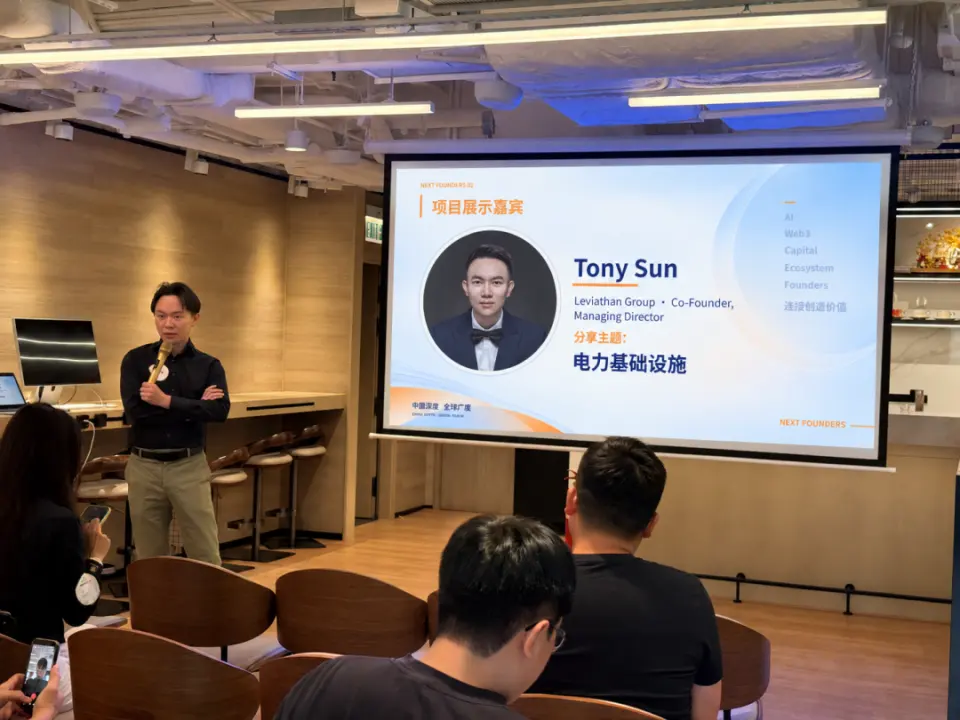
Tony Sun, Co-Founder and Managing Director of Leviathan Group
Tony Sun, Co-Founder and Managing Director of Leviathan Groupbrought the discussion to the fields of power infrastructure and the computing industry.
Tony believes that, as AI computing demand continues to grow, stable, low-cost and reliably deliverable power resources are becoming an important factor in competition within the digital infrastructure industry.
In his view, Bitcoin mining is not simply a sunset industry, but a computing business affected jointly by energy costs, equipment efficiency and market cycles. As AI data centers and other computing businesses intensify their competition for power resources, the cost structures and competitive conditions of the industries involved may also change.
Leviathan Group therefore chose to start from energy resources and infrastructure, exploring in East Africa a path that combines renewable energy, mining computing and future data center demand.
Tony also spoke about the economic and social value of entrepreneurship. He believes thatenterprises need not only to create commercial returns, but also to consider whether their own business can bring positive effects to local industrial development and energy utilization efficiency.
Professional Dialogue: Investors Focus on Commercial Returns, Lawyers Probe the Boundaries of Compliance
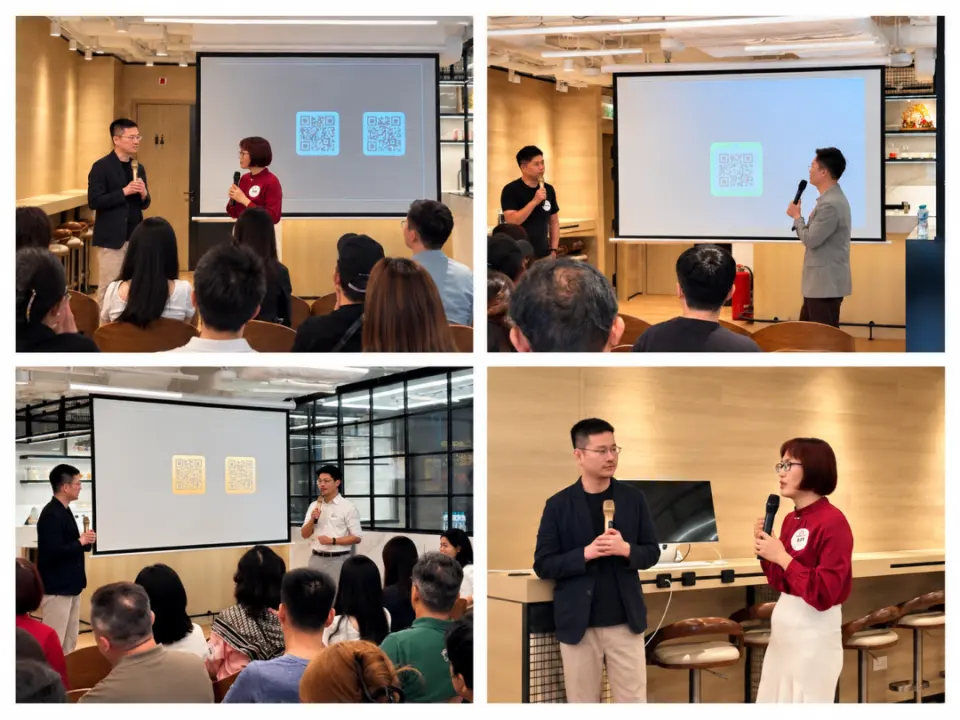
Unlike one-way project pitches, this session of the "Innovators Program" sets up a professional dialogue segment after the project presentations, allowing investors, lawyers and entrepreneurs to exchange views on practical business issues.
Beyond the business story, how can a project demonstrate its own value?
Ms. Li Xiumei, from an investor's perspectivefocusing the discussion on team capability, actual profitability and investment risk. After the LIKWID project presentation, she followed up with detailed questions on the core team's professional backgrounds, division of responsibilities and the project's revenue situation, and noted that Web3 entrepreneurship can no longer rely solely on market narratives and financing expectations,and that projects need to establish genuine profitability and demonstrate commercial value through operating results.
In the case of a cross-border infrastructure project such as Leviathan Group, further attention was given to investment trust and project execution risk, including whether the team can ensure long-term operations and how it will address the local operating environment and uncertainties in project performance.
Market space is important, but whether the team can execute, whether the business can be profitable and whether risks can be effectively managed likewise determine a project's long-term value.
How can technological innovation balance security and regulation?
Liu Honglin, Director of Mankun Law FirmFrom the two dimensions of technical security and regulatory compliance, he raised specific questions regarding LIKWID: How can on-chain protocols prevent smart contract vulnerabilities and the spread of asset risk? In the face of anti-money laundering regulatory requirements, how should necessary compliance mechanisms be established within a decentralized architecture?
During the exchange on the POPWIZ project, Liu Honglin also inquired about the progress of the team's cooperation with Meitu and expressed a willingness to provide professional support on the terms of subsequent commercial cooperation.
Technological innovation requires attention not only to product functions and efficiency, but also to advance consideration of security mechanisms, compliance boundaries and the allocation of rights and obligations in commercial cooperation, so that risk management and business development advance in tandem.
How should fund security and business responsibility be defined?
Shao Jiadian, Partner at Mankun Law FirmDrawing on crypto payment business practice, he raised two key questions regarding CardlyPay's white-label service model: After users top up stablecoins, who actually holds the funds in custody, and how is user fund security safeguarded? What app store review and product launch issues might enterprises face when integrating cryptocurrency card functionality into existing applications?
These issues also reflect the practical challenges that crypto payment projects need to address in the course of commercialization:it is not only necessary to resolve technical delivery issues, but also to clarify fund flows, the responsibilities of the parties, and the boundaries of business compliance, so as to avoid discovering potential risks only after the product has launched.
From investors' assessment of profitability to lawyers' inquiries regarding technical security, fund custody and business compliance, this installment of the professional dialogue moved project presentations beyond product introductions and further into the specific aspects of commercial operations.
Entrepreneurs' Roundtable: You Have a Project—What's Next?
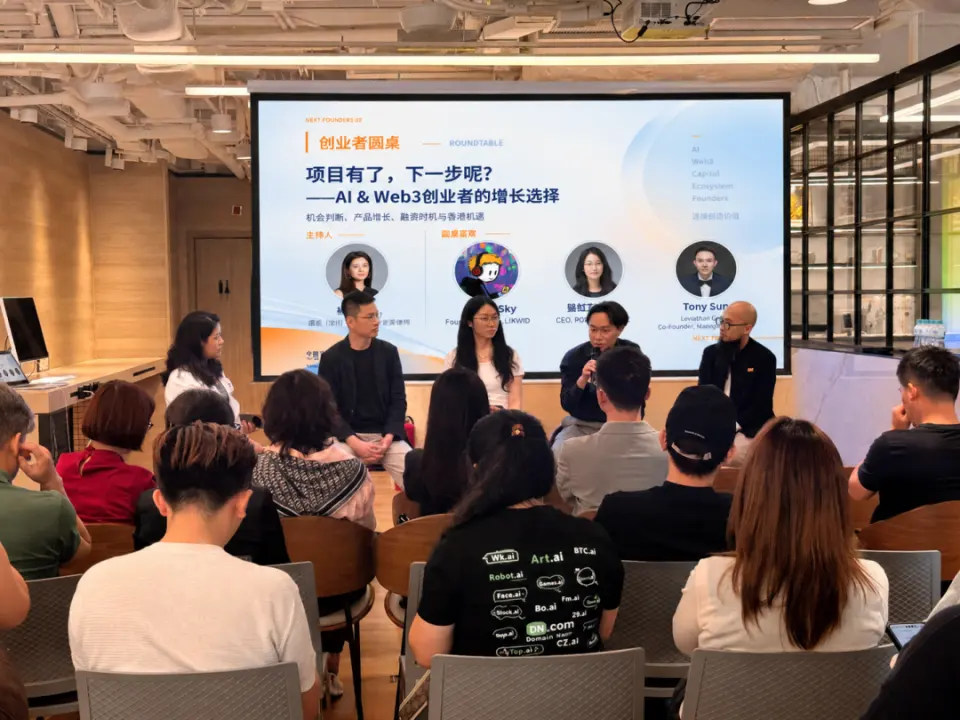
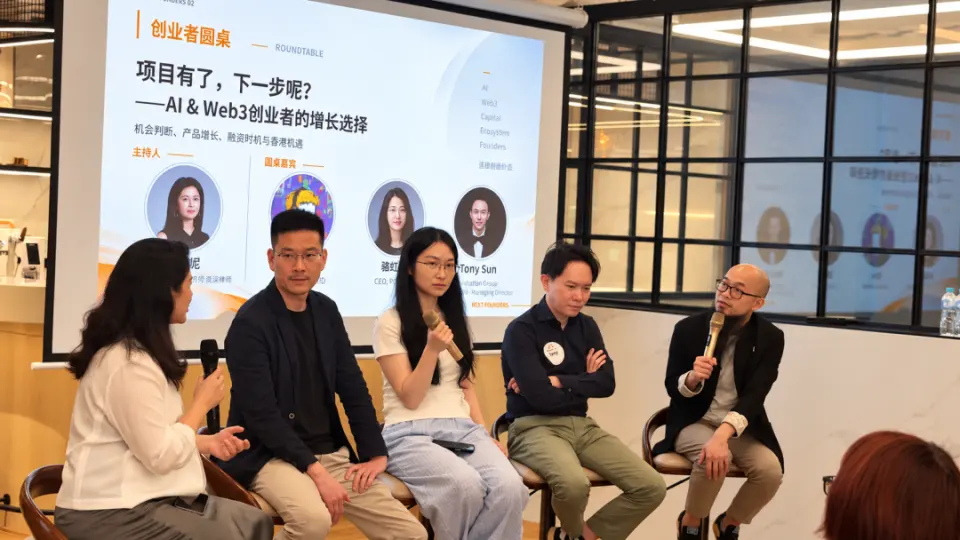
This installment of the Entrepreneurs' Roundtable took as its theme"You Have a Project—What's Next? Growth Choices for AI & Web3 Entrepreneurs,"and was moderated byYang Jiani, a senior lawyer at Mankun Law Firm,focusing on track selection, business growth, return on investment, competitive moats and entrepreneurial opportunities in Hong Kong; three entrepreneurs from different fields shared their respective reflections and practices.
On opportunities: do not look only at what is trending, but even more at what problems remain unsolved
Sky began with LIKWID's early product validation experience. In prior testing, the team observed clear feedback on user demand, and on that basis judged that the market does indeed have demand for a more efficient on-chain margin trading mechanism.
He believes that,Entrepreneurs should not merely chase the hottest concepts being discussed in the market. If a need has already been validated but existing solutions remain insufficiently efficient, this often signals new opportunities for innovation.
Tony, starting from the development logic of the energy industry, shared his observations on the long-term relationship between power resources and the computing industry. In his view, choosing a track requires not only attention to short-term market enthusiasm but should also be grounded in judgments about changes in industry structure and long-term demand.
On growth: beyond technological advantages, you also need to find the reason customers choose you
Luo Hongyi acknowledged candidly that an important challenge POPWIZ currently faces is how to further develop a product experience that differentiates it from general-purpose AI tools, and to raise brand awareness among its target customer groups.
In response to an on-site question about large platforms entering the same track, she expressed the view that the future market may not necessarily be covered only by a small number of large platforms, and that vertical products may still find room for development by relying on specific scenarios, service capabilities and user stickiness.
Mr. Gu also participated in this discussion, encouraging entrepreneurs to think further about differentiated positioning for their products. For early-stage teams, in addition to technical capabilities, whether they can find a clear market positioning and build a sustained competitive advantage is equally worthy of attention.
On capital: investment returns and risks are equally important
During the roundtable discussion, investors present further directed questions to the project's market space, investment returns and potential risks.
Sky spoke about the head-concentration effect in the DeFi industry and the team's goal of establishing a market position through differentiated products; Tony, from the perspective of infrastructure operations, introduced the project's considerations regarding long-term energy supply, cost control, project execution and investment returns.
From the technical security and market liquidity of DeFi products, to the homogeneous competition faced by AI applications, and further to the operating environment and contract performance capabilities of cross-border infrastructure projects, the risks faced by different tracks vary.
On marketing: entrepreneurs must learn to explain complex matters clearly
A young entrepreneur in the audience also raised a practical question:How should technology entrepreneurs develop marketing capabilities?
Sky believes that entrepreneurs first need to truly understand their own products and learn to translate complex technical logic into language that different audiences can understand. When addressing investors, they need to clearly explain the market opportunity and commercial value; when addressing users, they need to explain what problems the product can solve.
Luo Hongyi reduced marketing capability toconfidence and sincerityFor early-stage entrepreneurs, a willingness to proactively speak about their products is also an important step toward obtaining customers and cooperation opportunities.
Tony further emphasized that being able to explain complex ideas clearly in the simplest language is itself an important capability for entrepreneurs, and that such expression must be built on sufficiently deep understanding of and belief in the project's direction.
Mr. Gu also drew on his own observations to encourage young entrepreneurs to identify the right direction, improve their communication and expression skills, and make good use of AI tools to improve work efficiency. In his view, new technologies are changing the way teams work, and entrepreneurs should take the initiative to learn and turn new tool capabilities into their own competitive advantages.
The answers from several entrepreneurs, together with Mr. Gu's on-site suggestions, brought the discussion back to a basic question:Entrepreneurs must not only build a good product, but also enable others to understand it, be willing to believe in it, and understand why it is valuable.
Free exchange: from entrepreneurial space to continuous resource connections
At the end of the event,Mr. Mog Koo, Head of the CAI Building,continued to engage with the entrepreneurs present, responding to questions on the Hong Kong startup environment, project implementation, and the support available for moving into the CAI Building.
Mr. Koo noted that Hong Kong, backed by the mainland and connected to the world, has unique advantages in capital, talent, and cross-border business development, offering more growth opportunities to startup teams in fields such as AI and Web3.
The CAI Building also provides practical support to eligible startup projects. After a team submits the relevant materials and passes review, it may be eligible forthree to six months of free office workspace, reducing early-stage operating costs.The entrepreneurs present also exchanged views with Mr. Koo on matters such as tenancy applications and project implementation.
This is precisely the value that the "Visionaries Program" aims to create:through small-scale, face-to-face in-depth exchanges, it connects entrepreneurs, capital, and industry resources, enabling good projects to obtain more practical support and opportunities for cooperation.
Closing Remarks
From the first session, which discussed AI startup trends, Hong Kong opportunities, and global markets, to the second session, which brought four real startup projects to the venue for exchanges on business models, investment returns, risk management, and growth paths,The "Visionary Program" is moving beyond project showcases toward sustained professional dialogue and resource connections.
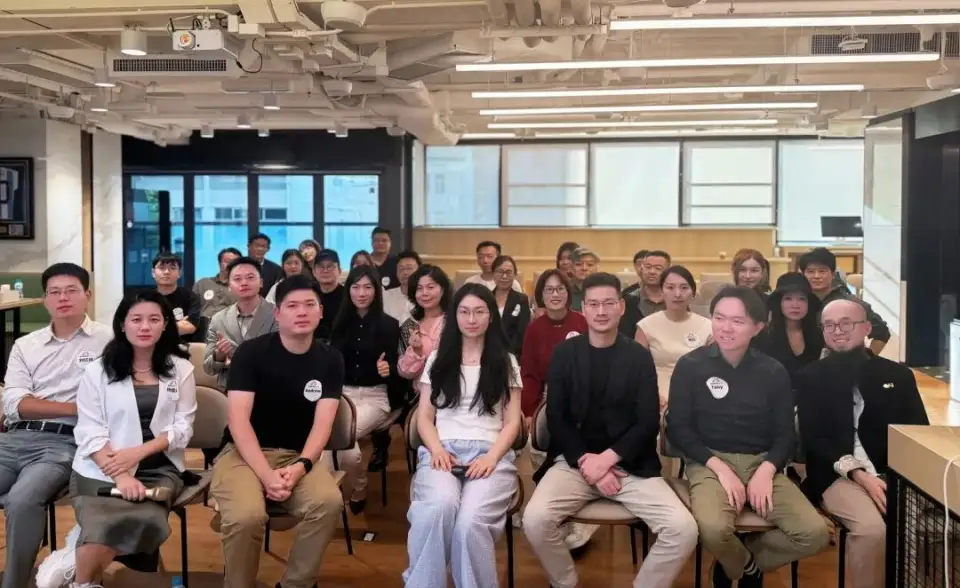
At this session, we saw the commercial exploration behind different technological paths and heard the practical challenges entrepreneurs face in product development, market access and financing.
Going forward,Mankun Law Firm and CAI Buildingwill continue to work with more ecosystem partners on project showcases, professional dialogue, resource connections and ongoing co-creation, creating more opportunities for exchange and collaboration among startup teams in AI, Web3 and the new economy. We look forward to seeing you next time.

Recruitment for the third roadshow is underway—scan the QR code to register!