On September 18, 2026, the event was jointly initiated byMankun Law Firm andCAI BuildingJointly initiated“NEXT FOUNDERS 01” was held at CAI Building in Hong Kong. This session, themed “The Next Stop for AI Entrepreneurship: Connecting Hong Kong, Capital and Global Markets,” brought together AI, Web3 and new-economy entrepreneurs, investment institutions, industry partners and entrepreneurial ecosystem organizations to discuss in depth the full chain of AI entrepreneurship, from product implementation to commercial validation and then to global growth.
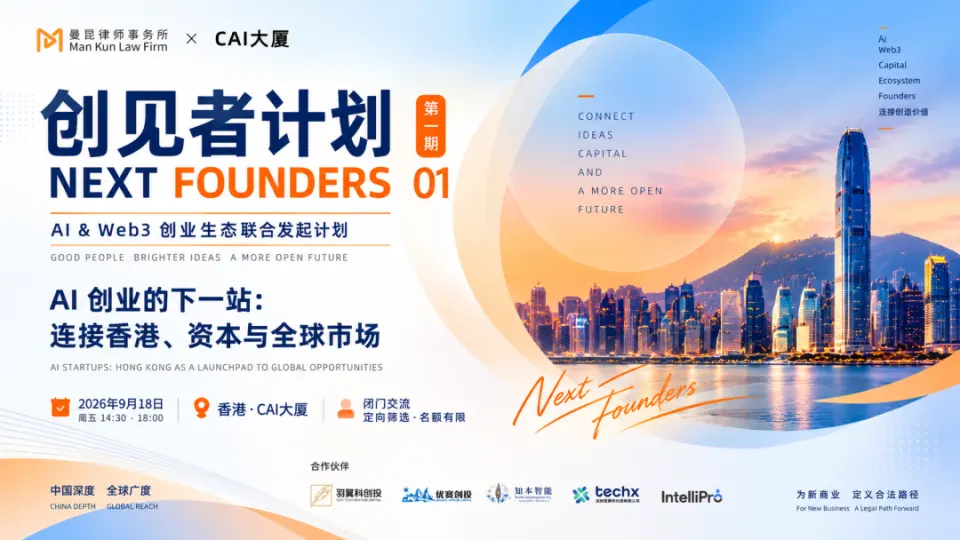
Yuyi Venture Capitalparticipated in this event as a founding co-partner,with support from institutions including Yousai Venture Capital, Zhiben Intelligence, techx and IntelliProJoint support.
Why We Are Doing This
As an AI project moves from an idea to the market, it must keep answering some specific and uncomfortable questions:Whose needs does the product actually address? Who will genuinely pay for it? What kind of partners does the team need? And what must be prepared in advance to enter a new market?
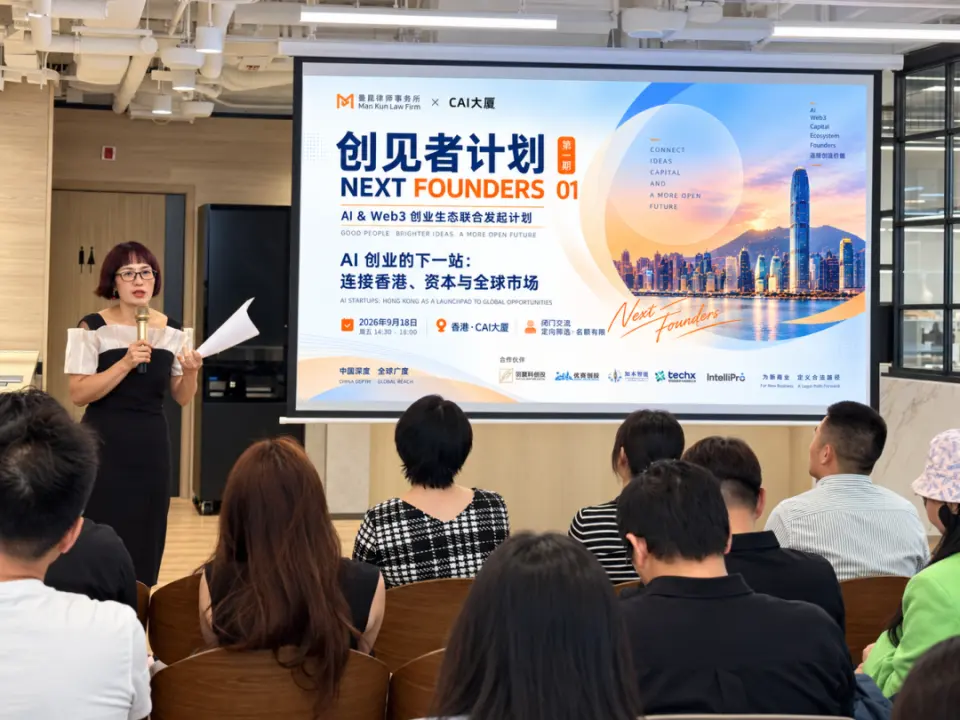
More important than understanding trends is having a place to discuss real progress, exchange experience, and respond to actual needs. As a joint initiative of the AI & Web3 startup ecosystem, the "Visionary Program" adopts"connection creates value"as its brand expression, hoping to bring together people who are building projects, people who follow projects, and people who can provide support, creating a platform for sustained co-creation.
Thematic sharing: from organizational forms to the compliance bottom line
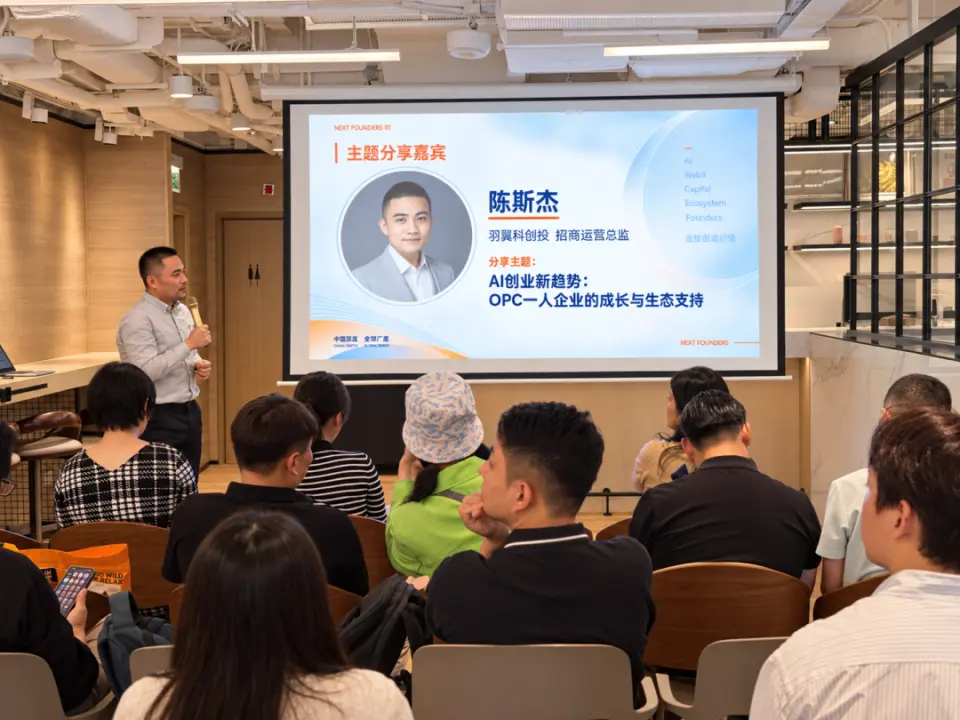
Chen Sijie, Investment Promotion and Operations Director of Yuyi Science and Technology Innovation InvestmentUnder the title"New Trends in AI Entrepreneurship: The Growth and Ecosystem Support of OPC One-Person Companies", he shared how AI is changing entrepreneurial organizational forms. As digital employees and various AI tools enter daily operations, one person can also mobilize the research, design, marketing, and management work that previously required a team.
Combining the industrial characteristics of different districts in Shenzhen and the startup support policies of Qianhai, he pointed out that AI has lowered the organizational threshold for entrepreneurship,while mature supply chains, industrial services, and cross-border resources determine whether an idea can quickly become a productFor projects involving Web3, cross-border settlement and similar businesses, it is also necessary to fully understand the different regulatory boundaries between the mainland and Hong Kong.
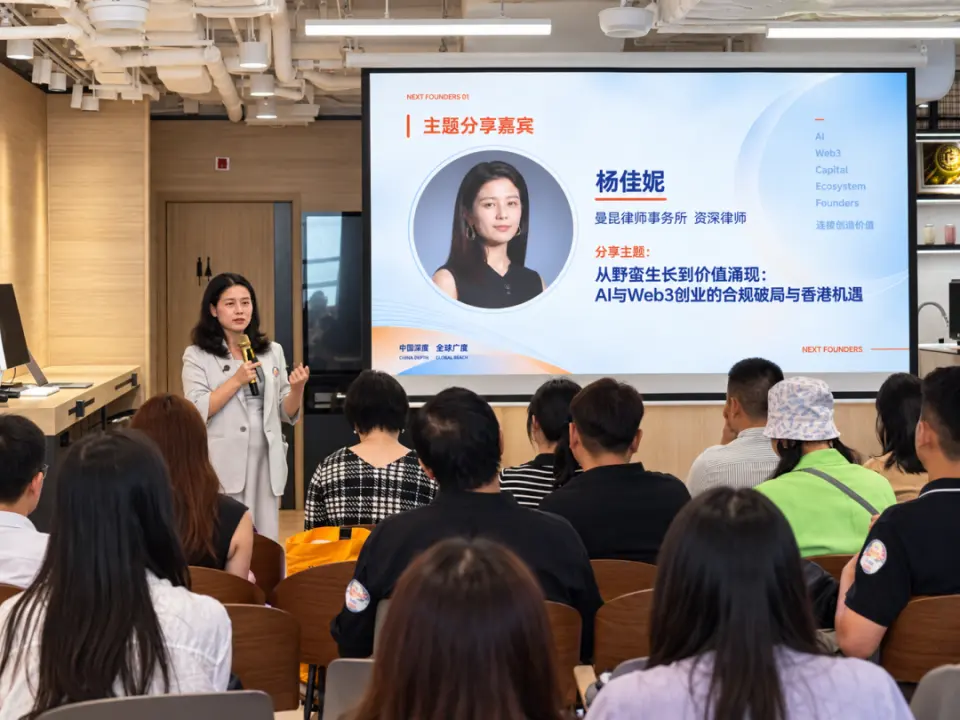
Subsequently,Mankun Law Firmsenior lawyer Yang Jianispoke on“From Wild Growth to Value Emergence: Compliance Breakthroughs and Hong Kong Opportunities for AI and Web3 Startups”and shared her views. She believes that as the industry gradually enters the commercial validation stage, compliance is changing from an “optional item” into a foundation for enterprises to gain the trust of customers and capital.
From the authorization of training data and user data, to the ownership of AI-generated content and the boundaries of responsibility for agent operations, and further to arrangements for funds, data and employment in cross-border operations, compliance issues should be taken into consideration at the very beginning of product design and business model formation.
As she said on site:“Good compliance does not mean asking entrepreneurs to do less, but enabling good projects to go further.”
Project Showcase: Two Paths to AI Commercialization
In the “Spotlight” session,ToMe AIandMagnetXthe two projects each presented AI commercialization explorations from different perspectives.
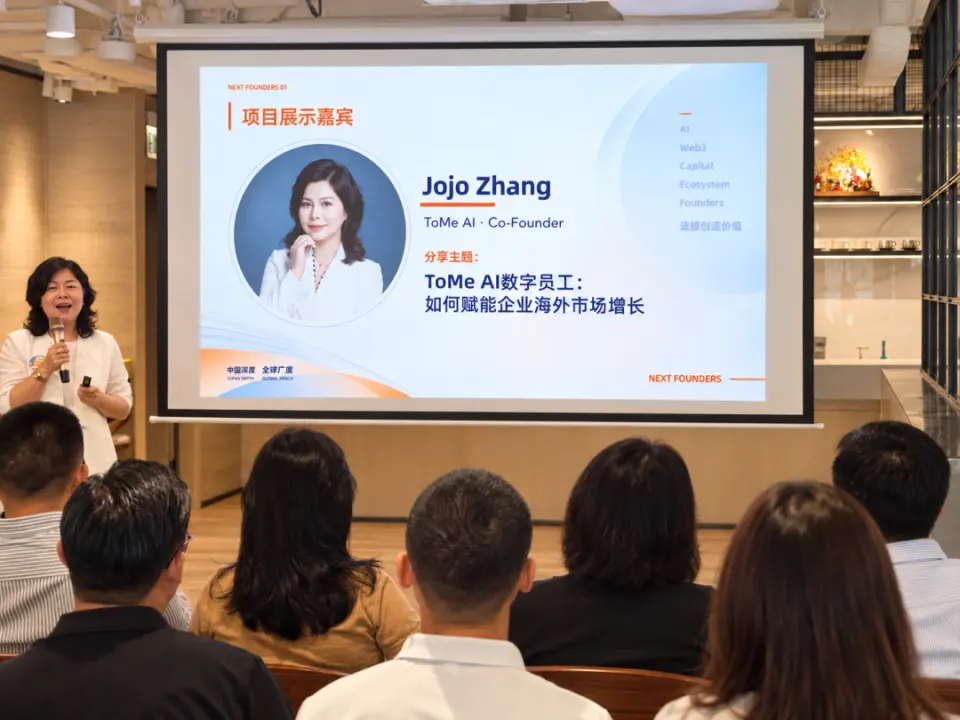
ToMe AI Co-Founder Jojo ZhangUnder the title"ToMe AI Digital Employees: How to Empower Enterprises' Overseas Market Growth,"the team introduced the AI digital employee matrix it has built, including capabilities such as business matching, SEO and GEO optimization, content production and sales follow-up, covering the complete chain from identifying business opportunities and establishing reach to driving deal closure.
In her view, enterprises do not pay simply because they "use AI"; what they truly care about iswhether digital employees can bring in customers, improve efficiency and ultimately translate into revenue.Therefore, the team has distilled the market and growth experience accumulated during their time at major tech companies into AI workflows, hoping to help enterprises going global expand into overseas markets at lower cost.
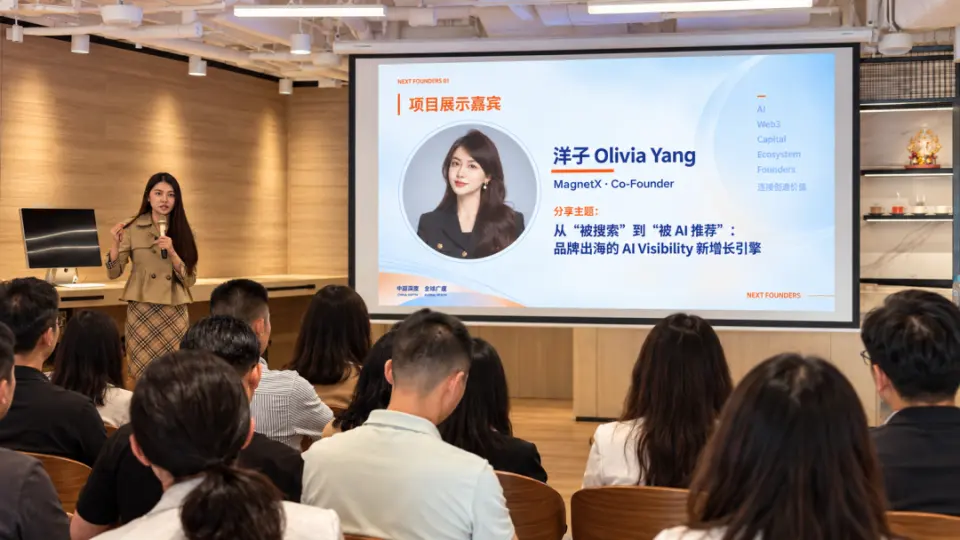
MagnetX Co-Founder Yangzi Olivia Yangapproached brand globalization from the angle of AI Visibility. As large models such as ChatGPT and DeepSeek gradually become new entry points for information and decision-making,brands must consider not only "whether they can be searched" but also "whether they can be understood and recommended by AI."
Drawing on the team's service cases, she proposed thatGEO should not remain at the level of a tool; rather, it should return to the problem the client truly hopes to solve, and through structured content, localized narratives and multi-channel communication, enhance the brand's visibility and credibility in the target market. Although the two paths differ, they point to the same judgment:AI entrepreneurship must ultimately return to genuine demand, paid use scenarios and measurable results.
Roundtable discussion: opportunities, implementation, growth, Hong Kong
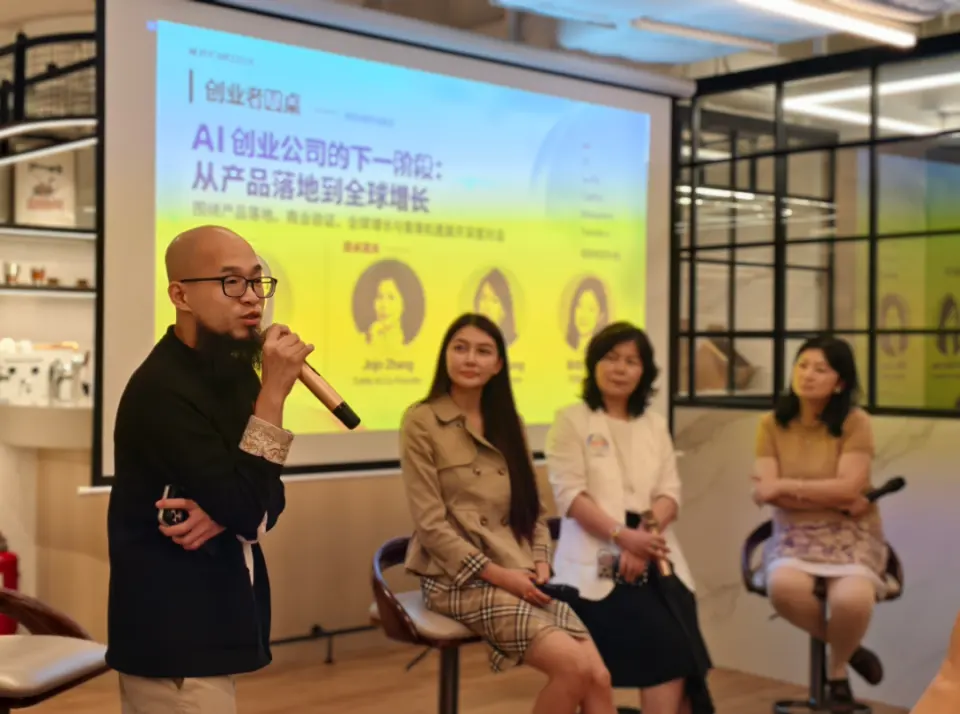
The entrepreneurs' roundtable, themed "The next stage for AI startups: from product implementation to global growth", was moderated bylawyer Yang Jianiand joined byJojo Zhang、Olivia Yang、U-Sail VenturesDirector Zhang Han (Cassie)participate jointly.

The roundtable session centered on the four keywords “opportunity, implementation, growth, and Hong KongExpand on the four key terms.”
On opportunity:Olivia believes that AI entrepreneurship is moving from model and technology narratives into the vertical application stage. For startup teams,the more realistic opportunities often lie in scenarios that are sufficiently specific, that customers are willing to pay for, and that have not yet been adequately addressed by large companies.Jojo, by contrast, began with the scenario in which a customer is genuinely willing to pay for the first time; what customers care about first is often not “what a digital employee can do,” but “whether it can help me make money.”On implementation: Zhang Han pointed out that the judgment criteria in the capital markets have changed. Investors no longer pay simply for technical parameters and imaginative potential, but focus more on real customers, sustained willingness to pay, and a closed commercial loop. Startup teams do not need to invest substantial costs at the outset to develop a complete product;they can first use a minimum solution to validate demand, and then gradually complete productization. On growth:Jojo shared a method of screening partnership needs by setting questions, while Olivia proposed the “five-minute rule”: if the problem a customer wants solved cannot be clarified within a short period of time, it is necessary to reassess whether the demand is real. Entrepreneurs must not only be selected by customers and capital, but also learn to screen for customers and partners that suit them.On Hong Kong: The guests discussed the value of connection offered by this city from different perspectives. Hong Kong has internationalized capital, rules and a professional services system, while mainland cities such as Shenzhen possess advantages in technology, talent and supply chains. Jojo summarized this model as"front office, back factory": Hong Kong handles business and market connections, while mainland teams undertake product research and development and delivery.At the end of the roundtable, Zhang Han summarized from an investor's perspective: "Money is smart and profit-driven; only if you are smarter than money will it pay."
Free exchange: Entering the CAI Building
As the event drew to a close,Mr. Mog Koo (Gu), head of the CAI Building,came to the venue, sat down with the entrepreneurs for an exchange, and responded one by one to their questions about projects, resources and entrepreneurial space.The sincere and direct style of communication also allowed the on-site exchange to extend naturally from the stage to the audience.
The value of the CAI Building lies not only in providing entrepreneurial space in Hong Kong's core district, but also in its continued gathering of entrepreneurs, industry partners and investment institutions,making teams with ideas and the ability to act more readily visibleMr. Gu is also an important driver of this entrepreneurial atmosphere. He understands entrepreneurs' practical needs, communicates openly, makes decisions efficiently, and is willing to personally participate in project exchanges to build more direct connections among different resources.
Guests at the event noted that, compared with traditional roadshows, small-scale, targeted and relaxed exchanges make it easier for participants to truly understand one another and to turn a single meeting into ongoing communication and practical cooperation.
This is precisely the value that CAI Building and the "Visionary Program" jointly seek to create: not pursuing superficial bustle, but enabling those who are truly doing the work to meet one another here, good projects to receive support, and valuable connections to continue to happen.
Closing Remarks
The inaugural event marks the beginning of the ongoing exchanges under the "Visionary Program."
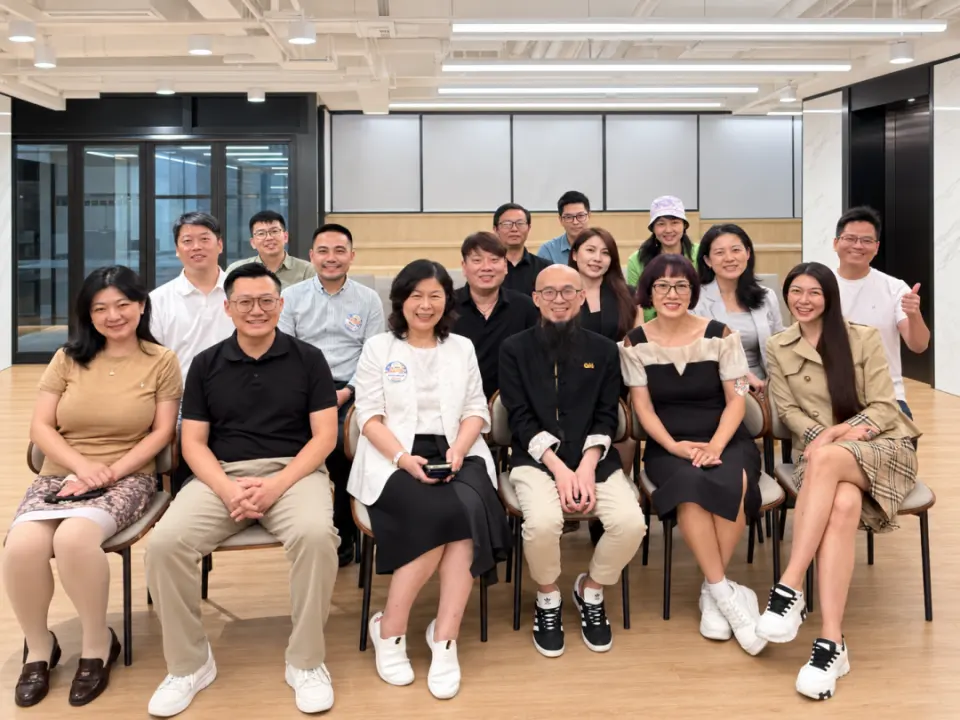
Going forward, Mankun Law Firm and CAI Building will continue to work with more ecosystem partners, collaborating on project showcases, resource connections, professional support and joint communications, to create more opportunities for AI, Web3 and new-economy entrepreneurs to get to know one another, communicate in depth and explore cooperation.
We look forward to seeing you at the next session!