On August 28, 2024, the Hong Kong Monetary Authority (the "HKMA") took another step forward in promoting crypto-financial innovation by launching the "Ensemble" sandbox initiative. According to the HKMA's press release, the Ensemble project sandbox aims to facilitate interbank settlement using experimental tokenized money and to focus research on tokenized asset trading.
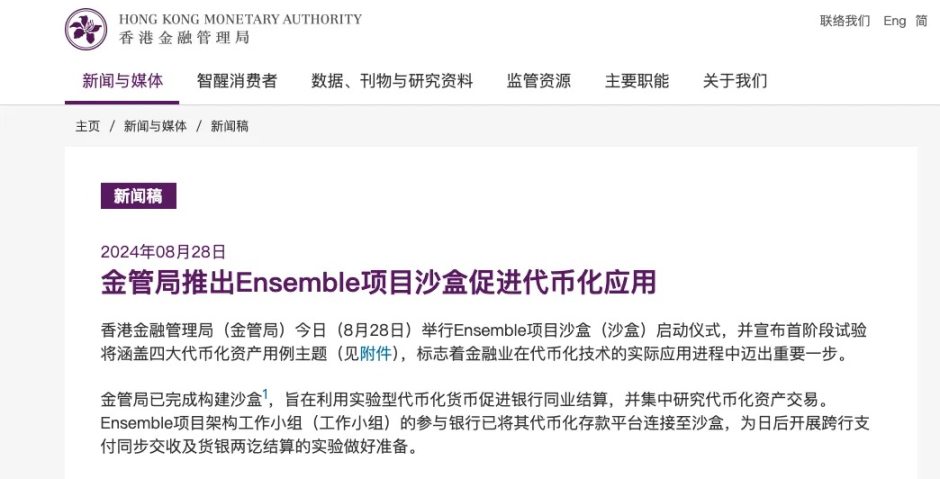
* Image source: Official website of the Hong Kong Monetary Authority
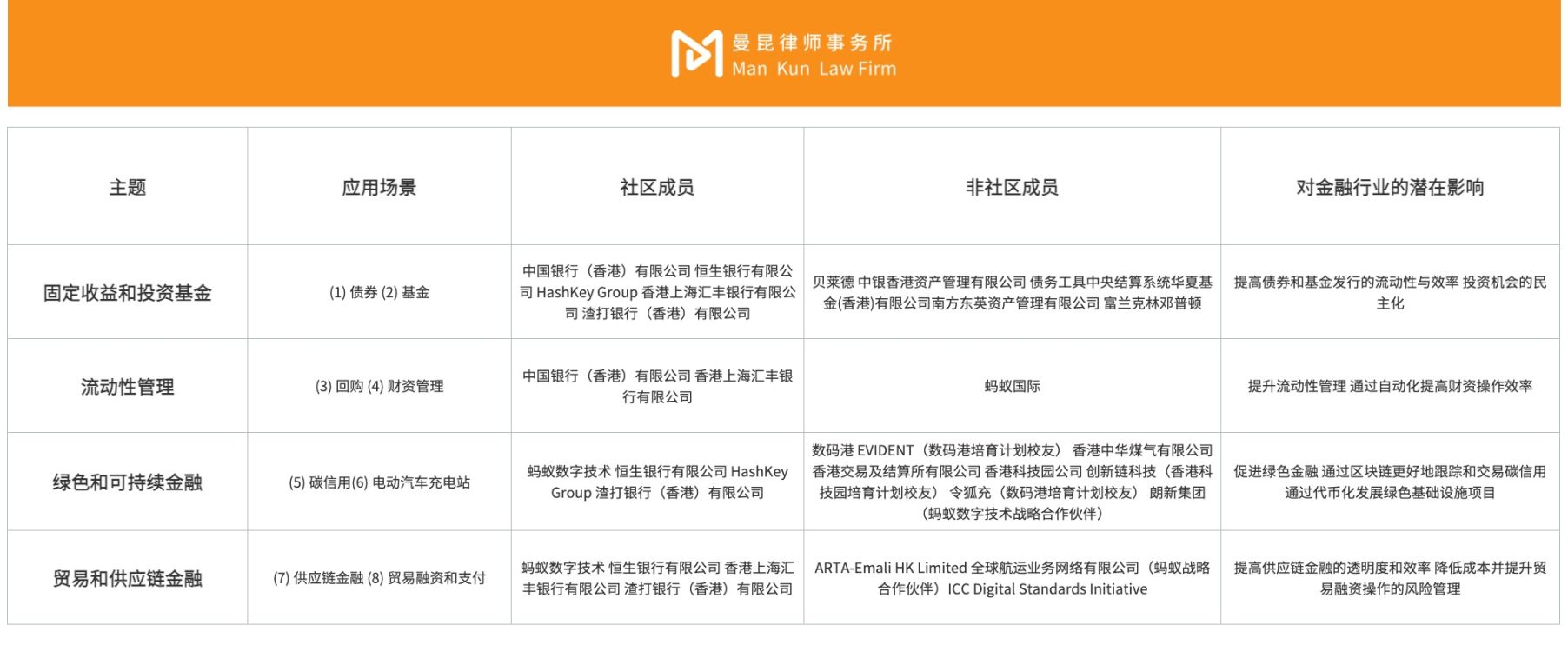
Concurrently, the HKMA announced that the first phase of trials would cover four major use case themes for tokenized assets, including: fixed income and investment funds, liquidity management, green and sustainable finance, and trade and supply chain financing.
This announcement has sparked discussion and attention among Web3 practitioners regarding Hong Kong's real-world assets (RWA) sector. Mankun Law Firm hereby publishes this article to share its analysis of the sandbox itself and its impact on the industry.
The Vision Behind Ensemble
It is no exaggeration to say that this initiative marks a significant milestone in the development of Hong Kong's digital asset ecosystem, bringing revolutionary changes to the conduct and regulation of financial transactions. The Ensemble sandbox envisioned by the HKMA is not merely a regulatory tool, but a vibrant testing platform where innovative ideas are transformed into practical solutions. The vision of Ensemble is closely linked to its technical testing phases, with each test serving as a cornerstone for achieving this broader goal.
In recent years, the HKMA has been very active in exploring the potential of digital currencies and new technologies, particularly in the field of Central Bank Digital Currencies (CBDCs), with notable efforts such as the mBridge project and e-HKD. However, the HKMA also recognizes that the future financial landscape will not be shaped solely by CBDCs. Tokenization, which utilizes blockchain technology to digitize assets, is another key piece of this puzzle. By tokenizing commercial bank money and real-world assets, financial transactions can be streamlined, creating new opportunities for innovation. Therefore, integrating CBDCs and asset tokenization into the Ensemble sandbox reflects the HKMA's clear strategy to explore the synergies between these innovations, ensuring that these technologies complement each other in creating a more robust and versatile digital financial ecosystem.
The primary objectives of Ensemble can be summarized as follows, with each aimed at advancing the understanding and application of tokenization in finance.
- Exploring Application Scenarios:Allowing participants to experiment with tokenized assets in a secure environment, exploring various applications without the immediate pressure of full-scale implementation.
- Technical Testing:Testing the compatibility between different digital assets, tokenized deposits, and CBDCs. This phase is crucial for ensuring the robustness of the technology and preparing for wider adoption.
- Establishing Industry Standards:Setting common industry benchmarks for tokenization, which is essential as the technology evolves. By facilitating the entire lifecycle of tokenized asset transactions, from creation to trading, payment, and settlement, the sandbox helps participants understand the practical implications of tokenization and its potential to address real-world challenges, such as applications in supply chain financing.
- Addressing Real-World Challenges:The sandbox promotes innovative applications aimed at solving practical problems in the financing sector, particularly in areas such as trade and supply chain finance. By addressing these pain points, Ensemble is helping to make tokenization a viable option for businesses.
Four Major Themes of Asset Tokenization
The HKMA's Ensemble sandbox project has identified four key themes for initial experimentation, each representing an important segment of the financial sector. These primary themes were carefully selected because they represent key areas where asset tokenization could have the most profound impact.
- Fixed Income and Investment Funds:This theme explores how tokenization can transform traditional investment instruments, making them more accessible and efficient. By creating digital representations of bonds or investment funds, the financial industry can reduce settlement times, lower costs, and enhance liquidity, providing new opportunities for investors.
- Liquidity Management:Tokenization has the potential to revolutionize liquidity management by allowing assets to be fractionalized and traded on digital platforms. This could lead to more dynamic and efficient liquidity management, especially in situations where rapid access to funds is critical.
- Green and Sustainable Finance:The HKMA is also focusing on how tokenization can support green and sustainable finance initiatives. By tokenizing assets such as green bonds or carbon credits, the financial sector can enhance transparency and traceability, ensuring that funds are effectively allocated to environmentally friendly projects.
- Trade and Supply Chain Finance:Tokenization can address significant pain points in trade and supply chain finance by streamlining the process of tracking and transferring ownership of goods and financial assets. This can improve the efficiency and transparency of supply chains, reduce the risk of fraud, and enhance overall market confidence.
Tokenization of Real-World Assets
Imagine you own a property worth USD 1 million. Through tokenization, you can convert this property into 1 million digital tokens, with each token representing a small fraction of the ownership of the property. These tokens can be traded, sold, or even used as collateral for other financial transactions within the blockchain ecosystem. It can be viewed as a digital representation of a real-world asset that can be easily traded, transferred, or utilized for various financial transactions within a secure decentralized network.
The tokenization of real-world assets is one of the key experimental areas of the Ensemble sandbox. By experimenting with real-world assets, the sandbox can test the operational feasibility and advantages of introducing traditional assets into the digital realm. This not only aligns with the HKMA's vision but also lays the foundation for future developments in the broader financial landscape, such as:
- Enhanced Liquidity.Traditional real-world assets like real estate often suffer from poor liquidity, meaning they can be difficult to sell quickly. Tokenization allows these assets to be fractionalized into smaller, more easily tradable tokens, thereby improving liquidity.
- Increased Accessibility.Tokenization makes asset classes that were previously inaccessible to many investors more widely available. For example, individuals with limited capital can purchase small fractions of high-value assets, such as real estate, through tokens.
- Reduced Transaction Costs.Blockchain technology can reduce the costs of transacting and transferring assets by eliminating the need for intermediaries such as brokers or custodial agents.
Global Collaboration and Future Prospects
Perhaps one of the most exciting aspects of Ensemble is its potential to facilitate cross-border payments. Currently, the HKMA has already demonstrated this capability through successful collaboration with French banks, connecting their respective sandbox systems to execute atomic cross-border settlements. This is just one example of how Ensemble is laying the groundwork for a more interconnected global financial system.
In summary, the Ensemble sandbox is a microcosm of the future digital financial landscape. By combining cutting-edge technology, strategic partnerships, and practical applications, it not only advances the HKMA's vision but also sets a global standard for digital asset innovation.
This article is an original work of Mankun Law Firm and represents only the personal views of the author. It does not constitute legal advice or a legal opinion on specific matters.
Recommended Reading
Summary of Global Crypto Industry Regulatory Policies (August 26–September 1, 2024)
Summary of Global Crypto Industry Regulatory Policies (August 12–18, 2024)
{loadmoduleid 245}