
Commercial implementation is crucial
Introduction
Recently,Mr. Liu Honglin, Founder of Mankun Law Firm, was invited to share insights at China Europe International Business School (CEIBS). This article presents the transcript of his speech, with certain parts omitted, shared with partners striving in the Web3 industry.
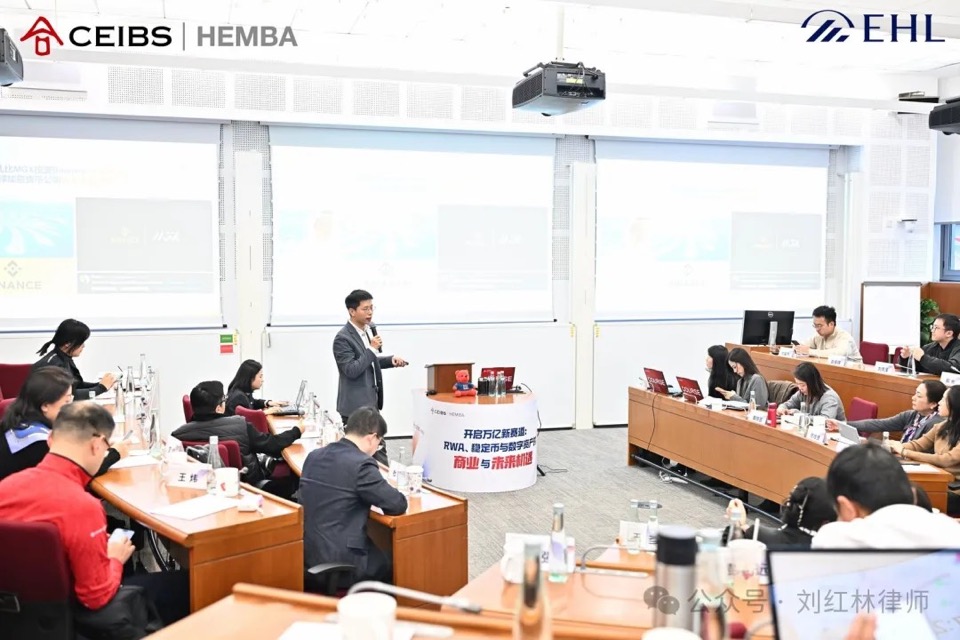
Thank you for the introduction by the moderator. Good afternoon, distinguished guests and CEIBS alumni.
The previous speakers have already analyzed the industry framework and future trends from a macro perspective. My sharing today willfocus on the stage of commercial implementation.。
Every time I return to the CEIBS campus to speak on blockchain topics, I feel a special sense of familiarity.
My journey into blockchain learning began right here at CEIBS. Between 2018 and 2019, I systematically studied blockchain under CEIBS professors and participated in writing the book "The Twilight of the Corporate System: Blockchain Thinking and Digital Incentives." At that time, we recognized thatbeyond its technical attributes, the core value of blockchain perhaps lies even more in its ability to significantly reduce the costs of large-scale collaboration among people on the internet.From this perspective,blockchain is likely to trigger profound changes in future organizational forms, particularly in the corporate system.
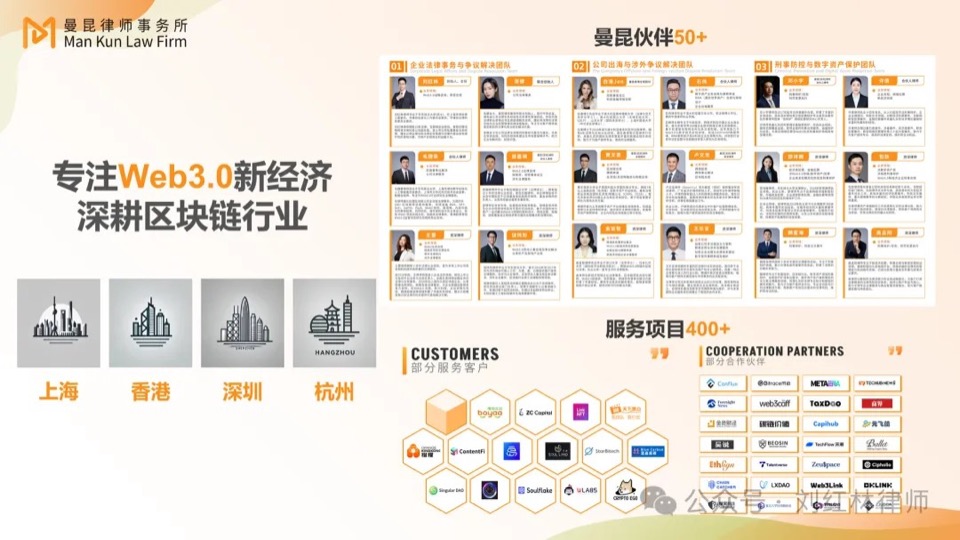
It was based on this understanding that we chose to delve deeply into the new economy of Web3.0 when starting our venture. Consequently, Mankun Law Firm became the first law firm in China dedicated to this specific niche. In the future, we hope to work together with practitioners and entrepreneurs in the industry to jointly promote the healthy development of China's blockchain industry.
The teaching building where we are gathered today also holds significant meaning—the Duan Yongping Teaching Center. Recently, interviews regarding Duan Yongping's investment and management philosophy were featured on Xueqiu. His core investment philosophy left a deep impression on me:"Buying stocks is buying companies; buying companies is buying their cash flow."
This philosophy applies equally to entrepreneurship and business projects in the Web3 field. When evaluating Web3 projects, an important criterion for us is whether they meet genuine market demands and create real commercial value. We have found that truly valuable blockchain projects share a common characteristic from a business perspective:When combined with blockchain technology, they generate sustainable operating cash flows.
In the current industry, which blockchain technology applications or sectors have sustainable cash flow income? Exchanges are one example; stablecoins or crypto payments are another.
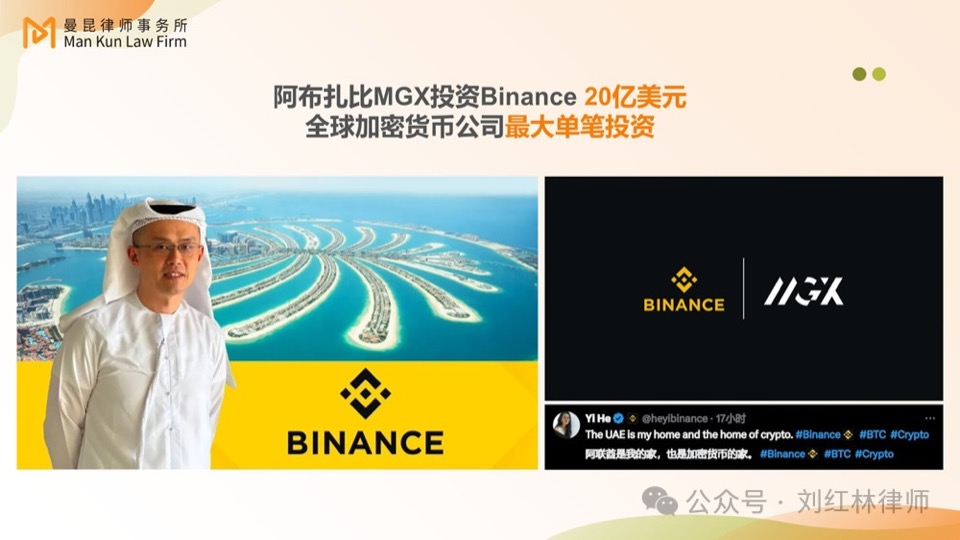
There is even an intersection between the two. Some time ago, the Abu Dhabi Sovereign Wealth Fund invested $2 billion in a certain exchange, marking the largest financing deal in the Web3 sector.
A key detail in this transaction was that the Abu Dhabi Sovereign Wealth Fund used a stablecoin for the investment—not the mainstream USDT or USDC, but a lesser-known USDY. The issuance terms of USDY explicitly reference Trump, and the vast majority of USDY is issued on the BSC chain.
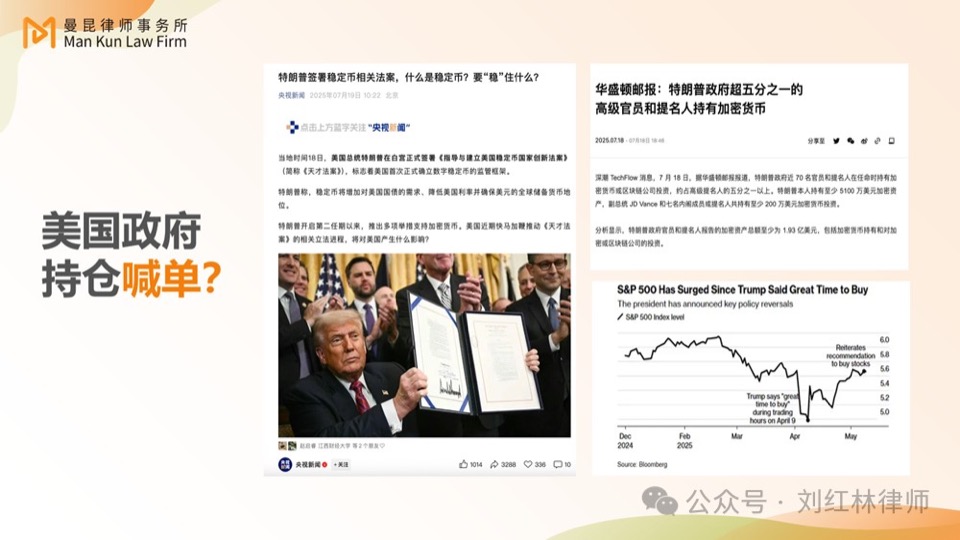
This forms a clear closed loop, indirectly reflecting thatthe U.S. government, and even the President personally, has deep ties with the most profitable leading commercial institutions in the crypto industry.
In addition to issuing stablecoins, Trump's side has also ventured into cryptocurrency mining operations. During his campaign, he explicitly proposed moving all Bitcoin production to the United States.
Public data shows that more than one-fifth of officials in the current U.S. administration hold crypto assets. This explains why Trump has consistently promoted crypto assets over the past year or so, hoping to establish the United States as the global crypto hub, because hisbusiness empire is closely linked to Web3, and hispolicy stance is highly correlated with his commercial interests.。
Beyond commercial value,Bitcoin and crypto assets are increasingly becoming a focal point of national security concerns for various countries, even regarded as chips in the game of national financial security.
An intuitive example is that during the Russia-Ukraine war, Russia continued to face sanctions in cross-border trade payments. Not only was the traditional SWIFT system obstructed, but it also struggled in the blockchain world.
It is worth noting that although both Bitcoin and stablecoins utilize blockchain technology and are cryptocurrencies, there is a fundamental difference in asset ownership: Bitcoin private keys are controlled by users, and no one can freeze your assets; whereas stablecoins like USDT and USDC can still be remotely frozen by the issuer, much like a bank freezing an account due to risk control measures.
In the first half of this year, a USDT transaction worth over $2 billion from Russia was frozen on-chain by the United States. This means that in great power competitions, if the traditional SWIFT system is inaccessible, emerging stablecoin payments may also be blocked.
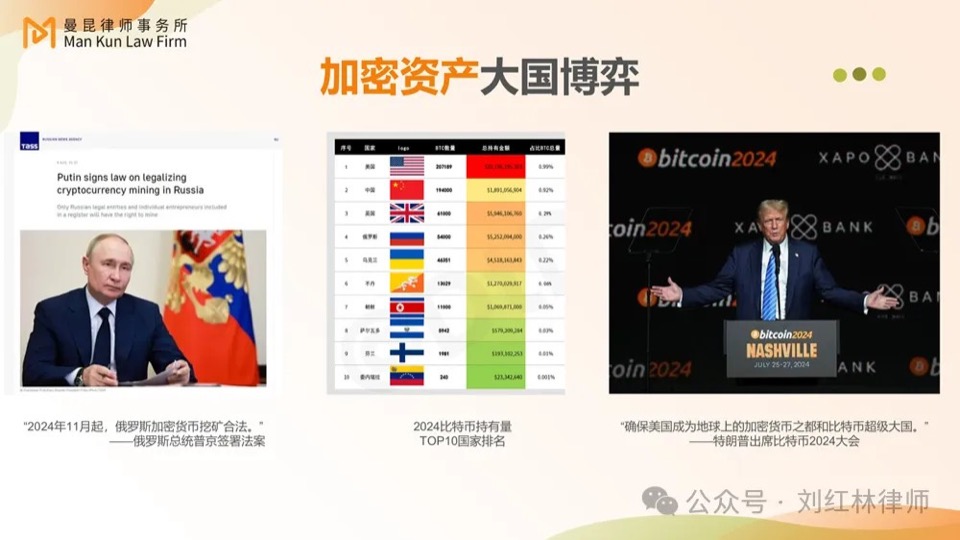
If stablecoins become a universal choice for global trade in the future, thenfor Chinese enterprises, it is unacceptable for assets to be potentially controlled by others on-chain at any time.Precisely for this reason,Hong Kong's launch of stablecoin pilots and China's active promotion of blockchain technology development are not only related to the next generation of internet and financial infrastructure but have also become an important part of the national financial security strategy.
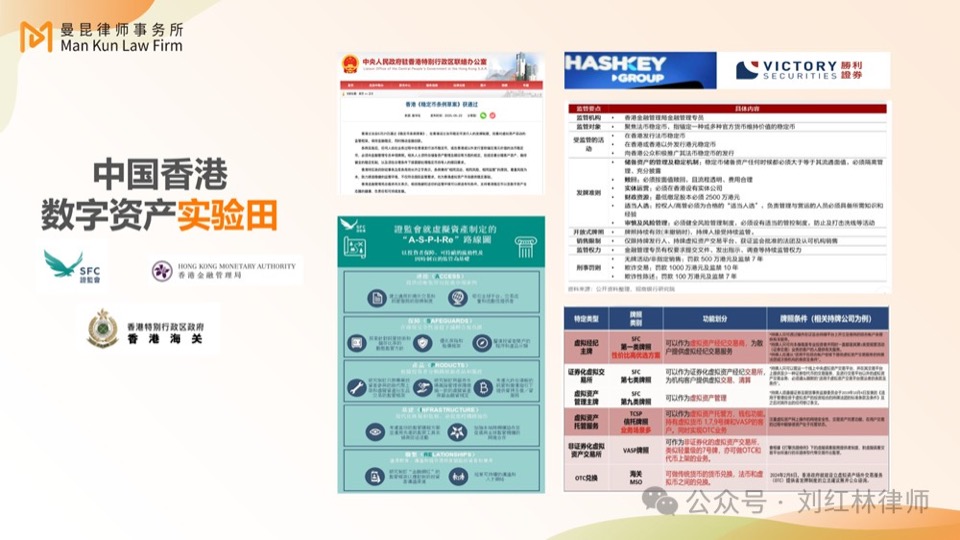
In Shanghai, including within the CEIBS campus, we have the opportunity to openly discuss the opportunities and challenges of this industry. Shanghai has established specialized blockchain parks in districts such as Jing'an and Xuhui. Our office is located within the blockchain park of the Data Bureau, demonstrating the government's encouraging attitude towards the Web3 sector.
Moving Forward Steadily: Law and Regulation in China's Web3 Industry
However, while encouraging innovation, we must also clearly identify the red lines and risk points. Based on our research, we have summarized three boundaries:
First, public fundraising through token offerings is prohibited.But this is not specifically targeted at the blockchain industry, as no industry is allowed to raise funds through public stock offerings.
Second, cryptocurrency exchanges cannot operate or conduct business in mainland China.In contrast, this is completely legal and compliant in Hong Kong. For instance, we see thatHashKeyoperations in Hong Kong are conducted with high compliance standards.
Third, energy-intensive mining activities, such as Bitcoin mining, are generally not feasible in mainland China.
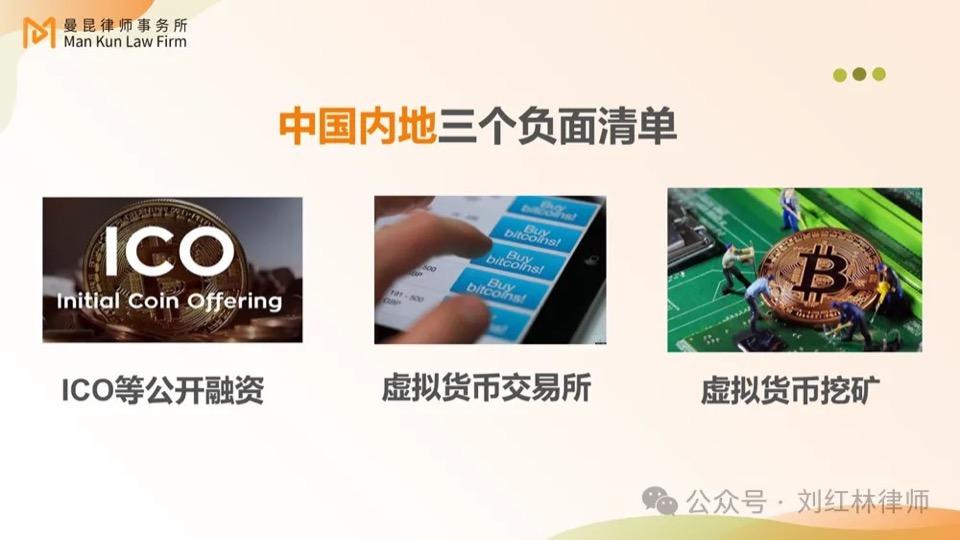
We believe thatapart from these three items, other business innovations and attempts can be explored. This is particularly important against the backdrop of increasingly internationalized capital flows, where innovations in areas such as stablecoins and cross-border payments become crucial.
Regarding the practical application of stablecoins, there is an interesting case.
Late last year, a research team conducting surveys in Yiwu, Zhejiang Province, discovered that many local foreign trade merchants received substantial amounts of USDT in their actual business operations and faced realistic issues regarding the compliant conversion of stablecoins.
Interestingly, in the first half of this year, a financial media outlet conducted a survey in Yiwu but reached the exact opposite conclusion, stating that no local merchants had heard of stablecoins, let alone used them. This created an interesting"Rashomon" effect.。
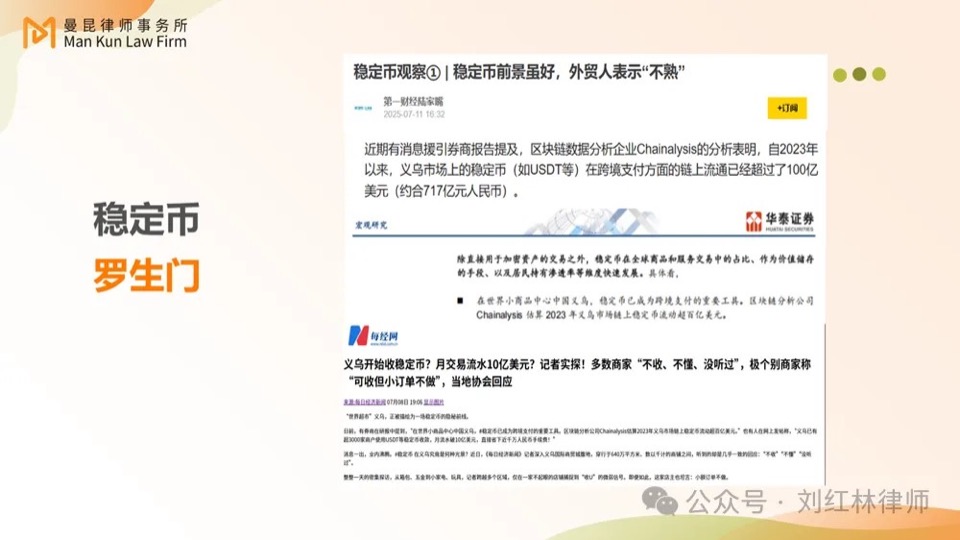
This phenomenon is easy to understand. Imagine if a stranger suddenly asked whether you were using stablecoins; your first reaction might involve caution, or even suspicion regarding the stranger's identity. Out of prudence, most merchants would choose to deny it.
But what is the reality? We believe that stablecoins are like the Retina display of the iPhone 4 back in the day:once you have truly experienced and used it, it is hard to go back, because the efficiency gains are tangible, and the costs are significantly reduced.
Taking our own business as an example, 40% of our operations involve overseas matters, often requiring cross-border payments. Under traditional methods, a payment might take 3-5 days to arrive, requiring constant confirmation with the bank. Sometimes, when making payments, we even had to visit bank counters in person to handle foreign exchange purchases. The entire process was time-consuming and laborious, involving costs associated with exchange rate fluctuations and handling fees. In contrast, if stablecoins are used for on-chain payments, most public chains allow funds to arrive within two minutes, with transaction fees under $0.50. This improvement in efficiency is definitely on the order of tenfold.
If a solution can improve efficiency tenfold compared to traditional methods, we consider it to have immense commercial value. At this current juncture,stablecoins are no longer just entry-level tools for the Web3 or crypto world; they are becoming an indispensable part of economic activities in the real world.
Looking back at the past few years, the growth speed of the stablecoin economy has indeed been astonishing. Currently, the global stablecoin market size is approximately $280 billion, with 95% being USD-pegged stablecoins. The probability of emerging markets using stablecoins or cryptocurrencies is also increasing.
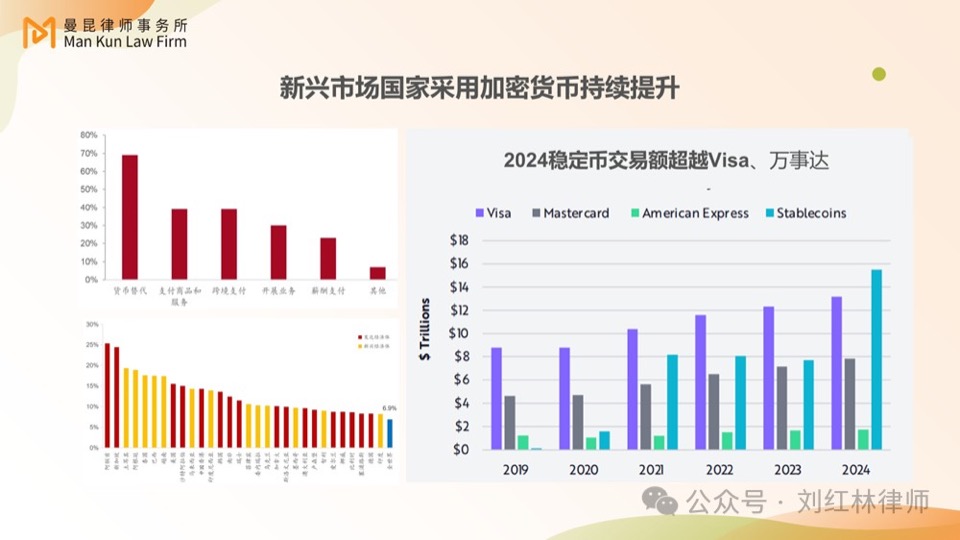
From this perspective, our current discussions on Hong Kong issuing offshore RMB digital currencies are, to some extent, lagging behind. This is precisely why we believe thatwe must seize the opportunity presented by Hong Kong and elevate the internationalization of the RMB and the construction of an autonomous and controllable stablecoin system to a strategic level.
The Way Forward: How to Achieve Commercial Implementation?
However, at the current stage, attempting to build a public chain from scratch to compete with Ethereum, or issuing an RMB stablecoin to rival USDT, is unrealistic for most entrepreneurs—this has become agame for giants.Since Hong Kong opened stablecoin debugging on July 1st this year, approximately 34 companies have submitted issuance applications. We believe this is largely the domain of state-owned enterprises, financial groups, or large corporations, as large-scale companies issuing stablecoins can, on one hand, connect with real business scenarios and, on the other hand, bear the corresponding compliance and system costs.
Therefore, for entrepreneurs hoping to find projects with sustainable cash flows in the niche sector of crypto payments, we recommend focusing on specific links within the entire industrial chain, making the entrepreneurial path more secure.
Here, I briefly share three feasible directions that have currently achieved closed loops in business logic and revenue:
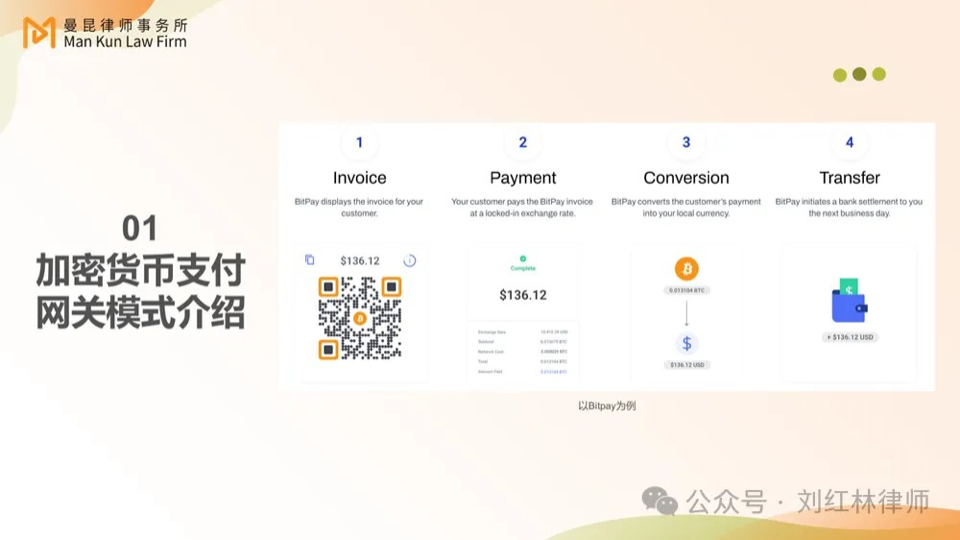
The first is crypto payment gateways, the logic of which is similar to the aggregated payment codes we use in coffee shops.
Nowadays, more and more cross-border e-commerce platforms are beginning to accept cryptocurrency payments. When users check out, in addition to traditional methods like PayPal, they can choose "stablecoin payment." Just like with WeChat Pay and Alipay, a QR code is randomly generated, and payment is completed by scanning the code with a crypto wallet, offering a very smooth experience.
Currently, many domestic payment companies are going to Hong Kong to conduct such crypto acquiring businesses. They only need to integrate cryptocurrency technical solutions in addition to addressing traditional cross-border payment business and customer acquisition issues.
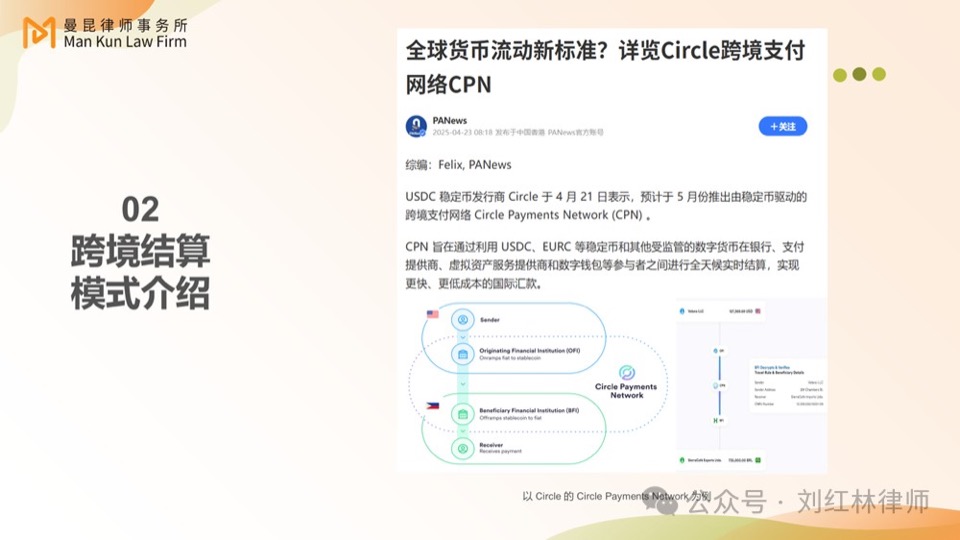
The second is the "sandwich" payment structure, primarily targeting ordinary users who do not hold cryptocurrencies.
Taking Circle's solution as an example: When a user pays from Country A to Country B, they pay in their local fiat currency; the service provider automatically converts it into USDC, transfers it cross-border via blockchain to a partner institution in Country B, and then converts it into the local fiat currency.
The entire process is seamless for both the payer and the payee, yet it leverages blockchain to achieve efficient asset transfer.
The third is cryptocurrency bank cards, which are more suitable for B2B or corporate users.
However, because users need to additionally consider how to convert cryptocurrencies in their accounts into fiat currency, this process is more prone to compliance risks, such as asset freezes or risk controls. Therefore, this is also a payment solution with a strong futuristic feel.
The current solution allows users to directly obtain a bank card that natively supports cryptocurrency top-ups. When users spend globally, the system can automatically complete the conversion between crypto assets and fiat currency online. Specifically, this involves two steps: first, converting crypto assets into fiat currencies like the US dollar, and then completing settlement through Visa or UnionPay channels. This not only solves the pain point of "difficulty in cashing out" but also gives rise to new models such as "spending as mining"—where users receive project token rewards for spending, thereby constructing an on-chain digital marketing system integrating membership points and rebate incentives.
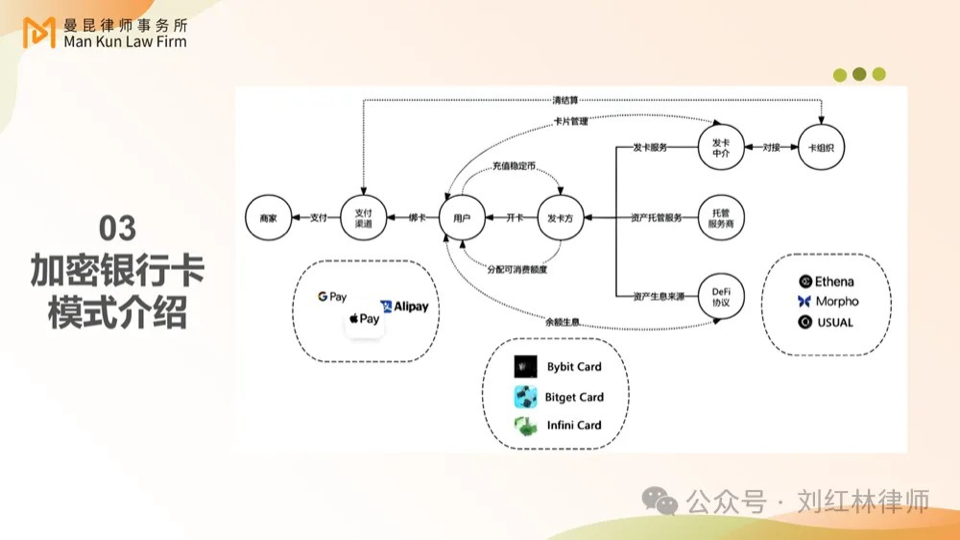
The above three solutions have demonstrated high certainty in terms of commercial implementation and legal compliance. Therefore, we have also seen since 2025 that an increasing number of traditional payment companies have begun to trial crypto payment businesses.
Of course,in terms of legal compliance, besides licenses, taxation, anti-money laundering, and network asset security remain key areas requiring continuous attention.
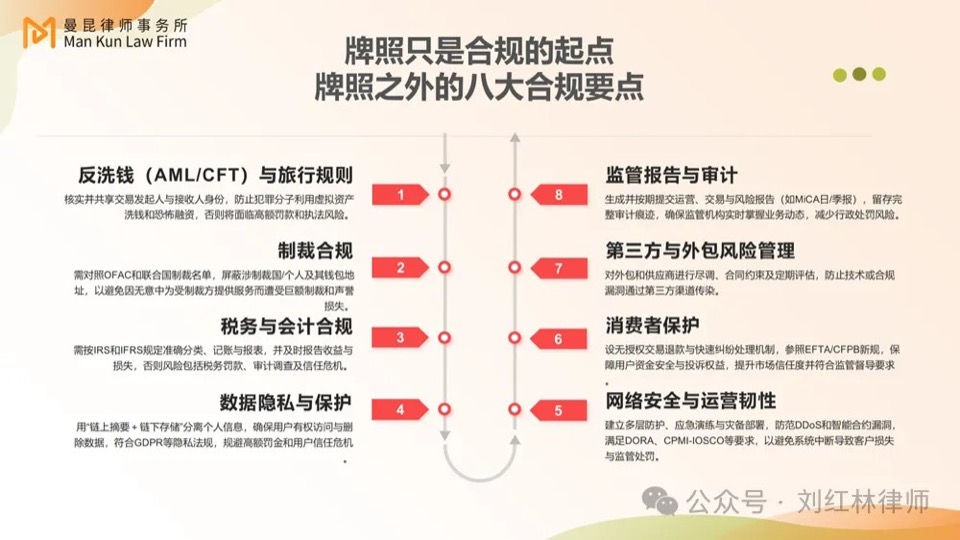
These are some of the observations we have made regarding commercially viable crypto payment scenarios. In the process of innovation, seeing the direction clearly and defining boundaries are equally important. We hope this provides reference for your upcoming business project selections and investment directions.
Thank you all!