
If the same AI product were launched simultaneously in the markets of China, the United States, and the European Union, would the legal issues it faces be exactly the same? The answer is no.
At the 2026 Global AI Founders Summit, Attorney Shao Jiadian, Equity Partner at Mankun Law Firm (Shenzhen), put forward a viewpoint that resonated widely with the audience: “Chinese AI entrepreneurs may be among the most ‘challenged’ groups globally.” The term “challenged” here does not refer to insufficient technical capabilities, but rather to the need to confront more systematic, stringent, and continuous regulatory requirements before products truly enter the market.
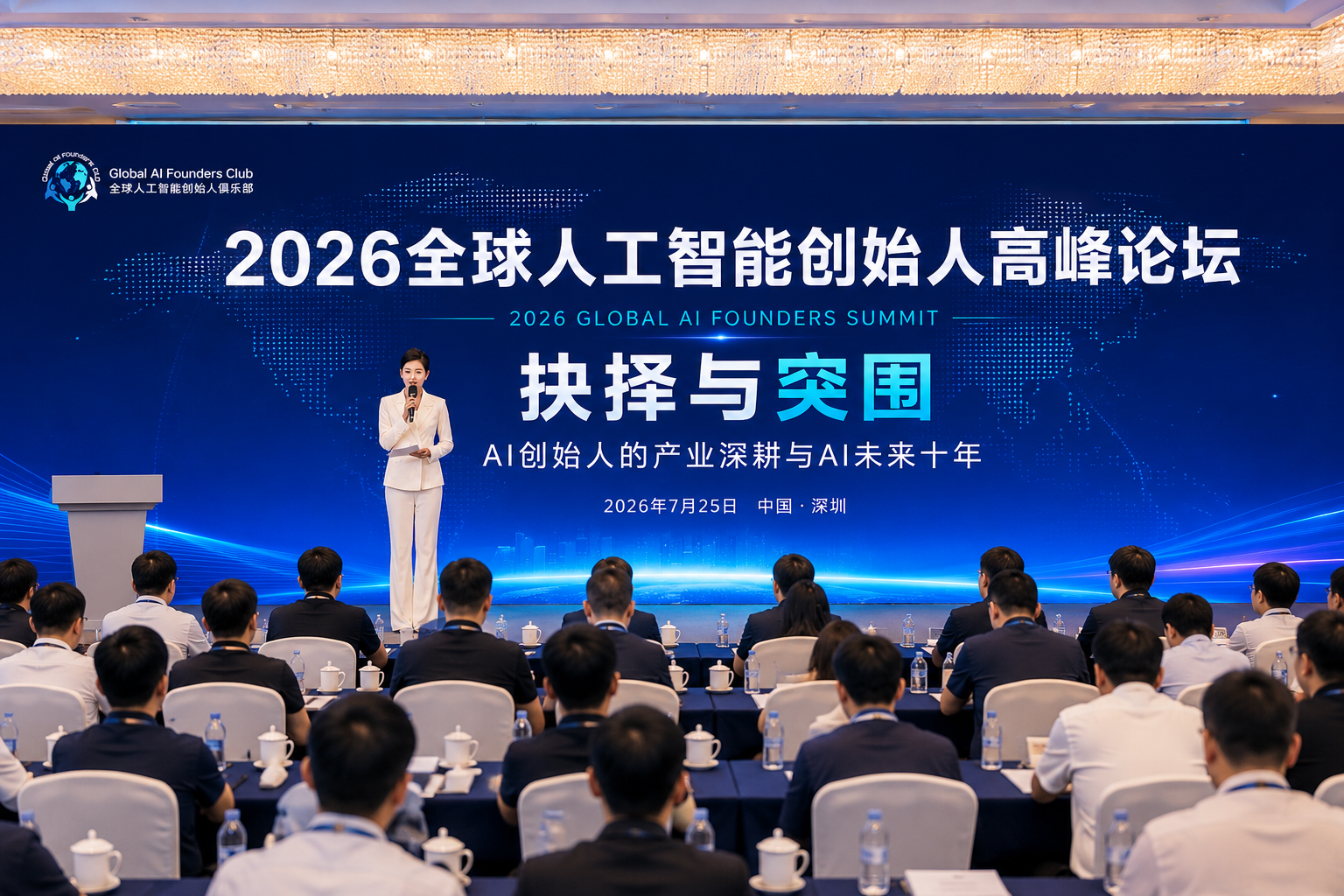
On July 25, the 2026 Global AI Founders Summit, themed “Choices and Breakthroughs—AI Founders’ Industrial Deepening and the Next Decade of AI,”was held at the Shangri-La Hotel in Luohu, Shenzhen. Representatives from industry associations, industrial think tanks, technology enterprises, investment institutions, legal service providers, and AI entrepreneurs from both domestic and international backgrounds gathered in Shenzhen to jointly discuss hot topics such as the development direction of the artificial intelligence industry, commercial implementation, capital allocation, global expansion, and compliance governance.
The summit was co-hosted by the Asian Digital Economy Research Institute and the Global AI Founders Club, with Hanlin Yunling Academy()and Dayun Zhonglian Technology as co-organizers, and the Shenzhen Artificial Intelligence Industry Association and Huaqinghui as strategic partners providing support.Jasen Zubcevik, President of the U.S. Artificial Intelligence Association,delivered a video address, calling on global AI innovators to jointly promote technological innovation and trustworthy governance.
Keynote Sessions
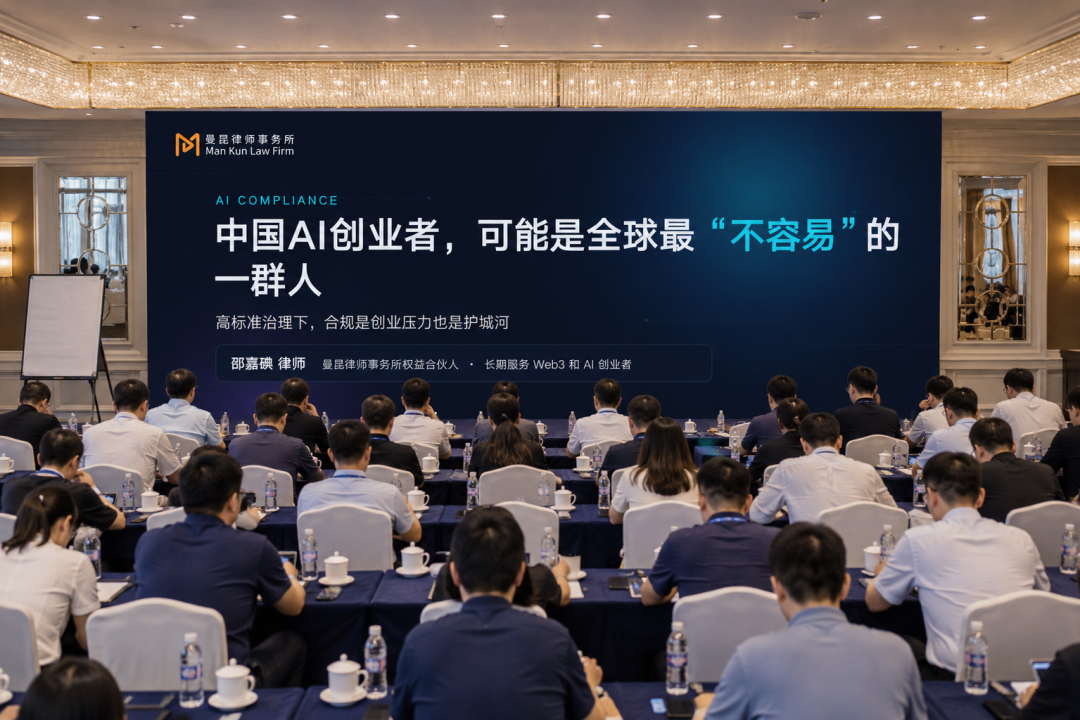
The most valuable aspect of a forum is not the number of panelists, but its ability to raise questions that truly merit industry-wide reflection.As a lawyer who has long served AI, Web3()and digital asset enterprises, Attorney Shao Jiadian delivered a keynote address titled “Chinese AI Entrepreneurs May Be the ‘Most Challenged’ Group Globally,” analyzing the practical challenges facing Chinese AI companies from the perspective of the global regulatory landscape.
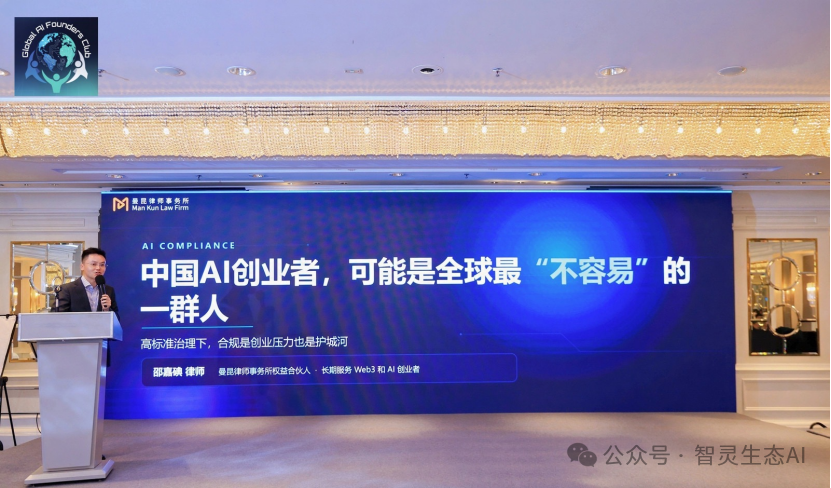
Attorney Shao Jiadian pointed out that the European Union emphasizes “risk-tiering plus ex ante compliance,” the United States relies more on fragmented oversight and ex post enforcement, whereas China has established a full-chain governance framework covering data, algorithms, models, generated content, and ongoing operations.This means that the same AI product entering different markets must address entirely distinct compliance issues.
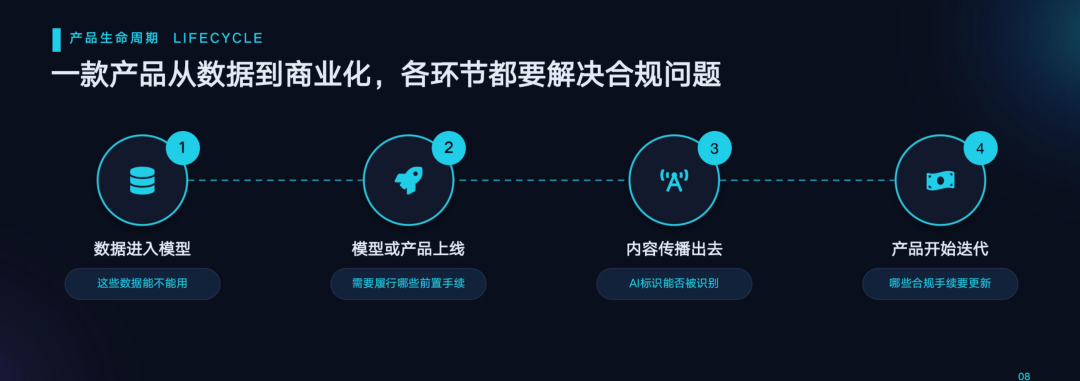
Subsequently, drawing on the full lifecycle of generative AI products, he systematically outlined the risk points most commonly overlooked by enterprises across five dimensions: training data, model filing,()application registration, labeling of AI-generated content, and continuous product iteration, emphasizing that every functional adjustment, model switch, or market change may trigger new compliance assessments.
During the speech, two remarks resonated widely with entrepreneurs in attendance:
“Having obtained data does not equate to having the right to use it for training.”
“The greatest challenge is not achieving compliance for the first time, but the need to reassess compliance after each product iteration.”
Attorney Shao Jiadian believes thatwhile high-standard governance indeed raises initial costs for AI startups, enterprises capable of sustainable long-term development compete not only on model capabilities but also on governance capabilities.Standardized data governance, clear chains of title, a stable registration and filing framework, and sustained risk management capabilities will help enterprises reduce operational risks, enhance credibility in financing, gain access to the procurement systems of large enterprises, and lower the costs of redundant governance in the course of global expansion.
Conclusion
During the forum, Lang Liping, Secretary-General of the Shenzhen Artificial Intelligence Industry Associationreleased the White Paper on the Development of Artificial Intelligence 2026,Zeng Chongrui, Executive President of the Hong Kong Small and Medium Enterprises Industrial and Commercial Federationshared insights on cross-border trade opportunities in the AI era,Zhi Gang Think Tank()Duan Ming, Executive Dean of the Strategy Research Instituteanalyzed AI industry layout from a corporate strategy perspective,Liu Rui, Chairman and CEO of Beijing Dayun Zhonglianexplored the interconnection of computing power and the development of industrial ecosystemsGlobal Artificial IntelligenceFounders Club()Tian Wei, Founder and Chairmanannounced the official launch of the Club,Dr. Ma Wenya and Dr. Yang Weilian,、Wang Xiaoyan, Chairman of Turing Capital,、Wu Shichun, Founding Partner of Plum Ventures,and other distinguished guests shared their insights on AI entrepreneurship, data intelligence, capital markets, and investment logic for the next decade, and participated in roundtable discussions.
From technological breakthroughs to commercial implementation, and from industrial synergy to capital support, this forum presented diverse topics reflecting the deepening development stage of the artificial intelligence industry.Participants generally agreed that competition in the AI industry is gradually shifting from a sole focus on model capabilities to comprehensive competition encompassing product capabilities, business models, industrial resources, and governance systems.
For AI entrepreneurs,what determines whether an enterprise can achieve sustainable development is not only the speed of technological iteration, but also whether products can be stably implemented, whether business models can withstand market validation, and whether the enterprise can establish compliance governance capabilities commensurate with its business development. Technological innovation, industrial synergy, capital support, and compliance systems are jointly constituting the key foundation for the long-term development of AI enterprises.
As a professional institution with long-term expertise in legal services for AI, Web3, digital assets, and corporate globalization, Mankun Law Firm will continue to monitor global developments in artificial intelligence regulation. Focusing on scenarios such as AI product compliance, data governance, model filing, intellectual property, cross-border data transfer, and corporate international expansion, we provide technology enterprises with comprehensive legal services that combine legal professionalism with commercial feasibility.In the future, Mankun will continue to participate in exchanges within the artificial intelligence industry, working with more entrepreneurs and industry partners to explore balanced pathways between technological innovation and compliance governance.
/ END.
*This article is an original work of Mankun Law Firm. It represents only the personal views of the author and does not constitute legal consultation or legal advice on specific matters. For reprints and legal inquiries, please contact customer service:mankunlawyer。
Author

About Mankun