This weekend, I was reading Zeng Ming's Intelligence: The Nature of Business, Organization, and Strategy in the AI Era.
While reading and taking notes, thinking carefully, I was also opening Codex and tinkering with it. After two days, something new appeared on the Mankun Law Firm website: Mankun AI.
First, let me explain why we are doing this.
In the book, Zeng Ming discusses a change I care about a great deal: when intelligence can be invoked like infrastructure, enterprises have the opportunity to reorganize their products and services around the tasks customers want to accomplish. Customers no longer need to first understand what you sell or which one they need to buy; instead, they can directly describe their situation and goals, and people and AI together clarify the problem and then organize solutions.
Going further, he proposes "intelligence compounding": if the feedback generated when completing tasks can be continuously used to improve the system, then the more business is done, the more the organization has the opportunity to accumulate stronger problem-solving capability. The premise is that the feedback actually enters the next round of work.
Merely using a few more AI tools and generating more content will not automatically create this kind of compounding.
As the operator of a highly digitalized law firm, when I read this, I thought of the clients we face every day. When he says he wants a contract, he may want to close a deal; when he says he wants to apply for a license, he may want to enter a new market. Clients need someone to understand their business and help them find a way forward. In the past, this relied heavily on an individual lawyer's time and experience.
Now, can we turn part of that experience into a product, so that clients receive professional support earlier and the team accumulates something after each service engagement?
I have written before that we should redo Mankun Law Firm with AI.
So this weekend I started Vibe Coding—explaining business ideas to AI, developing while testing, and revising again and again.
Now, version 1.1 of Mankun AI is ready for you to try.
Overall positioning: it is aimed at the Web3 and new economy industries, integrating Mankun Law Firm's public research, regulatory materials, and legal consultation entry point. You can experience Mankun AI in any AI software you commonly use.
Figure 1 | Mankun AI official website product introduction.
Starting from three client needs
When a new idea arises in your business, ask someone who knows the field first.
In Web3, many legal issues emerge as soon as a project is just getting started. A team wants to use stablecoins to collect overseas payments, but what they find are often just conceptual explanations; when they ask AI, they worry that it does not understand the business context and gives an answer that looks complete but is actually unusable. What clients need at this point is someone who first asks clearly where the company is located, who is paying, and how the money flows, and then looks for the relevant laws and regulations or regulatory rules.
Mankun AI takes this pre-consultation preparation as its first scenario: organizing questions around a specific business, searching Mankun's public materials, and listing the facts that are still missing and the matters that need further discussion. The website uses "collecting overseas payments with stablecoins" as a demonstration. By asking the right questions first, subsequent discussions with lawyers can get to the point faster.
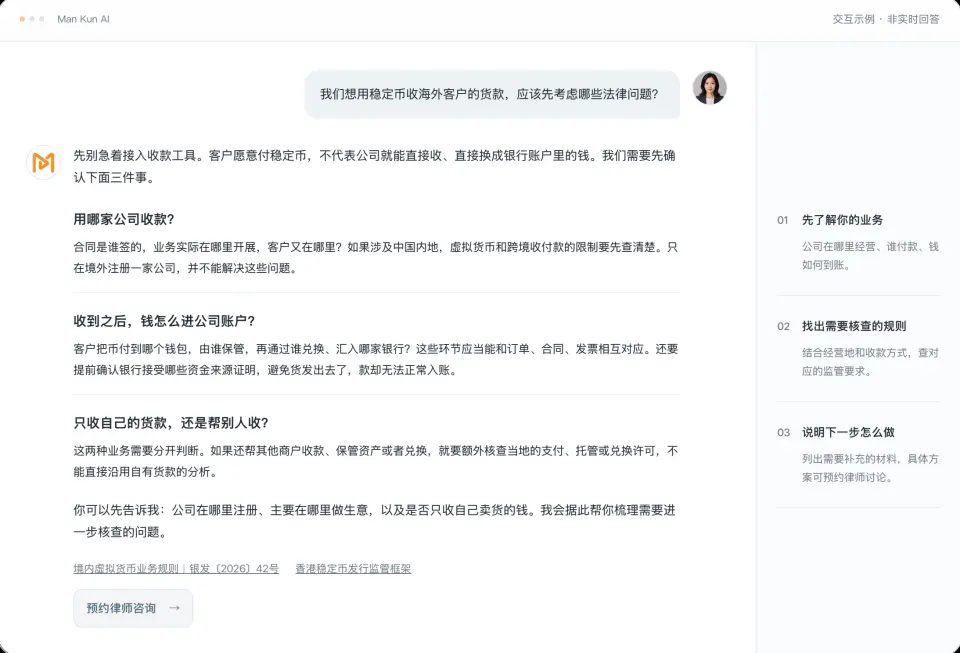
Figure 2 | Example of stablecoin payment collection consultation interaction, not a real-time answer.
When there are new regulatory and enforcement developments, know how they relate to your business.
The Web3 industry is not short of news. But information that continuously organizes regulatory policies and enforcement developments from a legal compliance perspective, and then clearly explains what they mean for business, is still scarce. Teams doing payments want to know whether the market access requirements in their target markets have changed; teams operating platforms care more about what the recent enforcement actions are actually investigating and whether their own business has similar problems.
For this type of need, we have put regulatory materials and developments search into Mankun AI. Users can search for relevant content around their market, business type, and issues of concern, and then continue to verify along the date, source, and original text. The regulatory developments example on the website presents exactly this approach: helping clients determine which changes are worth further inquiry and which arrangements need to be reviewed by a lawyer.
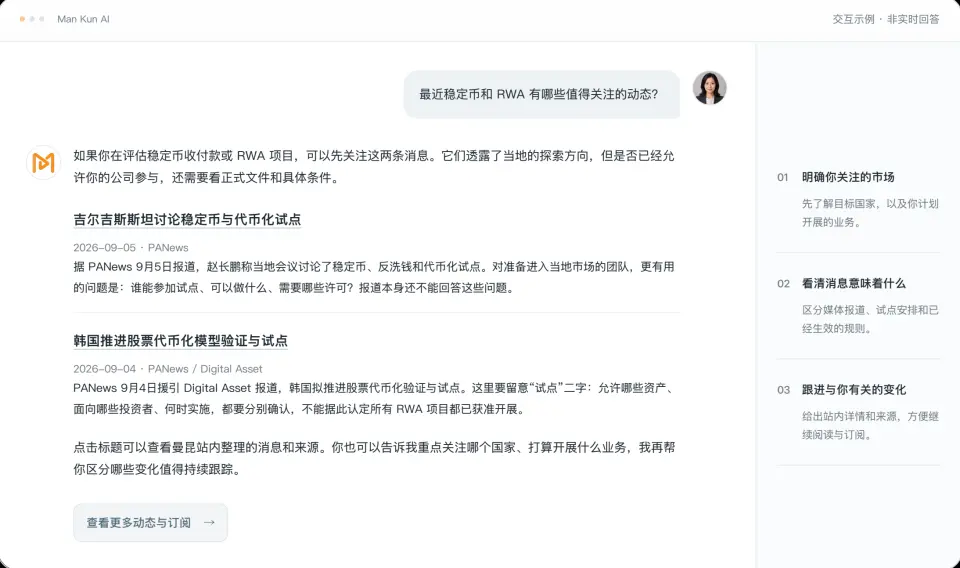
Figure 3 | Example of regulatory developments interaction, retaining date, source, and original text.
With industry news available, in-depth industry insights and learning naturally cannot be missing either.
Over the past few years, Mankun partners have written a large number of Web3 research articles popularizing the law, but clients may not know which one is relevant to them, and even less likely have the time to go through them one by one. Therefore, the third scenario is finding research around a project.
Mankun AI searches public articles by business question and presents the author, date and key points, making it easy to return to the original text for reading. With sources identified for the materials and a direction for reading, clients can more easily bring their own proposals and the points they have not yet thought through to the next discussion.
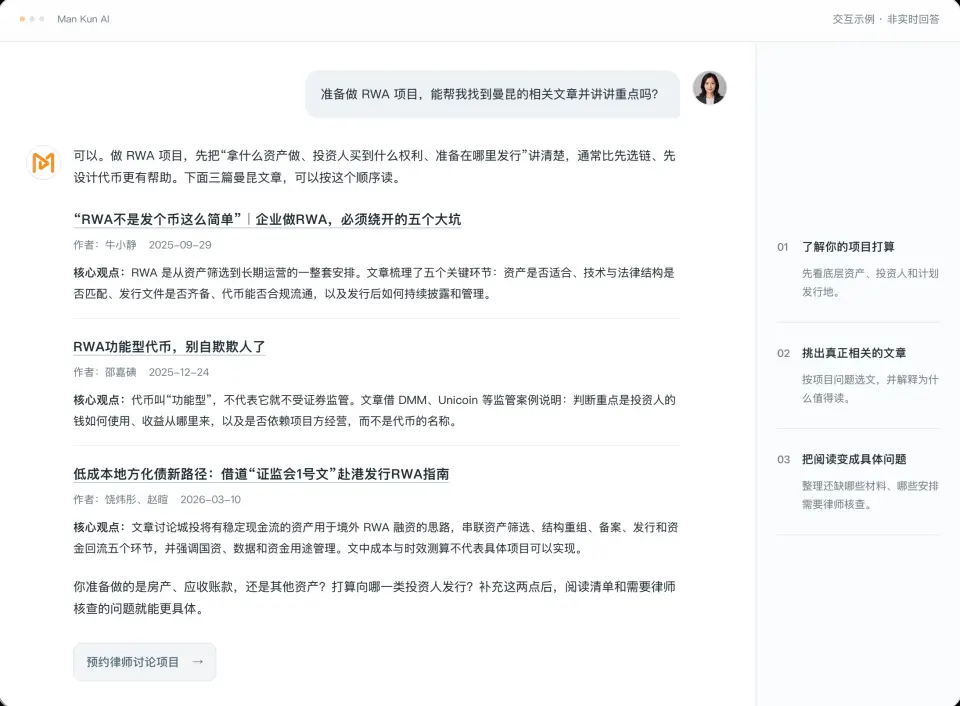
Figure 4 | Example of an RWA research interaction, where you can continue to view the original article.
Put Mankun lawyers into your AI
If we believe that professional services in the future will be delivered jointly by people and AI, then today we must begin adjusting the way and the processes by which Mankun, as a future commercial organization, serves clients.
In my understanding, what Zeng Ming calls "intelligence compounding," when applied to a law firm, means that after a piece of work is completed, the team can leave behind something reusable: a more effective method of asking questions, a set of verified materials, a work step that reduces errors. The next colleague does not have to figure things out from scratch, and the next client service can also be done better. This requires continuous development and is far from being accomplished by launching a single page.
For Mankun Law Firm, the direction is clear: continue serving new economy industries such as Web3, AI and technology finance, while also advancing the firm's own AI transformation. Clients' questions are increasingly new, and many matters have no ready-made answers. We need an organization that can continuously learn and bring new experience into the next piece of work.
Next, we will continue to have AI work in coordination with client needs analysis, service proposals, project collaboration, knowledge research and internal operations. Which experiences are worth organizing into tools, and which judgments must remain the responsibility of lawyers, must all be continuously explored within specific business contexts.
If you want to take the first step and experience the future of legal services.
You can send the following instruction to Codex, WorkBuddy, Claude Code, or AI tools such as the Doubao desktop client that support Skill installation, and you can begin the experience:
Please install @user_c008dbd9/mankunlawyer according to https://skillhub.cn/install/skillhub.md.
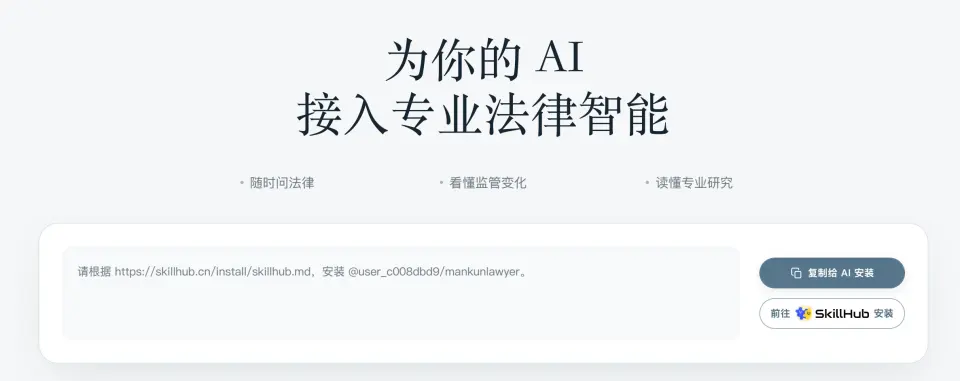
Figure 5 | Mankun AI installation area.
The fun has only just begun.
If you are also interested in the intersection of AI and legal technology, you are welcome to join Mankun.Whether you are a lawyer willing to transform the way you work, or a partner who understands product, technology and business, we look forward to working alongside you.