

What Has Web3 Truly Brought Us?
Recently, I have noticed two interesting developments in the Web3 space that I would like to discuss.
First, Binance has quietly listed Tesla (TSLA)-related products. These are not real-world assets (RWA) but rather perpetual contracts.

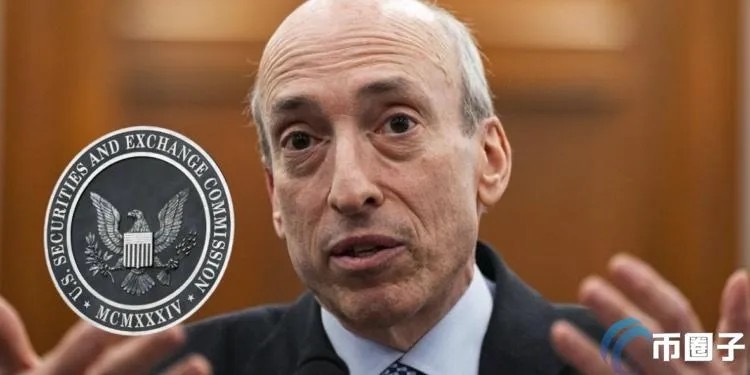
Second, Paul Atkins, Chair of the U.S. Securities and Exchange Commission (SEC), has recently made a series of public statements indicating that the U.S. financial markets may be fully migrated on-chain within two years.
These two developments are closely interconnected and bear on the next direction of global asset liquidity, raising both economic issues and intriguing legal questions.
Binance’s Experiment: From “Forceful Entry” to “Stealth Approach”
This is not the first time Binance has targeted Tesla.
Looking back to 2021, Binance prominently launched “stock tokens,” attempting to peg them 1:1 to underlying shares so that users could hold equity on-chain and receive dividends. However, this product faced strong opposition from regulators in Germany, the United Kingdom, and other jurisdictions due to allegations of illegal securities offerings, and was ultimately delisted.
At that time, Binance’s strategy was one of “forceful entry”—directly transplanting equity interests onto the blockchain—while underestimating the force of traditional financial regulations. Today, its approach has shifted to a “stealth” mode.
The Tesla perpetual contracts launched in 2026 no longer link to share ownership; they merely track price movements. They do not promise dividends, but only provide exposure to price fluctuations. What users purchase is not Tesla equity, but a pure bet on price movements.
This shift from “buying ownership” to “buying volatility” may appear concessive, but in fact represents another indirect exploration by a crypto giant into the equity trading market within the existing legal framework.
On-Chain Tesla: Are You Buying a "Bet" or the "Asset"?
Many users trading Tesla on Binance wonder whether on-chain Tesla is equivalent to Tesla stock listed on U.S. exchanges. To address this question, it is necessary to clarify the relevant legal boundaries:
- Perpetual Contracts (Perps):You are buying a "bet." What you purchase is a contractual instrument, and your exposure is to price movements. The logic is straightforward: while the underlying asset offers strong liquidity, its legal characterization is that of a "derivative." If the platform faces liquidation risk, you hold no physical assets that can be recovered.
- Real-World Assets (RWA) (Tokenized Assets):You are buying the "asset." For each token on-chain, there is a corresponding gold bar in a vault or a share of stock held in custody. The core issue is "establishment of title." This involves complex cross-border legal adaptation, asset custody arrangements, and look-through to the underlying physical assets.
At present, perpetual contracts are likely to capture speculative interest in the short term; however, in the long run, RWA linked to U.S. equities represent the ultimate solution for reshaping global financial liquidity.
Endorsement by Major Authorities: SEC Chair Paul Atkins’ Two-Year Plan
If Binance’s moves are considered private-sector initiativesto gain an early advantage, then the repeated formal statements by regulators constitute the official sector’sentry into the market。
Paul Atkins, the current Chair of the U.S. Securities and Exchange Commission, made public statements on two occasions in formal settings—in December 2025 and January of this year—indicating that the U.S. financial markets could fully migrate on-chain within two years.
Please note this timeline:Two yearsIn his “Project Crypto” blueprint, blockchain is no longer regarded as an adversary of regulation, but rather as the underlying operating system that enhances transparency and enables T+0 settlement.
Currently, bulk assets such as gold and silver have already achieved mature on-chain ownership trading through real-world assets (RWA). The on-chain migration of U.S. equities is no longer a technical question of “feasibility,” but a procedural question of “when to migrate.” Given that specific pathways have already been delineated, such procedural matters are merely details requiring proper compliance arrangements.
Exploration of Dispute Resolution Clauses
Against the backdrop of traditional finance being continuously restructured by Web3 technologies, substantial capital inflows, and yet-to-be-clarified rules, another key issue of concern to us is:
How can we achieve efficient and fair dispute resolution when disputes arise?
On-chain transactions feature the characteristic of “finality upon settlement,” while blockchain-related investment and financing activities often involve legal rules across multiple jurisdictions. In the event of disputes arising from breaches of contract or protocol vulnerabilities, traditional court litigation frequently becomes protracted due to jurisdictional conflicts.
Compared with resorting to courts after the fact, pre-agreeing on reliable arbitration jurisdiction has become an industry consensus. Recently, my colleagues and I held multiple rounds of in-depth discussions with professionals from major arbitration institutions, including the Singapore International Arbitration Centre (SIAC) and the Shanghai International Arbitration Center (SHIAC), to jointly explore how to integrate the resolution of large-scale blockchain-related disputes with the fairness and strong enforceability of international commercial arbitration.
We look forward to further dialogue with more experts in the field of arbitration, both domestically and internationally. In an era of increasingly cross-border asset flows, there is an urgent need to establish a compliant arbitration pathway that not only demonstrates a deep understanding of the underlying technological logic but also gains recognition from mainstream legal jurisdictions.
Conclusion
What Has Web3 Truly Brought Us?
Although the industry occasionally faces regulatory tightening and growing pains, I firmly believe that the core of Web3 lies in freedom. It is bound to reshape the entire financial system; the only uncertainty is how long this process will take—whether it will be two years, as predicted by the SEC, or somewhat longer.
On-chain freedom means that assets are no longer bound by physical national borders, and it also means that ordinary people can share in the dividends of global liquidity. The liberation of global asset liquidity is a clear and foreseeable future, and it is a key battlefield where our generation of legal professionals should actively engage.
—Deconstructing the SEC’s “Two-Year On-Chain” Vision: Moving Toward Web3 Freedom and Promoting Further Liberation of Global Asset Flows.
Author
Zhao Xuan, Partner at Mankun Law Firm. Attorney Zhao Xuan graduated from the Law School of Tsinghua University and has represented clients in hundreds of complex commercial litigation and arbitration cases before courts at all levels, including the Supreme People’s Court, and major commercial arbitration institutions in Beijing, Shanghai, and other regions. Attorney Zhao has handled numerous legal matters involving internet companies, AI startups, and Web3 industry companies, including but not limited to corporate structuring, financing and investment, dispute resolution, and emerging legal issues.
About Mankun
Mankun Law Firm was established in 2015 and is a boutique law firm in China specializing in the Web3.0 new economy and deeply engaged in the blockchain industry. Members of the Mankun team possess unique and diverse industry backgrounds, hailing from renowned legal service providers, state judicial organs, internet technology companies, crypto asset institutions, and blockchain industry think tanks.
Based on a profound understanding of the new economy, continuous attention to and research on policies and regulations, and extensive practical experience, the Mankun team excels at providing comprehensive legal services from the perspectives of business models and legal practice. These services include business structure design, project financing and investment, transaction planning, operational compliance, resolution of complex civil and commercial disputes, prevention and control of criminal risks, and criminal defense for enterprises in the Web3.0, blockchain, AI, NFT, digital collectibles, crypto funds, crypto payments, DeFi, real-world assets (RWA), and GameFi sectors.
Mankun Law Firm is headquartered in Shanghai and has branch offices in Hong Kong (China), Silicon Valley (United States), Shenzhen, Hangzhou, Zhengzhou, Chengdu, and other locations. In response to the global compliance development needs of Web3.0 industry clients, Mankun has established local offices in major global crypto-financial cities and selected local professional blockchain service partners to provide clients with professional legal and compliance services characterized by global breadth and Chinese depth.