

Surfing Web3 with Mankun Lawyers!
Special Disclaimer:
This article is an original work of Mankun Law Firm. It reflects only the personal views of the author and does not constitute legal consultation or legal advice on any specific matter. For permission to reprint this article, please contact Mankun Law Firm staff at: MankunLawFirm
Introduction
“Mankun Friday Afternoon Tea” is an offline networking event hosted by Mankun Law Firm every Friday. This article presents insights shared by Sullivan, a senior consultant at Mankun Law Firm, during his participation in the event. He offered valuable perspectives on personal experiences, practical advice for legal practitioners, and project financing and investment, hoping to inspire our readers.
If you are also interested in the new Web3 economy and blockchain technology, feel free to add the author’s WeChat account provided at the end of this article.
(Excerpts from the live broadcast)
Q1
It is rare for a lawyer from a leading Chinese law firm (“Red Circle” firm) to transition into becoming an investor in a crypto fund. Could you share the story behind this career change? What advice would you offer to legal professionals who wish to enter the Web3 space?
I am delighted to participate in Mankun’s Afternoon Tea event. My career path initially followed a conventional trajectory as a non-litigation lawyer. I completed my undergraduate law studies in China, participated in an exchange program in the United Kingdom, and earned an LL.M. degree from a T14 law school in the United States. Upon returning to China, I joined the finance group of a Red Circle firm to begin my professional career. The turning point came when I was exposed to the Web3 industry. By chance, I joined a Web3 fund as an investor, focusing on the gaming, DeFi, and NFT sectors, while also overseeing legal affairs.
In my personal view, transitioning from legal practice to the investment side is quite common abroad. Prominent examples include Joe Tsai, who moved from a law firm to Rosecliff Ventures and Investor AB (a Swedish investment company) before joining Alibaba. Charlie Munger also began his career as a lawyer. I have classmates who transitioned from in-house counsel roles at investment firms to front-office positions. I believe that legal training establishes a certain professional barrier to entry; whether through the bar examination or work at a law firm, it provides extensive opportunities for mental discipline and analytical thinking. These experiences serve as an excellent foundation and starting point for becoming a lawyer or pursuing other careers. Even now, I still feel a sense of familiarity when reviewing project contracts sent by firms such as Cooley.
Perhaps driven by interest, I subconsciously paid attention to developments in the investment industry while practicing law at King & Wood Mallesons. For instance, I observed and established a position in soybean meal futures when their prices rose during the initial easing of pandemic restrictions, recognizing a pattern similar to what occurred during the SARS outbreak in 2003. A few years ago, while examining financial products in the market, I became interested in the blockchain sector. Like many pioneers in the industry, I found it fascinating after conducting my own research. Additionally, several family members were practicing law in Shanghai at the time. After seeking their advice and having earned some profits from the DeFi wave, I naturally transitioned into the investment industry.
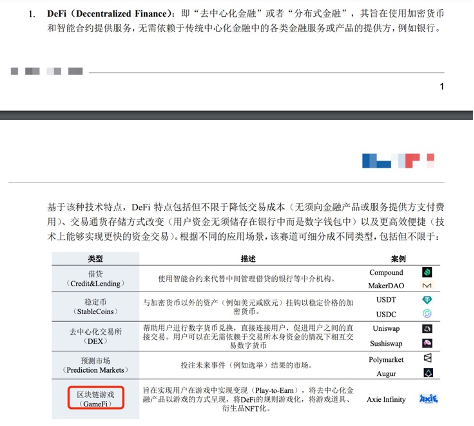
When I first moved from the legal industry into the Web3 space, I struggled to understand many concepts. For example, regarding decentralized finance (DeFi), I questioned how tokens could facilitate lending, leverage, liquidity mining, and other functions. Understanding these mechanisms requires time. It involves reviewing relevant materials and experimenting with various products. For instance, by using leading DeFi protocols such as Uniswap, Compound, and Curve, or exploring newer public chains like Base, Sui, Arbitrum (Arb), and ZKsync, one encounters numerous questions. Resolving these questions constitutes an effective learning process.
If fellow lawyers wish to enter the Web3 industry, I offer a few brief suggestions.
First, I believetiming is critically important, as there are more opportunities to enter the market during the late stages of a bear market or when market conditions are favorable. From the current perspective, the period from late 2023 to 2025 appears quite promising. Second, engage frequently with industry insiders; if there are job openings, you may be invited to join. Furthermore, dedicate time to understanding the industry, build a foundational knowledge base, and develop an understanding of different market sectors and projects. If we broadly categorize the crypto assets market into five sectors—DeFi, GameFi, SocialFi, Infrastructure, and NFTs—each sector differs in its key focus areas, market capitalization ranges, time horizons, and tokenomics. Only by keeping pace with project teams or fund managers can one earn their trust and establish business collaborations.
In terms of learning about Web3.0, I recommend some tools and websites that I personally use.For on-chain data analysis, consider Nansen, Dune Analytics, Footprint, and Glassnode. For the NFT market, you can use NFTGo, Blur, and OpenSea, although the NFT market has experienced a significant downturn. For news, Foresight News, Deep Tide, and The BlockBeats are good options, and their mobile apps are convenient to download. For research reports, I find the IOSG WeChat official account and Paradigm Insights to be quite valuable. However, it is important to note that online articles published by venture capital firms may not be entirely objective and often carry certain strategic intentions; relying solely on such articles for investment decisions could lead to issues. Other commonly used and practical tools include CoinMarketCap, DexScreener, DeFiLlama, DeBank, Zerion, and Twitter.
Engage frequently with industry insiders, because narratives differ across market cycles, and experienced individuals within the industry are better positioned to discern market development trends. For example, the mining hardware market in 2013, ICOs in 2017, and DeFi, GameFi, and NFTs in 2021 were all sectors that had not emerged in previous cycles. In the next cycle, those who can correctly identify new sectors that will drive significant traffic and gain a deeper understanding of the market will enjoy a stronger first-mover advantage.
Q2
Sullivan:
"Practicing law requires not only legal awareness but also business acumen." This is particularly evident in the Web3 market. Many lawyers understand legal principles and can leverage legal knowledge to structure contractual frameworks, but they lack insight into industry-specific knowledge and market developments. However, it is often difficult for lawyers to directly ask their clients to spend time providing them with basic industry education. If Web3 lawyers have misconceptions about fundamental business concepts, it may, at best, lead clients to question their professionalism and, at worst, jeopardize client fund security or future returns. Therefore, possessing a Web3 business perspective is highly important.
The following are some potential misconceptions that traditional lawyers may hold regarding Web3 business understanding:
-
Token Issuance
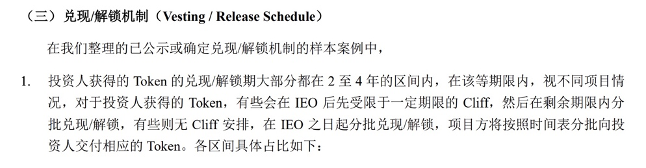
Not all Web3 projects are required to issue tokens. For instance, MetaMask, OpenSea, and Coinbase are Web3 projects with substantial user bases and high brand recognition, yet none have issued tokens. However, if a token issuance is planned, it is necessary to engage in advance with the project team to arrange matters such as the timing of issuance, selection of the public blockchain, token vesting and release schedules, and the financing structure for token rights (e.g., standalone tokens versus equity-mapped tokens).
-
Token Vesting Arrangements
An Article Interpreting Web3 Investment and Financing
-
Equity/Token Rights Financing Structure
Friends from other funds have asked whether it is acceptable to sign a SAFT when investing in equity-mapped tokens. The acronym SAFT stands for Simple Agreement for Future Tokens, which is an agreement covering only tokens and does not include equity interests. Executing such an agreement alone may lead to significant issues later on. The proper framework should consist of an equity agreement supplemented by a token ancillary agreement.
-
Industry Framework
An Article Interpreting Web3 Investment and Financing
-
Secure Custody Platforms for Funds
Web3 industry lawyers should possess not only knowledge of legal provisions but also substantial industry insights, such as where funds can be held to maximize security. This issue arises because, during offline conversations, some lawyer friends have suggested placing funds on certain “well-known” exchanges. However, experienced industry participants are aware of the hidden risks associated with these exchanges and choose not to store funds there. Such information is often not available in public sources and requires industry networking to identify the underlying issues.
Furthermore, regarding the importance of Web3 to the legal profession, I believe that during the bull market cycle of 2017, many investors would transfer funds directly to secure allocations without signing agreements or by only signing preliminary agreements. This phenomenon was less prevalent in 2021. As the industry expands, compliance is receiving increasing attention. Consequently, market demand for legal services from Web3 lawyers will continue to grow, which should be positive news for many legal practitioners.
Q3
Could you introduce the common methods of financing for blockchain projects?Why do Web3 companies choose token financing rather than equity financing?
Sullivan:
The common transaction structures for investment and financing in blockchain projects include the following four types:
(1)Standalone Equity FinancingThis financing structure is similar to traditional equity financing. Early-stage projects may directly use SAFE [1] agreements, while mid-to-late stage projects may use a complete set of equity investment instruments such as SPA, SHA, and MAA. Although this involves Web3 project financing, the financing structure closely resembles that of traditional capital markets.
(2)Standalone Token FinancingThe primary forms are SAFT and TPA. Similar to SAFE, the reason for signing a SAFT lies in its convenience, enabling rapid cooperation with details to be negotiated later.
(3)Equity-Linked TokensThis financing structure is currently favored by North American projects. It basically includes a Stock Purchase Agreement, Investors’ Rights Agreement, Right of First Refusal and Co-Sale Agreement, and Voting Agreement, plus a token linkage agreement in the form of a Warrant to Purchase Tokens. From a compliance perspective, this structure can sometimes be more convenient because investors are essentially investing in equity, with the project granting investors the right to "purchase" tokens at a very low price at a later stage. In other words, if an investor’s equity interest is transferred, their future right to "purchase" tokens will also be transferred accordingly. For earlier-stage projects, a combination of SAFE and a token linkage agreement may also be used directly.
(4)Parallel Equity and Token FinancingIn the same financing round, the project conducts both equity financing and token financing. Distinct from the equity-linked token structure where the token "purchase" right is tied to equity, in a parallel equity and token financing structure, investors retain their token rights even if they sell their equity portion. A small number of projects also choose the SAFTE structure, a model that flexibly combines SAFE and SAFT, allowing the project to adjust whether to grant investors equity or token rights based on development progress.
In addition, we have recently encountered numerous project sponsors that previously completed a round of equity financing and now seek to add a round of token-rights financing, or that previously conducted token-rights financing and now wish to add a new round of equity financing. In such scenarios, conducting an additional standalone round of token-rights financing or an additional standalone round of equity financing would adversely affect the rights and interests of investors from the prior round. A more favorable approach is to adopt a hybrid equity-and-token financing structure for the current round, regardless of whether the prior round consisted solely of equity or token-rights financing. If the prior round was equity financing, the new round should provide investors from the prior round with a gratuitous allocation of tokens; if the prior round was token-rights financing, the new round should provide investors from the prior round with a gratuitous allocation of equity interests. This approach better balances the interests of the project sponsor and investors across different rounds.
Regarding why Web3 companies may choose token financing over equity financing, preferences vary among project sponsors and investors. Generally, Web3-native funds tend to favor token financing, whereas traditional U.S. dollar-denominated funds tend to favor equity financing. Web3 investors prefer tokens because they offer easier exit liquidity; there is no need to undergo the cumbersome process of listing on equity capital markets. Instead, the project sponsor can issue tokens on exchanges or through other means, enabling early-stage investors to conveniently sell their tokens and realize profits. Conversely, some traditional U.S. dollar-denominated funds prefer equity because it facilitates clearer explanations and disclosures for compliance and financial reporting purposes. After all, invested funds correspond to registered equity interests, which are easier for limited partners (LPs) to understand.
Q4
Sullivan:
Having handled dozens of investment and financing agreements for Web3 projects, I have observed that the details in financing agreements for high-quality projects, such as EigenLayer, differ from those sent by less reliable project sponsors. Although some project sponsors verbally express confidence in their projects, if the contractual details are structured in a manner that prepares for a "soft rug," the reliability of the project becomes questionable. Conversely, with reliable project sponsors, many contractual provisions reflect an effort to balance the interests of the project sponsor and investors. I once engaged with an overseas project sponsor that appeared promising during discussions but whose agreement contained problematic terms. The counterparty remained adamant and refused to make amendments. Approximately six months later, they proactively contacted us stating that they were willing to amend the agreement. That project sponsor has since executed a "rug pull." Given the complex environment of the Web3 market, greater attention should be paid to these contractual issues.
Beyond the customary structural provisions in Web3 investment and financing agreements, the following are points that Web3 funds or project sponsors should pay particular attention to in their agreements:
-
Valuation
In addition to the project valuation stipulated in the agreement, careful attention should be paid to the conversion ratio when mapping equity interests to tokens, as certain terms may be unfavorable to investors. For example, a project sponsor may claim a 1:1 mapping, but upon reviewing the agreement, an investor holding 10% of the equity interests may find that this maps to only 5% of the token supply. Failure to notice such a reduced mapping ratio effectively inflates the project's valuation.
-
Vesting Mechanisms and Vesting Periods
Token financing agreements require careful review of token vesting mechanisms, allocation ratios, vesting periods, and related terms. For venture capital firms, shorter vesting periods are advantageous for receiving tokens earlier. However, some project sponsors impose lengthy lock-up periods, potentially extending up to five years. Without negotiation, such terms are highly unfavorable to investors and warrant close attention.
-
Allocation and Mitigation of Risks and Liabilities
Some project agreements include broad exculpatory clauses disclaiming liability for regulatory compliance issues in the token investors' jurisdictions, tax matters, risks of hacking and theft of crypto assets, technical issues, personnel matters, force majeure, and other concerns. Some clauses may even euphemistically state the risk that the project may cease operations at any time. Investors should ideally incorporate these risks into their investment decision-making process in advance. Conversely, I have encountered project sponsors that explicitly address potential future issues in their agreements and agree that, if the project cannot continue, necessary expenses (such as operating costs and salaries) will be deducted, with any remaining funds returned to investors.
-
Disputes Regarding Token Issuance Method and Timing—Long-Stop Date
Some project sponsors have not finalized whether to issue tokens in the future or the timing of such issuance at the time of fundraising, and investors seeking to invest in tokens will repeatedly negotiate on this point. A practical coordination mechanism is to include a long-stop date clause, which stipulates a latest date for token issuance (for example, two years). If the project sponsor fails to issue tokens by that date, the investors shall have two options: they may execute a supplemental agreement to reaffirm the timing of token issuance, or they may obtain a refund of their prior investment amount after deduction of necessary costs. Such flexible contractual design benefits both project sponsors and investors.
-
Most-Favored-Nation Treatment Clause
Many SAFTs do not contain this clause, and some project sponsors are unwilling to add it even when requested by investors. For investors, the absence of this clause may indicate that other investors in the same financing round have obtained more favorable investment terms. However, if an investor participates as a co-investor rather than a lead investor, it is normal for the investment terms received to be less favorable than those obtained by the lead investor.
-
Dispute Resolution
The dispute resolution provisions typically specify litigation or arbitration in jurisdictions such as California (United States), Hong Kong, or Singapore. As Hong Kong’s Web3 regulatory framework continues to improve, a greater number of disputes may be resolved through arbitration in Hong Kong in the future. For Asia-based investors, it is advisable to select a dispute resolution forum that is geographically closer. In addition, where certain project sponsors conduct public fundraising and maliciously defraud investors by using the proceeds for high-end personal consumption, some investors have been able to recover portions of their investments through criminal investigations and proceedings.
About the Author:
Sullivan
Senior Consultant, Mankun Law Firm
Graduated from East China University of Political Science and Law and Northwestern University Pritzker School of Law, obtaining a bachelor’s degree and a Master of Laws (LL.M.) degree, respectively. Previously practiced at King & Wood Mallesons. Currently serves as Investment Director and Head of Legal at a Web3 fund, and as a consultant at Mankun Law Firm. Has represented investors in financing transactions involving projects such as EigenLayer, Manta, Secure3, Curio, and NFTgo.
Edited by: Chen Jingyi
Paralegal at Mankun Law Firm; undergraduate studies in the Department of International Financial Law at East China University of Political Science and Law. Research areas include compliance for blockchain digital assets, cybercrime, and other emerging legal services.
For details, please click
《Join Mankun Law Firm as a specialized lawyer at the forefront of Web3》
Commission-Based Lawyer
Job Requirements:
Salaried Lawyer
Job Responsibilities:
1. Handle litigation and non-litigation matters for the firm
2. Provide day-to-day services to the firm’s annual general counsel clients, including legal consultations, drafting and reviewing legal documents, and conducting professional training.
3. Conduct legal research and produce content on cutting-edge issues in the new economy sector.
Job Requirements:
1. Bachelor’s degree or higher from a reputable domestic or international university, with a major in law or a related field.
2. Possess strong legal reasoning skills and a solid legal foundation; at least one year of practicing experience as a lawyer, with experience in either litigation or non-litigation matters.
3. Have a certain level of interest in the internet-based new economy and the Web3 blockchain industry.
4. Demonstrate excellent communication skills and a strong sense of teamwork, along with a high degree of responsibility and a proactive work attitude.
Mankun Law Firm
Address: 28th Floor, Tower A, No. 388 West Jiangwan Road, Hongkou District, Shanghai
Contact Person: Yang Li
Phone: 18202155397
Email: yangli@mankunlaw.com