
In 2023, the Hong Kong Family Court heard a divorce property case involving cryptocurrency investments.
The crypto assets held by the husband had an initial investment value of approximately HKD 2.12 million, which later shrank to approximately HKD 1.12 million. The wife raised objections to this:Did the husband fully disclose these assets? Should the investment losses be borne jointly by both spouses? In the division of property, should the calculation be based on the original investment amount or the shrunken value?
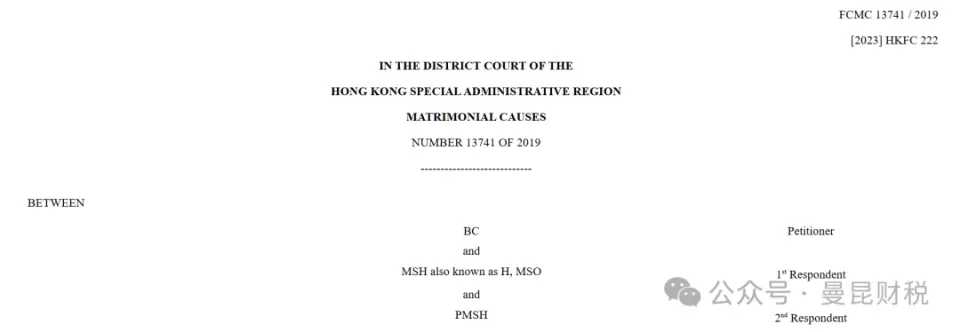
In BC v MSH the case [2023] HKFC 222, the court not only examined these issues but also set out specific requirements for how parties should disclose crypto assets. This case is in fact not far removed from the lives of many coin holders.
One party buys and sells cryptocurrencies on exchanges such as Binance and OKX, while the other party knows nothing about the account situation; some people held large amounts of BTC and USDT before marriage and kept them in personal wallets after marriage; others have obtained Hong Kong, China status and believe that in a future divorce they can directly divide property according to Hong Kong law. So, upon divorce, should the USDT in the wallet be divided?
The conclusion first: if a divorce financial dispute is handled by a Hong Kong court, crypto assets such as USDT may be included in the consideration of property disclosure and division, but whether they are ultimately shared and how they are shared must be determined in light of the source of the assets, the financial needs of both parties and the specific circumstances.
Moreover, having Hong Kong status does not mean one can necessarily divorce in Hong Kong, still less that one can freely choose the property division rules that are favorable to oneself.
I. With Hong Kong status, can property be divided according to Hong Kong law upon divorce?
Many people, after obtaining a Hong Kong identity card, feel that their marriage, property and even inheritance issues can thereafter be handled directly according to Hong Kong law.
In reality, status and court jurisdiction are two different issues.
Under section 3 of the Hong Kong Matrimonial Causes Ordinance (Cap. 179), the Hong Kong court has jurisdiction over divorce proceedings, and one of the following conditions is usually required to be met:
• At the time of filing the divorce petition, either spouse is domiciled in Hong Kong;
• For the three consecutive years preceding the filing, either party has been habitually resident in Hong Kong;
• At the time of filing the petition, either party has a substantial connection with Hong Kong.
Each of these conditions has corresponding legal tests. Merely obtaining a Hong Kong identity card does not automatically establish that any one of them is satisfied.
For example, a couple has lived and worked in Shanghai throughout, and one of them later obtained Hong Kong status. On divorce, they wish to have the Hong Kong court deal with the marital relationship and divide crypto assets according to Hong Kong rules. Whether this can be done still requires an assessment based on factors such as the parties' actual residence, and their living and financial connections.
Even if the Hong Kong court has jurisdiction, where assets are distributed across different jurisdictions—for example, Mainland real property, shares in offshore companies, and crypto assets held on different platforms or in different wallets—issues of cross-border recognition and enforcement of judgments may subsequently arise.
There is another situation that is easily overlooked: if the divorce has already been obtained in the Mainland, can a claim to property still be made in Hong Kong?
Part IIA of the Matrimonial Causes and Property Ordinance (Cap. 192) of Hong Kong provides a mechanism for applying for financial relief where a divorce has been granted outside Hong Kong. A party who satisfies the relevant conditions may still be able to apply to the Hong Kong court for financial relief even though the divorce has already been obtained elsewhere.
However, this is not a free-standing right to redistribute property; an application must still satisfy the requirements of Hong Kong law regarding recognition of the divorce, jurisdictional connection, leave of the court and other conditions. Therefore, for families involving both the Mainland and Hong Kong, where to divorce, where to deal with property, and where enforcement will take place in the future all need to be considered in advance.
The following mainly discusses the general legal approach of the Hong Kong courts when dealing with financial disputes on divorce.
II. If USDT is in one's own wallet, must it still be disclosed on divorce?
"I can understand the need to declare bank deposits, but the USDT is kept in my own wallet and there is no bank account—why must it still be disclosed?"
This is because crypto assets may likewise possess property value in the legal sense.
In 2023, in Re Gatecoin Limited (In Liquidation) [2023] HKCFI 914, the Court of First Instance of the High Court of Hong Kong confirmed the proprietary nature of cryptocurrencies and noted that they can be the subject matter of trust property.
Although that was not a divorce case, it demonstrates that cryptocurrencies do not escape legal scrutiny as property merely because they are held in an on-chain form.
In Hong Kong divorce financial proceedings, parties are required, in accordance with the applicable procedural requirements, to make full and frank disclosure of their financial circumstances. One important document is the financial statement. Through this document, a party is required to disclose assets, liabilities, income and other financial information relevant to the division of property.
As for crypto assets, the aforementioned BC v MSH case provides a more direct reference.
In that case, the court discussed how crypto assets should be adequately disclosed, including information capable of identifying the ownership of the relevant account or wallet, transaction records for the applicable disclosure period, dated balance or value information, and the basis for valuation. These requirements addressed the issue of crypto asset disclosure in that case and should not be understood as a fixed checklist applicable to all cases without exception, but the message they convey is clear:the disclosure of crypto assets should enable the court and the other party to reasonably verify the existence, ownership and value of the assets.
For example, one party holds some USDT on an exchange and later transfers part of the assets to a personal cold wallet. If these assets are relevant to the financial dispute, corresponding disclosure should be made in accordance with the procedural requirements, and it is not sufficient to declare only the deposits in bank accounts. However, the purpose of disclosure is to enable the court to see the true financial circumstances; it does not mean that all disclosed USDT will be directly distributed to the other party.
If the assets in a wallet actually belong to a company, or if there is a genuine third-party nominee holding relationship, the determination must still be made in light of the source of funds, contractual arrangements and the actual circumstances of control.
Likewise, where sensitive information such as wallet private keys and mnemonic phrases is involved, it should also be handled through appropriate legal procedures, and financial disclosure must not be simplistically understood as requiring the direct surrender of control over the wallet.
III. If USDT Was Purchased Before Marriage, Does the Other Spouse Also Have a Right to Share It?
Assume that one party held 1 million USDT before marriage and kept it in their own wallet throughout the marriage, without using it for household expenses and without commingling it with other post-marital funds.
On divorce, does all of that 1 million USDT belong to that party? Under the legal frameworks of the Mainland and Hong Kong, the analytical approaches to this question differ.
Under Article 1063 of the Mainland Civil Code, pre-marital property of one party is in principle separate personal property. Wages, business income and investment returns obtained during the existence of the marriage are subject to Article 1062 and other relevant provisions.
In Hong Kong, however, when the court deals with the distribution of matrimonial property on divorce, it further distinguishes two categories of assets:
matrimonial property, which generally refers to property accumulated during the marriage through the efforts of both parties and closely connected with married life.
non-matrimonial property, which may include assets already held before marriage, as well as property acquired by inheritance, third-party gift or other means.
Distinguishing these two categories of property is important, because they may be treated differently in a fair distribution.
According to the principles established by the Hong Kong Court of Final Appeal in LKW v DD (2010) 13 HKCFAR 537, the court aims at fairness and applies equal sharing as an important yardstick, while also taking into account the financial needs of both parties and other relevant factors.
Marital property is generally an important subject of the equal-sharing principle. For non-marital property, the court may decide whether to include it within the scope of sharing based on factors such as the source of the assets, the duration of the marriage, the financial needs of both parties, and whether the property has become integrated into married life.
This means that USDT purchased before marriage may lead to different outcomes.
For example, if one party held 1 million USDT before marriage, kept it separately after marriage without commingling it with family assets, and both parties had sufficient other financial resources to meet their respective needs, then the premarital source of the USDT may be an important reason for the court to consider excluding it from the scope of sharing.
However, if those assets were later used to purchase a family home, to pay long-term living expenses, or if the marriage lasted for many years and the premarital assets and their returns gradually became commingled with family property, the court's assessment may differ.
In the Hong Kong Court of Appeal case of PW v PPTW [2015] HKFLR 213, the court considered factors such as the duration of the marriage, commingling of property and the parties' actual living arrangements in dealing with assets that had originally been acquired before marriage.
In addition,the financial needs of both parties are also an important consideration. Even if some assets are non-marital in nature, if the other property is insufficient to reasonably meet the financial needs of both parties and their children, the court may still include the relevant assets in a more comprehensive assessment.
Therefore, purchasing USDT before marriage is an important fact, but it is also necessary to examine what happened to it during the marriage. If BTC or ETH was held before marriage and appreciated significantly after marriage, whether the appreciation should be shared also requires further analysis of the nature of the assets, the source of the appreciation and the financial circumstances of both parties; a uniform answer cannot be reached based solely on the purchase date.
For families holding substantial crypto assets, fully preserving records of purchase dates, sources of funds and transaction records, as well as relevant materials on whether additional investments were made after marriage and whether the assets were used for family life, is often more helpful than simply asserting that "the wallet is mine."
IV. When dividing crypto assets in divorce, is the division based on quantity or value?
Even if both parties agree to include crypto assets in the property division, disputes may still arise thereafter.
Suppose the spouses confirm that 200,000 USDT is to be allocated. One party wishes to take 100,000 USDT directly and continue holding it, while the other party is unwilling to deal with crypto assets and wishes to receive equivalent cash.The parties must not only negotiate the allocation ratio but also determine the valuation date, the method of performance, and who bears the relevant risks.
For crypto assets with significant price volatility, such as BTC and ETH, valuations at different points in time may differ considerably.
In the BC v MSH case, the husband argued that the value of his crypto asset investments had declined from approximately HKD 2.12 million to approximately HKD 1.12 million, while the wife requested that the original investment value be included in the property to be divided.
Based on the evidence in the case, the court found that the relevant losses resulted from actual market fluctuations and did not characterize the husband's investment conduct as a wanton or reckless dissipation of property warranting the addition back of the original value.
This determination also shows that investment failure and intentional squandering or transfer of assets must be distinguished on the basis of evidence.
If the subject of division is USDT, the issues differAlthough USDT is a stablecoin pegged to the US dollar, it is not equivalent to US dollar deposits in a bank account. In addition to possible price deviations, it may also involve freezes, platform withdrawal restrictions, asset locks, and similar circumstances.
For example, a party's wallet may show a holding of 100,000 USDT, but 30,000 USDT of that amount has already been frozen or is temporarily untransferable. If the parties agree to divide solely according to the book quantity, they may encounter obstacles to performance later.
Therefore, when dividing crypto assets, it is necessary to specify as clearly as possible the valuation basis to be adopted, when the value is to be calculated, whether direct delivery or cash compensation is to be used, and how to handle transfer restrictions or other obstacles to performance if they arise.
For families with mainland China connections, virtual currency regulatory rules must also be specifically considered.
On February 6, 2026, the People's Bank of China and seven other departments issued the Notice on Further Preventing and Addressing Risks Relating to Virtual Currency and Other Related Risks (Yin Fa [2026] No. 42), which continues to make clear that virtual currency does not have the same legal status as legal tender and imposes strict prohibitory regulation on virtual currency-related business activities within mainland China. The previously issued Yin Fa [2021] No. 237 Notice has been repealed at the same time.
This means that, in property arrangements involving mainland China, the purchase and sale, exchange or cross-border transfer of virtual currency cannot be directly treated as ordinary fund transfers. The legal effect, manner of performance and allocation of risk of the relevant transactions must be determined in light of the specific conduct and the applicable rules. Even if the divorcing parties have reached a property distribution agreement, this does not mean that any agreed method of delivering or cashing out USDT can be smoothly performed.
V. When a Personal Wallet Receives Company Payments, Whose Property Is It in a Divorce?
For entrepreneurs who have long used crypto assets to conduct business, it is sometimes difficult to distinguish directly from the wallet balance between personally held coins and company assets.
For example, a business owner operates a cross-border software services company, and clients frequently pay service fees in USDT. To facilitate receipt of payments, he has long used a personal wallet to receive company business payments, and sometimes also pays household expenses from the same wallet. By the time of the divorce, a sum of USDT remains in the wallet. Does this asset belong to the company or to the business owner personally?
The key remains the true ownership of the asset.
If the relevant USDT genuinely belongs to a company with independent legal personality, and the individual merely receives or holds it on the company's behalf, then the entire balance cannot be treated directly as personal property for division merely because the wallet is controlled by that individual.
However, distinguishing company assets from personal property also cannot depend solely on where the assets are registered. For example, the value of company equity held by one party, the genuine creditor-debtor relationship between the company and its shareholders, and the actual financial resources owned by the individual may all be relevant to the divorce financial arrangements.
If a dispute exists, further verification may be required in light of company accounts, business contracts, client payment records, on-chain fund flows and other materials. In particular, where company business payments and personal living funds have long been commingled, it is difficult to accurately explain the nature of each individual asset on the basis of a single screenshot of the wallet balance.
At the same time, arrangements involving the transfer of company assets to individuals, sales or cross-border arrangements may also give rise to corporate governance, financial treatment, tax and other compliance issues. What needs to be distinguished here is that distributing crypto assets in a divorce does not automatically create a tax obligation, but the specific transactions carried out to effect the distribution may produce independent legal and tax consequences.
Therefore, in situations involving company receipt of coins, personal holding of coins and family property at the same time, clarifying the true ownership first is often more important than rushing to discuss distribution ratios.
VI. If the other party secretly transferred the USDT away, can it still be traced?
"I knew he had been trading crypto, but during the divorce he told me there was no money left in the account."
For a party who does not have access to the exchange accounts and wallet addresses, this situation is indeed difficult.
Crypto assets can be transferred between different wallet addresses, sometimes without going through a traditional bank account. Information available only from daily life may not be sufficient to determine how many assets the other party currently holds.
However, transactions on the public blockchain usually leave searchable records. Even if USDT is transferred from one address to another, the relevant historical transactions will not automatically disappear as a result. Through transaction records, sources of funds and other account information, it is sometimes possible to further trace the flow of funds.
However, seeing an on-chain transfer is only the first step. To prove who actually controls the wallet, whether the assets belong to the other party, and whether further protective measures can be taken, corresponding evidence is still required. If there is suspicion that the other party is concealing crypto assets, one may first organize bank transfer records, exchange deposit and withdrawal materials, known wallet addresses and communications between the parties regarding holdings of crypto that one has lawfully obtained.
If such information can corroborate the on-chain flow of funds, it may provide leads for subsequent investigation.In Hong Kong divorce financial proceedings, if one party has not made full disclosure of their financial situation, the other party may, depending on the circumstances, request further disclosure of relevant materials and protect their rights through appropriate judicial proceedings.
If there is evidence showing that a party is preparing to transfer or dispose of assets in order to evade property division, the relevant measures under section 17 of the Matrimonial Proceedings and Property Ordinance may also be involved. Where the conditions are met, the court may make an order restraining the disposition of property, and certain completed dispositions of property may also be subject to review.
In addition, depending on the specific circumstances and legal basis, other appropriate asset preservation or information disclosure procedures may also need to be considered.
These measures all have corresponding application thresholds, and whether they can be implemented against the relevant wallets, trading platforms or third parties requires specific assessment. A party preparing to collect evidence should also be mindful of legal boundaries. Logging into the other party's account without authorization, copying the mnemonic phrase, or directly transferring USDT into one's own wallet may all give rise to new legal risks.
Conversely, a party holding crypto who deliberately conceals assets, fabricates false debts or temporarily transfers assets to relatives or friends may likewise face legal scrutiny. Breach of the obligation of full and frank disclosure may also give rise to adverse inferences, costs and other legal consequences.
On-chain records may help identify assets, but fund tracing, proof of ownership and actual enforcement are three issues that must be addressed separately.
Final Thoughts
With Hong Kong residency, must USDT in a wallet be divided upon divorce?
The answer depends on several interrelated questions:Which court handles the divorce and related financial disputes; whether the USDT was held before marriage or acquired after marriage; whether the assets are commingled with family property; what the parties' financial needs are; and, finally, what method is used to complete the distribution.
For families involving personal wallets, offshore exchanges, corporate receipts and cross-border residence, divorce property arrangements may no longer involve only the traditional issues of deposits, real property and equity, but also the disclosure, tracing, valuation and actual delivery of digital assets.
If the focus is only on the distribution ratio without first verifying the source of the assets, the actual control situation and enforceability, new disputes may still arise later even if the parties have already agreed on a plan.
The party holding the assets needs to be able to explain the source, ownership and changes of the assets; the party who does not control the wallet needs to confirm the relevant assets and financial situation through lawful means.
The distribution of USDT upon divorce is not simply a matter of dividing the wallet balance by two. Only after clarifying who owns the assets and under what rules they are to be handled can the parties further discuss a fair and practically enforceable plan.
References:
[1] Hong Kong Judiciary: "How to Apply for Divorce"; Matrimonial Causes Ordinance (Cap. 179), section 3.
[2] BC v MSH [2023] HKFC 222, FCMC 13741/2019; see also the case analysis published by ONC Lawyers on 31 January 2024, "How Will Cryptocurrency Investments Be Handled in Divorce Proceedings?"
[3] Re Gatecoin Limited (In Liquidation) [2023] HKCFI 914。
[4] Hong Kong Judiciary: Family Court Form E, Statement of Financial Position.
[5] Matrimonial Causes and Property Ordinance (Cap. 192), sections 7 and 17 and Part IIA;LKW v DD,FACV No.16 of 2008,(2010) 13 HKCFAR 537;PW v PPTW [2015] HKFLR 213。
[6] Civil Code of the People's Republic of China, Articles 1062 and 1063.
[7] People's Bank of China and seven other departments: Notice on Further Preventing and Addressing Risks Associated with Virtual Currency and Related Matters (Yin Fa [2026] No. 42), February 6, 2026.
[8] The University of Hong Kong Community Legal Information Centre (CLIC): Overseas Divorce and Legal Separations.

