
A crypto payment company has finally completed its licence application and is now preparing to establish banking relationships, open corporate accounts, receive fiat currency from customers, and launch settlement between stablecoins and traditional currencies.
The licence documents, certificate of incorporation, and director and shareholder information are all in order, and the business plan appears to present no obvious issues. Yet halfway through the bank's due diligence, the bank suddenly begins to press: from which countries do customers mainly come? Where do stablecoins first enter the platform? Who controls customer wallets? To whom are the converted euros ultimately paid? If a transaction involves a third-party wallet, how does the company prove the source of funds and handle anomalous transactions?
Only then does the project team realise that, while the regulator has permitted it to operate, the bank may not be willing to let funds enter its account system.
This is not a phenomenon unique to the crypto payment industry, but the problem is more pronounced in businesses that simultaneously involve on-chain assets, cross-border funds and multiple service entities.
A licence addresses whether an enterprise may lawfully provide specific financial services; bank account opening addresses whether a bank is willing and able to onboard, in a compliant manner, that enterprise and its transaction risks. The two are related, but they have never been the same approval.
For crypto payment projects genuinely preparing for long-term operation, obtaining a licence is only the first step. Whether stable and sustainable banking and payment partnerships can be established is what determines whether the business can truly get off the ground.
01 Why can a bank still refuse even after the regulator has approved?
The misunderstanding most easily arising in projects is this: since the regulator has already reviewed the company, why does the bank need to review it all over again?
The reason lies in the different responsibilities borne by each side.
In the licensing process, a regulator primarily determines whether an enterprise meets the market access conditions for the corresponding financial activity. For example, a CASP needs to demonstrate that it has the governance, prudential resources, client asset protection and ongoing compliance capabilities required to provide authorised crypto asset services; a payment institution, in turn, needs to meet the corresponding regulatory requirements for payment services.
A bank, however, is facing a different, specific business relationship.
When a bank opens an account for a crypto payment company, receives funds, executes payments or provides settlement services, it must independently assess the anti-money laundering, sanctions, fraud, operational and other risks arising from that customer and the related transactions, and consider whether those risks can be effectively managed through its existing policies, systems and risk tolerance.
In other words, what regulators examine is:
whether you are qualified to conduct this business.
Banks must also determine:
once this business enters my accounts and payment systems, whether the relevant risks can be effectively identified, controlled and continuously monitored.
This distinction is particularly evident in the context of MSB registration in the United States. FinCEN has expressly stated that MSB registration is not a certification or endorsement by the government of an enterprise's legality, business capability or compliance level; FinCEN itself does not, through MSB registration, issue enterprises a license to operate nationwide, and the relevant activities may also involve state-level licensing requirements.
Therefore, when a project provides a bank with an MSB registration certificate, this is at most only part of the regulatory status review and cannot replace the bank's own assessment of the actual business.
Even if an enterprise has already obtained a more complete CASP, payment institution or other formal license, the bank still needs to complete its own customer due diligence.
02 What banks are truly concerned about is not that the project uses blockchain
Suppose a traditional cross-border payment company receives payments from corporate clients every day and then settles with overseas suppliers. Banks can usually establish due diligence logic around the payer, the payee, the transaction contract, the goods or services, and the relevant fund flows.
But if stablecoins are added to the same business, the fund path may become: an overseas client first pays USDC through an on-chain wallet, the platform receives it and then pools and converts the assets, and another financial institution then pays euros to the merchant.
At this point, what the bank sees may be only a fiat currency credit from an exchange institution or payment partner, while the actual payer and the prior on-chain asset path are all outside the bank account.
The bank then needs to further determine: where exactly did these funds come from? What transactions do the funds correspond to? Do the on-chain assets involve high-risk addresses? Does the enterprise have the ability to identify and explain abnormal flows?
In its 2024 guidance on money laundering and terrorist financing risk factors for crypto assets, the European Banking Authority (EBA) specifically requires CASPs to identify potential money laundering and terrorist financing risks by reference to customer, product, service channel and geographic risk, and sets out risk mitigation measures including on-chain analysis. The guidance also addresses other financial institutions that have business relationships with CASPs.
The risk indicators for virtual assets previously published by the FATF likewise focus on factors such as unusual transaction patterns, amounts and frequencies lacking a reasonable commercial explanation, source of funds, highly anonymous transaction tools and high-risk jurisdictions.
This means that banks do not simply treat all on-chain transactions as problematic.
What banks often find genuinely difficult to accept is:
the enterprise may be able to complete the transaction, yet is unable to provide sufficient information to demonstrate the customer behind the transaction, the source of funds and the commercial purpose.
If the project itself cannot clearly explain where the upstream customers come from, which wallets the funds pass through, and why exchange and cross-border settlement are needed, it becomes even harder for the bank to bear these risks on the project's behalf.
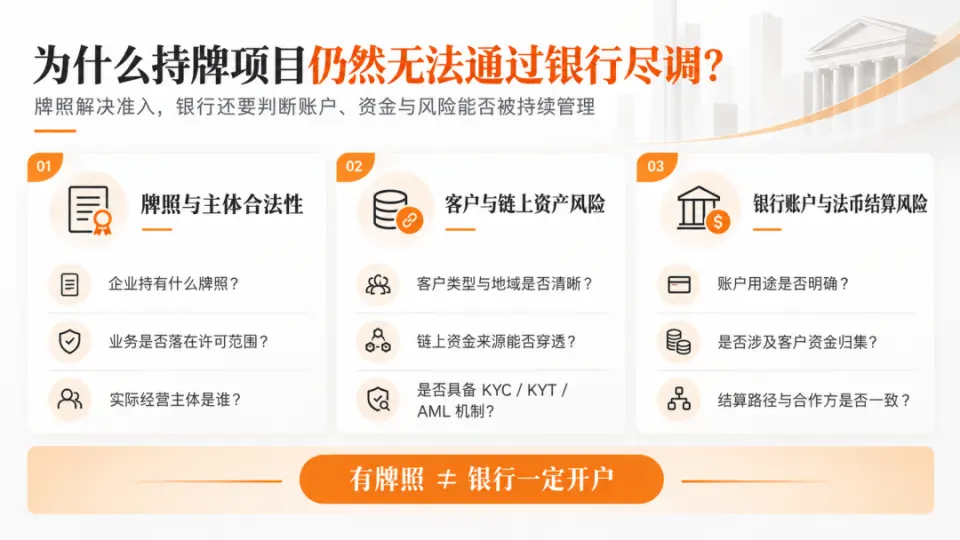
Figure 1 | The three core concerns of bank due diligence: licensing and legitimacy of the entity, customer and on-chain asset risk, and account and fiat settlement risk
03 What is more easily overlooked than "unclear source of funds" is an unclear purpose of the account
When many projects contact a bank, they raise only one request:
"We need to open a corporate bank account."
But for the bank, this description is far from sufficient.
Because even where the accounts are all corporate accounts, their actual purposes may differ considerably.
The first type is a company's own funds account, used primarily to receive shareholder investments and to pay employee salaries, office rent and other operating expenses.
The second type is an enterprise operating receipts and payments account, used to receive genuine business income and to make corresponding payments to contractual counterparties.
The third type involves client funds, merchant settlement, or the pooling of funds from multiple clients. The legal relationships, ownership of funds, client-fund protection requirements and payment-service attributes of such accounts may differ materially from those of an ordinary corporate operating account.
For example, a CASP that needs to open an account to pay employee remuneration and another crypto payment platform that wishes to use one account to receive euros from multiple clients and then make payments to merchants worldwide in a consolidated manner present two different business risks to a bank.
Particularly in the latter scenario, the bank may further examine whether there is third-party collection and payment on behalf of others, commingling of client funds, unclear actual control over the account, or payment services that have not been adequately disclosed.
Some projects assume that as long as client funds are first paid into a group company account and then transferred to a payment partner, the settlement path will be easier to complete.
However, from the bank's perspective, if this arrangement cannot explain the genuine transaction relationship, it may instead increase the risk that the account's stated purpose does not match the actual business.
The bank needs to know not only who owns the account, but also who owns the money in the account and why the enterprise is entitled to collect and pay those funds.
Therefore, before opening an account, a crypto payment project should clarify whether it is applying for a corporate operating account, an enterprise business account, or some specific client-fund or settlement arrangement.
Different account needs may correspond to different types of banks and payment institutions, and may also require different regulatory qualifications and client asset protection arrangements.
04 Regulators are supporting compliant crypto business, but this does not mean banks must open accounts unconditionally
From the perspective of international regulatory trends, it is no longer accurate to understand "banks refusing Crypto" as a universal, fixed regulatory prohibition.
In March 2025, the U.S. Federal Deposit Insurance Corporation (FDIC) rescinded its prior requirement for supervised banks to provide advance notice before engaging in crypto-related activities, clarifying that banks may conduct permitted crypto asset-related business, provided they comply with applicable law and effectively manage risk, without having to obtain prior special FDIC approval merely because crypto assets are involved.
In April of the same year, the FDIC and the Federal Reserve also withdrew two prior joint statements concerning risks related to crypto assets, emphasizing that banks may provide relevant services provided they meet safe and sound operation and applicable legal requirements.
However, this change does not mean that all banks must accept crypto payment companies, nor does it mean that banks may lower anti-money laundering and account management requirements.
The European Banking Authority (EBA) likewise opposes excessive de-risking that lacks sufficient basis. Its 2023 guidance emphasizes that financial institutions should adopt a risk-based approach and should not refuse to provide services merely because a certain category of customers presents potential risks, where reasonable analysis is lacking.
The Hong Kong Monetary Authority, in its 2023 circulars concerning corporate banking services, also emphasized that banks should conduct customer due diligence proportionate to risk when opening accounts and should promote reasonable access to banking services.
These regulatory directions collectively demonstrate one point:
Crypto business itself should not be simply equated with unacceptable risk, but banks still have a responsibility to identify and manage the risks of specific customers and transactions.
Therefore, if a project is refused by a bank, it should not immediately be concluded that "crypto business is prohibited locally," nor should it conversely be assumed that "regulators already support Crypto, so banks have no reason to refuse."
A more realistic approach is to first ascertain whether the problem arises from the scope of business, the transparency of customers and funds, the bank's internal risk policies, or the inability of existing materials to support the bank in completing due diligence.
05 Which crypto payment projects are more likely to get stuck at the bank stage?
In actual business structures, several types of scenarios are particularly worth assessing in advance.
The first category is platforms that serve a large number of third-party customers but lack a clear mechanism for looking through customers and funds. For example, an enterprise claims that it only conducts stablecoin settlement, but its actual customers include multi-layer agents, channel providers or other payment service providers, making it difficult for banks to confirm the ultimate payer, payee and true purpose of the transaction.
The second category consists of projects with complex sources of on-chain assets. In particular, where a large number of self-hosted wallets, OTC transactions, multiple liquidity providers or cross-chain asset transfers are involved, the bank may require the enterprise to demonstrate that it has effective KYT, risk screening and anomalous transaction handling capabilities, rather than merely providing a generic AML policy.
The third category consists of projects where the group entities and the account purpose are inconsistent. For example, the licensed entity is in the EU, but the customer contracts are signed by an offshore company, the stablecoin is controlled by another company, and ultimately the bank is asked to receive all settlement funds for a company with which it has no direct customer relationship.
These structures are not necessarily unlawful or ineligible for account opening, but absent reasonable contracts, authorizations and explanations of the fund flows, it is difficult for the bank to determine the business the account will actually undertake and the corresponding risks.
There is another category that is often overlooked: when the project obtained its license, its product was merely stablecoin exchange, but by the time it applies to open an account, it has already prepared to add wallet custody, merchant acquiring, cross-border remittance or other new functions. If the enterprise's current business plan differs from the original scope of authorization, customer agreements or application materials, this will also increase the difficulty of the bank's due diligence.
What the bank fears most is not necessarily business complexity, but that the complexity of the business has exceeded the enterprise's own capacity to manage and explain it.
06 Before opening an account, at least have these six questions clearly prepared
Rather than waiting for the bank to repeatedly request supplementary materials, it is better to review the project once from the bank's perspective before formally approaching the bank.
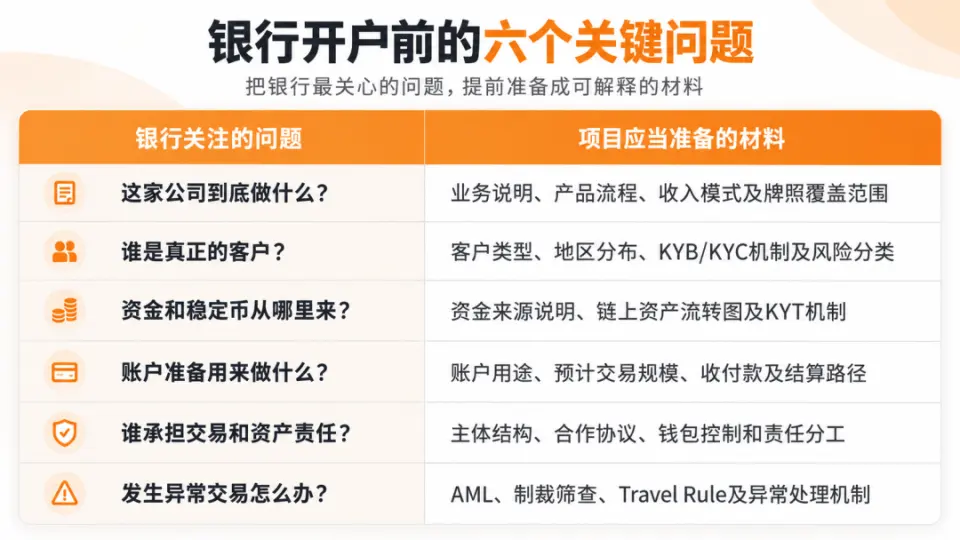
Figure 2 | Six questions the project must answer clearly before approaching a bank
These six questions do not mean that all banks will require materials according to the same form; the specific review content still depends on local regulation, bank policy and account functions.
However, for crypto payment projects, if even these six items cannot be clearly answered, the bank will likely need repeated supplementary due diligence materials.
In particular, the On-chain and Off-chain Fund Flow Diagram should faithfully reproduce the relationships among customers, wallets, CASPs, trading and exchange service providers, PIs/EMIs, banks and merchants.
If there are multiple asset transfers on-chain, further explanation should be provided as to which wallets are controlled by the project, which belong to customers, which are managed by licensed partner institutions, and at which point the exchange between stablecoins and fiat currency is completed.
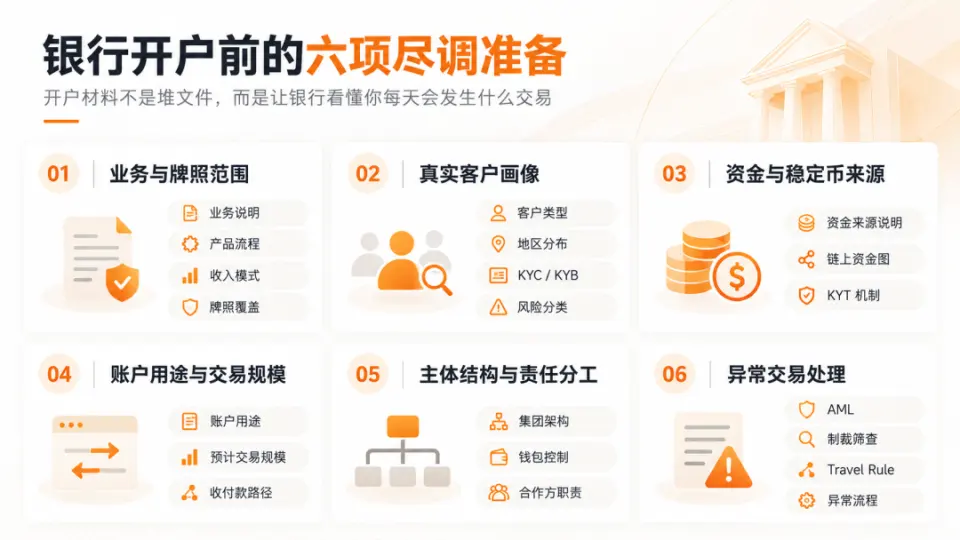
Figure 3 | Due diligence materials checklist corresponding to the six questions
07 After a bank declines, what should the project change first?
After a bank declines to open an account, many projects' first reaction is to switch to another bank, or to find another intermediary that can provide an account.
However, if the underlying problem stems from an unclear funds path, a customer type that exceeds the risk tolerance, or a mismatch in the intended use of the account, simply changing banks may not be effective.
The genuinely reasonable order of handling should begin by distinguishing the reasons for the refusal.
If the bank expressly states that it does not undertake a certain type of business, a reassessment can be made as to whether other institutions with the corresponding service capabilities and risk appetite exist.
If the problem lies in insufficient materials, then business evidence, customer structure, funds path, licensed cooperation relationships and risk control documents should be supplemented.
If the bank finds that the project's actual business does not match its licence or cooperation agreement, then priority should be given to adjusting the business arrangements, rather than changing the description in the account-opening materials.
In particular, what must be avoided is concealing the source of crypto assets in order to obtain an account, borrowing the account of an unrelated company, using a personal account to receive customer funds, or packaging genuine customer payment business as ordinary trade receipts and payments.
These practices may escalate an account-opening problem that could originally have been resolved through business adjustments into account-use, anti-money laundering or even other legal risks.
If a project is indeed temporarily unsuitable for directly establishing bank settlement capabilities, arrangements for cooperation with payment institutions (PIs), electronic money institutions (EMIs) or other financial institutions may also be assessed in accordance with the law, but the precondition remains that the counterparty possesses the corresponding service authority and genuinely bears the corresponding business and regulatory responsibilities.
Licensed cooperation is a choice of business structure, not a shortcut to bypass bank due diligence.
08 How do we typically support projects of this kind?
For projects that have already obtained a CASP, MSB, VASP or other relevant regulatory status but still face obstacles in bank account opening and settlement, the first step is usually not to contact more banks immediately, but to re-examine whether the business model matches the intended use of the account.
We form a diagnostic opinion focused on the entity's regulatory status, the actual jurisdictions of its customers, product functions, group structure, on-chain asset control and fiat settlement arrangements, first distinguishing whether the problem lies in the scope of the licence, the customer structure, the fund flow path, or the bank's own risk policy.
For stablecoin payment, PayFi and corporate cross-border settlement projects, we can further assist in mapping on-chain and off-chain fund flow diagrams, analysing the intended use of bank accounts and the attribution of funds, and preparing a matrix of group functions and regulatory responsibilities, so as to clarify why each sum of funds enters the corresponding account and what legal relationship exists between the account holder and the actual customers.
Once the project reaches the stage of engaging institutions, it is necessary, in light of the specific requirements of banks and payment partners, to prepare a due diligence package for banks and payment institutions, including product and business descriptions, scope of licensing, the AML/KYC/KYT framework, on-chain transaction monitoring, sanctions screening and mechanisms for handling anomalous transactions.
Where multiple licensed institutions are involved, it is also necessary to verify which business lines are covered by the CASP, the PI/EMI, the bank and other counterparties respectively, and whether the relevant contracts are consistent with the actual flow of funds.

Figure 4 | The three-stage path from licence to bank account
Conclusion: A licence allows a project to operate, but a bank account determines whether the business can actually run
For crypto payment projects, the licence, the bank account and the fund flow path are not three unrelated matters.
The licence proves that the entity holds the regulatory qualification for a specific business, the bank account performs the actual fiat receipt, payment and settlement functions, and the fund flow path connects customers, digital assets, licensed institutions and the ultimate recipients.
A problem in any one of these links will affect the actual operation of the business.
The regulatory environment is providing a clearer path for compliant digital asset businesses, but this does not mean that banks can disregard customer due diligence, source of funds and ongoing risk management.
Therefore, a project should not wait until the licence has been obtained before it begins looking for a bank, designing accounts and explaining the flow of funds.
The ideal state is that, when planning the first licence, the project simultaneously answers who will open the account in the future, how funds will enter the banking system, and how this payment chain will be understood and accepted by financial institutions.
Returning to the title:
Why is it that a crypto payment project has already obtained a licence, yet the bank still will not open an account?
Because what a bank needs to confirm has never been merely whether an enterprise is qualified to conduct this business.
More importantly:
whether the bank can clearly see and control every sum of money generated by this business, and continuously bear the corresponding risks.
Next article | Global Crypto Payment Compliance Map · Advanced Series ⑬
After the GENIUS Act, is a US MSB license still sufficient for USD stablecoin payments?
USD stablecoins have entered a new regulatory phase. The next article returns to the US market to discuss the relationship between the GENIUS Act and MSB, MTL and stablecoin issuance regulation, and how USD stablecoin payment projects should reassess their own regulatory status.

