

Safety Guidelines for Offline Web3 Events
Special Disclaimer:
This article is an original work by Mankun Law Firm. It reflects solely the personal views of the author and does not constitute legal advice or a legal opinion on any specific matter. For permission to reprint this article, please contact Mankun Law Firm staff at: MankunLawFirm
On March 29, the zkSync Chinese Community successfully held the "zkSync Shanghai Tour" event in Shanghai. As a legal services firm specializing in the Web3 industry, Mankun Law Firm provided comprehensive legal support and compliance guidance for this event.
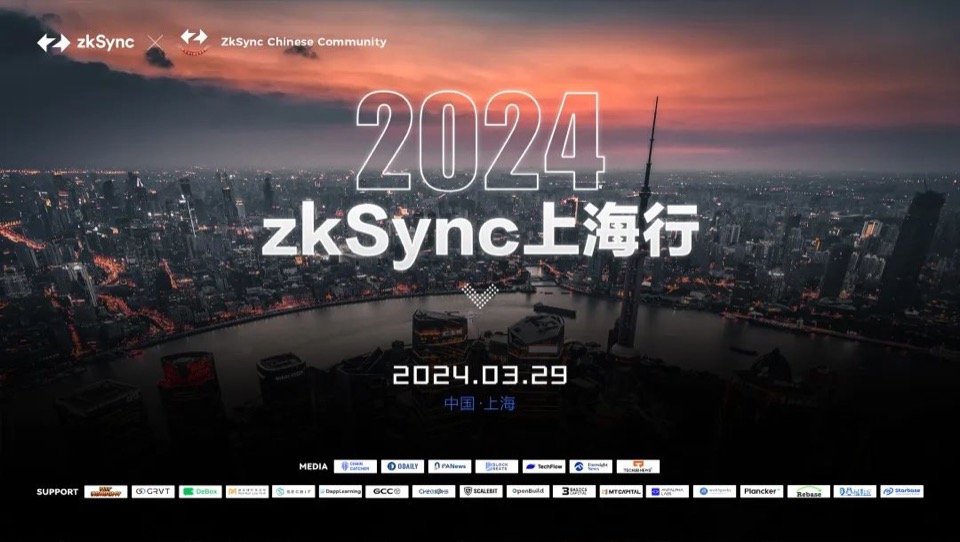
In fact, an increasing number of Web3 communities are no longer satisfied with purely online interactions, and there is growing demand for offline meetups. However, due to compliance considerations, organizers often exercise caution when holding offline events.
Taking advantage of the "zkSync Shanghai Tour," Mankun lawyers would like to discuss how Web3 communities can lawfully conduct offline events from a compliance perspective.
Event Preparation
(1) Application and Filing
During the pandemic period, local government authorities imposed strict scrutiny on offline events. In the post-pandemic era, regulatory oversight of large-scale offline gatherings has been relaxed; however, this does not mean that applications or filings with relevant authorities are necessarily unnecessary.

(After a certain Web3 offline event was suspended, members spontaneously organized a gathering)
Article 20 of the Regulations on Safety Management of Large-Scale Mass Activities provides as follows:
(1) For large-scale mass activities with an estimated attendance of more than 1,000 but fewer than 5,000 participants, safety permits shall be issued by the public security organ of the county-level people's government in the locality where the event is held.
(2) Where the expected number of participants exceeds 5,000, security permits shall be issued by the public security organ of the municipal people's government at the level of a city divided into districts where the event is held, or by the public security organ of the people's government of a municipality directly under the Central Government.
If the expected number of participants is between 1,000 and 5,000 (inclusive of 1,000 but exclusive of 5,000) or exceeds 5,000, the following materials must be submitted to the competent public security organ at the location of the event for approval:
 (Source:ShanghaiOne-Net Government Services Platform)
For large-scale events or conferences with fewer than 1,000 participants, it is sufficient to file the following materials with the local police station at the location of the event or conference:
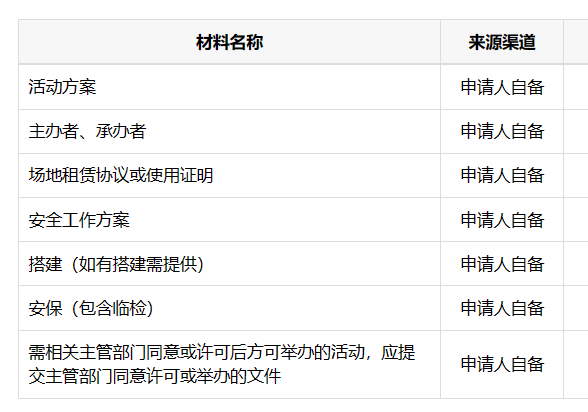 (Source:ShanghaiOne-Net Government Services Platform)
The above lists of materials for approval and filing are sourced from the Shanghai One-Net Government Services Platform. Requirements may vary by locality. If necessary, please consult the local public security authorities. Detailed elaboration is omitted herein.
The aforementioned approval and filing requirements apply to large-scale mass activities. Currently, it is rare for organizers to hold offline events on the scale of several hundred or more than one thousand participants. More commonly, events involve dozens or one to two hundred attendees. We consider that “gatherings” with fewer than 200 participants generally do not constitute “large-scale mass activities” and thus do not require approval or filing. However, if there is any uncertainty, you may consult the local police officers at the event location, as our activities are conducted in full compliance with positive social values.
(II) Venue Lease
Taking the common practice of leasing hotel venues as an example, such lease agreements are characterized by short lease terms, stringent venue safety requirements, and significant impacts resulting from breach by the lessor.
When entering into a lease agreement, the organizer (as the lessee of the venue) should first pay attention to the lease term, ensuring that it covers the necessary time for pre-event preparations and post-event wrap-up activities, so as to avoid disorder and chaos at the event site due to lack of rehearsals, equipment debugging, and other similar circumstances.
Secondly, the organizer should appropriately increase the liability for breach of contract on the part of the hotel (as the lessor of the venue). After all, once the hotel (lessor) breaches the contract, invited guests and attendees may have nowhere to go, inevitably causing further disruption for the organizer. As a form of security for performance, the organizer may pay a deposit not exceeding 20% of the total lease amount and clearly stipulate the deposit terms in the lease agreement. If the hotel (lessor) breaches the contract and fails to provide the venue as scheduled, it shall return twice the amount of the deposit, thereby reducing the risk of breach by the hotel (lessor).
It should be noted that when signing a contract, care must be taken to distinguish whether the parties have agreed upon a "deposit" (dingjin) or an "advance payment" (dingjin). A "deposit" is a standardized legal concept and a form of security voluntarily agreed upon by the contracting parties to ensure the conclusion, effectiveness, or performance of the contract, serving as one of the methods for bearing liability for breach of contract. An "advance payment" is merely a unilateral act and is generally regarded as the deliveredprepayment, which does not possess the same security nature as a "deposit." Regardless of which party causes the non-performance of the contract, the party that paid the advance payment may claim full refund.
Furthermore, while there are many paths to take, safety comes first. Venue safety assurance must also be a key focus when selecting a leased venue. For instance, one should examine whether emergency broadcasting systems, emergency lighting, and other emergency rescue facilities and safety warning facilities are installed and regularly maintained; whether necessary surveillance facilities are in place; and whether channels and routes for safe evacuation are clearly marked.
(III) Event Promotion
To hold a lively and successful event, promotion is indispensable. During the preliminary promotion phase, the organizer must pay attention to both the content and the form of such promotion.
Regarding promotional content, authenticity must be ensured to avoid exaggerated or false advertising. Otherwise, if participants discover that the actual event does not match the promotions, the organizer's reputation will suffer significantly. For example, if the event publicly promotes the attendance of a prominent figure who is actually unaware of the arrangement or cancels at the last minute, it will naturally disappoint registered attendees. If entry is paid, this may even lead to consumer rights disputes.
In terms of promotional formats, regardless of the method chosen, all activities must be lawful and compliant, and must not violate public order and good customs. For instance, content that exploits the major policies of the Party and the State or leverages significant political events for commercial hype is prohibited; the use or disguised use of the national flag, national anthem, national emblem, military flag, military anthem, military emblem, as well as the name or image of state organs or state organ personnel, is prohibited; content involving various forms of pity-mongering, wealth-flaunting, parodying classics, as well as "trend-chasing" or "attention-seeking" tactics that exploit publicly debated incidents as promotional gimmicks, is prohibited; and content containing obscenity, pornography, violence, gambling, superstition, or "soft-core pornography" is strictly forbidden.
As an organizer in the Web3 space, care must also be taken to ensure that promotional content related to virtual currencies aligns with current policies. In recent years, normative documents in China concerning the digital currency sector include the Notice on Preventing Bitcoin Risks, the Announcement on Preventing Risks Associated with Token Issuance and Financing, and the Risk Alert on Preventing Illegal Fundraising in the Name of "Virtual Currencies" and "Blockchain." Using blockchain and virtual currencies for financing, illegal fundraising, and other illegal or criminal activities has consistently been a high-pressure regulatory red line; thereforeInvolves sensitive topics such as token offerings and fundraising for projectsMust be strictly avoided。
(4) Personal Information Protection
Under the Personal Information Protection Law, personal information refers to "various kinds of information related to identified or identifiable natural persons recorded by electronic or other means, excluding information that has been anonymized." With respect to the personal information of invitees and registered attendees, the organizer shall fulfill its obligations to store such information properly and use it reasonably:
1. When collecting personal information, the organizer shall first inform the individual of the categories, purposes, intended uses, storage arrangements, and channels for exercising their rights with respect to the personal information collected;
2. The organizer shall assess the scope of personal information to be collected and avoid collecting unnecessary personal information;
3. After the event concludes, the organizer shall promptly delete the personal information or anonymize it;
In addition, organizers sometimes choose niche applications as registration channels. The personal information protection capabilities of these platforms vary, which increases the risk of personal information leaks. It is advisable for organizers to collect attendees' personal information through direct, point-to-point methods wherever possible. Therefore, if online registration is required, organizers should preferably use mainstream event registration software to collect registration information, thereby avoiding personal information leaks.
In summary, when collecting personal information, organizers must strictly adhere to the principles of openness and transparency and data minimization, and implement appropriate privacy protection measures.
Event Proceedings
(1) Pre-review of Speakers' Content
Inviting guests to speak is an important component of most Web3 community events. However, as the organizer, you must also fulfill basic duties of care with respect to the content of speakers' presentations.
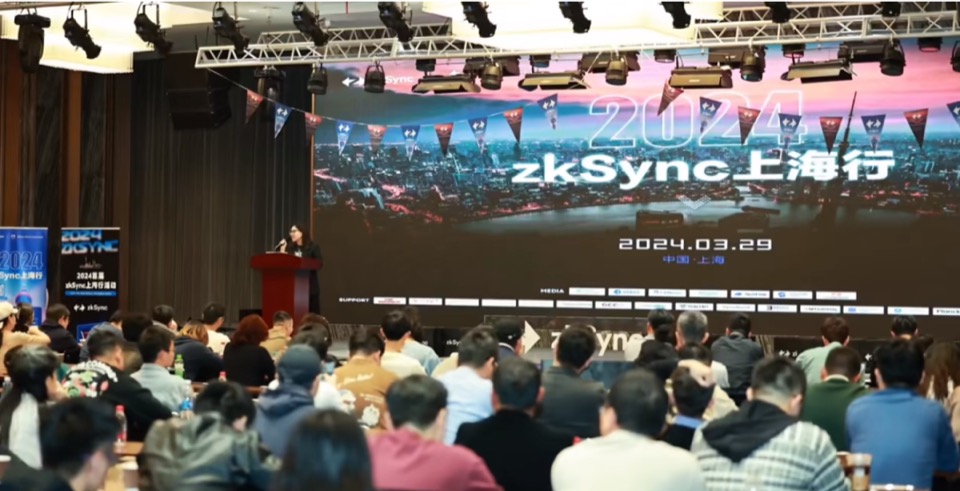
(Screenshot of remarks by a guest speaker at “zkSync Shanghai Tour”)
In addition to basic requirements of compliance and the prohibition against violating public order and good morals, guest speakers, like the organizer, must not engage in fundraising or capital-raising activities involving virtual currencies, nor address topics or content that may implicate criminal offenses related to virtual currencies.
It is advisable for the organizer to conduct necessary background checks on guest speakers, obtain their presentation materials in advance for preliminary review, and thereby avoid the emergence of unlawful or non-compliant content during the event that could adversely affect the event and the organizer.
(II) Contingency Plans
Various unexpected situations may arise during an event; how they are properly handled tests the organizer’s organizational capabilities.Article 1198, Paragraph 1 of the Civil Codeprovides that “...organizers of mass activities who fail to fulfill their safety assurance obligations and thereby cause damage to others shall bear tort liability.” The term “damage” here includes both personal injury and property damage. Does this mean that the organizer must bear liability whenever any third party suffers damage?
“Failure to fulfill safety assurance obligations” is a prerequisite for the organizer’s liability. Therefore, in addition to conducting various safety inspections and other preparatory work in advance, the organizer should establish contingency plans and response procedures—such as evacuating attendees in the event of a fire, providing emergency medical treatment and arranging hospital transport for sudden illnesses, and handling intrusions by unauthorized persons—to fulfill, to the greatest extent possible, the organizer’s safety assurance obligations.
Post-Event Phase

{loadmoduleid 245}

To submit contributions or request permission for reprinting, please add the WeChat ID: MankunLawFirm