

Reflections on 'Paths to Resolve the Impasse' of Frozen Bank Cards from Selling USDT
Special Declaration: This article is an original work by Attorney Shao Shiwei. It represents only the personal views of the author and does not constitute legal consultation or legal advice on specific matters. For article reposting, legal consultation, or business exchanges, please add: sswls66.
Introduction
In the previous article →《Who Bears Liability for Receiving Illicit Funds from Virtual Currency Transactions?》Attorney Shao mentioned the 'frozen card impasse' triggered by a virtual currency transaction involving Mr. Wang:
Mr. Wang was willing to compensate the reporting party only RMB 20,000, while the reporting party demanded full compensation of RMB 600,000. As the parties failed to reach an agreement, an impasse arose: the public security organs neither deducted the funds in Mr. Wang’s account nor unfroze his bank cards. The current situation is that all bank cards under Mr. Wang’s name are frozen.。
As a criminal lawyer specializing in the cryptocurrency sector, having handled numerous frozen card cases in daily practice, I have been continuously reflecting: Why do individual purchases and sales of USDT result, at best, in frozen bank cards, and at worst, in classification as money laundering-related crimes? If an ordinary person has their bank cards frozen due to trading virtual assets, how should they communicate with public security organs to achieve the goal of excluding criminal risks while successfully unfreezing their cards?
01
Unfreezing Cards Was Not Difficult in Earlier Years
Before 2019, or even earlier, having bank cards frozen due to virtual currency transactions was not as difficult as it is today. As long as one could provide transaction-related evidence proving normal purchase and sale of virtual assets, the public security organs would unfreeze the cardholder’s account. This was stated by an OTC merchant who has been active in the crypto circle for many years during a conversation with Attorney Shao.
In the past, participants in the crypto circle were not as mixed in character. Although many entered the market driven by speculation, high returns were accompanied by high risks. Ordinary people only saw the myths of overnight wealth in the crypto world, but failed to see the significant risks these individuals were simultaneously bearing. Moreover, virtual assets like Bitcoin, with their substantial price volatility and slow transaction speeds, were not suitable for criminals to use as tools for money laundering.
Therefore, public security organs previously maintained a relatively tolerant attitude toward virtual currency transactions. There was no prevailing practice requiring compensation to the reporting party as a prerequisite for unfreezing accounts.
However, the emergence of stablecoins is gradually changing many things.
02
The 'Card Breaking' Campaign and the Notice from Ten Ministries
The Inter-Ministerial Joint Conference of the State Council on Combating and Governing New Types of Telecommunications Network Crimes decided to launch the 'Card Breaking' campaign nationwide starting October 10, 2020. The background of the 'Card Breaking' campaign lies in the direct or indirect relationship between the illegal buying and selling of 'two cards' (bank cards and telephone cards) and various illegal and criminal activities such as telecommunications fraud, cross-border gambling, and economic crimes.
Since the state began to continuously crack down on the buying and selling of bank cards and telephone cards, criminals naturally upgraded and iterated their modus operandi: 'If you prevent me from receiving RMB, I will receive virtual assets; let’s see how you freeze them.'
Tether (USDT), as the stablecoin with the largest market share, was launched by Tether Limited and is pegged to the US dollar. From the perspective of criminals, it is undoubtedly an excellent vehicle for money laundering. Consequently, the number of people entering the crypto circle has increased, and the demographic has become increasingly complex.
In September 2021, the People's Bank of China, the Supreme People's Court, the Supreme People's Procuratorate, and other ten ministries jointly issued the 'Notice on Further Preventing and Disposing of Risks Related to Virtual Currency Transaction Speculation,' which stated, 'Severely crack down on illegal financial activities related to virtual assets, and severely crack down on criminal activities involving virtual assets.' In response to the constantly evolving new criminal methods employed by offenders, relevant Chinese authorities have continuously introduced new policies and regulations for regulation.
Against this background, the attitude of judicial organs toward virtual currency traders has naturally shifted—from neutral to negative. (This explains why some cardholders, when contacting public security organs to discuss unfreezing, do not understand why they are interrogated like suspects merely for selling a coin. Because public security organs handle so many crypto-related crimes, preconceived impressions are inevitable.)
03
If Your Card Is Frozen, Ask Yourself: Are You Truly Innocent?
Apart from assisting others in money laundering or engaging in normal crypto investments, why do you buy and sell USDT?
The price of USDT is clearly pegged to the US dollar, yet the counterparty is willing to trade with a fluctuation of three cents. Have you never wondered why?
While most people normally communicate via WeChat, why do some counterparties insist on using encrypted communication software like Telegram for transactions?
Why is it that, at the exact moment of transaction, some buyers of your USDT conveniently find their own bank cards limited, requiring them to transfer funds to you from a third party’s account?
Why do some individuals frequently purchase USDT from you? What exactly are they doing that requires such frequent or large-volume USDT transactions?
Why do both parties only post bank account numbers and wallet addresses in group chats during transactions, without adding each other as private contacts?
Given that your bank card has already been frozen by the bank or public security organs due to virtual currency transactions, do you actively communicate with relevant departments to resolve the issue, or do you choose to switch cards and continue trading with others?
……
High returns, strong liquidity, and high safety—this is the impossible triangle of investment.
Is it unjust to have your card frozen for earning spreads when you have failed to fulfill your duty of care? Arbitrage trading? There is no such easy way to make money! Furthermore, some individuals do not even perform Know Your Customer (KYC) checks; as long as the counterparty pays and there is a spread to earn, they proceed with the transaction.
04
Increasingly Strong Enforcement Efforts
What is 'Pao Fen' (running points)? 'Pao Fen' is money laundering. Through 'Pao Fen,' illicit funds from telecommunications fraud, gambling, and other crimes are transferred among multiple personal bank accounts to earn commissions.
From the perspective of judicial organs, the transaction methods mentioned in point three above make it difficult not to suspect that virtual currency traders are engaged in 'Pao Fen.' Moreover, why was your bank card frozen? Because a victim filed a report. Furthermore, the victim’s bank statements show that the funds were transferred into your account.
For you, the freezing of your card due to a specific transaction may be an isolated incident, a stroke of bad luck. However, for case-handling authorities, given the large volume of victim reports they process, their perspective is: Crypto-related crimes are difficult to investigate using traditional technical means, making it hard to catch the actual criminals, which results in victims’ losses being difficult to recover. Those who provide virtual currency trading services to these criminals are effectively accomplices in money laundering crimes.
05
Increasingly Strong Enforcement Efforts
Due to a failure to fulfill the duty of care, illicit funds from victims flowed into your card. Is the cardholder at fault? Certainly. But does this mean all cardholders with frozen accounts should be broadly categorized as criminals? Or must they fully refund the reporting party to have their cards unfrozen? Such simplistic and crude handling methods would be overly extreme.
Individuals should only bear the responsibilities they are legally required to assume; otherwise, society would fall into chaos.
Additionally, not everyone in the crypto circle is engaged in arbitrage trading every day; there are many ordinary participants. A gentleman once told me that the profits he made from trading crypto in 2020 have not been cashed out to date; instead, he converted them into stablecoins stored in wallets. When asked why, he stated that the capital amount was significant, reaching several million RMB, and he had been unable to find reliable counterparties for transactions, fearing his cards would be frozen.
Therefore, the group frequently engaged in arbitrage trading for spreads not only faces high risks of frozen cards and criminal liability themselves but also makes it more difficult,for those conducting normal transactions, increasing their risks and raising the difficulty of resolving frozen card issues.For example, in the article 'Who Bears Liability for Receiving Illicit Funds from Virtual Currency Transactions?', is Mr. Wang not an innocent victim implicated by circumstance? First, he fulfilled his KYC obligations, ensuring the customer’s source of funds was legitimate. Second, for every transaction, he conducted video confirmation to verify it was the counterparty personally trading, and he did not accept payments from third parties. Finally, he repeatedly reminded the counterparty to invest rationally and beware of being defrauded by others.
Did the reporting party have no issues themselves? As stated in the movie 'No More Bets':'Humans have two hearts: one is greed, and the other is unwillingness to accept loss.'The reporting party sought higher returns on investment and finance. After meeting an online contact, they made large investments in a short period, resulting in fraud. Seeking high investment returns stems from greed; after being defrauded, because the online contact became unreachable, they clung to Mr. Wang, with whom they had transacted, demanding full compensation. This stems from unwillingness to accept the loss.
Everyoneshouldbear the legal risks and liabilitiescorrespondingto theiractions.
06
Increasingly Strong Enforcement Efforts
In many cases encountered by Attorney Shao, parties experienced prolonged freezing of their bank cards due to poor communication with the case-handling authorities, affecting their work and daily lives. Since the problem has arisen, we must consider: How can it be resolved?
Some cardholders become quite emotional when giving statements to public security organs, consistently asserting that they are also victims and questioning why they should compensate the reporting party. As a lawyer, I understand this emotion, but frankly, it is meaningless for resolving the issue itself. Because the handling officer must also consider how to provide an explanation to the reporting party. Therefore,if your card is frozen, you need to prove your innocence.
(A further note here:Some cardholders angrily state, 'Since the public security organs froze my card, they must prove I am guilty!If you cannot prove I am guilty, you have no right to freeze my card!'—This is not an effective way to communicate with case handlers.The card was frozen because victim funds flowed into your bank account. The victim has already provided evidence of the infringement they suffered. Therefore, why did illicit funds flow into your card?You need to provide a reasonable explanation and supporting evidence.)
One purpose of proving your innocence is tofirst exclude potential criminal risks associated with yourself.,The second purpose is to negotiate the conditions for unfreezing the card.
According to big data retrieval, between January 1, 2019, and March 10, 2023, people’s courts at all levels issued criminal judgments related to 'buying and selling virtual assets.' Using keywords such as 'virtual assets; buying and selling; criminal; knowing it was proceeds of crime; crime of aiding information network criminal activities; crime of concealing or disguising proceeds of crime and gains therefrom,' a total of 90 judgment documents were retrieved. In current criminal cases involving the buying and selling of virtual assets, charges are more frequently classified as the crime of concealing or disguising proceeds of crime, and less frequently as the crime of aiding information network criminal activities.
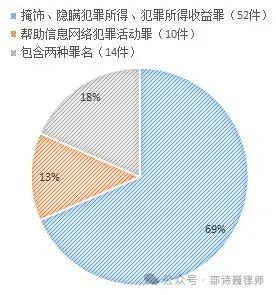
After excluding criminal risks, regarding communication for unfreezing the card, you need to provide a chain of evidence to prove that your transaction was indeed normal and lawful. For example: Do you have a stable and legitimate source of income? Did you fulfill your KYC review obligations when transacting with the counterparty? Additionally, you need to explain to the case handler the necessity of unfreezing the card and the impact of long-term freezing on your work and daily life.
Based on Attorney Shao’s experience in communicating with case handlers, many officers are willing to undertake significant work for the party involved after excluding criminal risks.
For instance, issuing a statement of circumstances to facilitate the party’s communication with major banks regarding risk control freezes imposed by the banks (generally, cards that have been subject to public security stop-payment orders or judicial freezes will have an additional layer of bank risk control freezes or restrictions on non-counter transactions).
Another example is helping to coordinate communications with the reporting party regarding compensation amounts, reaching a settlement agreement, and stating that 'if the funds involved in the case are recovered in the future, they will be refunded to the cardholder.'
Effective communication is the correct approach to solving problems.
07
Concluding Remarks
Many cardholders who entrusted Attorney Shao’s team to handle card unfreezing matters had already communicated with case handlers multiple times. However, some were overly confrontational emotionally, while others provided evidentiary materials that failed to meet the standard of excluding reasonable doubt for the case handlers. This resulted in communication impasses.
At this point, what you can do is engage in truly effective communication with the case handler and cooperate by providing materials for unfreezing. However, what constitutes 'effective communication'? It is easier said than done. Alternatively, entrusting a professional lawyer to assist you in handling the matter is also an efficient way to resolve the problem.