

Recently, Attorney Deng’s team received a consultation from a university student.
Xiao A (a pseudonym) saw someone on Xianyu offering to “buy USDT at a high price,” with an exchange rate two or three mao higher than that on exchanges. Believing he had discovered a business opportunity, he purchased USDT on an exchange and added the buyer on WeChat via Xianyu to conduct the transaction.
The first transaction earned him 50 yuan, proceeding smoothly. The second earned 200 yuan, also going smoothly. For the third, he pooled 50,000 yuan in principal aiming for a bigger profit, but as soon as the money arrived, his bank card was frozen.
Upon checking with the bank,it was a “public security freeze” with a duration of six months. What devastated him further was that a few days later, he received a call from the police station in his place of household registration,requiring him to explain the situation on the grounds of “suspected assistance in information network criminal activities.”
Xiao A felt aggrieved: “I was just earning the exchange rate spread; how did I become a criminal?”
In light of recent consultations regarding frozen cards due to USDT arbitrage, Attorney Deng will expose this hidden “digital black market” and examine how these seemingly attractive “arbitrage” businesses gradually push ordinary people into the abyss of criminal liability.
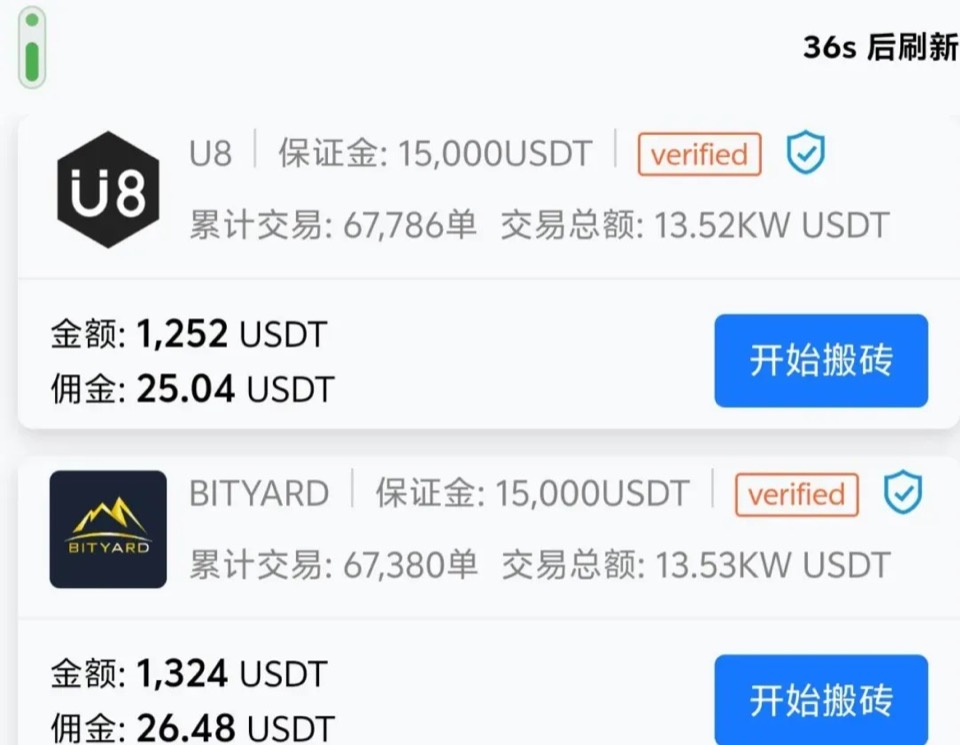
Reason for Card Freezing: You Think It Is Arbitrage, But It Is Actually Money Laundering
Searching for “USDT” on Xianyu usually yields blank results, but if you search for terms like “selling USDT,” “game top-up services,” or “payment on behalf,” you will discover a bustling underground market. This market is flooded with posts offering “high-price buybacks” and “exchange rate arbitrage.”
Always remember one principle of commercial common sense: As a stablecoin, the price of USDT is open and transparent across major exchanges. If someone is willing topay above the market price(for example, buying at 6.8 on the exchange while they offer 7.2) to acquire your USDT, or asks you to make payments on their behalf, there is only one reason:Their funds are illicit.
Perpetrators of telecom fraud and online gambling hold large amounts of dirty money. They dare not purchase crypto assets directly on exchanges (due to risk control measures), so they use C2C platforms like Xianyu to transfer dirty money to you in exchange for your clean USDT.
Throughout this chain,you act as a “human money-laundering machine.”The few hundred yuan in “spread” you earn is essentially the “money laundering fee” paid to you by the criminals.
In-Depth Analysis: Criminal Characterization Behind Three High-Risk Transaction Models
Based on the numerous crypto-related criminal cases handled by Attorney Deng’s team, these transaction models on Xianyu easily violate the following offenses under the Criminal Law. This is not alarmism but reflects actual instances occurring in judicial practice.
Scenario 1: “Top-up/Payment on Behalf” – Crime of Concealing or Disguising the Proceeds of Crime
1. Modus Operandi: The buyer claims they lack a foreign currency card and asks you to use USDT or foreign currency to purchase Steam top-up cards, gift cards, or pay for overseas goods on their behalf, promising high commissions.
2. Legal Characterization: This constitutes typical “physical isolation” money laundering.
- Objective Act: You receive funds from upstream sources (which are actually illicit proceeds) and “launder” or transfer the funds by purchasing goods or topping up services.
- Subjective Determination: Many defend themselves by saying, “I didn’t know it was black money.” However, in judicial practice, as an adult of sound mind, when faced withcommissions significantly higher than market ratesandtransaction requests that defy common sense(such as bypassing formal payment channels), the law presumes that you “should have known” the source of the funds was suspicious.
- Consequence: Constitutes the crime of concealing or disguising the proceeds of crime, punishable by fixed-term imprisonment of not less than three years but not more than seven years.
Scenario 2: “Selling USDT at a High Price” – Crime of Assisting Information Network Criminal Activities (Bangxin Crime)
1. Modus Operandi: Simple and direct; the other party buys back your USDT at a price higher than that on exchanges.
2. Legal Characterization: This is a high-incidence area for the Bangxin crime.
- Key Evidence: According to the Interpretation on Several Issues Concerning the Application of Law in Handling Criminal Cases of Illegally Using Information Networks and Assisting Information Network Criminal Activities, “significantly abnormal transaction prices”are one of the core criteria for determining that the actor had “subjective knowledge.”
- Logical Chain: You provided your own bank card to receive funds involved in fraud and completed thepayment and settlementusing USDT. This behavior directly assists upstream criminals in transferring illicit proceeds, constituting “providing payment and settlement assistance” in the legal sense.
- Consequence: If it meets the criteria for filing a case, it is punishable by fixed-term imprisonment of not more than three years.
Scenario 3: “Reselling” – Crime of Illegal Business Operations
1. Modus Operandi: If you do not merely sell USDT occasionally but engage in it as a profession, buying low and selling high to earn the spread.
2. Legal Characterization: Such behavior may be characterized asillegal business operations。
- Judicial Interpretation: In China, disguised trading of foreign exchange that disrupts the order of the financial market, if the circumstances are serious, constitutes the crime of illegal business operations. Although there is still debate over whether USDT is equivalent to foreign exchange, judicial practices in some regions have already issued judgments characterizing “reselling USDT” as the crime of illegal business operations. Once convicted, the sentencing is often heavier than for the Bangxin crime.
Civil Risks: A State of “Exposed Vulnerability” Under National-Level Notices
Apart from facing imprisonment, crypto transactions on Xianyu leave civil rights and interests in a state where one can cry to heaven and earth without response.
Since the September 24, 2021 Notice, national-level announcements have clearly defined that:Business activities related to virtual currencies constitute illegal financial activities.
What does this mean?
- Contracts are void, and losses are borne by the parties themselves.If you are defrauded while selling USDT on Xianyu (for example, the other party sends a fake transfer screenshot or blocks you after receiving the coins), and you sue in court demanding repayment, the court will likely rule that the transaction contract between you is void based on provisions in the Civil Code regarding “violation of public order and good morals” or “violation of mandatory provisions of laws and administrative regulations.” Simply put: The law does not protect “black market” transactions. You must swallow the loss yourself.
- Not only can you not recover the money, but you may also face fines.If your transaction behavior is determined by administrative authorities (such as market regulation or public security organs) to be illegally engaging in token issuance financing or illegal business operations, you will not only fail to recover the defrauded funds but may also face administrative penalties, or even criminal charges in serious cases.
Three Life-Saving Recommendations for “Side Hustlers”
Risking a criminal record that affects three generations for meager profits is never worth it. Here are three recommendations for those pursuing “side hustles”:
1. Stay Away from All “Payment on Behalf” or “Purchase on Behalf” Requests: No matter how plausible the other party’s excuse sounds (“insufficient study abroad quota,” “no foreign card”),if it involves using your own account to facilitate fund transfers for others, block them immediately. You are doing a side hustle, not charity, and certainly not acting as a “money laundering tool.”
2. Be Wary of “Premium” Transactions: There is no such thing as a free lunch. Any offer to buy crypto assets above the exchange market price necessarily involves irregularities. Do not let greed for a small exchange rate spread draw you into the scope of crackdowns under the “Card Breaking Campaign.”
3. What to Do If Your Card Is Frozen?
- Do not trust online “unfreezing scalpers”;that is secondary fraud.
- Do not panic; contact the bank immediately to inquire about the freezing authority (usually public security organs in another locality).
- Preserve evidence: Organize your chat records and transaction statements from Xianyu. Although your behavior may be non-compliant, proving in criminal defense that you had “no subjective intent” (merely seeking petty gain and unaware that the funds were illicit) is key to striving for non-filing of the case or non-prosecution.
Conclusion
You may think that “arbitrage” on Xianyu merely makes you the lowest-level “cannon fodder” in a vast black industry chain. Many young people mistakenly believe that the anonymity of blockchain is a natural barrier to crime, unaware thatthe “immutability” of on-chain data precisely becomes the most solid “ironclad evidence” for judicial organs in conviction and sentencing.
Upstream operators hide overseas, enjoying blood-stained huge profits; while you, downstream, become the easiest and lowest-cost target for police crackdowns due to your real-name verified bank cards and Alipay accounts.
Do not wait until you are imprisoned to understand the weight of “compliance.”
Author of this Article
Deng Xiaoyu,Partner Lawyer at Mankun Law Firm (Shenzhen). Attorney Deng specializes in criminal cases, having participated in nearly three hundred cases, possessing a solid theoretical foundation and rich practical experience. He is particularly adept in the field of Web3.0 crimes, having provided criminal defense for several well-known digital currency exchanges, effectively safeguarding clients’ rights and interests. He was awarded the “Special Contribution Award for the 30th Anniversary of the Shenzhen Lawyers Association” and has been interviewed by multiple domestic renowned media outlets and invited to lecture in the industry several times.
Li Haojun, Practicing Lawyer at Mankun Law Firm (Shenzhen). Bachelor of Laws from Beijing Normal University (Zhuhai). Lawyer Li Haojun has deeply participated in multiple complex and difficult litigation cases, possessing a solid professional foundation and high focus, dedicated to providing solutions for complex and difficult problems for clients. His goal is to become a dispute resolution lawyer who “understands both professionalism and the industry,” currently focusing on criminal and civil/commercial cases in new economy fields such as Web3, blockchain, and cryptocurrencies.
About Mankun
Mankun Law Firm was established in 2015 and is a boutique law firm in China focusing on the Web3.0 new economy and deeply cultivating the blockchain industry. Members of the Mankun team possess unique and diversified industry backgrounds, coming from renowned legal service institutions, national judicial organs, internet technology companies, crypto asset institutions, blockchain industry think tanks, and more.
Based on a profound understanding of the new economy sector, continuous attention and research on policies and regulations, and rich practical experience, the Mankun team excels in providing comprehensive legal services from the perspectives of business models and legal practice. These services include business structure design, project investment and financing, transaction planning, operational compliance, resolution of complex civil and commercial disputes, prevention and control of criminal risks, and criminal defense for new economy enterprises in Web3.0, blockchain, AI, NFTs, digital collectibles, crypto funds, crypto payments, DeFi, real-world assets (RWA), GameFi, and other areas.
Mankun Law Firm is headquartered in Shanghai, with branch offices in Hong Kong (China), Silicon Valley (USA), Shenzhen, Hangzhou, Zhengzhou, Chengdu, and other locations. To meet the global compliance development needs of Web3.0 industry clients, Mankun has established local offices in major global crypto-financial cities and selected local professional blockchain service partners, providing clients with professional legal and compliance services featuring global breadth and Chinese depth.