
This is my 18th/100th legal commentary article of 2026.
Recently, who hasn't been swept up in the storyline between the older sister and her brother-in-law in The Age of Innocence? The calm and rational older sister, discriminated against because of her "black five categories" status and therefore unable to pursue the mathematics career she loves, married a brother-in-law from a military family who seemingly still harbors a deceased first love who resembled the sister.
Under the same roof, the two went from polite distance to quiet mutual admiration; every time the sister's self-deprecating yet proud
stubbornness
and distance, and the brother-in-law's stepping forward to defend her at critical moments—that unspoken tension between two intelligent people—kept us grinning at the screen the whole time.
"Stand-in romance + love after marriage + sapiosexual attraction"—this combination punches precisely at the audience's sweet spot, no wonder the whole internet is shouting: "Give me a separate main storyline for the sister and brother-in-law!"
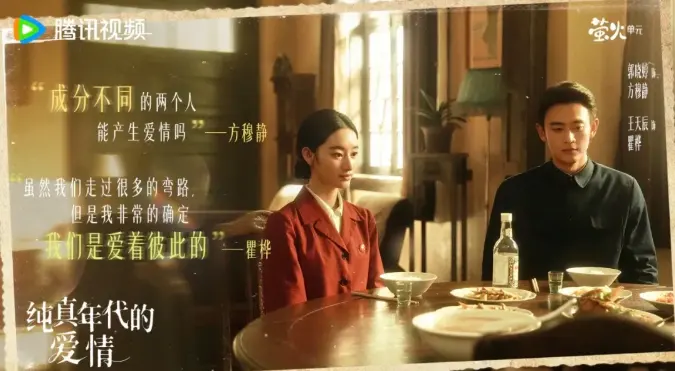
01 When watching dramas becomes an "antidote to fear of marriage," what exactly are we shipping?
It must be admitted that in recent years, with the rise of short dramas, this "love after marriage" setup has become an "electronic sugar substitute" for many young people, and more and more mainstream dramas are featuring storylines in this style.
It offers a romantic imagination: perhaps marriage need not begin with one hundred percent heart-fluttering, but can slowly brew into steadfast deep affection through daily companionship. While watching, we follow the protagonists as they test, strategize, and fall step by step, as if we ourselves had experienced a safe (escorted by a marriage certificate) yet intoxicating (with love and forceful rescue) romantic adventure.
In The Sun Also Rises and Love in the Age of Innocence, the male leads are not only tall, rich, and handsome, but also fight and compete for the female lead—not just young people, even I, a middle-aged girl in my forties, fall for this!
02 But life often has no screenwriter to protect us
As a family law attorney and professional gossip, I must remind you: the romance in dramas lies in the fact that all coincidences serve love. But "love after marriage" in real life is more like an unknown adventure.
When I watch dramas, I laugh along too, but my professional instincts always make me think one layer deeper.
The female lead first meets a very good male lead, and a male lead like that, however they meet, has the ability to bring her happiness. No matter what, the people the protagonists meet in the drama are fundamentally kind and responsible.
In reality, the 'blind box' opened by a whirlwind marriage may not necessarily contain anything so wonderful.

Among the cases I have handled, there are those where, due to insufficient understanding, only after marriage did one party discover that the other had significant debts or bad habits; and there are also those where, due to enormous differences in the two families' values, the relationship was ultimately worn out amid trivial frictions.
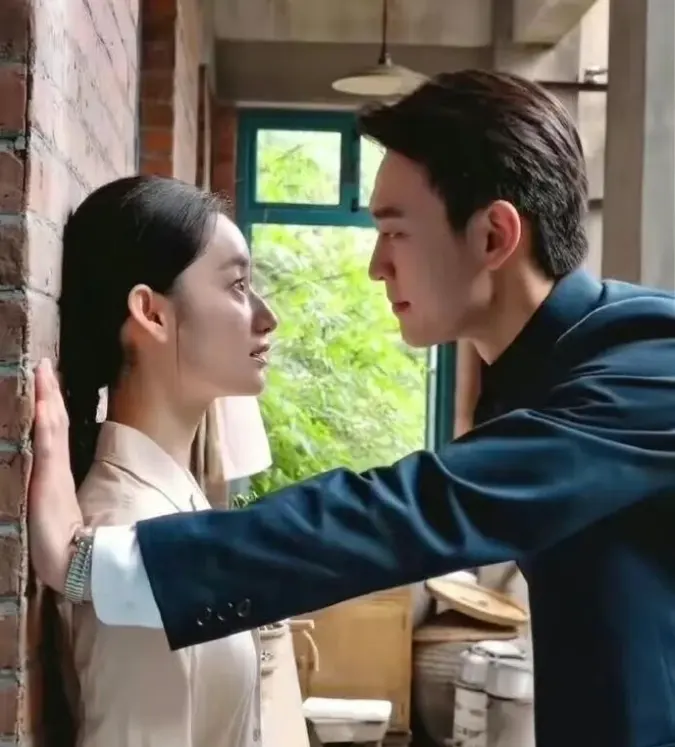
03 When the Plot Reflects Reality: The Other Side of Those Cases
"He fell in love with me at first sight, and only after we married did I learn that he had also fallen in love with many others at first sight."

One client was moved by an ardent pursuit and married quickly. After marriage, however, she discovered that the other party had blurred boundaries and maintained ambiguous relationships with multiple members of the opposite sex. When a relationship loses the foundation of trust, divorce becomes a long, exhausting drain on one's energy.
Some of the romance and love at first sight you believe in may be a reenactment of carefully studied and trained courtship techniques.
"Our two families seem to live in two different worlds."

A young couple came together out of love, but after marriage, every issue—"whose home do we go to for Spring Festival," "how much does each family contribute toward buying a home," "how should the child be educated"—could trigger a collision of values between the two families.
Love is a matter between two people, but marriage is indeed the running-in of two family systems.
"Actually, we are a lot like the drama—we married first and fell in love afterward. We are very lucky."

Of course, there are also heartwarming examples.
I have a friend who was introduced to her now-husband, and they began dating on the premise of marriage and married quickly. But it was more like an open and candid “
collaborative assessment
.” They swiftly and frankly exchanged all their views on money, career, and family, confirmed that each was “the right person,” and only then entrusted the romantic story to their married life.
This friend's good fortune lies in the fact that both parties were sufficiently clear-headed, mature, and sincere,
and, most importantly, that she herself had the inner strength to live well even on her own, and happened to meet someone who was genuinely good in himself
.
04 So, do we still believe in “love after marriage”?
Perhaps what we truly yearn for has never been the form of “marrying first” itself, but rather the earnestness of still being willing to draw closer to each other after the relationship is confirmed—the romance of two hearts gradually coming into alignment on a set track. The sweetness in the drama lets us see this possibility.
What reality reminds us of is this: no matter how a relationship begins, a healthy and lasting relationship can hardly avoid careful understanding, alignment of values, and shared responsibility.
A good match is about more than family background; it is also about being on the same wavelength in terms of outlook and lifestyle.
When binge-watching the drama, feel free to immerse yourself fully and ship the couple to your heart's content.
But when it comes to the script of your own life, perhaps you can write it with a more clear-headed romance—like the characters in the drama, using wisdom to judge, sincerity to nurture, and keeping the probability of happiness firmly in your own hands.
As I have said before, we must hold in our own hands the power to define our own lives (see yesterday's article for details:
From Ma Xiaomei and Xu Mengtao to Eileen Gu: When Women Begin to Reclaim the Power to Define Their Lives
)
In this Year of the Horse, may we all have the joy of savoring sweet moments and the ability to cultivate genuine sweetness in our lives.

