
In my memory, the winter nights of 2017 were colder than they are now. Back then I was still handling traditional fund-raising fraud cases. Late one night, a client behind the iron bars of a detention center asked me: "Lawyer Lü, have you heard of Bitcoin? That thing transfers money without a bank—can the police really not trace it?" I told him that every technology leaves traces. But I did not anticipate that, just a few years later, that "ideal republic" once belonging to hackers and geeks would evolve into an "industrial revolution" sweeping the global underground financial world. If Bitcoin opened the Age of Discovery, then the combination of TRON and Tether (USDT-TRC20) is the "steam engine" of those engaged in the black and gray industries. Today, we will not discuss ethereal technological sentiments, but only this "business" worth hundreds of billions.
I. Escaping Ethereum: A-Kun's "Migration History"
Before discussing TRON, one person must be mentioned first:A-KunA-Kun was the "finance director" in a particularly large cross-border online gambling case I represented. In the early years, he did "acceptance" business on Ethereum. At that time, settlement in the black industry was not as smooth as it is now. "Lawyer Lü, you have no idea how painful it was back then," A-Kun said on the sofa at the law firm, taking a deep drag on a cigarette, shrewdness showing in his eyes. "The Ethereum chain was as slow as an old lady crossing the road, and the most deadly thing wasGas fees (transaction fees). When the market was hot, a single transfer cost tens of US dollars. For those of us making high-frequency transfers, that was not money laundering—that was working for the miners." In 2019, a collective "paradigm shift" took place in the black industry. Everyone discovered that the TRON chain developed by a young man named Justin Sun was simply tailor-made for underground finance:Extremely fast: second-level confirmation; money arrives faster than you can scroll through Douyin.Almost zero cost: a transfer costs only a few yuan, and even free transfers can be achieved through "energy leasing."High liquidityTether (USDT) issuance on TRON rapidly surpassed one hundred billion, making it a hard currency. The A-Kun crowd collectively abandoned the aloof Ethereum and rushed to the grassroots, wild and ultra-fast TRON.
II. Breaking Down the Logic: Why TRON?
Why was TRON able to prevail in this contest? We need to usecommercial thinkingto dissect its logic coldly.
Extreme turnover rate: the lifeline of the underground financial sector
In the gray industry, turnover rate determines survival. Illicit funds are a "hot potato"; every extra second they are held increases the risk of being frozen. TRON's DPoS consensus mechanism allows transactions to be confirmed within 3 seconds. This means that a single d-fund transfer from a player's pocket to an overseas money-laundering operation, passing through five layers of "convoys" for laundering along the way, takes less than three minutes in total. In the eyes of the illicit industry, TRON is not a blockchain but a highway.
Energy leasing: a "free lunch" that has been abused
TRON has a unique design: Energy and Bandwidth. On other chains, transfers cost money; on TRON, if you stake TRX coins, transfers are free. This has spawned a massive secondary market—energy leasing. Illicit-industry bosses do not need to buy coins themselves; they only need to spend a few cents renting some energy from a bot on Telegram to complete a transfer of U (USDT) worth millions. This has pushed the marginal cost of money laundering down to a negligible level, achieving true "industrial scale."
A substitute for the trust economy: borrowing Tether's credibility
TRON itself is merely a carrier; the real protagonist is USDT-TRC20. Through centralized credit, Tether has pegged this token to the US dollar at 1:1. In the underground OTC (over-the-counter) markets of the Asia-Pacific region, you do not need to understand what a blockchain is, but you certainly know that "U" can be exchanged for RMB. This consensus constitutes a liquidity barrier that is difficult to shake.
III. The Chain of Interests: From "illegal payment-settlement schemes" to "convoys"
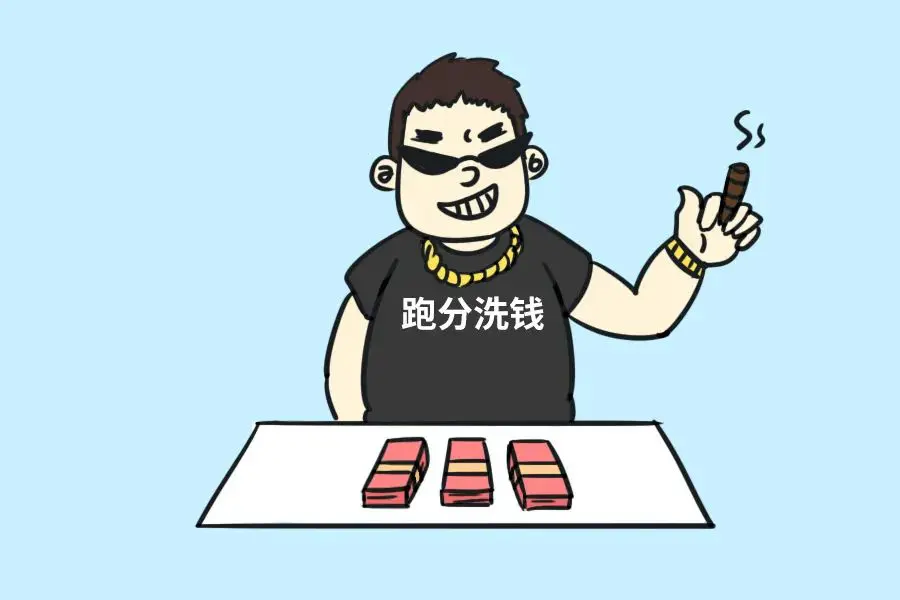
Akun's daily routine consists of managing hundreds of "fleet teams." These so-called "fleet teams" are criminal groups that specialize in money laundering. Their workflow has been simplified by Akun into a few stages:Audience acquisition / intake: luring victims through pornography and gambling advertisements.Aggregated payment: the money sent in by victims is instantly dispersed across countless TRON wallets.illegal payment-settlement schemes: tens of thousands of "code farmers" (people who provide payment collection QR codes) compete for orders on the platform, dispersing and offsetting the illicit funds.USDT return / downstream distribution: the laundered money is ultimately converted into USDT and flows back to the "platform bosses." "Lawyer Lü, money laundering used to rely on bank cards; now it only takes a piece of paper." Akun pulled a piece of paper printed with a QR code from his pocket; it was hisTRON receiving address, "Bank cards get frozen and have limits, but this address, as long as it is not locked down by Tether's blacklist, is a perpetual motion machine."This decentralized method of record-keeping has greatly alleviated the "compliance pressure" on the illicit industry.When the authorities investigate, they face tens of thousands of anonymous addresses on-chain, with tens of thousands of splits and aggregations occurring every second. This is no longer simple "money laundering"; it is atransfer of risk。
IV. Hunters and Traps: The Ultimate Game of Crooks Preying on Crooks
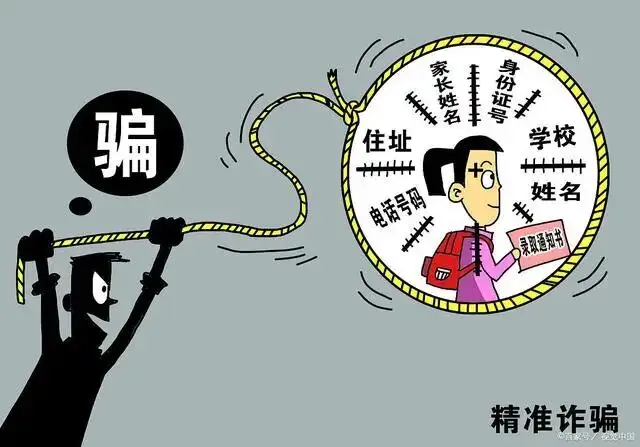
But where there is light, there is shadow, and the TRON chain is not only about "financial freedom." In my case files, a growing number of people are not arrested for money laundering, but are ruined by "crooks preying on crooks"and lose everything. TRON's uniquemulti-signature (Multi-Sig) mechanism has become a natural weapon for scammers. Xiao Li is a young man who wanted to buy discounted "U." He saw someone in a group chat selling "cheap U" at a price two mao below market. The other party sent a permission-modification link, euphemistically called "system verification." Xiao Li clicked it, and that was the end. His wallet permissions were tampered with by the other party through TRON smart contracts into multi-signature mode. Every cent he deposited into the wallet, if he wanted to withdraw it, had to be approved by the scammer. It is like buying a safe only to find the key in the thief's hand; you can only watch the money in the safe turn into a string of cold numbers. There are also thosefake USDTscammers who exploit TRON's extremely low token-issuance cost to issue a junk token with an identical name and identical icon. Many novices, lacking the ability to distinguish, exchange hundreds of thousands in cash for a pile of worthless "hell money." The underlying color of the gray-market world is always the "law of the jungle." There is no contract law here, only whose technology is more thuggish.
V. Regulatory Game: Cat-and-Mouse Beyond the High Walls
Facing the towering waves on the TRON chain, regulators have not sat idle. The current game is concentrated in two dimensions:KYT (Know Your Transaction) monitoring: Security firms such as SlowMist flag "malicious addresses" through big data. Once your address is linked to gambling or fraud, all mainstream exchanges will close their doors to you.Tether's blacklist mechanism: Although the TRON chain is decentralized, USDT is centralized. As long as the evidence is conclusive, Tether can directly freeze from its back endfreezethe assets in a given address. Last year, they locked up hundreds of millions of US dollars in funds tied to organized crime. But A Kun is not worried. "Lawyer Lü, as long as people are greedy, this business will never end." He sneers, "Lock one address, and I'll open ten thousand more. The TRON chain generates more new addresses every day than the number of police officers you've ever seen."

Lawyer Lü's take:
As a criminal defense lawyer deeply engaged in the Web3 field, I have witnessed too many "rises to glory" and "grand banquets." The reason the TRON chain is favored by the black and gray industries is essentially that it has found an ingenious "illegal equilibrium point" betweenefficiency, cost and regulation. It satisfies illegal financial activities' craving forextreme high turnover. But in my view, this is more like a massive bubble. Technology itself is neutral, but human nature has weaknesses. Most of the young people who use the TRON chain for "illegal payment-settlement schemes" see only the commissions of a few thousand yuan a day, but fail to see the stringent provisions of the Criminal Law on the "crime of assisting information network criminal activities" and the "crime of money laundering." Many clients, right up to the moment of arrest, still believe they are merely "doing financial business" and that hiding behind the anonymity of the blockchain makes them completely safe. But they forget thatthe core feature of the blockchain is "immutability"—which means every one of your criminal records is permanently etched on the public chain and becomes evidence in court.As international anti-money-laundering cooperation deepens, the "efficient tools" they once prided themselves on will ultimately become the shackles that bind their hands. Criminal law is the magna carta of the accused; I can only help you obtain a correct legal assessment, and everything inside and outside the high walls is determined by the facts of your case.

