

The First Step in Expanding to Dubai
On October 10, OKX CEO Xu Mingxing personally traveled to Dubai and made a major announcement to the entire online community that OKX had become the first crypto asset trading platform to obtain a full operating license in the United Arab Emirates. This news not only demonstrates OKX’s progress in global compliance, but also means that OKX can take the lead in expanding its business footprint in Dubai, a hotbed for Web3 entrepreneurship, thereby seizing early-mover advantages in the UAE market.

Coincidentally, during TOKEN2049 in Singapore, Wu Shuo interviewed Bybit CEO Ben Zhou. In the interview, it was specifically highlighted that Bybit had already established its global headquarters in Dubai in 2023. More than a year has passed,and Bybit and Ben, leading by example, continue to recommend Dubai to the entire Web3 entrepreneurial community: “Our impression of Dubai, and indeed the entire UAE, is that they view the crypto industry as an opportunity. They recognize that oil resources may not last forever, and they hope to attract more fintech and cutting-edge technologies. Therefore, from the government down to various departments, they are very welcoming to us, andhave provided substantial policy support. This is completely different from the situation in some other regions.Dubai not only offers support but also provides facilitative measures such as visas, making you feel welcome.”
In fact, over the past two years, the Middle East, with Dubai as its representative, has remained a popular destination for Web3 projects expanding overseas. Mankun Law Firm’s lawyers are frequently consulted by Web3 entrepreneurs regarding Dubai’s crypto asset policies and pathways for company establishment. Previously, our lawyers published an article titled “Crypto Oasis in the Desert: Overview and Application Guide for Dubai VASP Licenses,” which systematically outlined Dubai’s crypto licensing framework. This article serves as a preliminary guide for Web3 entrepreneurs taking their first step into Dubai—establishing a company. Before proceeding, however, our lawyers will first analyze why Dubai is so highly regarded within the Web3 sector.
Dubai’s Traditional Advantages
Currently, many well-known multinational corporations, including Procter & Gamble, Microsoft, Adidas, and Nestlé, have established their MENA (Middle East and North Africa) regional headquarters in Dubai. Chinese enterprises, particularly state-owned enterprises, also favor collectively expanding into Dubai to conduct business. These trends are based on certain “traditional advantages” of Dubai.
*Chinese Enterprises Establishing Companies in Dubai
1. Superior Geographic Location
Dubai is located at the crossroads of Europe, Asia, and Africa, enabling it to serve markets in the Middle East, Africa, South Asia, and Europe.
Dubai operates on Gulf Standard Time (GMT+4), a time zone that allows it to align with business hours across European, Asian, and African markets: the time difference with Europe is approximately 3 to 4 hours, and with Asia, 1 to 4 hours. Companies in Dubai can easily coordinate business communications and transactions with counterparts in Europe, Asia, and Africa.
2. Favorable Fiscal and Tax Policies
Dubai imposes no personal income tax, payroll tax, capital gains tax, or inheritance tax.
For most businesses,companies with profits exceeding AED 375,000 (approximately RMB 700,000) are subject to a 9% corporate income tax. This rate remains relatively low compared to many global jurisdictions (for example, Hong Kong’s corporate income tax rate is 16.5%, and Singapore’s is 17%).Entities below the taxable threshold are required to file nil returns. Companies registered in free zones typically enjoy corporate income tax exemptions for 50 years or longer, provided their income is derived from within the free zone or from international markets. The value-added tax (VAT) rate is 5%.
3. No Foreign Exchange Controls
In Dubai, the purchase, sale, holding, and transfer of foreign exchange are unrestricted. Companies in Dubai can readily conduct cross-border transactions and engage in foreign exchange trading through its open financial markets, without complex approval procedures, thereby facilitating foreign investment and capital flows.
For Web3 companies involved in the payments sector, Dubai’s absence of foreign exchange controls provides an highly liberal environment for conducting business.
4. Freedom in Corporate Profit Distribution
Dubai’s policies on corporate profit distribution are highly flexible. Companies may freely decide whether to distribute profits to shareholders or reinvest them in the business, with no requirement to retain profits within the company. Furthermore, no additional taxes are levied on profits distributed to shareholders.
5. Passport and Visa Policies
Chinese citizens holding passports with a validity of more than six months may enter Dubai visa-free. Meanwhile, Dubai’s visa policies are flexible and convenient, offering Chinese citizens various options. It is also highly convenient to apply for residence visas for children, parents, and spouses.
Dubai’s Web3 Ecosystem
For Web3 entrepreneurs, Dubai’s Web3 ecosystem—including its broad user base and crypto-friendly regulatory policies—is a key reason they choose to establish their businesses there.
1. User Base in the United Arab Emirates
According to Bitget Research Institute’s Middle East report, in February 2024, the daily active users (DAU) trading cryptocurrencies on centralized exchanges in several Middle Eastern countries ranged approximately from 100,000 to 150,000. Notably, although the populations of the United Arab Emirates and Morocco are each about one-third those of Saudi Arabia and Egypt, their cryptocurrency-trading DAU figures are not significantly lower. This reflects thatthe penetration and usage rates of centralized cryptocurrency exchanges in the United Arab Emirates and Morocco are significantly higher than those in Saudi Arabia and Egypt.Over the past year, the number of users in the United Arab Emirates increased by approximately 70%.
A study conducted by the financial services firm Holborn Assets found that users in the United Arab Emirates are increasingly interested in using cryptocurrencies:
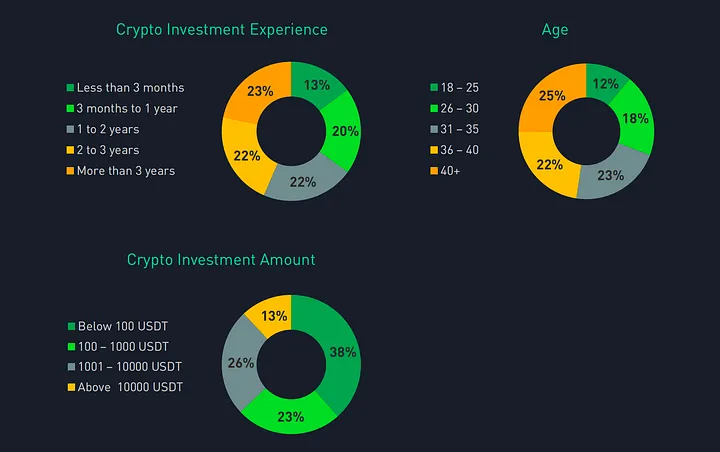
29% of users consider cryptocurrencies a more convenient way to hold assets; 34% are cryptocurrency traders; and 22% use cryptocurrencies for daily payments. From an investment perspective, users in the United Arab Emirates are most willing to invest in BTC and ETH. BTC is referred to by these users as “digital gold,” with 72% investing in BTC. In terms of interaction habits, users in the United Arab Emirates are adept at using the trading and lending functions of decentralized exchanges (DEXs) and are relatively familiar with on-chain operations.
In addition, users in the United Arab Emirates closely follow the latest developments in the crypto market, showing considerable interest in projects related to real-world assets (RWA), the metaverse, artificial intelligence (AI), and cross-chain bridges.
2. Regulation of Virtual Assets in Dubai
The Dubai government has long provided comprehensive and robust support to the blockchain and Web3 industries, laying a solid foundation for digital opportunities through initiatives such as the Dubai Blockchain Strategy launched in 2016, the UAE Centre for the Fourth Industrial Revolution established in 2019 by the Dubai Future Foundation in collaboration with the World Economic Forum, and the Dubai Metaverse Strategy introduced in 2022.
With respect to the regulation of virtual assets, Dubai has taken a pioneering approach by establishing an independent regulatory authority, the Virtual Assets Regulatory Authority (VARA), responsible for regulating and supervising the provision, use, and exchange of virtual assets in Dubai. According to industry insiders, because VARA operates according to market-oriented standards, its regulatory framework is clear and well-defined, its regulatory standards are highly professional, and its regulatory posture is approachable; if needed, one can even arrange meetings and discussions with VARA officials at any time.
So, how does one establish a Web3 company in Dubai? The first step is to understand the types of companies available in Dubai.
Dubai Business Locations and Company Types
When establishing a company in Dubai, the first decision is where to"where"conduct business. In the United Arab Emirates, commercial activities can be divided into two main categories based on geography: free zones and mainland. These two categories differ in aspects such as business operations, workforce composition, office premises, and visas.
1. Free Zones
Geographic Scope of Business Operations: Companies in free zones primarily focus on commercial activities outside the UAE. Certain free zones in Dubai can issue dual licenses to companies, allowing them to engage in both domestic and cross-border activities.
Workforce Composition:Companies in free zones are not required to employ UAE nationals.
Office Premises:Companies in free zones are not subject to mandatory requirements for physical office space. If a company chooses to lease office space, such space must be located within the free zone.
Visas:Companies in free zones are subject to quota or restriction systems. A company may increase the number of visas available by relocating to a larger office or applying for an increased visa quota, but any such change shall take effect only upon approval by the Free Zone Authority.
2. Mainland
Geographic Scope of Business Operations:There are no geographic restrictions on the business activities of mainland companies. Such companies may operate both within and outside the United Arab Emirates and are subject to the standard laws and regulations of Dubai.
Workforce Composition:Mainland companies are required to ensure that at least 2% of their skilled workforce consists of UAE nationals.
Office Premises:Mainland companies must maintain a physical workspace with a minimum area of 100 square feet; however, there are no restrictions on the location where the company leases or purchases office premises.
Visas:For mainland enterprises, provided that the scale of their business premises and commercial activities comply with the requirements of the regulatory framework, there is no limit on the number of visas they may obtain.
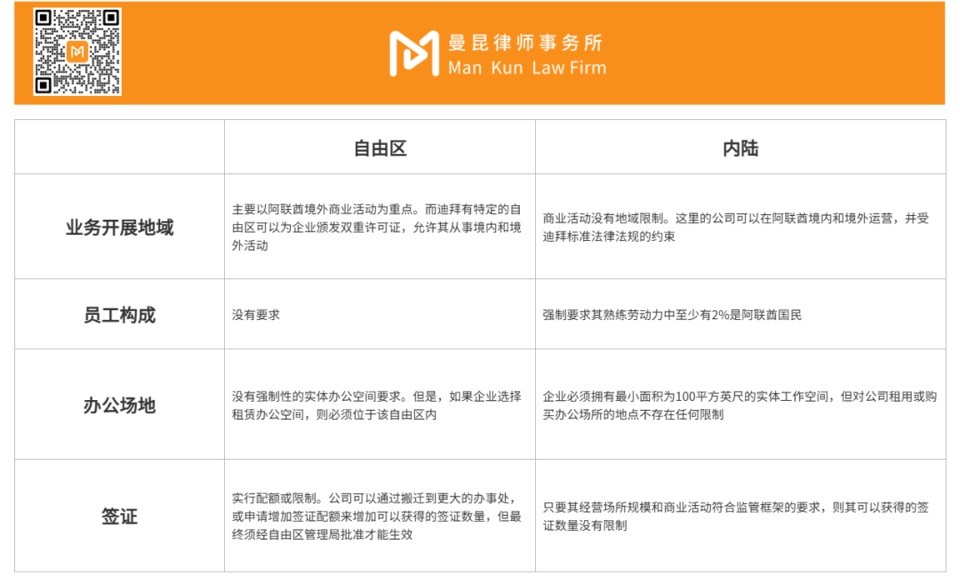
Generally speaking, non-UAE domestic enterprises are better suited for registration in flexible free zones.There are three types of free zone entities:
Free Zone Limited Liability Company (FZ LLC),This is the most common corporate structure, suitable for medium-sized and large enterprises and companies with multiple shareholders.
Free Zone Company (FZ Co.),Similar to an FZ-LLC, this structure is generally suitable for enterprises wishing to conduct business within a specific free zone.
Free Zone Establishment (FZE)This is a single-owner corporate structure, suitable for entrepreneurs and small companies seeking sole control over their business.
Different types of companies suit different parties and are subject to differentiated registration requirements. Web3 entrepreneurs should select the corporate structure appropriate to their circumstances based on the specific situation. If you have any questions, please consult a qualified lawyer. Once the corporate structure and place of registration have been determined, the following steps must be completed to establish a company in Dubai.
Procedure for Establishing a Company in Dubai
1. Determine Business Activities
When establishing an enterprise, it is first necessary to determine the nature of the business. In Dubai, there are more than 2,100 business activities to choose from, categorized into sectors such as industrial, commercial, professional, and tourism.
2. Select a Free Zone
Dubai offers more than 30 free zones to choose from. It is generally advisable to select a free zone where enterprises in the same industry are clustered.
3. Selecting a Company Name
When selecting a trade name, it is essential to ensure compliance with naming conventions in the United Arab Emirates. Names containing offensive language may be deemed offensive to religion. References to political groups or organized crime are prohibited. If a company is named after an individual, proof must be provided that such individual is a partner or owner of the company (the use of abbreviations or initials is not permitted).
4. Applying for Initial Approval
The Department of Economic Development (DED) of Dubai requires initial approval to ensure there are no objections to commencing business operations. The documents required will depend on the nature of the business, but typically include:
Application Form for Commercial Registration and Licensing
Copies of passport or identity card
Copy of residence permit/visa
Articles of Association
Feasibility study for the project
5. Opening a Corporate Bank Account
Once approval has been obtained and all necessary documents have been received, a corporate bank account may be opened.
6. Establishing Office Premises
All enterprises in Dubai must maintain a physical address.
7. Application for Final Approval
You need to prepare all documents, address details, and legal information to submit for final approval.
Provided that the submission materials are complete and there are no objections from the authorities, the registration of the corporate entity can typically be completed within one week.
Summary by Mankun Law Firm
Whether due to traditional advantages in geography, finance, and taxation, or its highly favorable stance toward Web3, Dubai is gradually becoming a top-ranked global hub for crypto entrepreneurship. According to the “World’s Most Crypto Business Friendly Countries in 2024” report published by Social Capital Markets, Dubai ranks first globally, surpassing traditional hotspots such as Switzerland, Japan and South Korea, Singapore, and the United States.
Furthermore, OKX’s announcement that it has obtained a full crypto exchange operating license further establishes Dubai as a key strategic location in the global layout of crypto business operations. It is anticipated that more well-known Web3 enterprises and startup teams will seek to establish a presence in Dubai, with company incorporation serving as a prerequisite in this process.
/ END.
References:
1. Bitget Research Institute: The Middle East – A Rising Star in the Crypto Market https://www.techflowpost.com/article/detail_17492.html
2. Understanding the Regulatory Landscape for Web3 in Dubai https://s.foresightnews.pro/article/detail/23454
Recommended Reading:
- Mankun Web3 Research | Analysis of Key Legal Compliance Points for Real-World Assets (RWA) in Hong Kong
2. The Issuance of Tokens by Blockchain Projects Does Not Equate to Illegality | Mankun Web3 Legal Education
*This article is an original work of Mankun Law Firm. It reflects solely the personal views of the author and does not constitute legal consultation or legal advice on any specific matter. We welcome contributions and disclosures from more Web3 practitioners. For reprints and legal consultations, please contact our customer service at: MankunLawFirm.
Author of this Article