

(In February 2026, marking exactly one year since accepting instructions from the largest domestic crypto exchange, we intervened at the second-instance stage of this case. Although the outcome did not result in an acquittal, which is regrettable, it did achieve a rare reversal on appeal at the second instance, warranting documentation to encourage our work this year.)
Engagement
At the beginning of 2025, while my professional affiliation was transitioning to Mankun Law Firm, I met with family members of the client from the crypto exchange (hereinafter referred to as the “Exchange”) in Shenzhen.
During the consultation, I learned that this was a high-profile case (involving what is believed to be thelargest domestic exchange by volume). The client, who was responsible for the perpetual contracts segment, was identified as a principal offender in the crime of operating a casino. At the first instance, a criminal law professor from a certain university was engaged for defense, and two leading criminal law scholars, Professors Zhang and Chen, were invited to issue expert opinions. These expert opinions uniformly concluded that:Perpetual contracts do not constitute gambling, and the case does not amount to the crime of operating a casino.。
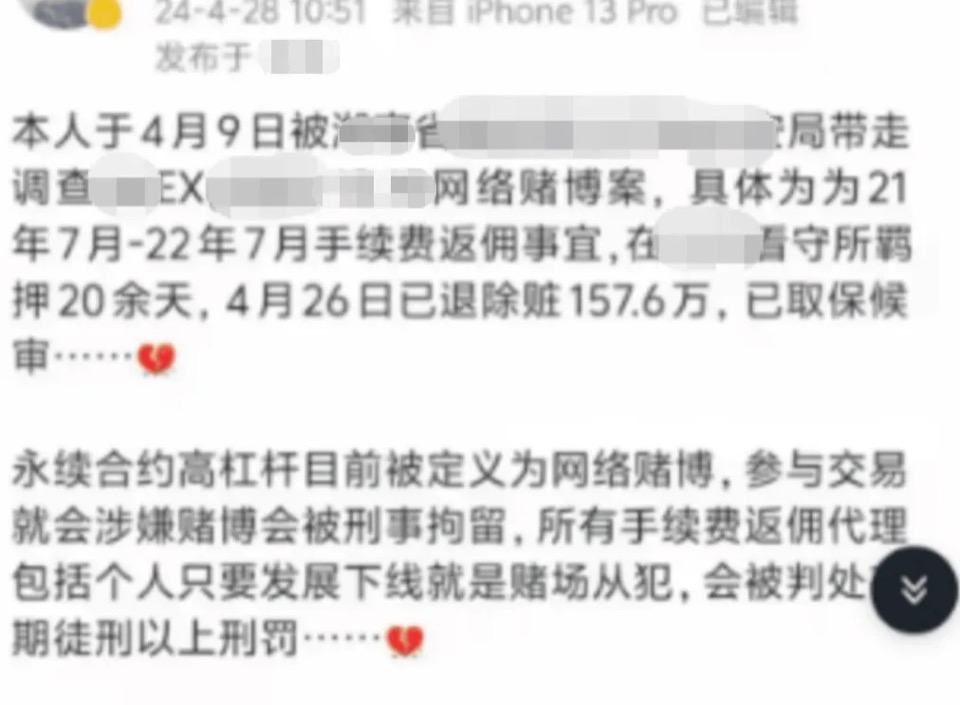
HoweverThe first-instance judgment did not meet the family’s expectations, and for the second instance they wished to retain a criminal defense lawyer with knowledge of the Web3 industry, so they contacted me.
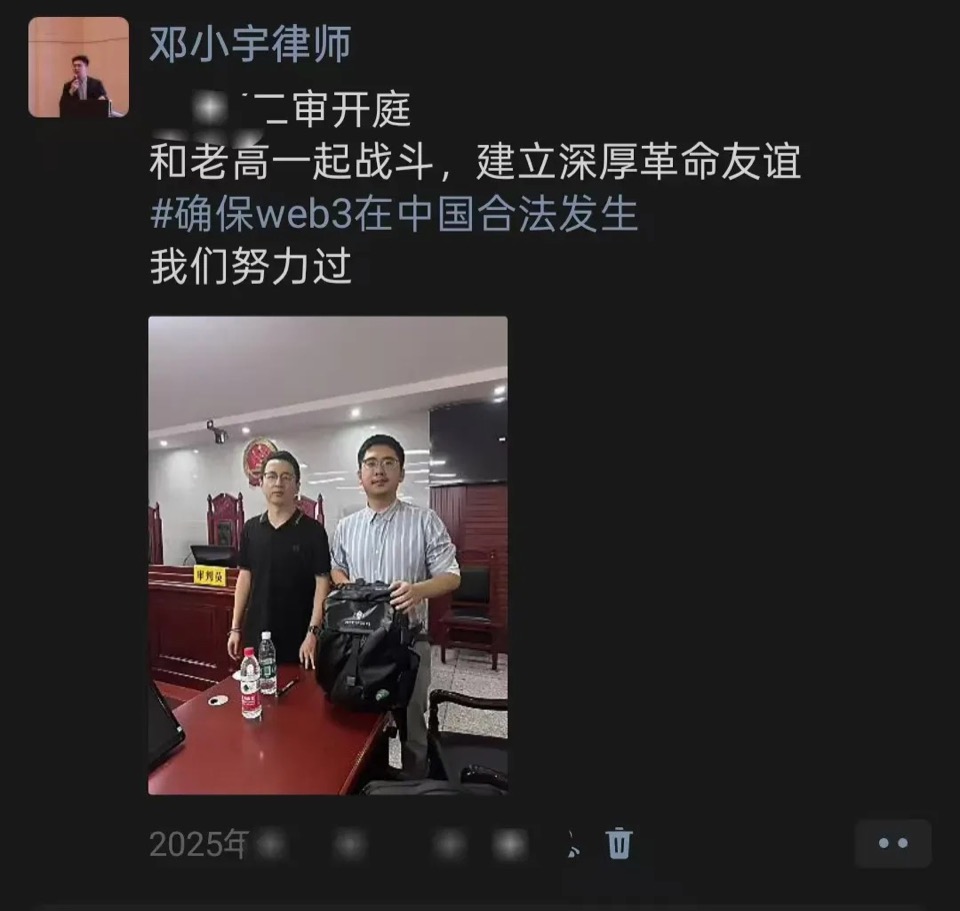
The engagement process proceeded smoothly. The family fully appreciated the difficulty of obtaining a revised judgment on appeal, but was very willing to make further efforts. Because my practicing certificate had to be surrendered for a period due to my transfer between law firms, I simultaneously arranged for the family to engage another criminal defense lawyer from Mankun Law Firm—Attorney Gao Mengyang(this was my first collaboration with Attorney Gao, laying the foundation for our enduring professional camaraderie). We promptly conducted a detention-center meeting and obtained access to the case file, enabling us to timely assess the case.
Investigative support company
Soon thereafter, Attorney Gao and I met Leo (hereinafter referred to as “Er Ge”) in a city without high-speed rail service. After more than a year in detention, he had become accustomed to the conditions, was in good spirits, and presented his thoughts clearly.
Because we both understand Web3, many concepts and information did not need to be explained, and trust was established quickly. He voluntarily described the background of cross-jurisdictional asset seizures in this case (as documented in my prior articleObservations on Cross-Jurisdictional Asset Seizures). For example, during the initial period of detention he was subjected to torture to extract confessions and was arbitrarily confined in an intensive care unit; if he failed to cooperate, he would be transferred to an infectious-disease ward. After our meeting, we verified these circumstances with the family and learned that the family had reported the above matters to the handling authorities during the first-instance proceedings. There was an audio recording in which Er Ge could be heard telling his family, “Give the devices in xxx to the public security organs, otherwise I will be beaten to death,” but the handling authorities did not respond.
According to his account, the handling authorities’ primary objective at the time was to obtain money.Initially, the investigative support company believed his assets amounted to nearly RMB 10 million. The investigators instructed him to disgorge those assets, leaving approximately RMB 1 million for his family’s living expenses, suggesting that this would facilitate the resolution of his case. However, after he surrendered the assets stored in the safe-deposit box, his previously unrelated virtual currencies also came under scrutiny, and the amount alleged to be involved in the case escalated to over RMB 100 million.
As he mentioned,the so-called "investigative support firms"constitute a malignancy within the industry. These refer to certain on-chain technical analysis companies based in mainland China thatostensibly operate in the cybersecurity sector, but in reality engage in lead-generation services in coordination with certain law enforcement agencies.Their egregious practices may even involve dispatching personnel to embed themselves within project teams (such as the mainland China teams of overseas crypto exchanges) to ascertain the specific identities of mainland colleagues and investigate the status of project liquidity pools. They subsequently extort the project entities or sell such information to mainland law enforcement authorities, thereby participating in a business model wherein they share in the proceeds derived from the subsequent disposal of virtual assets by law enforcement.
In light of this, as part of the subsequent defense strategy coordinated by Mr. Gao and myself, we advised the families to continue escalating these concerns through appropriate channels. A definitive determination must be made regarding the merits and faults involved. I have consistently maintained that achieving favorable outcomes in any case requires the concerted efforts of counsel, the clients, and their families.Although the available grounds for appeal in the second instance were limited, procedural violations remained a viable line of defense.
The anomalous phenomenon of pre-judgment prior to trial
Following the conclusion of the client meeting, we proceeded to the Intermediate People's Court to obtain the case file. The presiding judge assigned an assistant to liaise with us. Given the prior context of aggressive cross-regional enforcement actions and the restrictions imposed on attorney-client meetings, we were initially highly concerned about whether the court system would adequately safeguard attorneys' rights. Fortunately, the review of the case file proceeded smoothly. During this review, we discovered a document suggestive of internal collusion—At the outset of the investigation, a social risk assessment was conducted, which included scoring various aspects of the investigation into this case.。
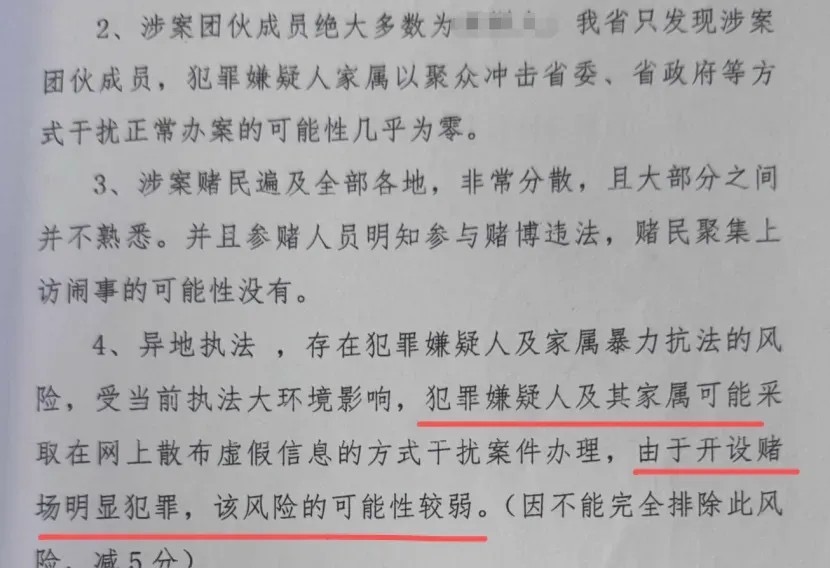
This assessment report, citing the former Panda Exchange as a precedent, asserted that there was no controversy in characterizing the conduct as the crime of operating a casino, noted the active cooperation of various departments, and directly confirmed the principal and accessory roles of each suspect within the report. Based on this, we became acutely aware thatThis case has been prejudged before trial. Moreover, given that it is at the second-instance stage (where the rate of reversal or modification on appeal has historically been approximately one in ten), mounting a defense will become an exceedingly arduous battle.
At the second-instance stage, the public security authorities still conducted interrogations.
Mr. Gao and I promptly reviewed the case file together, and after completing our review, we hurried to meet with our client, referred to herein as "Second Brother."We discovered in the case file that the data materials relied upon to determine the amount involved in the alleged crime were not included in the file. Upon verification with Second Brother, we confirmed that the same issue of failure to transfer such data materials had also occurred at the first instance.Furthermore, many witness statements in the case file were fragmented and housed within the files of other cases (as the dozens of individuals involved in this matter had been split into multiple separate cases).
After traveling directly from the county to the municipal court to submit our applications for supplementary file review and for holding a hearing, we returned to meet with Second Brother. He informed us that he had been interrogated. We initially assumed that the interrogators were the judge or the prosecutors appearing at the second-instance hearing; but on further reflection, this seemed unlikely, as we had been in contact with the handling personnel at the court and the procuratorate during the time period when the interrogation reportedly took place.
Second Brother stated explicitly that it wasthe police officers who had previously handled the case. We did not expect them to conduct an interrogation at this stage. Their remarks, both explicit and implicit, were essentially aimed at pressuring him to return funds so that the case would be handled more favorably.Such conduct constitutes a serious violation of procedural rules and has instilled fear in the client. Upon learning of this situation, the family members became resolute in their determination to file complaints regarding the improper handling of the case.
We are engaged in out-of-court advocacy efforts
to postpone the hearing.
Two months have passed since the second-instance case was docketed. Although the court accepted our application for a hearing, it contacted us in April to schedule the hearing. Both defense counsel rejected this scheduling. The complexity of the case is the underlying reason; more importantly, our previously submitted application for supplementary file review received no response, and we remain unable to access several materials that the first-instance court relied upon as the basis for its verdict.
We filed complaints.
At the same time, we informed the court that, as counsel, we had lodged complaints against the forensic appraisal institution, arguing that the appraisal materials used as evidence in the first-instance proceedings might no longer be admissible. The family members also filed complaints against the public security organs, contending that prior interrogation records might be excluded due to allegations of torture to extract confessions. We requested additional time for the case, which the judge granted, and indicated that they would coordinate with the case-handling authorities and the forensic appraisal institution to allow us to review the case file.
At this point, we remain grateful for the professionalism and sense of responsibility demonstrated by the female presiding judge in the second instance. Subsequently, we spent approximately two to three months communicating regarding the supplementary review of the case file in the second-instance proceedings.We obtained more than 70 gigabytes of electronic data materials from the public security organs and the forensic appraisal center, respectively. The materials revealed that the company’s technical personnel, seeking leniency for meritorious service, had proactively restored and downloaded the data from cloud servers.
Through coordination by the same female presiding judge in the second instance, we obtained materials from the first-instance court relating to the three cases that had been severed. Among these materials, the company’s finance department explicitly stated that our client’s illicit gains were not as substantial as alleged, which contradicted the audit report contained in the case file.
We conducted legal research.
During this period, I remained diligent and authored several articles arguing that perpetual contracts do not constitute gambling. In these articles, I asserted unequivocally that perpetual contracts are not gambling, rather than hedging by suggesting that they might constitute gambling under certain circumstances but not under others.
This stance was grounded, on the one hand, in a fundamental understanding of the distinctions between investment activities and gambling, and, on the other hand, in the encouragement provided by two preeminent legal scholars.Furthermore, while drafting this article today, I noted that a judge in Shanghai had also published an article arguing that perpetual contracts do not constitute gambling.
Even though all exchange-related perpetual contract cases we handled in 2025 were adjudicated as constituting the crime of operating a casino, I firmly believe that history will deliver the correct answer, because I am certainly not in the wrong. Nevertheless, I must regrettably caution Web3 entrepreneurs against engaging in perpetual contracts at present.
Pre-Trial Advocacy
After the supplementary case files were returned, the family members’ complaints against the public security organs received attention from the internal oversight departments. Detailing the full process would likely result in the removal of this article. In brief, our request for a routine meeting with the second defendant (referred to as “Er Ge”) was denied, and we were instructed to visit the public security bureau for an informal discussion before being permitted to meet. At the time, we were considerably concerned and reported the safety implications to our law firm. Later, we encountered a senior official at the public security bureau,After several rounds of amicable communications, we assisted the family members in recovering a portion of the assets.
We were also able to meet with Mr. Er Ge as scheduled, brief him on developments outside, and convey that many of his acquaintances both domestically and abroad had expressed concern for his situation. Our interim work also received Mr. Er Ge’s acknowledgment.
Guided by the defense strategy endorsed by Mr. Er Ge, we met with the prosecutor handling the second-instance proceedings. The role of the prosecutor in an appeal differs from that in the first instance: at first instance, the prosecutor acts primarily as the public prosecutor supporting the public prosecution, whereas at second instance the prosecutor also exercises supervisory oversight over the first-instance case. Genuinely believing that significant issues existed in the case, and approaching the meeting with a sincere willingness to engage in open dialogue, we presented our views. After hearing us out, the prosecutor stated candidly that he had handled the matter involving Panda Exchange and considered that there was little material difference between the exchange in this case and Panda Exchange.
Mr. Lao Gao and I had previously looked into the circumstances of Panda Exchange and discussed with Mr. Er Ge the contractual models employed by the two exchanges.Mr. Er Ge stated outright that Panda Exchange had fabricated data, and that characterizing its conduct as fraud would not be excessive. By contrast, apart from higher leverage ratios in certain segments, his exchange’s data were fully aligned with Binance, operating entirely in accordance with the Binance model.
However, our communications were limited to this extent. We did not expect that the second-instance case file could be materially altered through simple discussions.Nevertheless, we wished to say a bit more and encourage the case-handling personnel to listen further, so that the concepts and seeds of Web3 might take deeper root in the judicial realm.This is by no means a catastrophic threat; even if it were a ferocious beast, judicial officers should understand it better in order to craft more effective regulatory safeguards.
Morning court session
Before the hearing, we conducted intensive visits with Mr. Er Ge in the county town, which is not served by high-speed rail. During this period, we discovered a hidden-gem hotel with extremely low rates but star-rated amenities. Notices within the hotel regarding bankruptcy proceedings revealed that the bankruptcy administrator was implementing a gradual recovery plan, which explained the exceptional value of the accommodation.
Litigation resembles major surgery; after the proceedings conclude, there remains a period of rehabilitation and recovery. Are we undergoing a second operation? Ultimately, however, lawyers cannot become the lead surgeons—the scalpel always remains in the hands of the court.
The judge borrowed courtroom facilities from the first-instance court and traveled from the urban district to the county for the hearing. Although the first-instance proceedings had clearly taken place after the pandemic era, it was unclear why that hearing had been conducted by video link. It was Mr. Er Ge’s first time entering a courthouse; he appeared quite accustomed to the setting and was reunited with family members whom he had not seen for a long time.
We observedmany unfamiliar faces in the public gallery. It was only during the midday recess that we learned they were case-handling personnel from various stages prior to the first-instance trial.Mr. Gao and I divided our responsibilities: I primarily conducted questioning, while he focused on cross-examination and the presentation of evidence. During the questioning and cross-examination, both Mr. Gao and I raised issues concerning police torture to extract confessions and the unlawful disposal of virtual assets—After my client (referred to as “Er Ge”) realized that greater cooperation only led to harsher treatment, he ultimately refused to authorize the investigating authority to engage a third-party company to dispose of the virtual assets. Nevertheless, the public security organs proceeded with forced disposal.This became a focal point of our persistent inquiries during the second-instance proceedings.
Time flew by. The case did not enter the debate phase during the morning session. The judge called for a recess for lunch, scheduled the hearing to resume at 1:00 p.m., and urged us counsel to expedite the proceedings to avoid requiring them to stay overnight in the county. Near the end of the recess, I had intended to add the court clerk on WeChat and share with her a lengthy video titled “Futures” by the well-known content creator “Xiao Lin Shuo,” so that she could forward it to the judges to help them understand the historical development of futures contracts, noting that perpetual swaps are essentially a new form evolved from futures. To rebut the first-instance court’s finding that the absence of physical delivery in perpetual swaps constituted gambling, I had prepared extensive supplementary materials on futures knowledge, pointing out that stock index futures also do not involve physical delivery—all of which is covered in this educational video on futures.
However, unexpectedly, the thumbnail of Xiao Lin Shuo’s video on futures prominently displayed the title “What Is a ‘Financial Casino’...” Although Xiao Lin Shuo used quotation marks, I decided against sharing it to avoid any potential misunderstanding by the judges. We would continue to present our defense arguments during the afternoon session.

In fact, in the numerous economic crime cases we handle, we have heard many extreme assertions. It is not uncommon for case-handling personnel to equate stock trading and futures trading with gambling. Participants in the crypto community also jokingly refer to trading perpetual contracts as “degenerate gambling behavior.” However, such descriptions emphasize the speculative nature of these financial activities, rather than classifying them as genuine gambling akin to sports or horse race betting.
What distinguishes the two? If you have read this far, it is truly worth reflecting on this question.
Afternoon Session
Lunch with the family members was rushed. I ate only a few bites, having lost my appetite, and smoked repeatedly. By the time the hearing resumed at 1:00 p.m., we entered through the attorneys’ entrance and happened to overhear a case-handling officer on the phone in the corridor, seeking external assistance to gain a detailed understanding of what perpetual swaps are. I felt quite vindicated by my pre-trial preparations, having simulated perpetual swaps using the Binance demo trading platform and printed several PowerPoint slides for in-court presentation.
As the trial continued, Mr. Gao was reading out the evidentiary materials,We have collated the regulatory policies and case-handling practices concerning perpetual contracts in the United States, Singapore, and Hong Kong; none of these jurisdictions treats perpetual contracts as gambling.We also referenced our complaints against the appraisal institution and its prolonged failure to respond, seeking to demonstrate that the evidentiary weight of the materials used to finalize the first-instance judgment is questionable. Furthermore, we reiterated the opinions provided by two preeminent legal scholars during the first-instance proceedings, who argued from a criminal law perspective that perpetual contracts do not constitute gambling.
Notably, family members attending as observers were denied entry to the courtroom because it was outside working hours. The debate phase commenced before they could enter. During my oral arguments, I sincerely wished that the family members could have been present to witness the proceedings.
During his self-defense, Mr. Er Ge articulated viewpoints we had discussed in multiple meetings. He stated candidly that if a conviction were inevitable, he could at most acknowledge liability for illegal business operations, given that the state does not support the operation of virtual currency trading businesses. However, he firmly refused to admit to gambling charges.He emphasized that had they known the activity constituted gambling, they would certainly not have engaged in it. Abstaining from wrongdoing is the bottom line for Web3 practitioners.
Before presenting my defense opinions,I proposed displaying a presentation on perpetual contracts to all personnel involved in the trial proceedings. Using the presentation, I explained that perpetual contracts are not gambling games based on guessing high or low outcomes.In games of chance such as guessing high or low, the outcome is determined immediately once the dice cup is lifted. In contrast, as a form of financial speculation, an incorrect prediction of price direction in perpetual contracts does not necessarily result in a loss; traders can hold their positions and wait for the market price to move in their favored long or short direction. Moreover, if a trader opens a position with only 1x leverage, they will never face forced liquidation. The core distinction between financial activities and gambling lies in whether participants retain control over risk management. The so-called leverage ratio is not the defining factor; there are gambling activities without leverage, just as there are numerous financial activities involving high leverage.
I observed several judges exchanging views while listening to our defense arguments. I subsequently heard the co-defending counsel endorse our defense points, and the prosecutor acknowledged our argument that the public security organs’ unauthorized disposal of virtual assets constituted unlawful conduct warranting remedial action. Everything appeared to be progressing in a favorable direction.
In my closing statement, I clarified that Ido not argue that perpetual contracts are not gambling merely because I serve as defense counsel. Rather, it is my in-depth understanding of the industry and of perpetual contracts that compels me to firmly pursue a not-guilty defense.Mr. Er Ge did not engage in this activity with the intent to commit wrongdoing through gambling. If perpetual contracts were classified as gambling, a large number of individuals in mainland China would be implicated in illegal or criminal gambling offenses. Would such an outcome truly benefit social governance?
Conclusion
Around the National Day holiday, we received the case outcome: the second-instance judgment was revised, resulting in a reduced sentence for our client. Coupled with the partial recovery of assets by the family prior to the trial, we are relieved to have fulfilled our duties with integrity and honored the trust placed in us.
However, the legal characterization of the charges remained unchanged, a circumstance that leaves me with an indescribable sense of helplessness.Nevertheless, I wish to state that I have strived for the Web3 industry. We firmly believe that the seeds sown in spring will surely bear fruit in the future. In 2026, we will continue to facilitate the lawful development of Web3 in China.
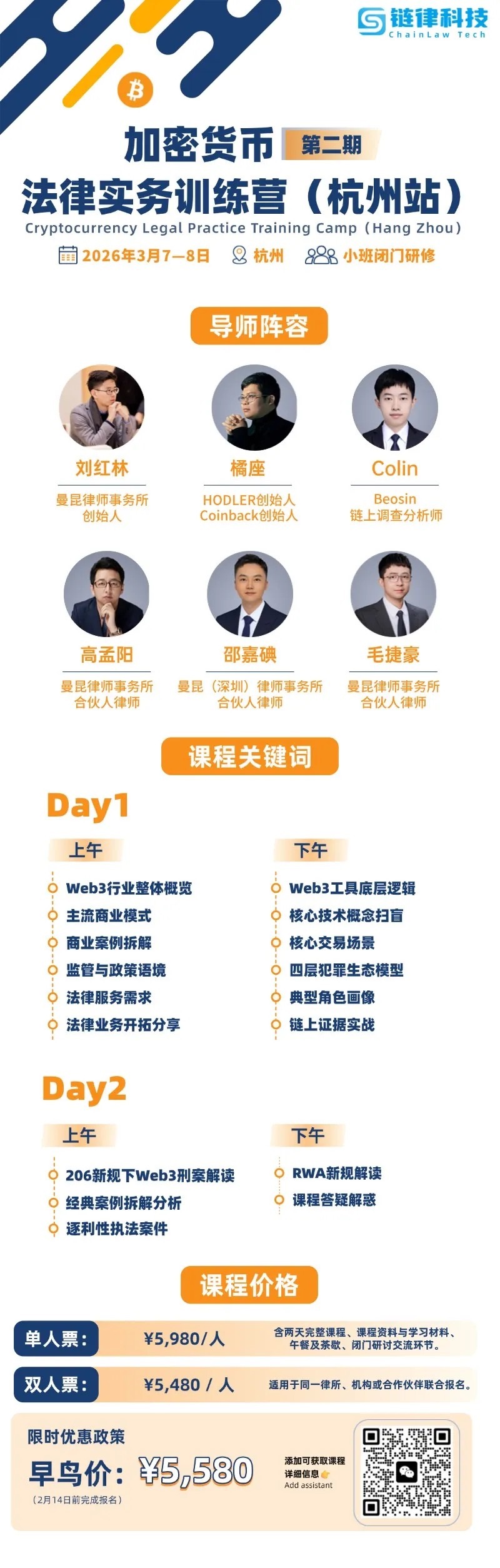
Going alone allows one to move fast; going together enables one to go far. The path to Web3 compliance is long and requires more legal professionals with solid expertise to jointly cultivate it. On March 7–8,we welcome you to attend the offline Crypto Assets Legal Training Camp in Hangzhou. We avoid empty talk and focus solely on how to address real-world compliance challenges. You are welcome to join us for exploration and exchange.
Representing Attorney
Deng Xiaoyu,Partner at Mankun Law Firm (Shenzhen). Attorney Deng specializes in criminal cases, having participated in nearly three hundred cases, with a solid theoretical foundation and extensive practical experience. He is particularly adept in the field of Web3.0-related crimes, having provided criminal defense services for several well-known digital currency exchanges, effectively safeguarding clients' rights and interests. He was awarded the "Special Contribution Award for the 30th Anniversary of the Shenzhen Lawyers Association," has been interviewed by multiple prominent domestic media outlets, and has been invited on numerous occasions to deliver lectures within the industry.
About Mankun
Mankun Law Firm was established in 2015 as a boutique law firm in China dedicated to the Web3.0 new economy and deeply engaged in the blockchain industry. Members of the Mankun team possess unique and diverse industry backgrounds, hailing from renowned legal service institutions, state judicial organs, internet technology companies, crypto asset institutions, and blockchain industry think tanks.
Leveraging a profound understanding of the new economy, continuous attention to and research on policies and regulations, and rich practical experience, the Mankun team excels in providing comprehensive legal services from the perspectives of business models and legal practice. These services include business structure design, project financing and investment, transaction planning, operational compliance, resolution of complex civil and commercial disputes, prevention and control of criminal risks, and criminal defense for enterprises in the new economy sectors such as Web3.0, blockchain, AI, NFTs, digital collectibles, crypto funds, crypto payments, DeFi, real-world assets (RWA), and GameFi.
Mankun Law Firm is headquartered in Shanghai and maintains branch offices in Hong Kong (China), Silicon Valley (United States), Shenzhen, Hangzhou, Zhengzhou, Chengdu, and other locations. To meet the global compliance development needs of Web3 industry clients, Mankun has established local offices in major global crypto-finance cities and carefully selected local professional blockchain service partners, providing clients with professional legal and compliance services that combine global reach with deep expertise in China.