
Reading note:This article examines tokenized stocks and common structures for purchasing stocks with stablecoins from the perspective of compliance research in offshore markets. It is intended solely for industry research and legal discussion and does not constitute investment advice, a product recommendation, or a solicitation of transactions. Access and regulatory requirements differ across jurisdictions, and readers in mainland China should pay particular attention to domestic restrictions on virtual currencies, real-world asset (RWA) tokenization, and cross-border securities services.
Buying Apple, Nvidia, or Tesla with USDT already appears on the webpages of crypto trading platforms, Web3 wallets, on-chain applications, and tokenized stock projects. Some wallets place "stocks" under the "Trade" or "Markets" menu, while others display stock tokens on exchange pages just like ordinary crypto assets.
The interface increasingly resembles a securities app, yet what users actually receive may be entirely different: real shares held in a brokerage account, stock certificates issued by a third-party company, or a contract whose profit and loss is calculated by reference to the share price. All of these may track the price of Apple or Tesla, but different entities are responsible for dividends, exit, and compensation.
The following follows a single 1,000U payment: first, what the money ultimately becomes; then, who is responsible for honoring it; and finally, whether ordinary individuals can buy it.
I. Paying with a stablecoin is not the same as buying a stock
What is commonly called "U" usually refers to USDT, and may also refer to US dollar stablecoins such as USDC. It only indicates what the user pays with. A stablecoin can first be exchanged for US dollars and then deposited into a brokerage account to buy stocks; it can also be used to directly purchase stock certificates or share-price contracts issued by a company.
"Tokenization" refers to how rights are recorded and transferred. A blockchain can be understood as an electronic ledger jointly verified by multiple parties, and real shares, debt instruments, and derivative contracts can all be represented by tokens. Therefore, even where the page also displays "AAPL," the underlying rights may differ substantially.
Products on the market can broadly be grouped into the following four pathways. The payment entry point may be similar, but the destination of funds and the rights of holders must be assessed separately.
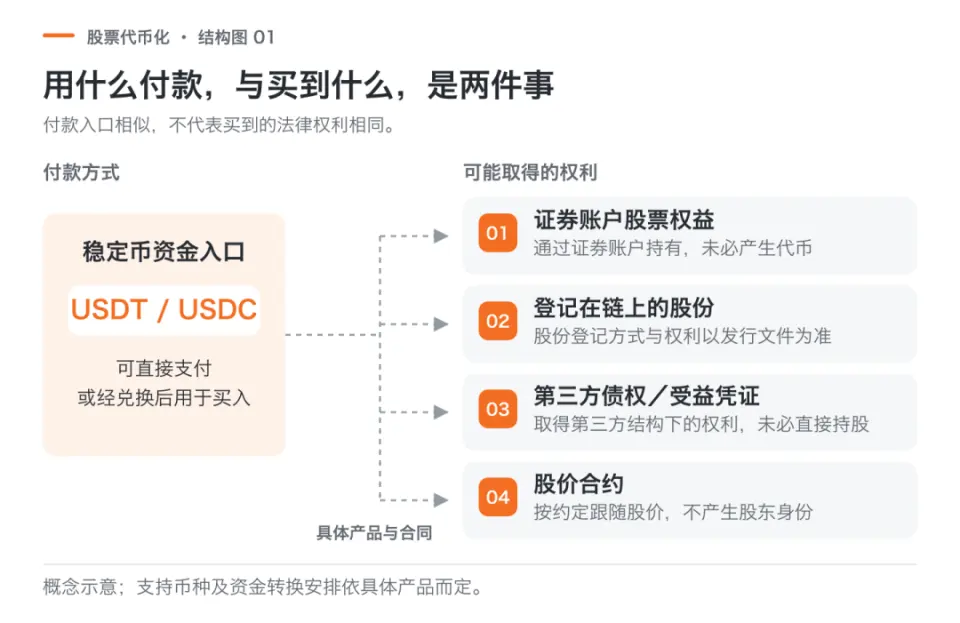
Figure 1 | Stablecoins explain how the money is paid; what actually determines user rights is which trading arrangement the funds ultimately enter.
II. The same stablecoin payment, four different destinations
(1) First exchange for US dollars, then buy stocks through a broker
The first model is closest to buying shares through a traditional broker: stablecoins are converted into US dollars through a partner channel, the US dollars enter a securities account, and the broker then executes the stock order. What the user holds is a stock interest recorded within the broker's system, and stablecoins serve only as a deposit or withdrawal tool.
This is how Interactive Brokers (IBKR) operates. The partner receives stablecoins, converts them into US dollars and credits them to the securities account; after a client sells shares, the client may also convert eligible US dollar balances back into the stablecoins it supports. The specific currencies and available regions are determined by the platform's rules.
Binance, by contrast, embeds a similar service into its exchange app. Nest Trading receives instructions and displays the account, while Alpaca handles the purchase, sale and custody of the shares. The shares are held collectively in an omnibus client asset account, with client-level records used to distinguish individual holdings. The agreement also treats users as Alpaca clients for purposes of SIPC protection; where shares are on loan, the relevant protection is subject to separate exceptions. After a sale of shares has settled, the proceeds enter the Binance funding account in USDC.
"Alpaca will not establish any accounts in your name" — Chinese meaning: Alpaca will not open an account in your name. — Binance, Securities Trading Product Terms, Section 4(a).
(2) Moving the registration of real shares onto the blockchain
The second model moves the registration of real shares onto the blockchain. A listed company participates in the arrangement, and the registrar maps wallet addresses to shareholder records. When a transfer that complies with the rules occurs on-chain, the legal record of the holder is updated accordingly.
The GLXY arrangement between Galaxy and Superstate is one example. Investors who have completed identity and wallet verification may transfer Galaxy Class A common stock into an approved wallet for holding. The relevant shares remain one-share-one-vote corporate shares, and voting, dividends and corporate actions continue to be handled under the rules applicable to shares.
When holders exit, they may transfer the on-chain shares back into the traditional registration system and then sell them through a brokerage account, or transfer them to another eligible investor through a permitted channel. There are also arrangements in which a company directly issues new shares and collects payment in stablecoins. Whichever approach is used, the blockchain changes the manner of registration and settlement, while share issuance, investor identity and trading channels must still comply with securities rules.
(3) A third party holds the shares and gives you its own instrument
The third model interposes an issuing company between the user and the listed company. It holds shares through brokers and custodians, and then issues its own instruments to users. Many of the stock tokens commonly seen on trading platforms and in wallets adopt this structure.
xStocks and the Ondo offshore products discussed in this article both use a debt-type securities structure. What the user holds is the issuing company's contractual obligation to pay, with the amount varying according to the share price, dividends, taxes and fees. The listed company is responsible for its shares, whereas whether the stock tokens can be redeemed depends on the issuance documents and the supporting asset arrangements.
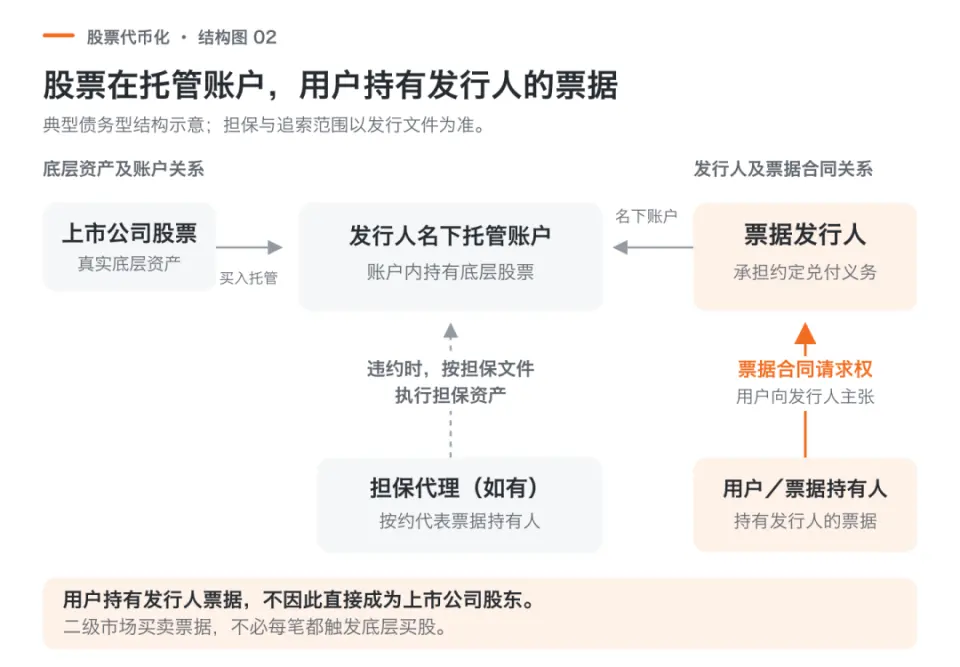
Figure 2 | Taking debt-type stock instruments as an example: the issuing company holds supporting assets such as shares, and the user has a contractual claim for payment against it; upon default, the collateral assets are handled by the institution designated in the contract.
The "1:1 backing" referred to in the product usually means that assets such as shares held by the issuing company correspond to the tokens already issued. These assets may be included in collateral arrangements and, upon default by the issuing company, disposed of by the collateral agent pursuant to contract. This can reduce the risk that the tokens have no asset backing at all, but the user's direct claim still points to the issuing company.
There are two exit routes: sell to the next buyer on the secondary market, or apply to the issuing company for redemption in accordance with the issuance documents. In the former case, the purchase price comes from the counterparty; only in the latter case does the issuing company handle the backing assets and settle in accordance with the contract. The ability to hold and transfer tokens in a wallet does not mean the holder has already satisfied the identity, regional and amount conditions for direct redemption.
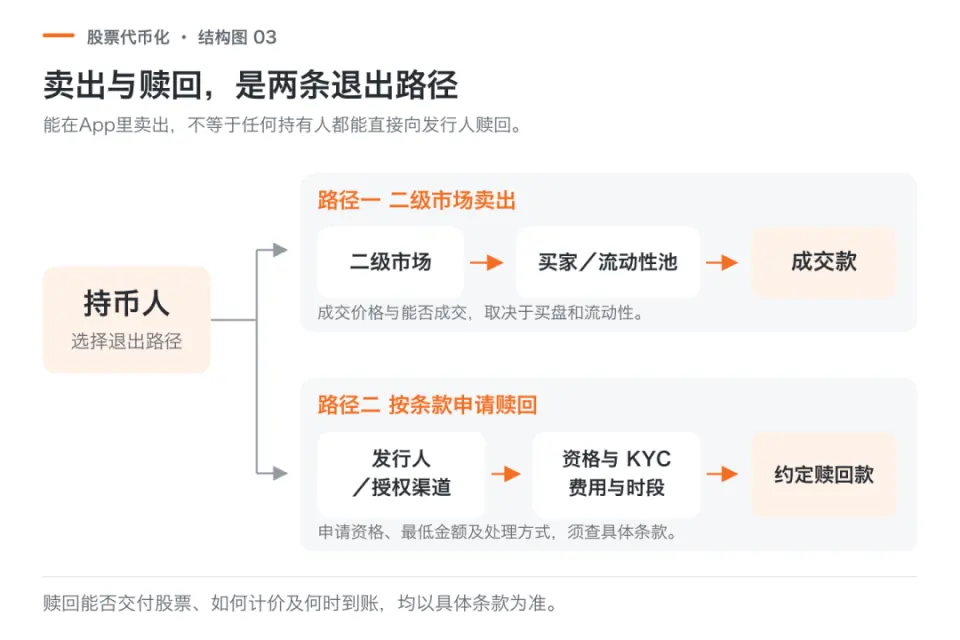
Figure 3 | On a sale, the money comes from the next buyer; on redemption, the issuing company pays funds or delivers assets under the contractual arrangements. USDon shown in the figure is the U.S. dollar stablecoin used by Ondo for settlement.
The final terms of TSLAx are stated plainly: redemption is settled in fiat currency or cryptocurrency, and the underlying Tesla shares are not delivered to holders. What users get back is the settlement amount.
"Physical delivery of the Underlyings ... is excluded" — Chinese meaning: the terms exclude physical delivery of the underlying Tesla shares. — TSLAx final terms, May 8, 2026.
The rights details of different tokens will still vary. For example, AAPLc of the Coinbase Onchain SPV uses a trust arrangement, and only holders who have completed the prescribed identity and rights-registration conditions may directly apply for redemption or submit voting instructions. For ordinary users, small purchases and sales in an App and direct subscription and redemption with the issuing company are often two different sets of thresholds and procedures.
(4) Purchasing a contract that tracks share price movements
The fourth approach centers on the contract between the user and the platform. The two parties calculate profit and loss by reference to the price of a given stock, and the user receives a settlement amount after closing the position. Even if the platform buys shares to hedge, it is managing its own performance risk.
Robinhood Europe's Classic Stock Tokens are over-the-counter derivative contracts. Customers obtain price exposure but do not directly hold shares, have no shareholder voting rights, and cannot withdraw the underlying shares. Robinhood also has RHJ stock tokens, which adopt a debt securities structure; under the same brand, different legal products may exist at the same time.
"The Product is an over-the-counter ('OTC') derivative" — Chinese meaning: the product is an over-the-counter derivative. — Robinhood Classic key information document, July 1, 2026, page 1.
Classic customers submit closing requests through the App, and Robinhood Europe settles according to the then-current underlying quotation and fees. Customers place orders in euros, the system converts them into U.S. dollars to calculate the position, and the proceeds from closing are converted back into euros. When users exit, they are dealing with the contractual counterparty.
Stock perpetual contracts in wallets add margin, leverage and forced liquidation. Taking the stock perpetuals accessible through Phantom as an example, traders bet on the direction of the share price, and profits are settled by the contract counterparty and the trading mechanism; when margin is insufficient, the position will be forcibly closed. This is closer to leveraged trading in the crypto market than to purchasing shares.
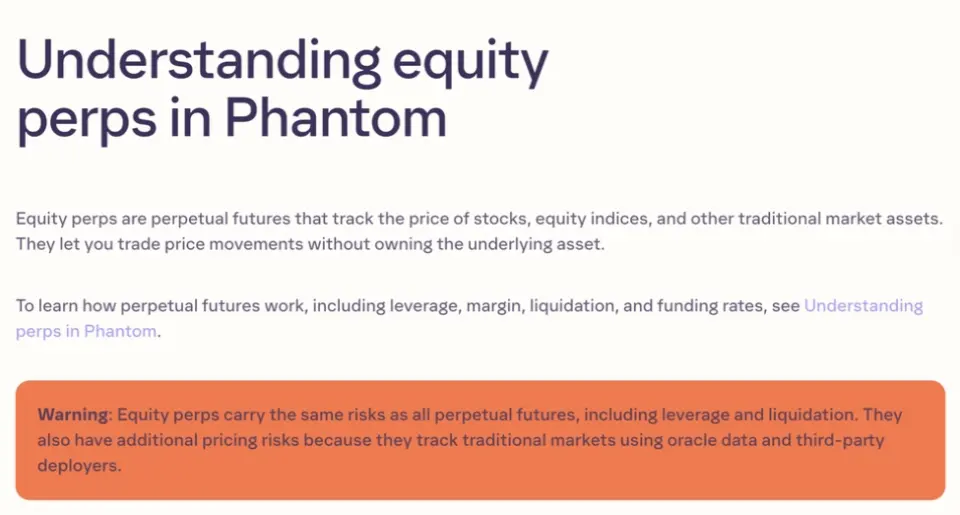
Figure 4 | Phantom's official perpetual stock product page, describing price tracking, leverage and liquidation risk.
At this point, the main differences among the four models are clear. Although all of them display stock price movements on screen, users sometimes hold shares, sometimes hold certificates issued by the issuing company, and sometimes hold only a contract that settles profit and loss. The table below places them side by side for comparison.
III. Why do "stock" entry points appear simultaneously in trading platforms, wallets and on-chain applications?
Common entry points currently include project websites, centralized trading platforms, Web3 wallets and on-chain trading applications. Ondo Stocks has its own purchase page; platforms such as Kraken and Bybit place stock tokens within their trading functions; Bitget Wallet, Solflare and Wallet in Telegram have already set up stock sections in their wallets, while MetaMask, Trust Wallet and others mainly provide entry points through their existing swap functions.
Behind these front ends are often the same group of products. xStocks or Ondo issues the certificates, brokers and custodians hold the shares, market makers or on-chain trading tools provide quotes, and the app handles display, order taking or trade connection. A "stock" button appearing in a wallet may represent a complete product section, or it may simply mean that its trading route can swap for the corresponding token.
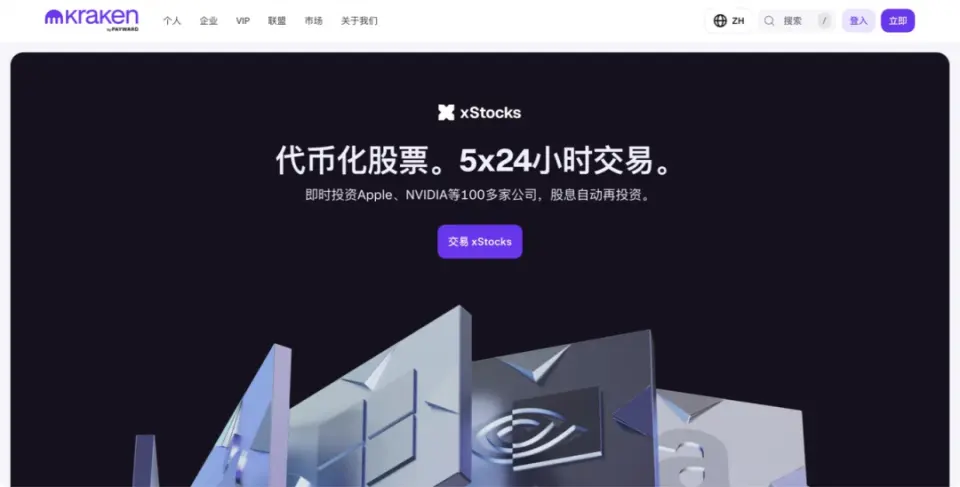
Figure 5 | Kraken's official Chinese-language xStocks product page, showing the stock token entry point.
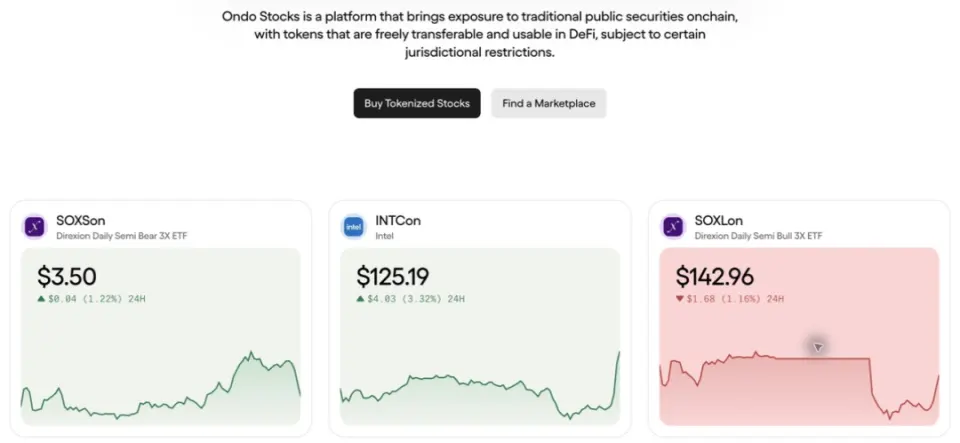
Figure 6 | The Ondo Stocks official website displays token cards for stocks and funds. An ETF is a type of fund that can be bought and sold on an exchange like a stock; some of the ETFs shown also use leverage.
Once the entry points are separated, the responsibilities of each party toward users are also separated. Taking xStocks as an example, Backed bears the issuer's payment obligations under the certificate contract, while the platform providing the entry point is responsible for its own trading, display and customer service. Behind a single click to buy, there may simultaneously exist multiple layers of relationships, including issuance, custody, trading and software services.
Fees are also dispersed across these stages: currency exchange spreads, platform trading fees, on-chain fees, and the issuing company's subscription, redemption or management fees may all arise. A homepage statement of "zero commission" usually eliminates only one of these items. Determining whether something is compliant requires examining what each institution actually does, one by one.
IV. How do these products and the applications providing entry points achieve compliance?
Compliance must be viewed at two levels: whether the product can be lawfully issued, and whether the institution providing the access point can sell or arrange transactions in the product to this particular user. Real shares, debt-type equity certificates and share-price contracts are subject to different rules; the fact that a product has completed its issuance procedures does not mean that any App may sell it in any region.
xStocks uses a Jersey company as the issuer and prepares corresponding offering documents, setting out the issuing entity, holder rights, supporting assets, fees and risks. In the European Economic Area, Kraken provides the relevant services through a regulated investment firm and conducts product-knowledge and risk-suitability assessments for ordinary retail clients. This shows that tokenized shares can enter compliant sales channels, but this must be operated by an appropriate entity and in accordance with securities business rules.
An App may also delegate securities accounts, identity verification and trade execution to a licensed broker. Dinari's integration solution in the United States requires a securities account to be established for each client and reviews the interface and marketing of partner Apps. Another category, self-custodial wallets, emphasizes that it only provides software and transaction connectivity, with users signing on-chain transactions themselves. Even so, actual functions must still be examined: whether the App receives or transmits orders, controls client assets, and charges promotional fees. Calling the interface a "wallet" does not automatically exempt it from securities sales or marketing rules.
Cross-border operations must also simultaneously satisfy the requirements of the place of issuance and the place of sale. Common problems fall mainly into three categories: marketing, accepting orders or arranging transactions without a licence; selling products intended only for professional investors to ordinary retail investors; and marketing issuer certificates as if users directly hold shares in a listed company. Compliance ultimately turns on actual business conduct, not on the App's name or page labels.
V. Which retail investors can buy, and why do different access points give different answers?
Whether an ordinary person can buy depends on their region, purchase channel and investor status. Secondary trading within a platform, wallet swaps, and direct subscription or redemption with the issuing company often apply different thresholds. The fact that a person can receive tokens on-chain does not mean the issuing company must accept that person's redemption request.
Taking xStocks as an example, Kraken opens access to ordinary individuals in some regions, but markets such as the United States, the United Kingdom, Canada and Australia are restricted, and European Economic Area clients must also complete a questionnaire and use the prescribed trading method. Ondo Stocks allows eligible non-US users to buy or redeem directly after completing review; the regions open through the MetaMask access point are narrower still. The same product through a different access point may yield a different answer.
For readers in mainland China, an overseas platform showing "available for purchase" cannot replace a domestic legal assessment. Yinfa [2026] No. 42, issued in February 2026, continues to impose prohibitions on virtual currency-related business within China and restricts real-world assets (RWA) tokenization business; overseas projects soliciting clients within China or unlawfully providing related services also fall within the scope of regulation. Where an individual participates in relevant transactions and the contract is held invalid for violating public order and good morals, the investment loss may be borne by the individual.
If a product follows the path of "stablecoin deposit followed by a broker purchasing real shares", cross-border securities business rules are also involved. Marketing to domestic clients, opening accounts, or providing trading or ancillary services without approval may be subject to rectification. A platform's regional restrictions, domestic rules and source-of-funds requirements must be assessed together.
VI. After purchase, how are dividends, exit and handling after problems carried out?
The "dividends" referred to in tokenized shares are often not a cash payment received in a wallet. xStocks, Ondo and Robinhood RHJ generally reinvest after-tax dividends in the corresponding shares and reflect this to holders through adjustments to the number or value of tokens. What users enjoy is the economic benefit after reinvestment.
When retrieving funds, a distinction must be drawn between selling and redemption. Selling means transferring the tokens to the next buyer, with the price coming from the counterparty; redemption means returning the certificates to the issuing company and obtaining stablecoins, fiat currency or other agreed assets in accordance with the product rules. On-chain tokens can be transferred around the clock, but the secondary market and the issuing company's subscription and redemption channels each have their own business hours; when liquidity is insufficient, both price and settlement time will be affected.
When the issuing company defaults, stock certificates must be pursued for recovery along the contract. Taking xStocks as an example, the collateral agent handles the supporting assets on behalf of holders, first deducting enforcement and related expenses, and then distributing the remaining proceeds. This process takes time, and the ultimate recovery amount is also affected by disposal prices and expenses.
Real shares held in custody by a broker are subject to a different set of customer asset protections. The terms of Nest Trading and Alpaca treat users as Alpaca customers for SIPC protection purposes; that regime primarily addresses shortages of customer securities or cash upon broker liquidation, does not compensate for declines in stock prices, and shares on loan are subject to separate exceptions. If the front-end App ceases service, the shares may remain with the broker, but users need to complete identity verification, account handover, or position transfer. Once shares are sold and converted into USDC in a platform account, those assets also no longer fall within the SIPC protection scope of a securities account.
VII. Mankun Lawyers' Summary
Returning to the 1000U at the beginning, the same "buy" button may send money into a broker account, may hand it to the issuing company of stock certificates, or may merely establish a contract settled according to stock prices. The ticker and price curve on the screen look very similar, but the rights users obtain are different.
To assess this type of product, one can first ask three questions: to whom was the money paid, is what is obtained shares, certificates, or a contract, and from whom is money claimed upon exit. Stablecoins and blockchain have changed the methods of payment, record-keeping, and transfer, but dividends, redemption, and treatment after institutional failure are still determined by account, contract, and asset custody arrangements.
From a legal perspective, products issued and sold under securities rules have already appeared on the market, and wallets, trading platforms, and on-chain applications are also continuously expanding entry points. Each layer of participant must be responsible for its own issuance, promotion, order-taking, trading, or custody conduct; where the Chinese mainland market is involved, virtual currency, real-world assets (RWA) tokenization, and cross-border securities business restrictions must also be complied with simultaneously. Only by seeing these three layers of relationships clearly can one truly understand the "stocks" in the App.

