
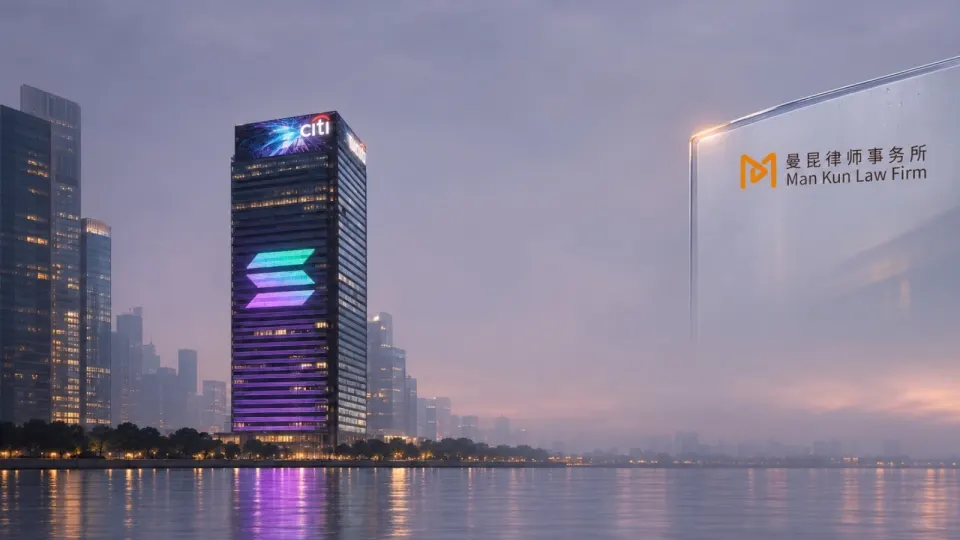
In October of this year, a large-screen advertisement for Solana displayed in Lujiazui, Shanghai, excited quite a few friends in the industry for a while. The fact that a leading public blockchain could make a public appearance in such a place also led some to speculate whether the domestic policy environment had changed somewhat.
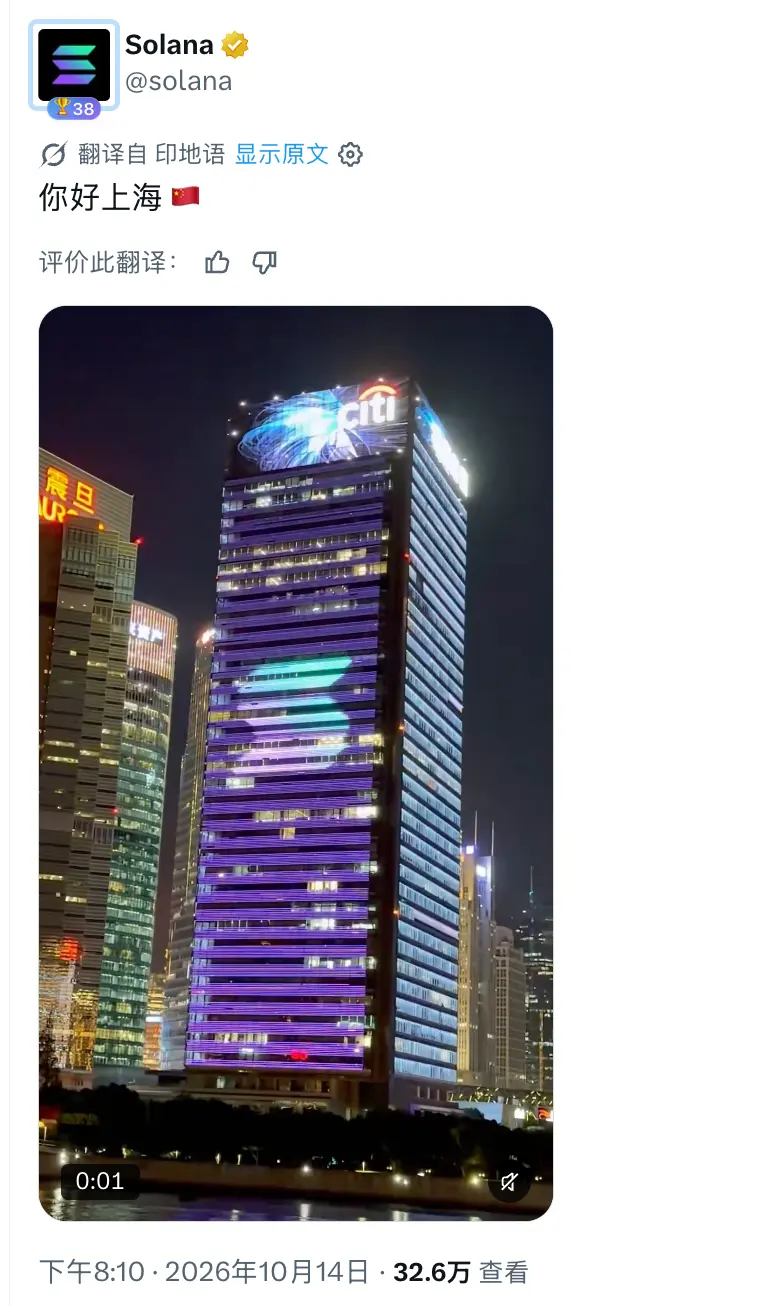
Today, the relevant official of the People's Bank of China responded through the Financial Times. Solana placed advertisements and promoted its brand through relevant domestic entities, conducting marketing and publicity for virtual currency. The People's Bank of China, together with relevant local financial management, public security, market regulation and other departments, has ordered a halt to offline exchange activities and will, together with relevant departments, conduct investigations into the entities and individuals involved.
The official stated that, next, the People's Bank of China will, together with relevant departments and local governments, focus on domestic virtual currency dealers and the domestic affiliates of overseas virtual currency issuance and trading platforms, and continue to crack down on virtual currency-related business activities within China.
Frankly speaking, I think this news carries considerable weight. In the past, when public blockchains held technical events in China, many teams still felt there was room to do so. Now, Solana has been explicitly named, and the entities and individuals involved will also be investigated. Community leads of other public blockchains will probably also have to reconsider whether the events they are currently preparing should go ahead.
Is the boundary of technological neutrality disappearing?
In recent years, many blockchain projects have adopted a cross-border division of labor. The company is registered overseas, financing and related business arrangements are placed outside China, while product managers and engineering teams may still be in China. China has an ample supply of technical talent, and the efficiency of product development and the cost of employing people are also attractive, so project teams are naturally willing to assign part of the work to Chinese teams.
If people remain in China, there will be demand for exchange and cooperation. Public blockchains hoping for developers to build applications on their networks need to teach people how to use development tools and also need to let those interested in cooperation get to know one another. Intensive development events such as hackathons, as well as various technical exchange meetings, have thus become important ways for public blockchains to reach domestic developers.
People in the industry usually have very different attitudes toward public blockchain technical events and exchange customer gatherings. When exchanges recruit customers and guide them to open accounts and trade, everyone knows this cannot be done in mainland China, and such gatherings are relatively low-key. Public blockchain events, by contrast, are more willing to be held publicly, with themes focused on development tools, applications and technology, avoiding coin prices and investment as much as possible.
The reason people are willing to hold events publicly is also that they believe in technological neutrality. Since what is being exchanged is technology, there should still be room.
But this response directly mentions the business carried on by the public blockchain. The relevant official pointed out that Solana's own token is a virtual currency, that it also provides technical services for the issuance and trading of virtual currencies such as Tether (USDT), and explicitly stated that the above business constitutes illegal financial activity as referred to in the notice issued in February of this year, and that publicizing and promoting Solana violates the provisions of the notice.
Even if organizers avoid coin prices on stage and do not recommend buying coins, the event may still be helping virtual currency projects expand their domestic influence. This time, Solana's brand promotion has been found to be non-compliant, and it will probably not be so easy for other projects to use "we only talk about technology" to explain that their events are problem-free.
An engineer who comes to learn code may indeed have no intention of investing. But the public blockchain project team pays for the event in the hope of finding developers, attracting more applications and getting more people to use the chain. Technical exchange itself is also helping the project expand its ecosystem. When regulators view the public blockchain brand together with the virtual currency business it carries on, even if the event agenda is entirely about technical topics, it will be hard for organizers to feel as reassured as they did in the past.
What Should a Blockchain Company's Domestic Team Do?
What domestic teams should pay closer attention to is that this response also mentioned an investigation into the entities and individuals involved. Solana operates overseas, but advertisements in Shanghai must be placed by domestic entities, and offline events also require someone to organize them. For the domestic teams involved in this promotion, the next step may be cooperating with an investigation and explaining specifically what they did.
This directly touches on the daily division of work in many blockchain projects' distributed office teams. Overseas teams come to China to hold events, and domestic community or business leads are responsible for execution. Coordinating venues, producing posters, and recruiting attendees are ordinarily categorized as ecosystem building. Now, brand promotion itself has been specifically named, and the domestic teams undertaking this work may also be asked about their relationships with overseas projects and the specific circumstances of their participation in promotion.
The notice issued in February this year already stated that domestic entities and individuals that, while knowing or ought to know that an overseas entity is illegally providing virtual currency-related services within China, still provide assistance to it must bear relevant liability in accordance with law. This provision directly concerns people who handle marketing, operations, and business in China for overseas projects. Even if the company is registered overseas and salaries are paid by an overseas entity, conduct carrying out promotion within China may still be subject to investigation.
What responsibility a specific individual bears still depends on what work he or she participated in, what he or she knew, and the facts subsequently ascertained. What the reports currently disclose is that an investigation will be carried out, and the outcome remains to be seen in subsequent news. But when domestic leads next receive event arrangements for overseas projects, they will probably first have to consider whether what they plan to do might also be deemed virtual currency marketing and promotion.
For Chinese Web3 teams, this is indeed somewhat frustrating.
With the company overseas and the people remaining in China, this arrangement originally balanced business needs and convenience in daily life. Engineers can work in familiar cities, and project teams can also find suitable people. Offline technical communities also help everyone meet partners, giving some small teams the opportunity to participate in global projects.
But if a public blockchain wants to reach developers in China, it often needs to organize events through its own brand and community. If brand promotion is restricted, developer recruitment and technical exchange will also become more difficult accordingly.
Lawyer Honglin suggests that friends currently preparing public blockchain brand roadshows, ecosystem promotion, or similar public events should hold off for now.
Friends who have already received investigation or assistance-in-investigation requests and need assistance may also contact our Mankun colleagues.
