

Special Declaration: This article is an original work by Attorney Shao Shiwei. It represents only the personal views of the author and does not constitute legal consultation or legal advice on specific matters. For article reposting, legal consultation, or business exchanges, please add: sswls66.
Hong Kong, this world-renowned free port and international financial center, saw its crypto-economic ecosystem flourish long before the introduction of official preferential policies. Among these, virtual asset over-the-counter trading service providers (VAOTC), operating through offline stores and online groups, together with native and overseas virtual asset trading service providers (VATP), provide investors with token exchange and fiat-to-crypto on/off-ramp services, forming a unique market landscape.
However, the high degree of anonymity and borderless nature of virtual assets under blockchain technology have also opened convenient doors for illegal and criminal activities. A large amount of crime-related cryptocurrencies, especially stablecoins, have quietly flowed into Hong Kong’s crypto ecosystem, bringing numerous challenges to operators and ordinary investors, such as fund contamination and legal and compliance risks.
This article takesthe recent experience of mainland Chinese university students traveling to Hong Kong to run errands exchanging USDTas a starting point to deeply explore the damage caused by Southeast Asia’s fraud industry to Hong Kong’s crypto-economic industry.
l Author: Bitrace & Attorney Shao Shiwei
Case Background: Running Errands to Buy USDT in Hong Kong, a University Student Unwittingly Became a “Money Laundering Tool” for a Fraud Syndicate
University student Xiao Wang originallybelieved that trading virtual currencies in Hong Kong was legaland posed no issues, but recently discovered that his bank card, WeChat Pay, and Alipay accounts had all been frozen by mainland police. It turned out that he had been staying in Hong Kong recently and accidentally met someone on the Xianyu platform who asked him to help buy “U” (USDT) in exchange for an errand fee.
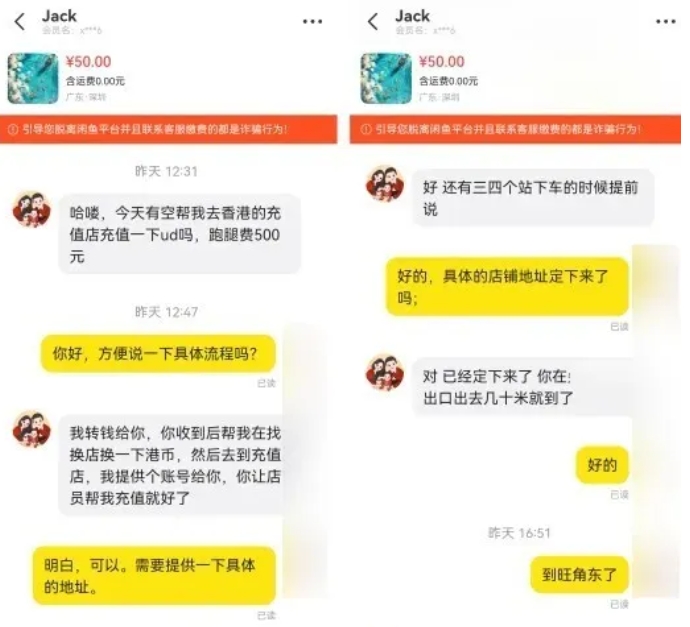
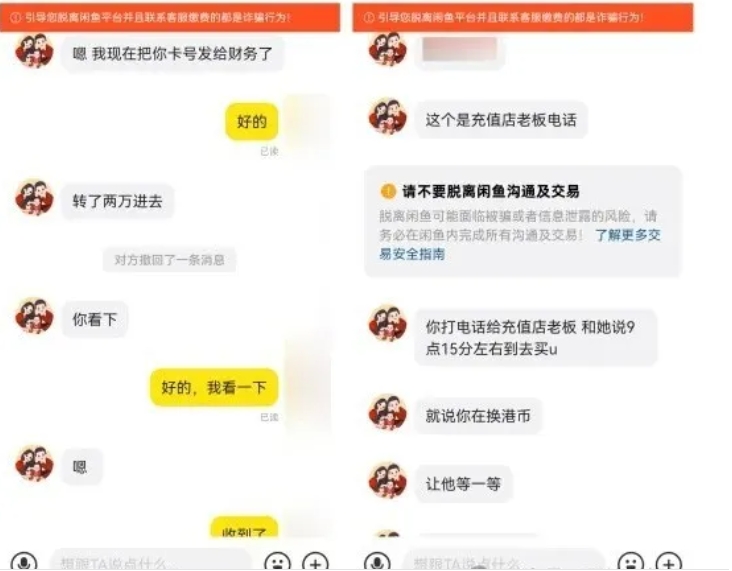
The specific process was as follows: the counterparty transferred RMB to his mainland bank card; he exchanged it for HKD cash at a local fiat currency exchange shop; then went to a Hong Kong cryptocurrency exchange shop to purchase USDT, asking the clerk to transfer the virtual currency to the wallet address designated by the counterparty. However, shortly after the transactionthe police informed him that he was suspected of fraud. He was bewildered—how did he become suspected of fraud? Therefore,is there any risk in going to Hong Kong to run errands buying and selling USDT virtual currency for others?
It turned out that the money transferred to him each time came from different victims.
In essence, this is a typical “Card Receipt for USDT Return” money laundering method, closely related to organized crime networks in Southeast Asia.
On-Chain Analysis: How to Identify Hong Kong OTC Money Laundering Chains Through On-Chain Data?
Attorney Shao Shiwei and the Bitrace team (a cryptocurrency security service platform) joined forces to conduct an in-depth investigation. Through Bitrace’s fund analysis of the designated USDT receiving address TTb8Fk, it was found that the university student purchased 2,396 USDT from the designated exchange shop. These funds subsequently flowed into the guarantee platform merchant address TKN5Vg, which has long been associated withHuiwang Guarantee(HuioneGuarantee)、New Coin Guarantee(NewcoinGuarantee), two entities with business connections in Southeast Asia.

(Bitrace on-chain tracking of Hong Kong VAOTC transaction paths, same below)
These two guarantee platforms have long provided services to Southeast Asia’s organized crime industries, including illegal online gambling, black and gray market activities, money laundering, and fraud. In this incident, they played a role in helping process upstream fraud funds.
Indicatingthat this is a severe incident where a Southeast Asian fraud group utilized Hong Kong cryptocurrency exchange shops for money laundering.
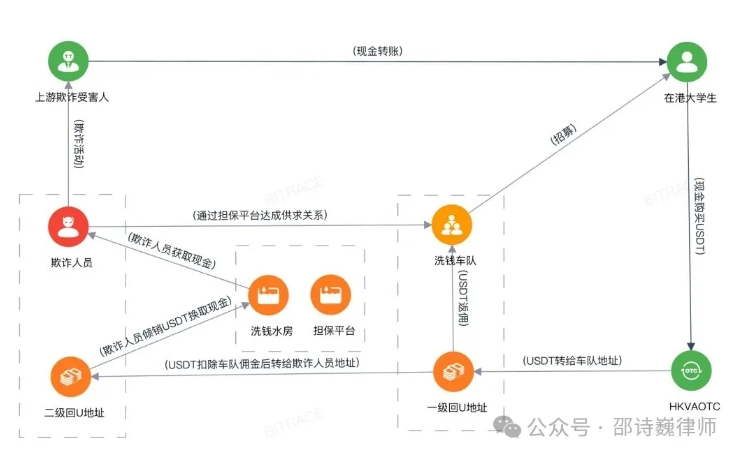
Its model is the common “Card Receipt for USDT Return(Crypto-based money laundering)” technique, meaning that money launderers collect fiat illicit proceeds from fraud victims, quickly exchange them for USDT in the over-the-counter market, and then transfer them back to the fraudsters’ blockchain addresses, earning commissions in the process. Since purchasing USDT requires numerous bank cards and real-name information, money launderers recruit large numbers of part-time workers in advance to form “money laundering syndicates (Crypto Laundering Syndicate),” and these part-time workers are known as “card suppliers” or “runners.”
In this incident, the mainland university student unwittingly became a money laundering runner, working together withHong Kong virtual asset over-the-counter trading service providers(i.e., VAOTC, commonly referred to ascryptocurrency exchange shops), to help money launderers complete the fund conversion. The acquired USDT first entered the syndicate’s address; after deducting commissions (calculatedat a rebate ratio of 33%), the funds were transferred to guarantee merchants and finally settled through the guarantee platforms.
Unveiling the “Money Laundering Syndicate”: Hong Kong VAOTC Exploited by Southeast Asian Fraud Groups for USDT Money Laundering
Behind such cases, a mature black and gray market assembly line has formed. Fraud syndicates remotely command operations from Southeast Asia, using “card suppliers” for transfers and “runners” for USDT exchanges, disguising illegal funds as compliant transactions.
By further expanding the investigation into the syndicate’s rebate address TGeZzC, we discovered that this money laundering incident is not an isolated case but merely the tip of the iceberg of a highly industrialized large-scale money laundering syndicate.
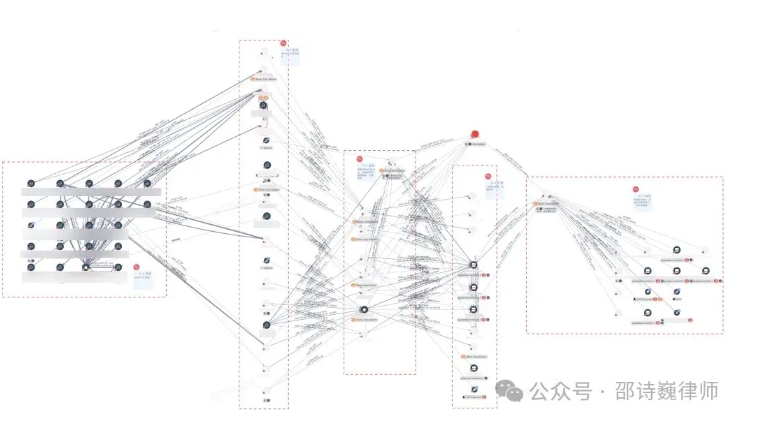
Tracing the source of funds for the rebate address revealed seven other primary USDT return addresses (left three). These addresses are at the same level as TTb8Fk, all receiving varying amounts of USDT from Hong Kong exchange shops (left one and two, HKVAOTC). Of these, 33% were transferred to the rebate address (marked in red), and 67% were transferred to secondary USDT return addresses (right two), each dumping funds through guarantee platforms. The entire process exhibits very clear characteristics of division of labor.
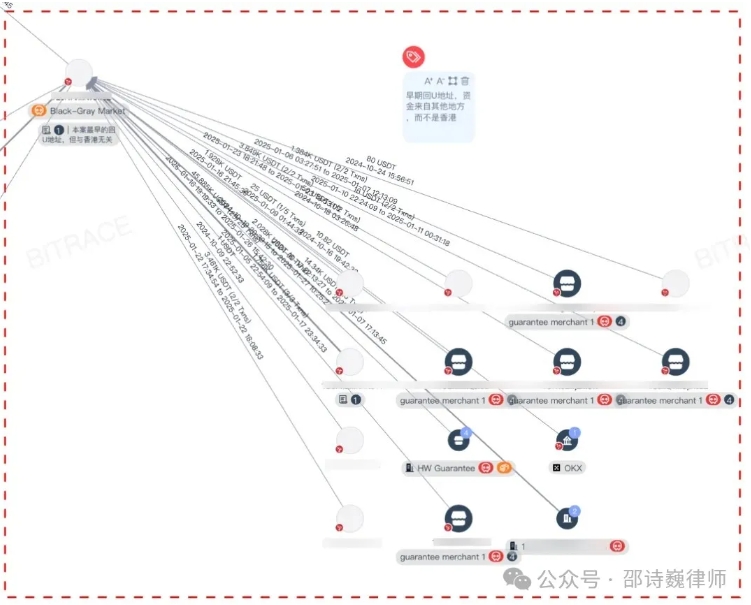
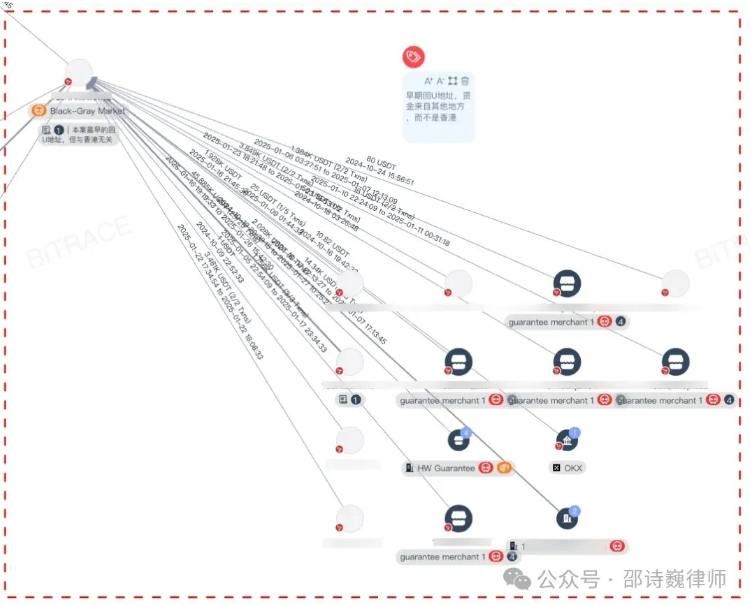
Analysis shows that these addresses have been active since early 2024. The initial source of funds was unrelated to Hong Kong but consisted largely of risky addresses associated with Southeast Asian black and gray markets, further indicating that the group behind this case is closely linked to Southeast Asia’s organized crime networks.
In less than three months, this single money laundering syndicate illegally laundered over USD 310,000 in Hong Kong using the same method. Considering that other addresses in this case remain unexplored, or other syndicate addresses have gone undetected, the actual scale of such industrialized money laundering activities exploiting HKVAOTC may be even larger.
Hong Kong VAOTC Exchange Shops: A Gray Area Before the Introduction of Compliance Policies
Attorney Shao Shiwei of Mankun Law Firm pointed outthat currently, Hong Kong’s virtual asset over-the-counter (VAOTC) industry remains in a stage of imperfect regulation. Many platforms, lacking effective compliance mechanisms, have become important channels for laundering fraud funds. Globally, regulatory frameworks for cryptocurrencies and OTC trading services are not yet fully unified. However, major virtual asset trading markets such as Hong Kong, the European Union, and the United States have begun advancing licensing regimes for virtual asset service providers and building anti-money laundering (AML) regulatory systems.
Taking Hong Kong as an example, the Financial Services and the Treasury Bureau (FSTB) released a legislative consultation paper on virtual asset over-the-counter (OTC) services in February 2024. The paper proposed an important suggestion: introducing a licensing regime for OTC dealers via the Anti-Money Laundering and Counter-Terrorist Financing Ordinance (AMLO). Under this proposal, Hong Kong plans to establish a licensing management system for OTC dealers through the Anti-Money Laundering and Counter-Terrorist Financing Ordinance (AMLO), with the core objective of ensuring that these companies meet compliance requirements such as anti-money laundering (AML) and customer identification verification (KYC).
This means that all companies conducting virtual asset over-the-counter trading services, including OTC dealers, must apply for the corresponding license from the Customs and Excise Department (CCE) and strictly comply with relevant laws. However, as of now, this legislation remains in the consultation phase, and specific implementation details and effective dates await formal announcement by the government.
How Should VAOTC Merchants Respond to Hong Kong’s Virtual Currency Compliance Regulations?
As Hong Kong is about to introduce regulatory policies targeting virtual asset over-the-counter (OTC) trading, OTC service providers face unprecedented compliance pressure. Currently, virtual asset over-the-counter trading services (VAOTC) have become a key link in the cryptocurrency market, providing users with efficient fiat-to-crypto on/off-ramps. However, their high degree of anonymity also makes them susceptible to becoming downstream links for money laundering and telecom fraud.
Against this backdrop, VAOTC operators urgently need to systematically review their customer due diligence (KYC) processes and source of funds review mechanisms (AML), comprehensively screening for potential illegal fund risks in their business. Failure to fulfill necessary compliance obligations, once verified as assisting in the processing of illegal funds, could likely result in criminal liability.
To proactively respond to the impending OTC licensing regime, industry participants must not only actively understand the compliance requirements soon to be implemented by the Customs and Excise Department (CCE) and the Financial Services and the Treasury Bureau (FSTB) but also establish robust internal risk control systems to ensure all trading activities comply with anti-money laundering and counter-terrorist financing standards. Furthermore, OTC platforms should strengthen communication with regulatory authorities and industry self-regulatory organizations to timely grasp policy dynamics and enhance transaction monitoring through technical means to promptly identify suspicious behaviors. Meanwhile, platforms should strictly refuse any association with funds suspected of involvement in black and gray market activities, cutting off the possibility of illegal funds being whitewashed through OTC channels. This not only helps maintain the enterprise’s good reputation but also reflects the enterprise’s fulfillment of social responsibilities.
Overall, Hong Kong’s upcoming OTC compliance policies represent a significant opportunity for the standardized development of the virtual asset over-the-counter trading industry. Operators within the industry should seize this opportunity, proactively adapt to changes in the regulatory environment, and continuously improve their compliance levels to enhance competitiveness. Only in this way can they remain invincible in Hong Kong’s prosperous crypto-economic market and achieve long-term, stable development.

Recommended Reading
The September 24 Notice Is Not Law, So Why Do You Say I Committed a Crime?