

Virtual currency criminal cases are gradually becoming a hot area in judicial practice, moving beyond what was previously a relatively niche case type. In recent years, the legal characterization and judicial controversies surrounding charges such as "virtual currency crimes," "illegal business operations," and "USDT trading" have attracted increasing attention. In recent years, Attorney Shao has also represented several cases in which individuals were charged with illegal business operations due to buying and selling virtual currency.
Therefore, this article will combine the latest released typical cases and practical experience to analyze and discuss the focal issue of "whether cross-border arbitrage by U merchants constitutes illegal business operations" from the perspectives of legal characterization, defense strategy, and judicial trends.
I Author of this article: Attorney Shao Shiwei
1
Why is buying and selling USDT characterized as illegal business operations? Analysis of a typical case
The case of Zhao et al. for illegal business operations (the Zhao Dong case), handled in 2022 by the People's Court of Xihu District, Hangzhou City, Zhejiang Province, is a representative case in which buying and selling virtual currency for cross-border arbitrage was characterized as illegal business operations. This case was also listed by the Supreme People's Procuratorate and the State Administration of Foreign Exchange as a typical case for punishing foreign-exchange-related illegal and criminal activities.

From the official case notification, it can be seen that the conduct pattern of the parties in this case involved cross-border "arbitrage" through buying and selling USDT and other virtual currencies, and they were therefore held criminally responsible for illegal business operations.
Based on the limited information currently disclosed officially, it seems that the following preliminary judgment can be drawn: any conduct involving cross-border arbitrage in virtual currency, earning exchange-rate spreads, and involving exchanges between different national fiat currencies may be brought within the scope of evaluation for illegal business operations.
However, from a prudent and questioning standpoint, this conclusion itself still warrants further inquiry: for this type of conduct pattern, does the direct application of the crime of illegal business operations truly conform to the boundaries and logic of criminal-law evaluation?
Even though this case has already resulted in an effective judgment, the judgment was rendered four years ago. Cases involving coins have long existed in a state lacking clear legislative rules, and the approaches in judicial practice have mostly been gradually explored based on the policy spirit of the "94 Announcement," the "924 Notice," and other policies, advancing through continuous experimentation. Whether its adjudicative standards are stable and reproducible itself still requires ongoing observation.
Taken together, the following two reports show that, at the level of judicial practice and legal application, the above assessment has in fact already seen some noteworthy new developments.
The first report is a case published in 2024 by the People's Procuratorate of Jianhu County, Jiangsu Provincethe illegal business case of Lin and Yan:
Concerning whether "cross-border virtual-currency arbitrage" constitutes lawful arbitrage or illegal business operations, the facts disclosed officially provide a relatively clear point of entry.
According to the case facts, Lin's so-called "arbitrage" was in substance carried out under the direction of a Nigerian individual known as "Prince": Prince transferred naira into Lin's Binance account, and Lin then sold the received USDT to domestic U merchants for RMB and returned the funds to Prince. Lin set the purchase price at 5% below the day's listed USDT price, then sold to U merchants at the listed price, earning the spread.
For details of the case, click 👇👇👇
The value of this case lies in the fact that it relatively clearly identifies the core reason for criminalizing the conduct: the problem is not the form of the conduct itself, namely "arbitrage," but rather its true business model—the actor did not independently engage in market arbitrage, but rather used virtual currency as a medium to substantively provide counterparty currency-exchange services for others. Precisely for this reason, the nature of the conduct underwent a fundamental shift, from "arbitrage" to "illegal business operations."
Moving forward to 2025, discussions in judicial practice have deepened further.
On December 17, 2025, the Shanghai No. 2 Intermediate People's Court published the article "Overview: Zhizheng · Theory and Practice in Parallel | Unification of Legal Application in Cases Involving Virtual-Currency Crimes》article.
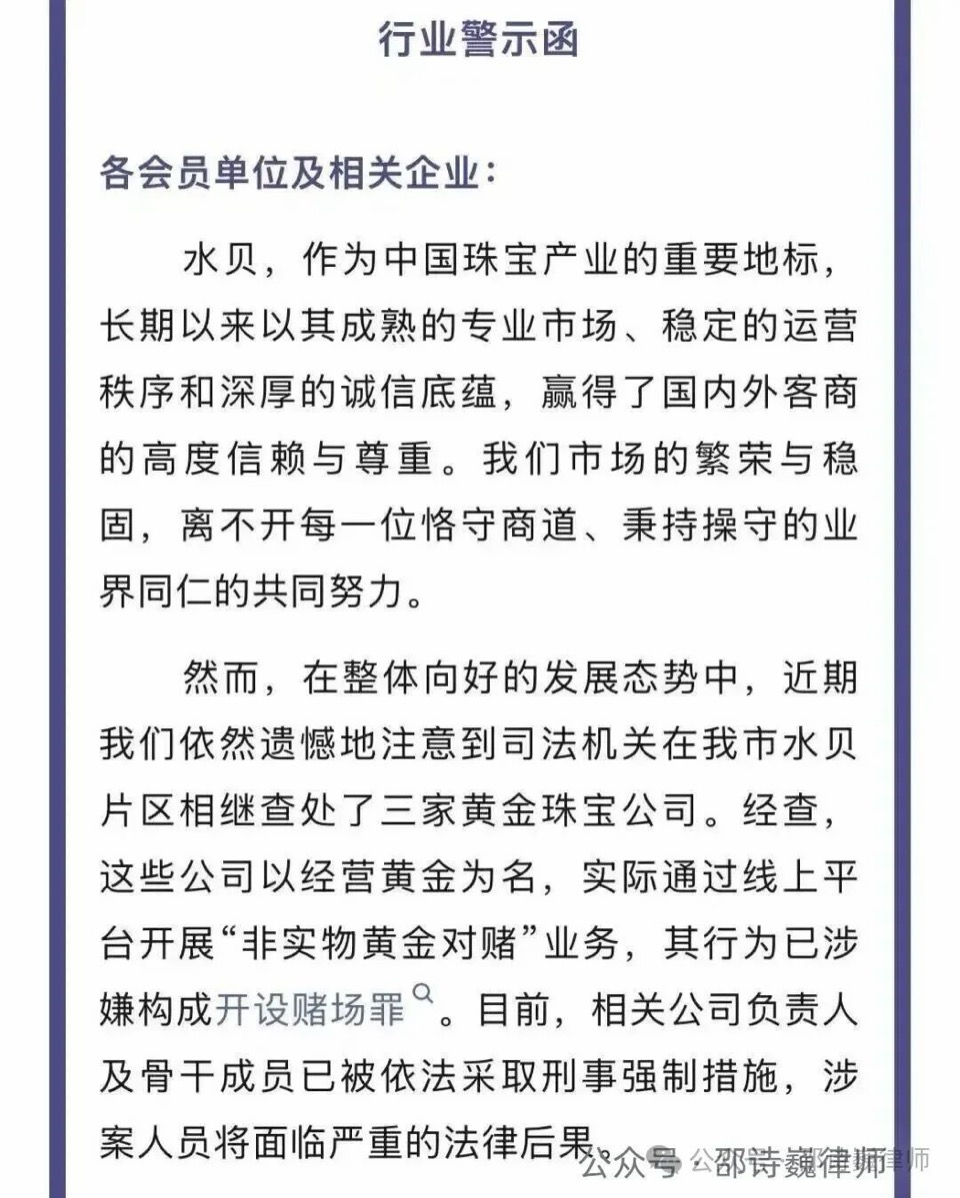
The article systematically reviews the legal application issues in cases of the crime of illegal business operations involving virtual currency, listing two categories of circumstances and conducting a relatively cautious and in-depth discussion of whether they constitute the crime of illegal business operations.
The article mentions:
Regarding Case 5, if Li's conduct does not exhibit the characteristics of a business operation and constitutes merely personal holding and trading of cryptocurrency, it is generally not determined to be the crime of illegal business operation. However, if the person clearly knows that another person is illegally buying or selling foreign exchange, or disguisedly buying or selling foreign exchange, and still provides assistance by means of exchanging virtual assets, and the circumstances are serious, it should be determined as an accomplice to the crime of illegal business operation.
In Case 6, Hu's conduct exhibited business-operation characteristics such as regularity and profit-making, and the person clearly knew that another person intended to realize mutual exchange between RMB and US dollars outside the trading venues prescribed by the State, yet still provided "local currency - virtual assets - foreign currency" exchange and payment services, which constitutes disguised buying and selling of foreign exchange; the person thereby illegally profited more than 3 million, and it is appropriate to determine that this constitutes the crime of illegal business operation.
From this it can be clearly perceived that, compared with the earlier broad-brush approach of "criminalizing any cross-border arbitrage involving virtual assets," some judicial authorities have now begun to place greater emphasis on a detailed analysis of the nature of the conduct, the transaction structure, the flow of funds, and the harm to society. This change at least demonstrates one fact: the adjudicative logic in cases involving virtual assets is gradually moving from simply applying charges by rote toward refined judgment.
The circumstances in the cases disclosed by the authorities above also have similar scenarios in past cases handled by Lawyer Shao. Then, for such conduct of "buying and selling virtual assets and engaging in arbitrage," how should the boundary between crime and non-crime be accurately drawn in judicial practice?
Therefore, next, Lawyer Shao will, based on specific case-handling experience and from a practical perspective, further break down this issue: under what circumstances may the relevant conduct be determined as the crime of illegal business operation? And under what circumstances is it inappropriate to bring it within the scope of evaluation for the crime of illegal business operation?
2
Whether buying and selling USDT virtual assets constitutes the crime of illegal business operation should adhere to "specific analysis of specific issues"
First, one must directly confront an extremely practical issue:
The reason a case can become a guiding case is often that its chain of evidence is complete, the facts are clear, and the reasoning is sufficient, so that it can withstand repeated scrutiny. However, in real judicial practice, many cases are exactly the opposite — the evidence is not sufficient, yet the conclusion and spirit of guiding cases are still simply followed by superficial analogy, and a guilty assessment is made against the party concerned.
From the perspective of protecting the rights of the party concerned, and also from the perspective of criminal evidence standards, this practice itself warrants vigilance.
It is precisely against this background that one of the core values of defense counsel lies in: by breaking down the evidence and the details of the facts, enabling case-handling personnel to truly understand the essential differences between this case and the so-called "reference case," and then to determine whether that case is comparable and whether it is appropriate to serve as the basis for adjudication.
Second, so-called "typical cases" themselves also have obvious limitations of era and context.
They may serve as references, but they are not "imperial edicts" that must be followed at all times, and still less should they be mechanically applied to any specific case. For legal professionals, maintaining a necessary spirit of skepticism and the capacity for independent judgment is a basic professional quality, not an optional posture.
Based on the foregoing premises, when handling cases involving "virtual currency arbitrage," it is necessary to directly address at least the following two core questions:
-
Question One: In a specific case, how should it be determined whether the "arbitrage" engaged in by a particular U merchant constitutes lawful arbitrage or has already constituted a business operation?
-
Question Two: If the profit model of so-called arbitrage derives not only from exchange-rate spreads but also includes a certain proportion of "service fees" or "handling fees," does that necessarily constitute the crime of illegal business operation?
These two questions are raised because a very real contradiction has long persisted:
Statutory provisions, officially disclosed typical cases, and theoretical discussions often present a relatively clear "black-or-white" logic; yet when applied to specific criminal cases, the actual situation is often highly complex with blurred boundaries, far beyond what the simple application of conclusions can cover.
It is precisely under this complexity that lawyers' work in specific cases cannot remain at the level of mechanically citing statutes or cases; rather, it must return to the essence of the crime at issue, re-examine the boundaries of legal application from the perspective of the structure of conduct, role positioning, and the substance of the transactions, and on that basis construct a targeted defense path.
From the perspective of the elements of the offense, the crime of illegal business operation requires at least two core elements:
First, the conduct must be "business-like" in nature;
Second, the conduct must be for the purpose of "profit-making."
The term "business operation" generally refers to economic activity in which the actor, on the basis of planning, organization, and management, continuously provides goods or services to the outside world, steadily participates in market exchange, and intends to obtain profits therefrom. By contrast, occasional and scattered individual transactions are in principle difficult to characterize as "business operation" in the sense of criminal law.
Then, in the specific context of the crime of illegal business operation involving the buying and selling of foreign exchange, as to whether conduct is criminal or non-criminal, the following distinctions are generally drawn:
(1) If the actor meets the following circumstances, the purpose shall be determined to be personal use, and the conduct shall not be determined to constitute illegal business operations:
-
The actor satisfies their own needs: earning the bid-ask spread on the purchase and sale of virtual assets, or having a genuine and reasonable need for foreign exchange.
-
Profits derive from price fluctuations of the virtual assets themselves across different markets.
-
The conduct is the individual's own investment or exchange activity.
-
It is occasional and non-continuous. The counterparties, timing and prices are not fixed.
-
Funds and virtual assets circulate within the individual's own account in a one-way loop of "fiat currency → virtual assets → fiat currency."
(2) If the actor meets the following circumstances, the actor shall be determined to have a business purpose and to be suspected of illegal business operations:
-
Providing financial services: providing illegal foreign exchange conversion or payment settlement services for profit-making purposes.
-
The profits are in substance exchange-rate spreads, fixed handling fees or commissions.
-
Carrying out cross-border mirroring (dui qiao) transactions in the form of "foreign currency ↔ virtual assets ↔ RMB" as a disguised foreign exchange conversion activity.
-
Long-term, stable and organized. There is a fixed customer base or cooperating parties, and even a gang with a clear division of labor is formed.
-
Using (including borrowing) a large number of other people's accounts to form a fund pool, thereby achieving the matching and hedging of domestic and overseas funds.
Take a case handled by Lawyer Shao as an example: a certain U merchant was criminally detained on suspicion of the crime of illegal business operations, because, from the perspective of the case-handling personnel in that locality, the following characteristics were present:
First, the trading spanned a long period, the trading frequency was high, and the trading scale was large; over the long term, the person earned price spreads through buying and selling virtual currency;
Second, a studio was established, multiple persons were employed, and the bank accounts of all employees were used for receiving and making payments;
Third, some clients were located overseas on a long-term basis, the client group was relatively stable, and individual transactions were large, all involving transactions of more than one million yuan.
Judged only from these surface characteristics, it is indeed easy for one to form an intuitive judgment: this pattern of conduct appears to align closely with the typical characteristics of the aforementioned crime of illegal business operations, and even bears considerable similarity to the circumstances involved in existing cases.
In reality, however, the nature of this case is fundamentally different from the aforementioned Lin case:
In the Lin case, the actor acted under the instructions of a Nigerian national and completed fund transfers in accordance with the other party's arrangements; the substance of the conduct was providing cross-border currency exchange services for others. Virtual currency was merely a tool, and the true purpose was to "help others realize cross-border payment and settlement of funds."
In this case, by contrast, whether the client was "directed by others," whether the client "provided payment and settlement services for specific counterparties," whether the client "performed a fund transit function," whether the funds constituted a de facto fund pool, and whether client funds were commingled with the client's own funds—these key questions are precisely where clear differences from the Lin case exist. These differences are what determine the nature of the case, rather than the level of trading frequency or the size of the amounts itself.
As pointed out in the aforementioned analysis by the Shanghai No. 2 Intermediate People's Court regarding the absence of the crime of illegal business operations:
"Currency conversion conducted through U-coin links is not directly equivalent to the buying and selling of foreign exchange, and the actor had no subjective intent to help others exchange foreign currency; it merely objectively caused conversion and circulation between different currencies";
It should be determined "in light of the essential characteristics of the crime of illegal business operations, and by substantively assessing whether the conduct at issue violates state regulations and seriously disrupts financial market order, so as to distinguish crime from non-crime. If an actor uses virtual currency as a medium to circumvent state foreign exchange supervision, provides others with exchange services between RMB and foreign currency, and has operational characteristics such as earning handling fees or exchange rate spreads... this constitutes the crime of illegal business operations";
"By comprehensively considering factors such as the actor's subjective knowledge, objective conduct, and manner of profit-making, accurately determine whether there is joint crime... If the person knows that another person is illegally buying or selling foreign exchange, or disguisedly buying or selling foreign exchange, or has conspired with another person in advance... the person shall be punished as an accomplice to the crime of illegal business operations."
Therefore, after Attorney Shao became involved in this case, Attorney Shao consistently maintained that the case should not be characterized as the crime of illegal business operations. The core reasons can be summarized as follows:
First, large-scale, team-based, high-frequency trading does not automatically equate to "operating a business."
The client had long engaged in the buying and selling of virtual assets and profited through price spreads, which certainly involved a profit motive, but "profit" and "operating a business" cannot simply be equated. In the sense of criminal law, business operations should refer to providing services to external parties and intervening in the order of capital flows, rather than autonomous trading conducted solely on the basis of market fluctuations.
Second, a relatively fixed customer base does not equal the provision of foreign-exchange services.
Although the client had some long-term customers, the client never acted on customer instructions to complete "foreign currency—virtual assets—RMB" exchanges or the reverse. In other words, the client did not serve as a conduit for others' funds, still less substantively provide cross-border payment services; the essence of the transactions remained autonomous buying and selling, not "acting on behalf of others."
Third, the use of another person's bank cards does not automatically give rise to an inference of a "fund pool" or "underground payment."
The holders of the bank cards involved in the case were all relatives or acquaintances of the client, not "cat-pool accounts" purchased on the black market or illegally collected. The relevant bank cards were at all times actually controlled by the cardholders themselves, and the client did not buy, sell, or rent bank cards. This is clearly distinct in nature from typical underground banking-style operations.
Fourth, the existing evidence cannot form a closed chain of evidence and cannot prove subjective knowledge.
The existing evidence neither proves that the client knew of others' mirror-exchange foreign-exchange conduct, nor is it sufficient to infer that the client "should have known." Under the criminal standard of proof, if subjective intent cannot be proven, no finding of guilt should be made.
Fifth, the essence of the conduct is "spread trading," not "foreign-exchange services."
The client's true purpose was to profit from trading by buying low and selling high, taking advantage of price fluctuations across different markets and platforms. The profit derived from market fluctuations themselves, not from earning commissions on foreign-exchange activity through matching, payment, or conduit services. For the client, virtual assets were the subject matter of trading, not a tool for channeling funds.
It was precisely on the basis of the above facts and evidentiary structure, and while insisting on clear facts and evidentiary review, that release on bail pending trial was ultimately successfully obtained on the grounds that the "facts are unclear and the evidence is insufficient," achieving a milestone result.
The foregoing answers the first question raised earlier: in a specific case, how should one determine whether the “cross-market arbitrage” engaged in by a given U merchant constitutes lawful arbitrage or has already amounted to carrying on a business?
The second question, then: if the profit model of so-called cross-market arbitrage derives not only from exchange-rate spreads but also includes a certain proportion of “service fees” or “handling fees,” does that necessarily constitute the crime of illegal business operation?
The core source of profit in cross-border virtual currency cross-market arbitrage is indeed the “exchange-rate spread” between different fiat currency jurisdictions, rather than fluctuations in the price of the virtual currency itself.
However, Lawyer Shao is of the view that whether the crime of illegal business operation is constituted does not depend on the superficial question of “whether a fee is charged,” but on the substance of the conduct to which the fees charged by the actor correspond.
If, in the course of cross-market arbitrage, the actor charges service fees or handling fees beyond the exchange-rate spread, but does not, in accordance with client demand, carry out a closed-loop operation of “foreign currency ↔ virtual currency ↔ RMB” by using virtual currency for matched counterparty foreign-exchange transactions to effect a conversion of monetary value,
then as a matter of legal doctrine it should not constitute the crime of illegal business operation; however, as a matter of practice, the criminal risk of such conduct remains relatively high. Because different case-handling personnel differ considerably in their understanding of such cases, there is a possibility that it will be characterized as illegal business operation. The business model in the aforementioned Zhao Dong case, which was characterized as illegal business operation, is itself a warning.
3
Lawyer Shao’s note
For U merchants engaged in so-called “cross-market arbitrage,” this remains a highly dangerous business. The risk arises not only from policy itself but, more importantly, from uncertainty in judicial practice—different regions and different case-handling personnel often differ enormously in their understanding of such conduct, and this will directly affect whether the actor is guilty or not guilty as well as the specific conviction and sentencing.
Therefore, for U merchants, so-called “cross-market arbitrage” remains in essence a high-risk gray area; the potential risks of relevant activities must be carefully assessed, and they should not be entered into rashly.

Recommended reading
Trading through “virtual assets” listed as one of the money-laundering methods

