

Recently,the global decentralized prediction market platform Polymarket launched a Simplified Chinese interface, sparking significant attention in the domestic market.
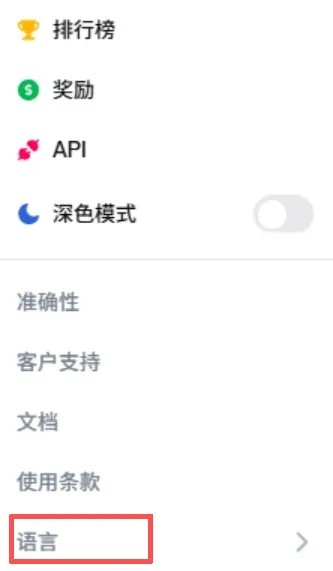
Does an overseas financial platform "donning" a Chinese interface equate to opening its doors to the Chinese market? The answer is likely affirmative.
In the eyes of Chinese regulators, such conduct itself sends a clear signal—the platform intentionally targets residents within mainland China for business operations, thereby subjecting itself to the jurisdiction and scrutiny of Chinese law.
Polymarket, an overseas prediction platform that has recently drawn attention due to the launch of its Simplified Chinese version. Users can use crypto assets to "bet" on the outcomes of various events. Such businesses, which possessa wagering nature, are they financial innovations or do they operate in a legal gray area?
This article will penetrate its business model, based on current domestic regulations, to clarify the true legal characterization of Polymarket under Chinese law, and clearly reveal: what legal red lines and specific risks might both ordinary users and promoters face when participating?
Model Analysis: Named "Prediction," Actually "Wagering"?
On the Polymarket platform, users can use USD stablecoins (such as USDC) to"place bets"on the outcomes of various events. However, viewed from the perspective of Chinese law, its business structure primarily presents the following three key characteristics:
1. A "Binary" Wagering Structure
The Polymarket platform simply designs event outcomes intoopposing optionssuch as "Yes or No." Users buy and sell these options, with price fluctuations reflecting market expectations of the probability of the event occurring. After the event concludes, cash settlement is made directly based on the result, with winners profiting and losers incurring losses.
2. Speculative Behavior Entirely Dependent on "Chance"
User returns depend entirely onfuture uncertain events(such as election results or sports match outcomes). The entire process involves no creation of actual value, nor does it serve the function of hedging risk; essentially, it is aprobability-based speculative activity。
3. Settlement Entirely in Crypto Assets
All fund flows arecompleted via crypto assets such as USDCon the Polygon blockchain, entirely detached from the traditional banking and foreign exchange regulatory systems, remaining outside the scope of Chinese financial monitoring.
Legal Characterization: Financial Innovation or Illegal Activity?
Although in some countries, such as the United States, such prediction markets may be brought within the scope of regulation,under the legal framework of mainland China, due to the lack of a licensed access basis and its obvious speculative attributes, its legal characterization is distinctly different and more severe.
From the perspective of Chinese legal practice, Polymarket's business model is highly likely to be simultaneously characterized as "illegal financial activities" and "online gambling," and it is highly susceptible to being used as a channel for money laundering:
1. Characterization as Illegal Financial Activities
According to the "Notice on Further Preventing and Disposing of the Risks of Virtual Currency Trading and Speculation" (Yin Fa [2021] No. 237) issued by the People's Bank of China and nine other ministries and commissions in 2021:
"Overseas virtual currency exchanges providing services to residents within mainland China via the internet also constitute illegal financial activities. For domestic staff of relevant overseas virtual currency exchanges, as well as legal persons, unincorporated organizations, and natural persons who, knowing or should have known that they were engaged in virtual currency-related businesses, still provided them with marketing promotion, payment settlement, technical support, and other services, relevant responsibilities shall be investigated in accordance with the law."
As an overseas platform, if Polymarket provides derivative trading based on virtual currencies to residents within mainland China through a Chinese interface, it clearly falls within the scope of the aforementioned prohibitive provisions.
2. Substantively Characterized as Online Gambling
Judicial authorities adopt the principle of "substance over form" for characterization. Although the platform operates under the name "prediction market," it fully meets the three elements of gambling:
- Investment of funds
- Reliance on contingent outcomes
- Existence of gains and losses of property
In the absence of a financial license and without serving the real economy, its nature is no different from online gambling.
3. Risk of Being a New Channel for Money Laundering
Due to its anonymity and hedging mechanisms, the platform is easily used for "offsetting money laundering": perpetrators can control multiple accounts to simultaneously place bets on opposing outcomes. After paying a small fee, they disguise illicit funds as "betting winnings," thereby violating the crime of money laundering under the Criminal Law.
Legal Risk Analysis for Participants in Mainland China
Depending on the degree of participation and role, the legal risks faced by subjects in mainland China (including natural persons and institutions) vary significantly.
1. Ordinary Users: Risks of Individual Participation
For domestic natural persons who only access the platform through technical means and engage in personal transactions, the primary risks are administrative penalties and fund compliance risks.
- Administrative Illegality Liability:
May be subject to public security administration penalties, including detention and fines, for participating in gambling with relatively large amounts.
- Criminal Risk:
Since Polymarket settles using virtual currencies such as USDC, if users come into contact with criminal funds from telecom fraud, gambling, etc., during the deposit and withdrawal process (OTC transactions), they may be characterized as committing the crime of concealing or disguising the proceeds of crime.
- Political and Censorship Risks:
Participating in predictions involving political figures or sensitive events may trigger attention and investigation by relevant authorities.
2. Promoters and Agents: High-Risk Roles
For domestic subjects who promote Polymarket via social media and private domain communities, publish invitation links, provide trading guidance, organize groups for shouting orders, or provide technical access services, they face extremely high criminal legal risks.
Crime of Opening a Casino: If one develops downlines through invitation links and takes a cut from them, judicial practice often characterizes this as "acting as an agent for a gambling website." Those with serious circumstances may be sentenced to fixed-term imprisonment of not less than five years but not more than ten years.
Crime of Aiding Information Network Criminal Activities: Even if no direct profit is made, knowingly providing assistance such as advertising promotion or technical support to a platform suspected of criminal activity may constitute this crime, facing fixed-term imprisonment of not more than three years.
Regulatory Trends and Compliance Recommendations
Currently, China maintains a stance of severe crackdown on cross-border online gambling and illegal virtual currency transactions. Polymarket's launch of a Simplified Chinese interface makes it even more likely to attract focused attention from regulatory authorities. Based on the above risk analysis, Mankun lawyers provide the following recommendations for different groups:
1. Practitioners and Promoters: Hold the Legal Bottom Line
Please do not act asan agent for, promote, or provide any support tooverseasprediction platforms such as Polymarket. If you are a self-media Key Opinion Leader (KOL) or community operator, it is recommended to immediately cease related promotions, sever interest ties with the platform, and avoid touching the red line of the "Crime of Opening a Casino."
2. Ordinary Users: Protect Your Wallet
It is recommended that individual investors fully recognizethe legal nature and fund risks of cross-border online gambling, so as to avoid having bank accounts judicially frozen by public security organs or generating administrative illegality records that affect personal credit reporting and career development due to participation in such transactions.
3. Platforms and Related Parties: Recognize Legal Boundaries
By launching a Chinese interface and other measures, Polymarket has demonstrated a clear intent to serve Chinese users, which effectively subjects its business to the jurisdiction of Chinese law.Even if the operating entity is overseas, the platform and related service providers may still face risks such as being blacklisted, having services blocked, or even bearing criminal liability. It is recommended that relevant parties carefully assess the legal consequences of China-related business.
Conclusion
Financial innovation should be conducted within the framework permitted by laws and regulations. As an emerging economic model, prediction markets currently lack a lawful access path within mainland China. For domestic subjects, participating in such activities not only lacks legal protection but also faces severe administrative and even criminal liabilities. It is recommended that all market participants remain rational and strictly adhere to the compliance bottom line.
Author of this Article
Deng Xiaoyu,Partner Lawyer at Mankun Law Firm (Shenzhen). Lawyer Deng specializes in criminal cases, having participated in nearly three hundred cases, possessing a solid theoretical foundation and rich practical experience. He is particularly adept in the field of Web3.0 crimes, having provided criminal defense for several well-known digital currency exchanges, effectively safeguarding the rights and interests of clients. He was awarded the "Special Contribution Award for the 30th Anniversary of the Shenzhen Lawyers Association" and has been interviewed by several well-known domestic media outlets, and has been invited by the industry to give lectures on multiple occasions.
Li Haojun, Practicing Lawyer at Mankun Law Firm (Shenzhen). Bachelor of Laws from Beijing Normal University (Zhuhai). Lawyer Li Haojun has deeply participated in multiple difficult and complex litigation cases, possessing a solid professional foundation and high focus, dedicated to providing solutions for complex and difficult problems for clients, aiming to become a dispute resolution lawyer who "understands both professionalism and the industry." He currently focuses on criminal and civil/commercial cases in new economy fields such as Web3, blockchain, and crypto assets.
About Mankun
Mankun Law Firm was established in 2015 and is a boutique law firm in China focusing on the new Web3.0 economy and deeply cultivating the blockchain industry. Members of the Mankun team possess unique and diversified industry backgrounds, coming from well-known legal service institutions, state judicial organs, internet technology companies, crypto asset institutions, blockchain industry think tanks, etc.
Based on a profound understanding of the new economy sector, continuous attention and research on policies and regulations, and rich practical experience, the Mankun team is adept at providing comprehensive legal services from the perspectives of business models and legal practice for new economy enterprises in Web3.0, blockchain, AI, NFTs, digital collectibles, crypto funds, crypto payments, DeFi, Real-World Assets (RWA), GameFi, etc. These services include business architecture design, project investment and financing, transaction planning, operational compliance, resolution of complex civil and commercial disputes, prevention and control of criminal risks, and criminal defense.
Mankun Law Firm is headquartered in Shanghai, with branch offices in Hong Kong (China), Silicon Valley (USA), Shenzhen, Hangzhou, Zhengzhou, Chengdu, and other locations. In response to the global compliance development needs of Web3.0 industry clients, Mankun has established local offices in major global crypto-financial cities and selected local professional blockchain service partners to provide clients with professional legal and compliance services featuring global breadth and Chinese depth.