
This is my 20th/100th legal commentary article of 2026. It addresses the recent hot topic of family wealth succession in the Xiang family.
01 The wisdom of a prominent family's "choosing a daughter-in-law": a modern-day family governance reform
At the end of February 2026, a video by Hong Kong entertainment industry figure Charles Heung (Xiang Huaqiang) went viral. He and his wife Tiffany Chen (Chen Lan) made a remarkable decision: after their passing, all family assets will not go directly to their two sons but will be placed entirely under the management of their daughter-in-law, Guo Biting.
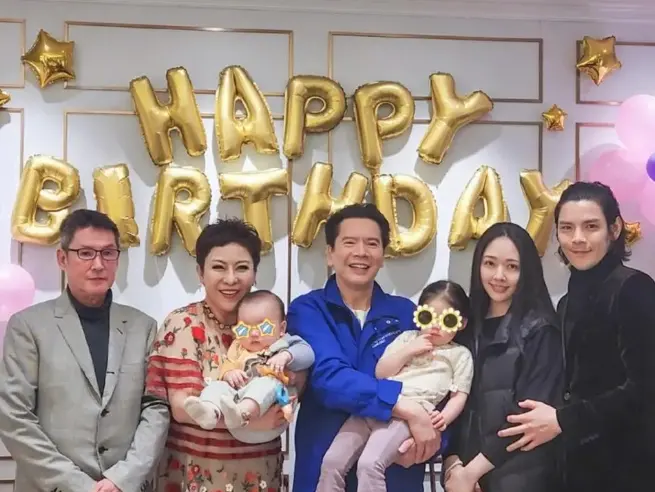
This storyline inevitably reminds me of the scene in The Story of Minglan in which Gu Tingye marries Minglan. At the time, the Gu family appeared prominent but was in internal disorder, and Gu Tingye overcame all objections to marry Minglan, a concubine-born daughter of the Sheng family, for reasons both of affection and of practical reality.
However capable Gu Tingye was, he managed external affairs; only by finding a capable person to manage the inner household could there be peace. I believe that if affection alone could not bring peace to the inner household, Gu Tingye would not have been so resolute.
After Minglan took charge of the Gu household, she straightened out domestic affairs and balanced all parties, and managed to govern a declining marquisate household in perfect order and restore its vitality.
This scene in the Xiang family is almost a modern replica of a prominent family.
Charles Heung said plainly in the video that his two sons are "not suited to managing money," while Guo Biting, in their eyes, is just like Minglan—the choice to keep the household who is "down-to-earth and good at running a household, best at safeguarding wealth, and never wasteful."
Tiffany Chen's recognition of this daughter-in-law has been a guiding presence from courtship and marriage through childbirth. Behind this trust lies a far-reaching consideration for the family's coming decades—choosing the right daughter-in-law is like finding a reliable helmsman for the family's great ship.
However, this arrangement, which breaks with tradition, was difficult for the younger son, Xiang You, to accept. Upon learning of the decision, he immediately cried out that it was unfair, his grievance written all over his face.
What is even more lamentable is that the parent-child relationship has completely frozen as a result: Tiffany Chen has blocked Xiang You, and Charles Heung does not have the younger son's contact information. Now, if Xiang You wants to see his parents, he must "make an appointment" through the secretary and is often turned down with "no time."
It may appear that Charles Heung and Tiffany Chen have aired the family's dirty laundry, but I suspect that behind these remarks they are in fact helping Xiang You ward off trouble by outwardly cutting ties—since he has no possibility of inheriting and his parents appear not to favor him, his dubious friends will stay away. Whether Xiang You has again taken up with dubious friends, leading Charles Heung to make such a public announcement, we cannot know.
02 Governing a Family Like a Business: The Modern Management Wisdom of Putting People to Their Best Use
On the surface, this looks like the division of family property; in reality, it is a far-sighted "family governance reform" by the Xiang family. The wisdom embedded in it is much like how Minglan governed the Gu family: the core lies in breaking through the limits of blood ties and achieving "putting people to their best use."
\1. Bringing in "outside support" to activate new momentum for the family
In The Story of Minglan, Minglan marries into the Gu family as an "outsider." Unentangled by the intricate web of interests, she is instead able to act impartially and introduce new household governance ideas. She reorganizes the estates, clarifies the accounts, and disciplines the servants, using a new set of methods to give the Gu family a completely new look.
The Xiang family's choice of Guo Biting has a similar effect: a daughter-in-law, as an "external force," is often better able than a son mired in family entanglements to step outside emotional constraints and manage assets rationally.
But there is a key point here: what Guo Biting receives is "management rights," not "ownership."
What the Xiang family established is a "family trust," and Guo Biting is the trustee-manager. She can withdraw funds from the trust as agreed for household expenses and the children's education, but she cannot spend them at will. The true beneficiaries are the grandchildren; she is more like a "
professional manager
" of this family fortune rather than its "owner."
\2. Breaking with "bloodline-only thinking" and selecting the worthy and capable as a business would
The choice made by Xiang Huaqiang and his wife is, in essence, to manage the family using modern corporate governance thinking. In an excellent company, the CEO is not necessarily the founder's child, but the person most capable of leading the company forward. Is governing a large family any different?
The Xiang family skipped over the son and chose the daughter-in-law, likewise a rational decision based on ability rather than bloodline. This approach of "recommending the worthy without avoiding relatives, but even more without favoring only relatives" is a reform of the traditional notion of "the son inherits the father's business" made under constraint, but it is also an active embrace of modern family governance.
3. Establishing a "firewall" to shield the family from risk
There is another deeper consideration behind Charles Heung's decision not to give his younger son any property: establishing a risk-isolation mechanism for the family. Heung Yuk has a record of misconduct; if he were to directly inherit a vast fortune, he would very likely repeat the same mistakes, or even be exploited by persons with ulterior motives, dragging down the entire family.
This is like Minglan, in managing the Gu household, resolutely dealing with those old associates and old matters that might bring hidden risks. Charles Heung's move of "not dividing the family estate" in fact establishes a "firewall"—it protects the family assets from being squandered, and also protects his son from falling into danger because of a vast fortune. What appears heartless is in fact a long-term protection mechanism established for the entire family, including Heung Yuk himself.
4. The ultimate goal of succession: enduring prosperity and continuity of values
Charles Heung repeatedly stressed that he "likes the grandchildren so much," which reveals the ultimate goal of family governance: enduring prosperity and continuity of values. All the arrangements ultimately point to the third generation—through institutional design, wealth flows steadily to the grandchildren for their education and growth.
The Heung family has even established conduct-restriction clauses, such as that the grandchildren's eligibility to inherit may be affected if they go to the United States. This kind of meticulous planning is just like Minglan planning the future for the Gu family's sons and nephews—transmitting not only wealth but also values. It breaks free of the curse that "wealth does not last beyond three generations," using institutions to ensure the dual transmission of the family's spirit and material wealth.
03 When parents love their children, they plan for them deeply
Looking back at the whole matter, this arrangement by Charles Heung and his wife appears on the surface to have triggered family conflict, but in fact reflects the deepest love of parents.
"When parents love their children, they plan for them deeply." This classic line from The Story of Minglan has found a contemporary interpretation in the reality of the Heung family. True deep planning is not giving children mountains of gold and silver to squander, but using wisdom and rules to lay out a path of sustainable development for the entire family.
The choices of Charles Heung and his wife, Tiffany Chen, accomplished several important things:
- Breaking through traditional limitations, selecting the worthy and appointing the capable as a modern enterprise would, and letting the most suitable person manage the family wealth
- Establishing institutional safeguards, using tools such as trusts to replace personal arrangements that easily give rise to disputes
- Emphasize risk prevention and control, and establish isolation mechanisms for potential conduct-related risks
- Focus on intergenerational succession, leave the most far-reaching love to the third generation, and ensure the family's enduring foundation
Family succession has never been a simple transfer of wealth; it is the transmission of values, governance wisdom and a philosophy of survival. The unfolding drama of the Xiang family echoes the far-sighted family decisions in The Story of Minglan, and together they illustrate one principle: governing a family is like governing a great state or running an enterprise—the core lies in putting people to their best use, giving priority to institutions, and planning for the long term.
In this story there is no simple right or wrong, only the difficult balancing and far-reaching arrangements of a modern family between tradition and innovation, emotion and reason. And this is perhaps precisely what contemporary family succession most truly looks like, and also its most profound wisdom.
The lesson this offers ordinary families is not to imitate its specific practices, but to grasp its core spirit:
- A planning mindset is better than improvisation: regardless of the amount of assets, consciously planning family resources (money, time and care) for the long term and reviewing them regularly is better than responding without any preparation.
- Cultivating capabilities matters more than giving wealth: teaching children to fish (independent thinking, financial management and interpersonal skills) is far more important than merely giving them fish (material wealth). This is their true armor against life's storms.
- The transmission of values is the true family wealth: the most solid foundation of a family is not the numbers on a bank card, but integrity, responsibility, foresight and love passed down from generation to generation. These intangible assets are a legacy that no external force can take away.
The reason stories of wealthy families are so compelling is that they place human nature, interests and emotion under the giant microscope of wealth, allowing us to see its finest textures. And when we turn off the news and return to our own lives, perhaps we can ask ourselves a few simple questions:
In what specific choices and preparations is our "far-reaching planning" for the family reflected?
What have we passed on to the next generation that is more important than material things?
Does our love stop at the satisfaction of the present, or has it already seen what the future looks like?
Inheritance is, in the final analysis, an art of time. The Xiang family's choice is their answer to time. And each of our families, too, is writing in its own way this answer sheet concerning love and the future.
The ending of the story may not yet have been written, but that original intention of 'planning deeply for them' is the same in ancient and modern times, and knows no boundary between rich and poor. This, perhaps, is the most serene and most powerful resonance we can carry away from this clamorous narrative of a wealthy family. May we encourage one another!

