

This
is my
13th of 100 legal commentary articles in 2026.
Jin Chen drove into a
wall, left the scene, and had her assistant stay behind as the "driver" — an apparently ordinary single-vehicle accident that nonetheless sparked widespread discussion across the internet because of Jin Chen's status as a public figure and the improper handling. As a professional observer of celebrity news, this article aims to share the legal risks hidden in each step, from the traffic police investigation to insurance claims handling.
PART.01
How the accident unfolded: surveillance footage is more honest than people
On March 16, 2025, in Keqiao District, Shaoxing, Zhejiang. Jin Chen was driving when a single-vehicle accident occurred; the vehicle collided with a perimeter wall and a warning sign, and the assistant Xu Changqing was injured.
After the accident, Jin Chen and her manager left the scene, and the assistant reported the matter to the police as the "driver." The next day, the accident determination report was issued, and Xu Changqing was held fully liable.
What appeared to be a flawless accident-handling process was exposed during the insurance claims stage. After obtaining surveillance footage, the insurer discovered that the person actually driving was Jin Chen herself.
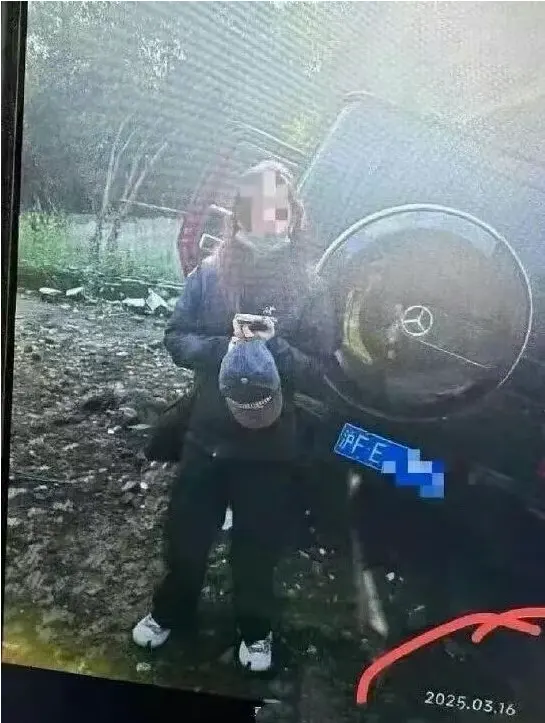
Then came the dramatic twist: after the insurer reported the matter, Jin Chen waived the claim and bore the costs herself, and the insurer withdrew the case. It was not until late January 2026 that paparazzi disclosures pushed the matter onto trending searches.
PART.02
Legal liability: a blurred dividing line
The legal characterization of the accident mainly turns on two key indicators: personal injuries and property damage.
If the assistant suffered only minor injuries and the property damage was not significant, the matter would remain at the level of administrative penalties—fines, possibly detention, and at most license revocation. But if there are serious injuries or major property damage, the nature of the matter is entirely different.
Based on the current circumstances, it is most likely the former. Otherwise, the insurer would not have withdrawn the case so readily, and the traffic police would not have initially issued only an ordinary accident determination.
The act of "taking the blame" does not itself constitute a separate crime; only when the person being shielded is suspected of a crime may the person taking the blame potentially be involved in the crime of harboring an offender.
This is like a chain—
If the underlying accident does not meet the threshold for a crime, the subsequent "taking the blame" loses its basis for criminal punishment.
.
PART.03
Insurance claims: those details you overlook
The insurer's handling is also worth examining. It reported the matter immediately upon discovering suspicious points, but withdrew the case as soon as the client abandoned the claim—this reflects the practical considerations of the insurance industry.
What the insurer cares about is whether insurance fraud exists. When the insured voluntarily bears all losses, the insurer has no need to investigate further.
But resolution of the claims dispute does not mean administrative liability disappears. The traffic police may still impose penalties for conduct such as providing false information or arranging for someone to take another's place.
The insurer's handling also serves as a reminder to the public: dashcams and surveillance are everywhere, and it is almost impossible to conceal the truth.
PART.04
Public opinion fermenting: an unexpected chain reaction
Why did a matter from nearly a year ago explode so quickly once exposed?
First, the halo effect of public figures. Every move a celebrity makes is magnified, and this is even more true of legal violations.
Second, the circumstances invite speculation. Phrases such as "leaving the scene" and "asking someone to take the blame" readily bring to mind an attempt to evade responsibility.
Finally, the lack of transparency fuels speculation. How serious were the injuries? How substantial were the losses? The absence of this key information has allowed all kinds of speculation to run rampant.
Public attention has forced the proceedings to restart—the Shaoxing traffic police establishing an investigation team is the best proof of this. This also demonstrates the positive value of public oversight: ensuring that facts which should be clarified are not buried by the passage of time.
PART.05
Beyond the law: the costs that cannot be ignored
Even if no criminal penalty is ultimately involved, the other costs arising from this matter cannot be ignored:
The reputational cost is the greatest. The artist's image has been damaged, and commercial value may be diminished.
The legal cost is also significant. Fines, points deducted, possible administrative detention, and the hassle of retaking the driving test.
Industry costs must also be considered. If classified as an "uncivilized artist," one may face an industry boycott.
What is more worth considering is: why choose to leave? Was it fear of exposure, or concern about the impact on work? Whatever the reason, handling a problem in the wrong way often makes the problem worse.
PART.06
The correct approach: three steps everyone should know
When encountering a traffic accident, the correct approach is actually very simple:
Step 1: Rescue and report
If anyone is injured, call 120 first, then immediately report to the police (122). Secure the scene and do not move the vehicles (unless they are obstructing traffic).
Step 2: Give a truthful account
Truthfully state what happened to the traffic police and the insurance company. Telling the truth costs the least; lying costs the most.
Step 3: Cooperate with the investigation
Actively assist the investigation; accept liability where liability is due and pay compensation where compensation is due. With insurance, there is no fear of paying; without insurance, sincerity matters even more.
Remember this simple formula: handling matters in good faith > evading responsibility.
Handling an accident does not involve that much "technical sophistication"; it relies on basic legal awareness and a sense of responsibility. The law may treat matters differently depending on the severity of the consequences, but the requirement of good faith is always applied equally to all.
The final conclusion must await the official investigation, but this matter has already taught everyone a sufficient lesson: when something happens, do not panic, and above all do not flee. Facing the situation and taking responsibility is the safest "fast track."
Thank you for reading this article. The law is not far from us; every everyday choice may face legal scrutiny.
Follow me for more accessible legal analysis, so that the law becomes a guardian of your life rather than a source of risk.
Look at trending topics rationally; the law has a human touch.

