
This is my 30th legal commentary article of 2026. Today I am sharing the old-wine-in-new-bottles online phenomenon of "grooming older men."
"Lawyer, I want to sue him!"
A woman, pulling along her reluctant husband, walked into the law firm and slapped a record of mobile-phone transfers onto the table.
The husband rolled his eyes: "Here we go again. I was just chatting with someone. I didn't have an affair. Is that little bit of money really worth all this?"
The woman raised her voice an octave: "That little bit of money? RMB 8,600 over three months! That was our child's tutoring fees!"
The husband muttered: "At home, when I talk to you, you can't be bothered to answer. Am I not even allowed to find someone to talk to?"
— This is a common scene in which "grooming older men" is exposed before a lawyer. Because the amounts involved are not very large and the other parties are mostly online acquaintances, most families have "made big things small and small things nothing."
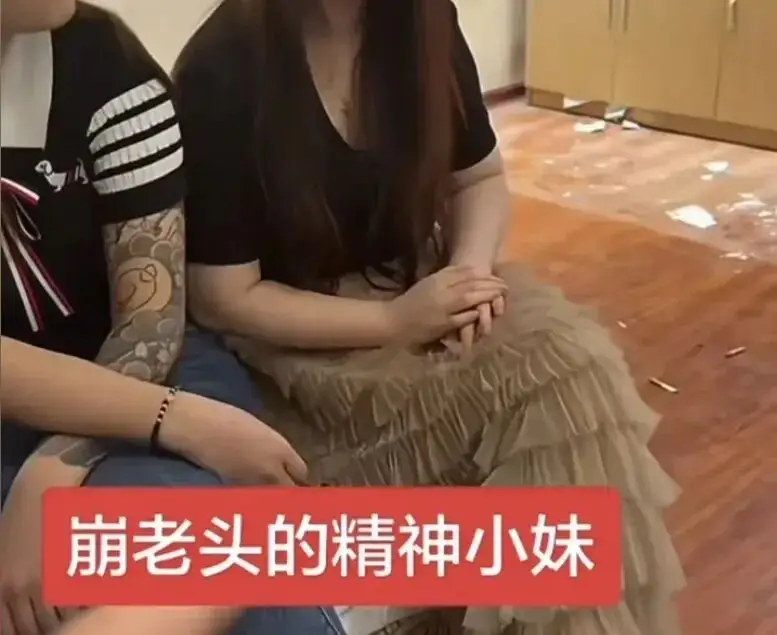
I. At the Law Firm: A Family Debate About "Emotional Value"
Reconstruction of a classic dialogue:
Wife: "Lawyer, look. He transferred money to this 'Xiaomei' 52 times, from milk tea to mobile-phone top-ups. I calculated it: RMB 8,642 in total!"
Husband: (impatiently) "Oh, she's just an online friend I get along with. The young girl has a hard life. What's wrong with buying her a few milk teas? I didn't have a physical affair!"
Wife: "No affair? Your emotional affair has reached the Pacific! Every day you hold your phone and giggle, and when you talk to me it's just 'mm-hmm, uh-huh,' but you're quick enough to transfer money!"
Husband: "And whose fault is that? When I say at home that work is stressful, you say 'whose job isn't stressful?' When I say I'm in a bad mood, you say 'stop being so dramatic.' At least she comforts me a little!"
Lawyer's inner monologue: Well, well—this went from a legal consultation to marriage mediation in seconds.
But here's the key point—the husband's final remark, "I was just chatting with her, that's all," is precisely what exposes the most delicate aspect of this type of case: the parties often do not see themselves as "victims," but rather regard it as "emotional spending," as something "both parties wanted."
II. The Law Draws Its Sword: Marital Community Property Is Not Your "Private Piggy Bank"
Let's set emotions aside and see what the Civil Code says:
\1. Whose money is it?—Every cent in the family account is "two people's share"
Under Article 1062 of the Civil Code, wages, bonuses, investment income and the like earned by spouses during the existence of the marriage relationship all constitute marital community property.
Translated into plain language:
Of the 52 yuan you transferred to "Xiaomei" for milk tea, half (26 yuan) is, in theory, your wife's.
You gave "two people's share" of the money to a third party without consent—and on this matter, your wife has the right to say no.
\2. Is the gift valid?—If the spouse says "invalid," it is invalid
The adjudicative view of the Supreme People's Court is clear: where one spouse unilaterally gifts community property to another person, it constitutes unauthorized disposition.
More critically, if the donee knows or ought to know that the other party is married (for example, you mentioned "my wife" in a WeChat conversation), then the gift is void from beginning to end.
For example:
- You secretly use your personal savings to treat a female colleague to a meal: this may be only a moral issue.
- You use a joint marital account to transfer an "emotional companionship fee" to an online acquaintance: legal issue +1.
- The other party knows you are married and still accepts the money: legal issue +N.
3. Can it be recovered? — Yes, and the full amount can be recovered.
Many husbands think: "The money is what I earned; I can give it to whomever I like."
Wrong.
In judicial practice, where a wife brings an action seeking a declaration that the gift is void and the return of the property, the courts generally uphold the claim. Moreover — the full amount is to be returned, not half.
Because the logic is as follows:
- The gift is void → void ab initio.
- The legal consequence of invalidity is restoration to the original state.
- Therefore, all the money must be returned and restored to the joint marital account.
Simply put: what you think is "I gave Xiaomei a gift" is treated by the law as "you temporarily held this money on behalf of us as husband and wife, and now it must be returned."
III. Practical Steps to Protect Rights: How a Wife Can Elegantly "Recover Marital Assets"
If you discover that your spouse is continuously spending money on a "close female confidante," you can proceed as follows:
Step One: Preserve the Evidence (Stay Calm, Do Not Argue)
- Transfer records: bank statements, WeChat/Alipay bills (complete screenshots showing the other party's nickname and account number)
- Chat records: the portions that can prove the other party knew you were married and continuously demanded money
- Timeline: organize the entire process from first acquaintance to the transfers
- Amount accounting: create an Excel spreadsheet with categorized summaries (milk tea, ride-hailing, holiday red envelopes, etc.)
Step Two: Polite First, Firm Later
- Family meeting: lay out the evidence and have a serious conversation (avoid emotional accusations)
- Ask the other party to recover the money voluntarily: give your husband a chance to "make amends for his mistakes"
- Set a deadline: for example, handle it within one week, otherwise legal proceedings will be initiated
Step Three: Legal Action
If the other party refuses to cooperate:
- Defendant(s): list the husband and the donee ("Xiaomei") as co-defendants
- Claims:
- Confirm that the gift is invalid
- Order the return of all gifted funds
- Bear the litigation costs
- Practical effect:
- The money can be recovered (most likely through mediation or a judgment ordering return)
- The husband's "close female confidante" will vanish instantly (no one is willing to go to court over a few thousand yuan)
- Control over the family finances returns to the proper track
A lawyer's whisper: in fact, many cases are resolved at the letter-writing stage—as soon as the other side sees that litigation is imminent, they immediately refund the money and delete the friend.
IV. The deeper issue: why is "chatting" more expensive than marriage?
Returning to the scene at the beginning, the husband's remark, "I'm the person at home no one talks to," struck a nerve on a pain point in many marriages.
A cruel comparison:
| Item | Virtual relationship ("bing laotou") | Real marriage |
|---|---|---|
| Cost of listening | RMB 52 per session (openly priced) | Requires an investment of time, patience and empathy |
| Quality of feedback | Always "You're amazing, bro" | There may be remarks such as "You're doing it again" or "How many times have I told you?" |
| Conflict resolution | Blocking the person is enough | Requires communication, compromise and repair |
| Long-term investment | Money (quantifiable) | Emotions, energy and sense of responsibility (non-quantifiable) |
Here is the problem:
When a person becomes accustomed to the emotional gratification of "pay and receive," will they still be willing to invest in a relationship that requires adjustment and involves friction, yet is genuine and profound?
Even more alarming is that this pattern creates a vicious cycle:
The husband feels his wife does not understand him → he seeks out online friends to purchase emotional value → the wife finds out and they quarrel → the husband thinks, "Sure enough, it is still my online friends who understand me" → he becomes even more addicted to virtual relationships...
It is like boiling a frog in warm water, slowly eroding your marriage, and by the time a major problem arises and you try to solve it, it is too late! This is also why I often tell people never to underestimate the harm of "collapsing the old man"!
V. Advice for Both Parties: Rebuilding Matters More Than Assigning Blame
Advice for the Wife:
- Recovering the money matters, but the relationship matters more. Suing to recover the money is a legal right, but afterward you will need to confront: Do you still want this marriage? If so, how do you repair it?
- Look at the need behind the need. "He is simply lustful/vainglorious" may be the surface; the deeper cause may be that he feels unheard and unappreciated in the marriage.
- Set boundaries, but do not build high walls. "From now on I will manage all the money" may provoke even greater resistance. You can sign a Marital Property Agreement providing that:
- Any expenditure exceeding RMB XXX per transaction requires the consent of both parties
- A reasonable monthly "personal allowance" is established
- Household finances are reviewed periodically
A Reminder for the Husband:
- Legal cost: Every cent of the "milk tea money" you transferred may need to be repaid to the family account, principal plus interest
- Emotional cost: Virtual relationships are like saccharin—sweet but fake, and harmful in excess
- Opportunity cost: The time and money you spent on "Xiaomei" could originally have been used to:
- Take a weekend short trip with your wife
- Sign your child up for an interest class
- Replace the sofa at home with a more comfortable one—these are the things that truly improve a family's happiness
Finally, a few blunt but true words:
Those "younger sisters" who accept your "milk tea money" may be saying the same things to dozens of "older brothers" at the same time.
But the person by your side who argues with you, who complains, yet also stays up all night caring for you when you are sick—that is the only real relationship.
The law can help you recover your money, but what it cannot recover is:
- The time that should have been spent cultivating real relationships
- The willingness to communicate that has been worn away by virtual sweetness
- And your partner's trust in you, which was once given without reservation
Next time you think about sending "milk tea money," you might try this:
Send 52 yuan to your wife with the note, "Have a milk tea on me, and while you're at it, listen to the mess I ran into today."
It may be awkward at first, and she may say, "Spending money recklessly again," but—
This is what a real relationship looks like: it has friction, warmth, and a future.
Note: The legal analysis in this article is based on the Civil Code and the relevant judicial interpretations. Please consult a professional lawyer for specific cases.
Marriage is not easy; cherish it as you go—this saying is old-fashioned, but it works.

