
This is my 166th legal education article of 2026.
I was jolted awake first thing in the morning by a piece of news.
NVIDIA CEO Jensen Huang sent an email to all employees, personally admitting that "I was unfaithful to my wife." Barely two weeks separated "ordinary business dealings" from "I owe my family an apology."
This is not ordinary gossip, but a public lesson for all high-net-worth women, professional women, and anyone concerned about risk management of family assets: when marital private morality, listed-company governance, tens of billions in equity, and a national-security investigation collide, how does the law see it?
I. News summary: what exactly did he say (quoting his own words)
According to the email draft disclosed by Axios and Reuters, the core text of Jensen Huang's letter to all NVIDIA employees is as follows:
"I owe my family and all of you an apology. I was unfaithful to my wife. My actions hurt her and our children. There is no excuse for what I did. I am deeply sorry." "I owe my family and all of you an apology. I was unfaithful to my wife. My actions hurt her and our children. There is no excuse for what I did. I am deeply sorry."
"I take full responsibility for what I did and the hurt I caused, and I accept the criticism that comes with it." "I take full responsibility for what I did and the hurt I caused, and I accept the criticism that comes with it."
"My family bears no responsibility for my choices. I do. Please give them privacy." "My family bears no responsibility for my choices. I do. Please give them privacy."
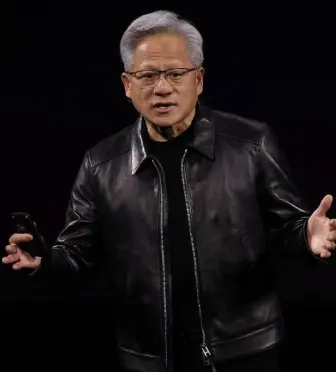
The letter admits only "unfaithfulness to my wife" and does not admit to espionage. The NVIDIA board announced the same day that it would form a committee of independent directors and engage outside counsel to launch an independent investigation into whether he has become a target of foreign intelligence and whether chip secrets were leaked.
The board's current position: no evidence shows that confidential information has been compromised, and Jensen Huang remains CEO.
The person involved in the affair is identified as Alice Huang, a former executive of Singapore-based Megaspeed; U.S. intelligence assessments suggest she may have been used to approach Jensen Huang to obtain AI chip intelligence, China denies the relevant allegations, and the independent investigation has not yet reached a conclusion.
II. Legal Analysis: Can His Statement That “I Bear Full Personal Responsibility” Hold Up?
1. “Personal liability” in a marriage is not so simple
Jensen Huang's statement that “the responsibility is mine” is a moral statement, not a legal allocation.
He married his wife Lori Huang in 1985, and NVIDIA was founded in 1993. Under California's default community property regime (absent a valid prenuptial agreement), most appreciation, shareholdings and dividends during the marriage are treated as community property.
His statement that he “bears full personal responsibility” can be understood as follows:
- not shifting the espionage risk onto his family;
- acknowledging his own marital fault;
- however, whether the marriage continues faces uncertainty.
If the marriage proceeds to divorce:
- California is a no-fault divorce state, and infidelity itself does not necessarily result in one party leaving with nothing;
- however, if community property was used to buy a house, transfer funds or purchase gifts for a third party, the wife may assert unauthorized disposition of community property and seek to recover the amount from his share;
- if a prenuptial agreement was signed, that agreement will have a significant impact on the division of property upon divorce.
2. What would Nvidia face in the event of a marital breakdown?
(1) Equity division risk: a reserve for the most expensive "breakup fee" in history
Jensen Huang holds approximately 3.5% of Nvidia's shares (media estimates place his net worth at over 160 billion USD). Absent a prenuptial agreement and under California's community property logic, in the event of a divorce division:
- Appreciation during the marriage would be subject to division;
- His wife could receive shares worth tens of billions;
- By reference to the Bezos case: MacKenzie could originally have taken half, but ultimately took only 4% of Amazon shares and returned voting rights, and Amazon's share price fell only slightly by 0.1%.
If Huang's shares were divided, the potential impact would be more sensitive:
- His shareholding is already concentrated, and halving it further would weaken his control rights;
- If the wife sells or donates the shares, the market would form an expectation of "the founder's ex-wife selling," triggering sentiment-driven selling pressure;
- If trusts and foundations (the Huang charitable fund, GRAT trusts) were designed in advance, they could isolate part of the assets, but post-marital appreciation could still become embroiled in disputes.
(2) A short-term "sentiment-driven selloff" in the share price; in the long term, the investigation's conclusions will matter
- Short term: public opinion fermenting, congressional questioning, and erosion of the ethical premium make opening-price volatility unavoidable;
- Medium term: If an independent investigation finds only a "private moral issue," with no leak of confidential information and no improper transfer of benefits, the institution will return to fundamentals (orders, the computing-power ecosystem, chip iteration);
- Long-term latent risks: Congress seizes the opportunity to tighten export reviews toward China, customers redo security assessments, and anxiety over succession is amplified—these are the real valuation killers.
(3) Corporate governance "key-person risk"
An analyst's exact words: NVIDIA is not an ordinary company; Jensen Huang is the "embodiment." He directly manages 60 subordinates and sets long-term strategy. With a marital breakdown and an investigation overlapping, the board must answer:
- Is there a succession plan?
- With the founder's credibility damaged, will major customers (cloud providers, government, military) still dare to trust the company?
When Wang Wei of Tudou suffered a marital breakdown and missed the IPO window, it gave rise to the "Tudou clause"—a CEO's divorce must go through the board.
This letter from Jensen Huang reveals a truth:A founder's bedroom matters will sooner or later become the company's matters.
Legal basis for reference:
Cal. Fam. Code § 760 (definition of community property)
Except as otherwise provided by law, all property acquired by spouses during the marriage (from the date of marriage to the date of separation), whether movable or immovable, and whether located in California or anywhere in the world, is presumed to beCommunity Property.
Cal. Fam. Code § 770 (separate property exception)
The following is classified asSeparate Propertyand is not divided:
- property acquired before marriage;
- property acquired during the marriage by inheritance, gift or testamentary bequest and expressly designated as belonging to one spouse;
- fruits and natural appreciation of separate property (to the extent not commingled);
- income separately acquired by one spouse after separation.
Cal. Fam. Code § 771 / § 772 (post-separation income)
From the date of separation, income newly acquired by each spouse reverts to separate property.
Cal. Fam. Code § 2550 (division principles)
Marital property upon divorceis in principle divided equally (50/50), and the court has no discretion to alter the ratio (unless by agreement or a statutory exception).
Cal. Fam. Code § 2640 (reimbursement for contributions of separate property)
Where a premarital property is used after marriage to repay a mortgage or renovate with community income, the community portion may be reimbursed or compensated, but ordinary living expenses are not reimbursed.
III. It Is Not a Matter of "Just Having an Affair," but of "Being Seen Sooner or Later": The Inevitable Logic of the Blue Storm
Many people ask: Did this just happen?
No. According to the media timeline:
- In 2024–2025, photos of the two appearing together in Taipei were already circulating;
- In October 2026, The New York Times named Alice Huang and raised intelligence-related suspicions;
- On November 4, three congressional committees sent a letter requesting that he appear on November 18 to provide explanations;
- On November 8, he changed his account and admitted to "infidelity."
It looks like a black swan, but it is actually a chain:
Secret relationship → contact involving interests → intelligence-perspective intervention → media amplification → instrumentalization for political purposes → the individual must make a statement.
Once it happens, it will be discovered sooner or later. There are three reasons:
- High-profile figures have no private sphere: global cameras are fixed on the king of AI, and chips, clients, flights, bar surveillance, and congressional memoranda are all part of the evidentiary chain.
- The entanglement of interests is too deep: this is not "dating someone"; the romantic partner stands at the intersection of AI chip export controls, national security, and hundred-billion-dollar orders. Once a private relationship touches public power, it is bound to be exposed.
- Marriage is a long-term account, not a one-time cover-up: he has been married for 41 years, and both children work at NVIDIA. Family members, shareholders, rivals, and the intelligence system—if any one of these ends loosens, the secret collapses.
So, as a lawyer, I often tell clients one thing:
You think an affair is "a matter between two people," but when you have equity, a company, children, and rivals, it is a "due diligence project."
Signing an agreement is not the end (see the preceding article on post-earthquake reconstruction); not signing an agreement and not isolating assets is planting landmines. Jensen Huang's letter is essentially "apologize first, then submit to an investigation, preserve control, stabilize the family, and stabilize shareholders"—every step is a legal action.
IV. Attorney Qu's Bottom-Line Remarks
Jensen Huang's "I take full responsibility" is dignified in the letter, but in court it must be implemented:
- If you want to avoid harming the company, you must have trusts, marital agreements, and voting-right arrangements in advance;
- If you want to avoid hurting your wife, you must genuinely return 'joint property' to joint decision-making;
- If you want to avoid hurting yourself, you must accept that—once personal morality collapses, capital will price it for you through the share price.
Marriage is essentially a partnership (as discussed in Article 161). The partnership between founding spouses is further layered with a 'corporate partnership.' Your infidelity is not merely a betrayal of your wife; it simultaneously exhausts the trust of shareholders, employees, and the state.
At this point, the only person who could step forward to help Nvidia and its shareholders is Jensen Huang's wife, by reference to the public-opinion playbooks common among entertainment-industry celebrities (Ma Yili and Angelababy once provided response templates); or a new professional manager (by reference to JD.com's Richard Liu, who announced his withdrawal but remained behind the scenes to continue exercising actual control over the company).
Whenever something like this happens, many people sigh: Alas! This world is just a slapdash outfit!
I want to say: appetite for food and sex is human nature. However successful a person may be, he is still flesh and blood, still human. He made a mistake that many men make; it is only because he is not someone with nothing to lose that his marriage is not merely gossip but affects the interests of many people, and thus becomes an investment and wealth-management risk for many—the shareholders of Nvidia and the Nvidia supply chain cannot afford to be hurt!
Let us wait and see whether the blue storm further triggers a tsunami or subsides into calm.

