

Will game licenses be issued to blockchain games?
Special Disclaimer: This article is an original work by Attorney Shao Shiwei. It reflects only the personal views of the author and does not constitute legal consultation or legal advice on specific matters. For article reposting, legal consultations, or professional exchanges, please add WeChat contact: sswls66.
Introduction:
Currently, the metaverse market is experiencing rapid development. As a combination of gaming and decentralized finance (DeFi), blockchain games (GameFi), built on blockchain technology as their underlying infrastructure, possess significant market potential. Domestic blockchain game projects, such as Dragon Island and Sepol, have also attracted considerable attention from players.
NFTs endow blockchain games with value attributes. Many domestic digital collectible platforms (such as HOTDOG and Shiba Digital Collectibles, among others) have begun to enter the blockchain gaming sector.
However, in China, the launch of an online game requires approval from the National Press and Publication Administration and the acquisition of a publication number (the “License”). Due to policy considerations, game licenses are strictly controlled. In 2018, regulators even suspended the issuance of game licenses [1]. After approvals resumed nine months later, the number of online game licenses approved began to decline sharply.
At present, no blockchain gaming platform in China has obtained a license.。
Against this backdrop,some digital collectible project operators, while hoping to transition into blockchain gaming, are concerned about their inability to obtaingame licenses, and whether this entails relevant legal risks.?
Let us examine a news report:

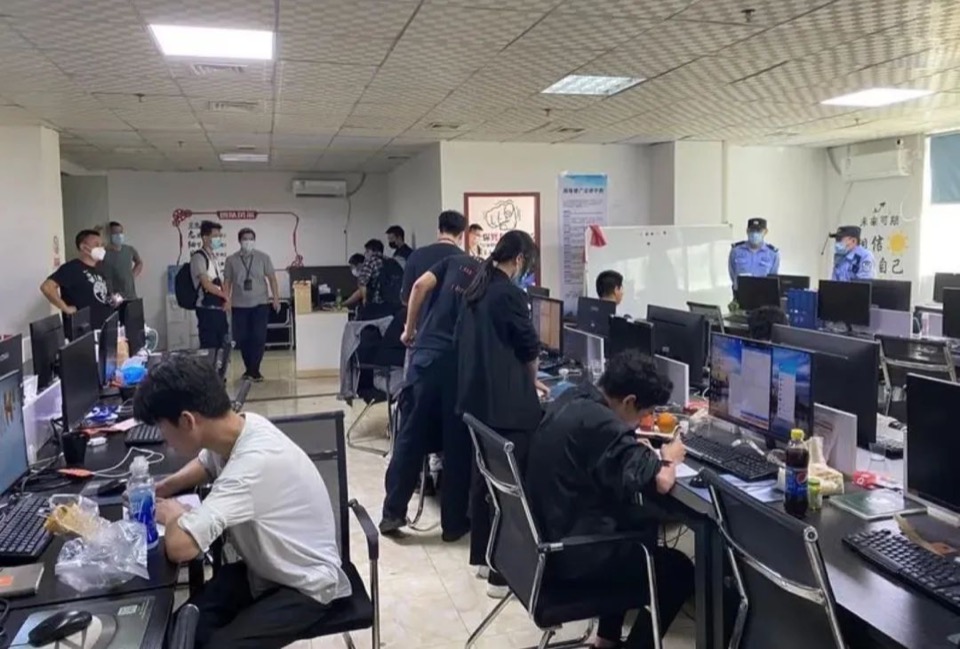
(Scene of police arrest operation)
It can be seen thatlaunching games without a license or by misusing another’s license may constitute the crime of illegal business operations.。
However, the author believes that, as the crime of illegal business operations serves as a “catch-all” offense in China, its application is itself highly controversial. Blockchain gaming platforms that launch and operate without obtaining a game license should not be criminalized under this charge.
The following analysis proceeds in two parts:
Based on the definition of the crime of illegal business operations under the Criminal Law, two basic conditions must be met for this offense: (1) violation of state provisions, and (2) disruption of market order.
Article 225 of the Criminal Law of the People’s Republic of China, concerning the crime of illegal business operations, provides: “Whoever, in violation of state provisions, engages in any of the following illegal business activities, thereby disrupting market order, where the circumstances are serious…”
01
Reason 1: Launching a blockchain game project without a license does not constitute a violation of state provisions.
Under China’s Criminal Law, “state provisions” refer to laws and decisions enacted by the National People’s Congress and its Standing Committee, administrative regulations formulated by the State Council, and administrative measures, decisions, and orders issued thereby.
The basis for asserting that launching a blockchain game without a license involves criminal liability is theProvisions on the Administration of Online Publishing Services. However, the legal hierarchy of these Provisions is that of departmental rules. Although the Regulations on the Administration of Publication, on which these Provisions are based, rank as administrative regulations, their application is limited to “electronic publications,” among other items. Whether online games fall within the scope of “electronic publications” is not expressly stipulated. According to the Provisions on the Administration of Electronic Publication, electronic publications generally involve a tangible medium [2].
Therefore, launching and operating a blockchain game without a license does not violate state provisions.
Provisions on the Administration of Online Publishing Services
Article 51: Where anyone, without approval, engages in online publishing services, or publishes online games on the internet without authorization (including online games authorized by overseas copyright holders), in accordance with Article 61 of the Regulations on the Administration of Publication and Article 19 of the Measures for the Administration of Internet Information Services, … if the conduct constitutes a crime under the Criminal Law, criminal liability shall be pursued in accordance with the law.
Regulations on the Administration of Publication (2020 Revision)
Article 2: … For the purposes of these Regulations, “publications” refer to newspapers, periodicals, books, audio-visual products, electronic publications, and the like.
02
Reason 2: Launching a blockchain game project without a licensedoes not constitute “disruption of market order”.
Under the Criminal Law, constituting the crime of illegal business operations requires reaching a level of serious disruption to market order. The law enumerates behaviors such as dealing in goods under state monopoly or restricted sale; buying or selling import/export licenses or other approval documents; and illegally engaging in fund payment and settlement businesses.
One characteristic of criminal law is its “punishability.” Under the Provisions on the Administration of Online Publishing Services, operators may be subject to a series of punitive measures, including fines of up to ten times the illegal business revenue, website closure, and confiscation of illegal gains.
In the absence of explicit provisions in the Criminal Law stating that operating a blockchain game without qualifications or licenses constitutes “serious disruption of market order,” and given the existence of corresponding administrative penalty provisions, the principle of restraint in criminal law dictates that criminal sanctions should not be employed.
03
Risk Warning
Even if launching a blockchain game without a license does not constitute the crime of illegal business operations, operators must still attend to compliance on other fronts during operation. For example, issues such as suspected infringement of others’ copyrights, involvement in pornography or violence, or contradiction with core socialist values must be considered. If the circumstances are serious enough to meet the thresholds for initiating cases under other criminal charges, certain risks remain.
[1] On March 29, 2018, the former State Administration of Press, Publication, Radio, Film and Television issued the Notice on Important Matters Regarding Game Declaration and Approval, stating that, due to institutional reforms, the issuance of all game licenses was fully suspended.
[2] Article 2 of the Provisions on the Administration of Electronic Publication provides: … For the purposes of these Provisions, “electronic publications” refer to mass media in which information with knowledge-based and ideological content is edited and processed in digital code form, stored on fixed physical media such as magnetic, optical, or electrical mediums, and read, displayed, or played through electronic reading, display, or playback devices. These include read-only discs (CD-ROM, DVD-ROM, etc.), write-once discs (CD-R, DVD-R, etc.), rewritable discs (CD-RW, DVD-RW, etc.), floppy disks, hard disks, integrated circuit cards, and other media forms recognized by the General Administration of Press and Publication.