AI summaryWindfall Profits or Devastating Blows?This article is an original work by Mankun Law Firm. It represents solely the personal views of the author and does not constitute legal consultation or legal advice on specific matters.…
Windfall Profits or Devastating Blows?
Special Disclaimer:
This article is an original work by Mankun Law Firm. It represents solely the personal views of the author and does not constitute legal consultation or legal advice on specific matters. For permission to reprint this article, please contact Mankun Law Firm staff at: MankunLawFirm
As the market shifts between bull and bear phases, participants in the virtual currency space have become increasingly active in various WeChat groups. Screenshots showing tenfold or hundredfold returns, along with legends of individuals achieving overnight wealth, are widely circulated within the community. Whether a bull market has truly arrived remains uncertain; however, this recent trend has indeed sparked interest among many outsiders, who hope to seize this rare "wealth-building secret."
However, the virtual currency sector is complex and fraught with risks. The dazzling array of projects, coupled with the technical barriers associated with on-chain wallet interactions, exchange security identification, and risk management, deters many novice users. Furthermore, some users engage in erratic trading behaviors, resulting in substantial losses in their investment transactions.
Some seasoned veterans, having spent years in the crypto space, offer assistance out of goodwill. Novice users, hoping to profit from the market, entrust their digital assets to these purported professionals for management, thereby establishing entrusted trading relationships.
The virtual currency market is highly volatile. While profits generally lead to harmonious relations, losses are also common, frequently giving rise to disputes. As China has not enacted specific legislation governing virtual currencies, judicial practices vary across different local courts regarding standards of determination. This article discusses how courts typically adjudicate cases where losses occur during entrusted virtual currency trading.
What risks should be considered when operating communities on foreign messaging platforms such as Twitter (X)?Click?
China's regulatory policy on virtual currencies primarily consists of normative documents issued by departments such as the People's Bank of China. Specifically:
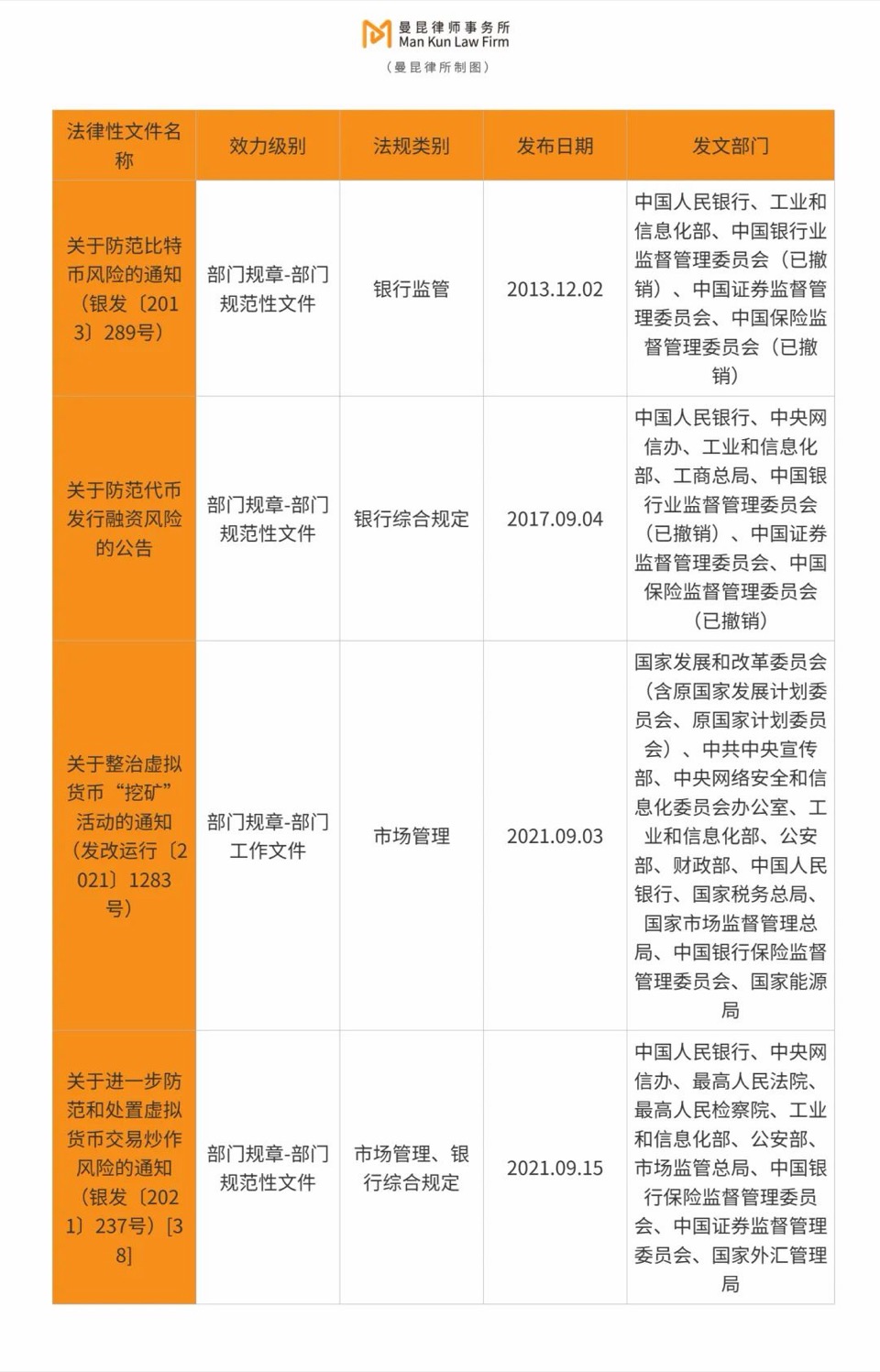
Regulation of financial activities involving Bitcoin and other virtual currencies in China has evolved from initially denying their monetary attributes to controlling institutions, and further extending to regulating virtual currency financing and investment activities.
The regulatory stance on business activities related to virtual currencies has shifted from "should not" to "must not," and ultimately to "strictly prohibited."
Regarding the act of investing in virtual currencies, the approach has transitioned from "risk warnings" to "assumption of risk by investors," and further to directly invoking the principle of public order and good morals to explicitly negate the validity of relevant civil juridical acts and contracts.
This demonstrates a trend of progressively strengthening financial regulation of virtual currencies in China, enhancing oversight in terms of regulatory content, subjects, and consequences. Although the aforementioned documents are merely departmental norms, they reflect the current conservative regulatory attitude of Chinese authorities toward Bitcoin and other virtual currencies.
Showcase of Entrusted Virtual Currency Investment Cases
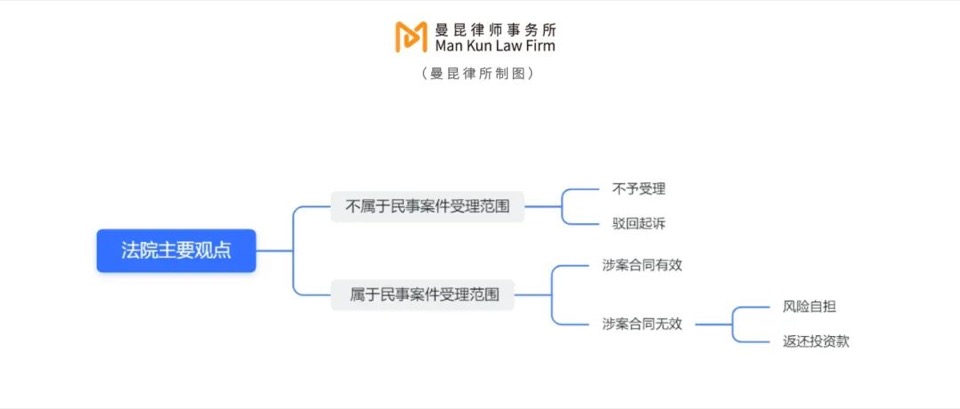
Under China's current strict regulatory stance, courts tend to deem contracts related to virtual currencies invalid due to violations of regulatory requirements and financial order. However, during our research, we identified several interesting cases.
(1) Entrusted to Invest in Spot Trading, but Futures Were Opened Secretly? Court: Compensation Ordered
Mr. Zhang, a seasoned participant in the virtual currency market, recommended Bitcoin to his friend, Mr. Wang, while trading for himself. Observing Mr. Zhang's considerable profits, Mr. Wang developed an interest in trading virtual currencies. However, as a novice unfamiliar with the intricacies of the market, Mr. Wang transferred RMB funds to Mr. Zhang, entrusting him to purchase Bitcoin and manage the investment. Three months later, Mr. Zhang displayed his personal bank account balance to Mr. Wang, claiming it represented profits earned from buying Bitcoin. It seemed that the virtual currency market was indeed profitable.
However, the situation did not last. Over a month later, Mr. Zhang informed Mr. Wang via WeChat that he had purchased Bitcoin futures and warned of the risk of margin liquidation. Subsequently, due to their failure to meet margin calls, Mr. Wang suffered losses. Intending to surprise his friend by leveraging small capital for significant gains, Mr. Zhang inadvertently caused alarm instead.
Upon review, the court determined that the parties had established a gratuitous entrusted financial management contract relationship. The risks associated with investing in Bitcoin spot trading differ significantly from those of Bitcoin futures trading. As the trustee, Mr. Zhang was obligated to act with diligence and care. However, without the consent of the principal, Mr. Wang, he unauthorizedly changed the use of the investment funds, constituting gross negligence. Therefore, Mr. Zhang was held liable for compensation to Mr. Wang.
This case was reviewed by courts at two levels, both of which recognized the entrusted financial management contract relationship between the parties. They determined that the trustee committed gross negligence based on the distinctions between Bitcoin spot and futures trading. Ultimately, the courts supported not only the claim for reimbursement of the principal investment but also the claim for interest losses, resulting in a complete victory for the plaintiff. [Case No. (2020) Min 0205 Min Zhong 4592]
(2) Contract Invalid, but Funds Must Still Be Repaid
Mr. Huang and Mr. Zhang signed a "Digital Currency Quantitative Entrustment Agreement," stipulating that Mr. Huang would entrust USDT (approximately RMB 200,000) to Mr. Zhang for custody under Mr. Huang's name, granting Mr. Zhang full authority to conduct quantitative trading and other operations in digital currency investments. The agreement specified that Mr. Zhang would guarantee the return of an equivalent amount of digital currency upon expiration. The entrustment period was one year. Upon expiration, the defendant failed to repay the full amount, returning only RMB 95,760, leaving an outstanding balance of RMB 104,240.
The court held that the subject matter of the case lacked legality; therefore, the entrusted custody behavior regarding such transaction items was not protected by law. The "Digital Currency Quantitative Entrustment Agreement" was deemed an invalid contract. The defendant, Mr. Zhang, was ordered to return the investment funds. Since Mr. Huang was aware that entrusting investment in virtual currencies violated national regulations and thus bore fault, his claim for interest compensation was not supported. [Case No. (2021) Zhe 1003 Min Chu 2034] (Similar case: [Case No. (2022) Shan 04 Min Zhong 1225])
(3) Entrusted Bitcoin Investment: Court Orders Return of Bitcoin
Xiao Lu and Da Lu signed a "Financial Advisory Agreement," whereby Xiao Lu fully entrusted Da Lu to manage his digital currency account. Apart from a profit-sharing commission, Da Lu did not charge any fixed management fees. Da Lu assumed responsibility for losses incurred during trading in Xiao Lu's account. On December 25, 2019, Da Lu issued a promissory note stating that, due to severe losses incurred during the financial management period, he agreed to compensate with 60 BTC. If not repaid by the deadline, repayment would be made in RMB according to the agreed exchange rate.
The court held that although the "Financial Advisory Agreement" signed by the parties was invalid due to violation of regulatory provisions, the resulting promissory note possessed relative independence and constituted a settlement and compensation agreement acknowledged by both parties. Therefore, execution should proceed according to the promissory note. The court ordered Da Lu to return 60 Bitcoins. [Case No. (2021) Hu 01 Min Zhong 16047] (Similar cases: (2021) Yue 0307 Min Chu 8199, (2021) Hu 0114 Min Chu 22216, (2022) Hu 0105 Min Chu 4886, (2023) Liao 0202 Min Chu 773)
Recommendations from Mankun Lawyers
In practice, disputes involving virtual currencies face challenges such as novel types of disputes, scarce legal bases, and inconsistent judicial rulings. Some judicial reasoning notes that while Bitcoin is not recognized as currency by many countries, including China, holders still enjoy property rights and interests therein. This viewpoint undoubtedly offers a degree of protection for the assets of participants in the virtual currency sector.
In April this year, the Supreme People's Court released the "Minutes of the National Courts' Financial Trial Work Conference (Draft for Comments)," addressing the previous blanket non-support for virtual currency investment disputes and the inconsistency in rulings across different regions. It clarified that disputes arising from entrusted investments in virtual currencies should be comprehensively assessed by considering factors such as the timing of the entrustment, the causes of the entrusted matters, and the degree of fault of both parties. (Those interested may refer to Lawyer Hong Lin's previous interpretive article, "How Do Chinese Courts Adjudicate Cases Involving Virtual Currencies? (Plain Language Version)")
Thus, it is evident that judicial standards evolve with practical developments. Actively asserting rights not only safeguards one's legitimate interests but also promotes deeper theoretical research and legal practice. In the future, through the collective efforts of participants in the virtual currency sector, we hope to continuously expand the methods and pathways for protecting digital assets.
Recommended Reading
Reporting Losses from Crypto Trading to the Police: Did a Post-2000s University Student Receive a Four-Year Sentence for Fraud Due to Issuing Tokens?
China's Anti-Money Laundering Law Undergoes First Major Revision, with Virtual Currencies as a Key Focus
[Infographic] Risks of Selling USDT Virtual Currencies

To submit articles or request permission for reprinting, please add WeChat ID: MankunLawFirm