

Legitimate Wealth Creation (Benefits at the End of the Article)
I will ensure that the United States becomes the global capital of cryptocurrency and a superpower in Bitcoin. If cryptocurrency is to define the future, I want it to be mined and minted in the United States, not elsewhere. If Bitcoin is to go "TO THE MOON" as we say, I want the United States to lead this trend.
— Donald Trump
Since former President Trump made these remarks, Bitcoin mining and the value of Bitcoin have once again become focal points in the market. According to an investor report released on October 16 by analysts at investment banking giant JPMorgan Chase, the 14 publicly listed Bitcoin miners in the United States currently control 28.9% of the global hashrate, and their market dominance continues to grow. Meanwhile, as the U.S. presidential election enters its final countdown in October, whether Trump can successfully be elected will directly impact the market performance of Bitcoin (BTC). Reports suggest that if Trump wins, the price of Bitcoin could surge dramatically.
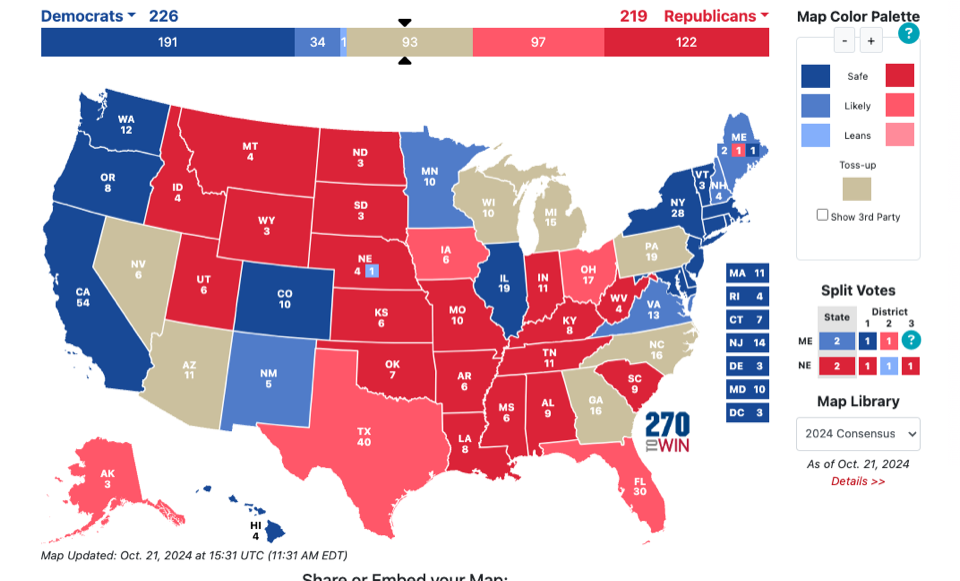
*Image Source: Voting status in various U.S. states as of October 23
Beyond the U.S. election, the latest significant positive development for Bitcoin mining globally is the enactment of Russia’s Bitcoin mining law, which is expected to enhance Russia’s position in Bitcoin hashrate. Mankun Law Firm has previously published several articles analyzing the significant role of Bitcoin reserves and the mining industry, such as "Web3 Lawyer: How to View the U.S. Purchase of 1 Million Bitcoins as a National Reserve?", "Bitcoin Welcomes 'Made in USA': Cryptocurrency Mining Becomes a New Focus in Great Power Competition", and "Web3 Lawyer: Russia Passes Cryptocurrency Mining Law, Is BTC Mining Now Officially Legal?".
However, whether in China or globally, the core issue in accepting or even promoting Bitcoin (BTC) mining lies in "how to address environmental protection and energy issues”。
Interlude: The 85th Mankun Afternoon Tea is counting down—1 day left.

Mankun Law Firm specially invites Lei Jun (Shareholder Partner at Bitforest; Director of Asset Management at Huanlian Financial) to join Zhang Na, Co-Founder of Mankun Law Firm, to share insights on sustainable exploration of Bitcoin mining in North America. Welcome to register!
The Primary Offense of Bitcoin Mining: Environmental Unfriendliness
Restrictions on Bitcoin mining have become a major global trend in recent years, with China’s regulatory policies being the most typical example.
1. China
China was once the absolute center of global Bitcoin mining, possessing nearly 75% of the global hashrate. However, the "Notice on Rectifying Virtual Currency 'Mining' Activities" issued in 2021 by the National Development and Reform Commission and other departments pointed out that Bitcoin mining leads to energy waste. Particularly in energy-intensive provinces such as Inner Mongolia and Sichuan, its high electricity consumption contradicts China’s carbon neutrality goals, making Bitcoin mining a primary target for crackdowns. In this context, a large number of domestic miners relocated overseas. Nevertheless, according to the report "China Has Never Banned Bitcoin Mining" by the well-known Web3 media outlet Bitcoin Magazine, the hashrate in China only dropped to "zero" briefly in 2021 before recovering. Currently, mainland China ranks second globally in hashrate, trailing only the United States.
2. Kazakhstan
Following China’s ban, a large number of miners relocated to Kazakhstan, where energy resources are relatively abundant and electricity prices are lower. The rapidly growing mining activities placed severe pressure on its power grid, even leading to nationwide electricity shortages. To control energy consumption, the Kazakh government began restricting electricity quotas for Bitcoin mining enterprises in 2022 and intensified crackdowns on illegal mining operations. The country also introduced additional electricity fees for cryptocurrency mining to mitigate the impact on the power grid.
3. Iran
Iran is another significant country for Bitcoin mining, with its low-cost electricity attracting numerous mining enterprises. However, Bitcoin mining is also considered one of the causes of the country’s electricity supply shortages. To cope with peak summer electricity demand, the Iranian government implemented temporary bans on Bitcoin mining during periods of tight electricity supply starting in 2021. In 2022, the Iranian government again suspended mining activities in an attempt to reduce pressure on the power grid during peak usage periods, while simultaneously cracking down heavily on illegal mining operations.
4. Certain U.S. States
Although the United States generally maintains a relatively lenient or even welcoming attitude toward Bitcoin mining, given its decentralized structure, some states have adopted stricter regulatory measures due to considerations of environmental protection and electricity resource allocation. For example, New York State passed a bill in 2022 temporarily prohibiting Bitcoin mining facilities in the state from using fossil fuel-based energy.
5. Other Enforcement Actions
In recent years, some countries and regions have taken more stringent enforcement actions. For instance, on August 21, 2024, Malaysian authorities destroyed over 900 Bitcoin mining machines during an operation against electricity theft; on May 27, Venezuelan authorities confiscated over 6,000 Bitcoin mining machines, bringing the cumulative total seized to 17,000, and planned to shut down all Bitcoin mining farms; on May 26, Paraguayan authorities seized nearly 400 Bitcoin mining machines in Sapucay; and on December 29, 2023, Indonesian regulatory authorities raided ten locations suspected of electricity theft for mining, seizing 1,314 Bitcoin mining machines and detaining 26 individuals.

It can be observed that enforcement actions involving Bitcoin mining are typically linked to electricity pressure, electricity theft, and excessive energy consumption. Therefore, to change the attitude of governments worldwide toward Bitcoin mining, it is necessary to start with energy and environmental protection. In fact, some countries have already begun to alleviate the environmental burden of mining through eco-friendly solutions and leverage this trend to promote economic growth, such as the United States and Russia.
U.S. and Russian Support for Bitcoin Mining: Clean Energy
Why are the United States and Russia able to elevate Bitcoin mining to a national strategy, and how do they plan to address energy and environmental issues?
1. United States
Clean energyandtechnological innovationare the primary means by which they address the energy and environmental challenges of Bitcoin mining.
Currently, some U.S. states have begun adopting clean energy sources, such as Texas. The state not only offers low electricity prices but also possesses abundant renewable energy resources, particularly wind and solar power. Such clean energy allows miners to operate at relatively lower costs while reducing Bitcoin mining’s reliance on fossil fuels.
At the same time, many Bitcoin miners and companies in the United States have recognized the importance of energy efficiency and have adopted technological innovations to improve mining efficiency. Examples include using advanced cooling technologies to reduce the energy consumption of mining equipment, establishing clean energy facilities near mining farms, and reducing environmental impact through methods such as waste heat recovery. Additionally, some Bitcoin miners purchase carbon credits to offset their carbon footprint, such as by investing in other sustainable projects (e.g., afforestation) to compensate for their environmental impact.
2. Russia
Abundant clean energy resourcesandfavorable climate conditionshave become key factors in its large-scale adoption of Bitcoin mining.
Russia’s Siberian region possesses abundant hydropower resources, providing cheap and clean electricity for Bitcoin mining. Furthermore, the vast territory and sparse population lead to local energy surpluses, prompting the Russian government to encourage miners to utilize these resources and reduce energy waste. Meanwhile, Siberia’s cold climate helps lower the cooling costs for Bitcoin mining machines, making the mining process more efficient and environmentally friendly.
In terms of policy, Russia’s law regarding Bitcoin mining has come into effect. The law imposes clear and strict regulatory requirements on energy consumption, along with severe penalties, to ensure that legal miners use clean hydropower resources while avoiding negative impacts on the energy needs of local residents. Additionally, the government encourages controlling illegal mining operations through legal means and ensuring compliance in energy allocation during the mining process.
3. Other Countries
Countries such as Canada and Norway possess abundant hydropower resources; nearly all of Iceland’s electricity comes from renewable sources like geothermal and hydropower; and El Salvador is actively promoting the use of volcanic geothermal resources. These countries are reducing the environmental impact of Bitcoin mining through clean energy, thereby attracting a large number of Bitcoin miners and boosting their respective national economic growth.
The First Step in Global Strategic Layout: Promoting Environmental Sustainability
To further promote the acceptance and development of global Bitcoin mining, especially in countries and regions with concerns about environmental issues, the primary task of the global strategic layout is to facilitate environmental sustainability. This is also a critical step for the continued development of the Bitcoin mining industry. Moreover, this process requires not only policy support from regulatory authorities but also active cooperation and genuine technological innovation from miners and related enterprises.
Mankun lawyers believe that possibilities can be considered from the perspectives of government agencies and mining enterprises:
- Government Agency Perspective. As demonstrated by the actions of the United States and Russia in environmental protection and energy utilization, regulatory authorities can promote the adoption of clean energy by Bitcoin miners and encourage energy-saving and efficiency improvements. This can be achieved by directly providing clean energy supplies to Bitcoin miners, introducing incentive policies, or establishing mechanisms similar to carbon offset programs that encourage mining enterprises to invest in sustainable projects such as afforestation. Furthermore, through measures such as tax incentives and subsidies, governments can effectively guide miners to adopt more environmentally friendly technologies and reduce reliance on traditional energy sources.
- Miner and Mining Enterprise Perspective. Whether to comply with environmental requirements set by regulatory authorities or from the perspective of corporate social responsibility (ESG), actively adopting clean energy is a crucial step in addressing environmental issues. At the same time, miners and enterprises should actively leverage technological innovation to improve energy efficiency. For example, they can adopt advanced cooling technologies, utilize waste heat for power generation, and even explore more efficient mining algorithms to reduce electricity consumption. Mining enterprises can also choose to establish mining pools in regions with surplus electricity, returning the thermal energy generated during the mining process to society to assist governments in addressing energy consumption issues, thereby achieving a win-win outcome.
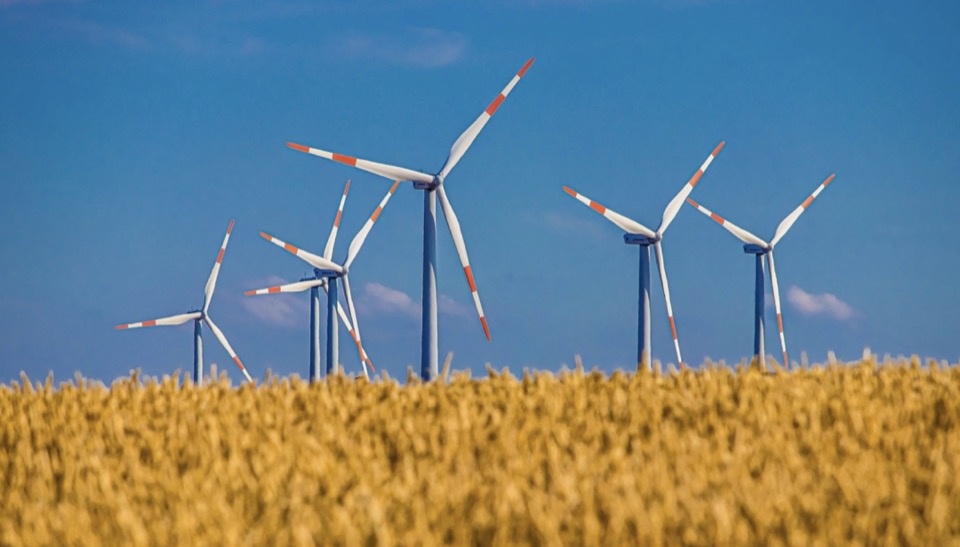
Additionally, governments and mining enterprises can consider jointly building clean energy infrastructure, such as establishing wind, solar, or hydropower facilities near Bitcoin mining farms, enabling energy to be converted and used locally. This not only promotes the application of clean energy but also attracts more miners and mining enterprises to settle in, increasing the country’s share of global Bitcoin hashrate. Based on these measures, nations can not only regulate the Bitcoin mining industry but also integrate it into their long-term energy strategies and carbon neutrality goals.
Summary by Mankun Lawyers
Elevating Bitcoin mining to the level of national strategy is not only about environmental protection and energy management but is also closely related to technological innovation, economic development, and international competitiveness. Therefore, "promoting the development of the Bitcoin industry" relies not merely on slogans or visions but requires pragmatic actions. From clear regulatory policies to practical energy utilization solutions and technological innovation, the sustainable development of Bitcoin mining requires comprehensive efforts and execution. Only if countries can properly coordinate environmental concerns with mining demands can they truly drive the global Bitcoin mining industry toward maturity and stability. Forward this article and send a screenshot to our backend message box before the end of this week to receive a Mankun mouse pad!
/ END.
Recommended Reading:
- How Can Blockchain Technology Companies Assist Public Security in Combating Virtual Currency Crimes While Ensuring Legal Compliance? | Mankun Web3 Legal Education
- Mankun Exclusive Interview | Must-Read for Job Seekers: Senior Headhunter Reveals Golden Rules for Web3 Job Hunting
*This article is an original work by Shanghai Mankun Law Firm. It represents only the personal views of the author and does not constitute legal consultation or legal advice on specific matters. We welcome contributions and tips from more Web3 practitioners. For reprinting permissions and legal consultations, please contact customer service: MankunLawFirm.
Author of this Article