
Recently, our Mankun colleagues have been using AI to do more and more things.
In last week's Mankun AI Class, everyone talked about "How to Use AI to Produce Good Short Videos." This week, the topic returned to the case files and legal documents that lawyers deal with every day. With a large volume of materials and tight timelines, which tasks can AI lend a hand with? After receiving AI-generated content, how should lawyers verify it?
On the afternoon of November 11,Lawyer Yi Haotian from Mankun Law Firm's Shanghai office brought a skill he had recently researched to an internal sharing session.The sharing session was held offline in the Shanghai office, while colleagues in other offices participated online in real time.

"In the AI Era, How Should Lawyers Use AI? Which Steps Can Use It, and Which Steps Require Caution?"
Lawyer Yi began with daily case handling, discussing which tasks can use AI assistance, what to watch out for when using it, and also gave a live demonstration of how to perform local de-identification of case materials.
During case handling, what can AI do? Lawyer Yi shared practical uses ranging from organizing materials to drafting documents, and also explained the key to keeping AI from "making things up":Only by feeding AI the right materials can the content it produces be reliable.
Safe use is an unavoidable topic for lawyers using AI. Case materials often contain sensitive information, and direct uploading carries a risk of leakage. Lawyer Yi gave a live demonstration of a local de-identification tool for case materials—De-identify sensitive information first, then hand it to AI for processing, and privacy will not be leaked.
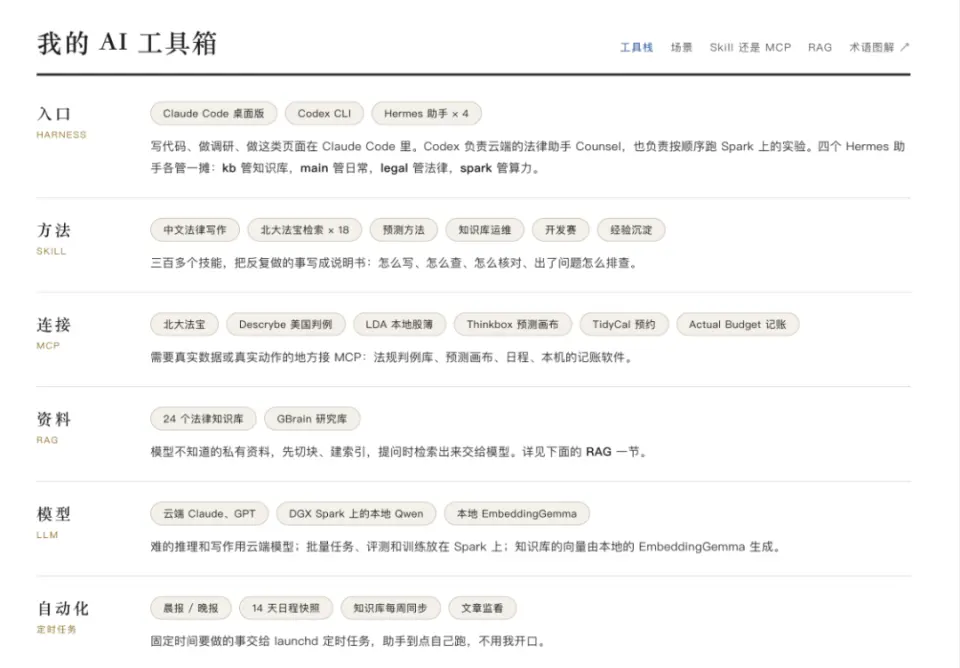
Lawyer Yi also brought an AI tool he had participated in developing. This tool is aimed at lawyers' daily case-handling scenarios and embeds AI capabilities into actual workflows. He also shared the ideas and practices from the development process.
On model selection, Lawyer Yi offered a simple suggestion:Choose the model according to task difficulty.A lightweight model is sufficient for simple tasks; there is no need to spend more on a model far more powerful than the task requires.
The sharing session can be summarized in three sentences:
① Feed AI the right materials, and it will not fabricate;
② Desensitize sensitive information before feeding it to AI, so privacy is not leaked;
③ Choose the model according to task difficulty, and do not spend more on a model far more powerful than the task requires.
Of course, AI is not omnipotent. Case judgment, review of content, and the choice of tools still require lawyers themselves.AI is responsible for improving efficiency; people decide the quality of case handling.

This sharing session showed everyone a concrete path for implementing AI in lawyers' practice and brought back some methods that can be put to use immediately.
From short video production to practical case handling, the topics of Mankun AI Classroom continue to expand.Tools and methods developed by one person, through sharing, can help more colleagues save the time spent exploring on their own.
From professional knowledge to working methods, there remain many topics worth discussing. We look forward to hearing more new discoveries from our Mankun colleagues next time.

