

Resolving the Account Dilemma for Stablecoin Global Expansion: “Can You Secure Umbrella Accounts?”
“Can you open umbrella accounts for us?”
In the course of assisting clients with crypto license applications, the most frequently asked question is not about approval timelines or capital requirements, but rather this one. Many companies approach us not merely to“obtain a license”, but to secure“umbrella accounts”. In this regard, the El Salvador DASP license does offer distinct advantages when applying for umbrella accounts.
What Is a DASP?
In 2021, El Salvador made Bitcoin legal tender, shocking the world. A year later, the Digital Assets Act came into effect, formally establishing the DASP (Digital Asset Service Provider) as a core license within the regulatory framework. Simply put: if you wish to engage in digital asset exchange, custody, or payment services in El Salvador, the DASP license is your ticket to entry. However, the value of this ticket extends beyond mere “legality.” Its true worth lies in the fact thatregulators recognize your status as a “third-party service provider.”。
What Does This Mean?
- There is an institutional basis for fund segregation.
- There are clear standards for Anti-Money Laundering (AML) and Know Your Customer (KYC) procedures.
- When negotiating with banks for accounts, you are no longer viewed as an “overseas company with unclear business nature.”
Why Choose El Salvador?
From a policy perspective, El Salvador adopts an encouraging strategy toward digital asset service providers. Consider the following data points:
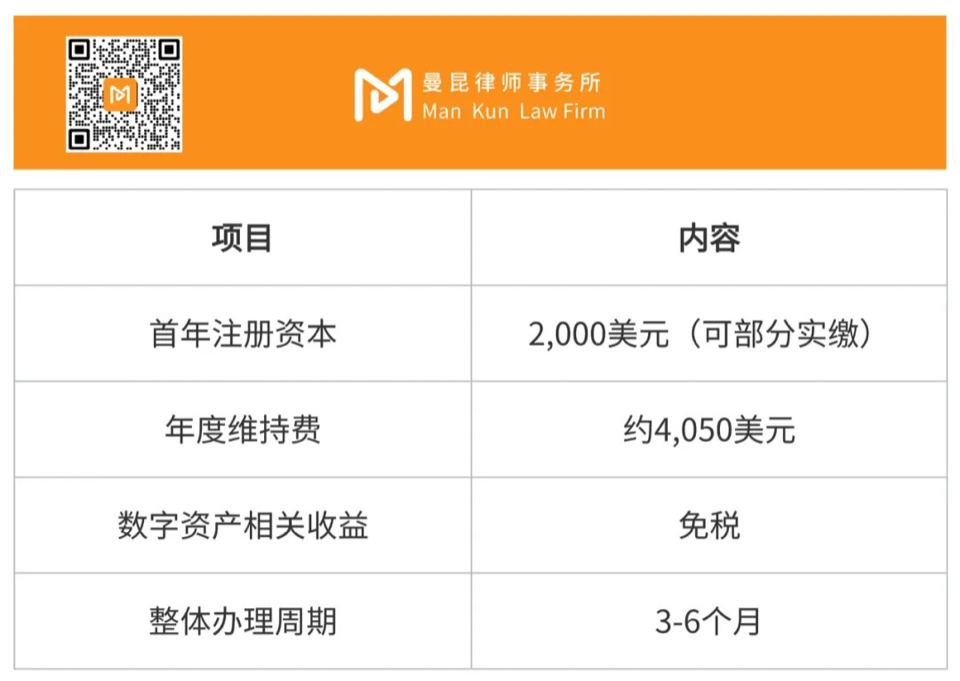
Compared to other jurisdictions where costs often reach hundreds of thousands of US dollars and approval cycles start at one year, El Salvador’s cost structure and policy friendliness are highly attractive to payment companies in their startup and growth phases. More importantly, the banking system remains open to digital asset activities. Based on our practical experience,the success rate for licensed entities in El Salvador opening accounts with European Electronic Money Institutions (EMIs) and local banks is significantly higher than that of ordinary offshore structures.。
Application Process: Three Phases That Can Proceed in Parallel
Phase 1: Preliminary Preparation (Approx. 2 Weeks)
- Clarification of business model
- Reservation of company name
- Notarization and authentication of identity documents for shareholders/directors
Phase 2: Company Incorporation + License Application (3–6 Months)
- Completion of company registration
- Submission of DASP application to the CNAD (National Commission of Digital Assets)
- Review feedback and supplementation of materials
Phase 3: Account Opening (Can Proceed in Parallel with Phase 2)
- Simultaneous initiation of bank/EMI account applications
- Submission of source of funds explanations, business models, AML policies, etc.
Key Requirements to Avoid Pitfalls:
- At least two shareholders (natural persons or legal entities)
- Mandatory appointment of a local AML Officer
- Minimum share capital of USD 2,000
- Provision of IT system descriptions and cybersecurity protocols
Core Pain Point: How Are Umbrella Accounts Negotiated?
The real dilemma for many crypto payment companies is not the “lack of a license,” but ratherthe inability to establish suitable account structures even with a license.。
What Is an Umbrella Account? Simply put: You hold the master account, under which sub-accounts or virtual accounts are established for different merchants or business lines, achieving accounting segregation and split management. The problem for ordinary companies: When third-party funds are involved, banks conduct extremely conservative risk reviews, often requiring layered explanations that “this money is not mine, but belongs to my clients.” The advantage of a DASP: Your third-party service status is explicitly recognized by regulators, not constructed through contractual workarounds.
In practice, when licensed DASP entities negotiate account structures, bank compliance classifications proceed more smoothly. Third-party fund activities have an institutional foundation, allowing greater room for negotiation in the design of sub-accounts/virtual accounts. Of course, final approval still depends on the bank’s risk control policies. However, in actual operations,licensed DASP entities do hold a stronger position in negotiations regarding account purposes and structural arrangements.
Who Is It Suitable For? Who Is It Not Suitable For?
Suitable for:
- Stablecoin collection/payment and merchant settlement businesses
- Cross-border payments requiring clear account structures
- Those with limited budgets who still seek compliant licensing
- Existing structures facing account bottlenecks
Not suitable for:
- Those seeking the “cheapest license” merely for appearances
- Business models unrelated to digital assets
- Those expecting that “obtaining a license will guarantee accounts with all banks”
Conclusion
The El Salvador DASP is neither a low-cost formalistic license nor a universal solution applicable to all types of projects. Its institutionalvalue lies in providing a clear legal identity and regulatory boundaries for businesses involving third-party services and fund management within the digital asset regulatory framework.。
For projects centered on stablecoin collections/payments, merchant settlements, or cross-border payments, when account structures become a bottleneck to growth, the DASP offers a more fitting compliance pathway. Whether to adopt it should be carefully judged in light of specific business models and risk structures. If you are interested in the DASP license,please feel free to contact Mankun Law Firm. We can provide comprehensive services for DASP license applications and the opening of umbrella accounts.。
Author of This Article
Shao Jiadian, Partner at Mankun Law Firm (Shenzhen). He graduated from the National University of Singapore and has served as a lawyer, head of compliance and risk control, and Vice President of Legal Affairs at prestigious red-circle law firms, a central state-owned enterprise’s cross-border investment platform, and a multi-billion yuan fund of funds, among other institutions. Focusing on new economy sectors such as Web3.0, he excels at creatively providing one-stop solutions for clients’ legal and compliance needs, including global structure setup for Web3 projects, license applications, project financing, Real-World Assets (RWA), and the establishment of crypto funds.
About Mankun
Founded in 2015, Mankun Law Firm is a boutique law firm in China specializing in the Web3.0 new economy and deeply rooted in the blockchain industry. Members of the Mankun team possess unique and diverse industry backgrounds, hailing from renowned legal service institutions, national judicial organs, internet technology companies, crypto asset institutions, and blockchain industry think tanks.
Leveraging a profound understanding of the new economy sector, continuous attention to and research on policies and regulations, and rich practical experience, the Mankun team is adept at providing comprehensive legal services from the perspectives of business models and legal practice. These services include commercial structure design, project investment and financing, transaction planning, operational compliance, resolution of complex civil and commercial disputes, prevention and control of criminal risks, and criminal defense for new economy enterprises in fields such as Web3.0, blockchain, AI, NFTs, digital collectibles, crypto funds, crypto payments, DeFi, Real-World Assets (RWA), and GameFi.
Headquartered in Shanghai, Mankun Law Firm has branch offices in Hong Kong (China), Silicon Valley (USA), Shenzhen, Hangzhou, Zhengzhou, Chengdu, and other locations. To meet the global compliance development needs of Web3.0 industry clients, Mankun has established local offices in major global crypto-financial cities and selected professional local blockchain service partners, providing clients with professional legal and compliance services characterized by global breadth and Chinese depth.