

Compliance Challenges and Solutions for Web3 Implementation
Following the U.S. Securities and Exchange Commission’s (SEC) approval of Bitcoin (BTC) spot ETFs, the enactment of the EU’s MiCA stablecoin regulation and Russia’s cross-border payment legislation, and Hong Kong’s vigorous promotion of the Ensemble sandbox to advance real-world assets (RWA), decentralized finance has become an essential strategic component of global financial development.
Industry Leads, Compliance Must Follow. On the afternoon of October 26, the Shanghai Distributed Consensus Technology Association, in collaboration with Mankun Law Firm, Shanghai Tree Graph Blockchain Research Institute, and Fudan University, hosted an offline salon themed “Web3-Driven Compliant Financial Innovation.” The event focused on the pivotal role of Web3 technologies in fostering innovation and compliance in financial services, attracting experts and practitioners from the blockchain, finance, and legal sectors to jointly explore sustainable pathways for integrating Web3 with traditional finance.
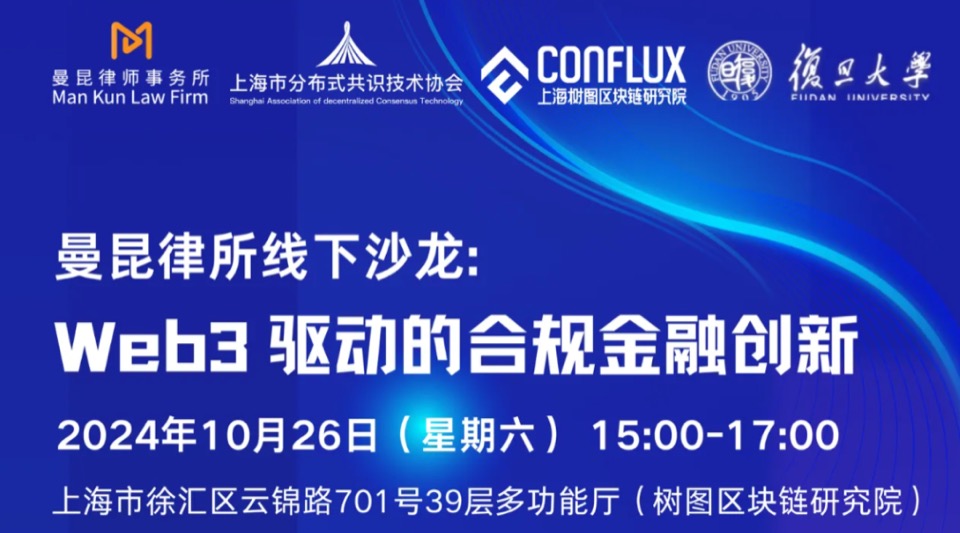
The event featured five keynote speeches and one panel discussion. The speakers analyzed the application of Web3 technologies in financial innovation from various perspectives, while the panel delved into the compliance challenges and solution pathways encountered during the implementation of Web3 applications. The session was rich in substantive insights. Mankun Law Firm has specially compiled the core content to provide valuable perspectives and ideas for practitioners deeply engaged in Web3 finance.
Zhang Yuanjie: Global Compliant Web3 Business Practices
In the first keynote speech of the salon, Conflux co-founder Zhang Yuanjie, under the theme “Global Compliant Web3 Business Practices,” thoroughly discussed current practices of Web3 technologies in the compliant finance sector and shared his latest exploratory experiences in Hong Kong.
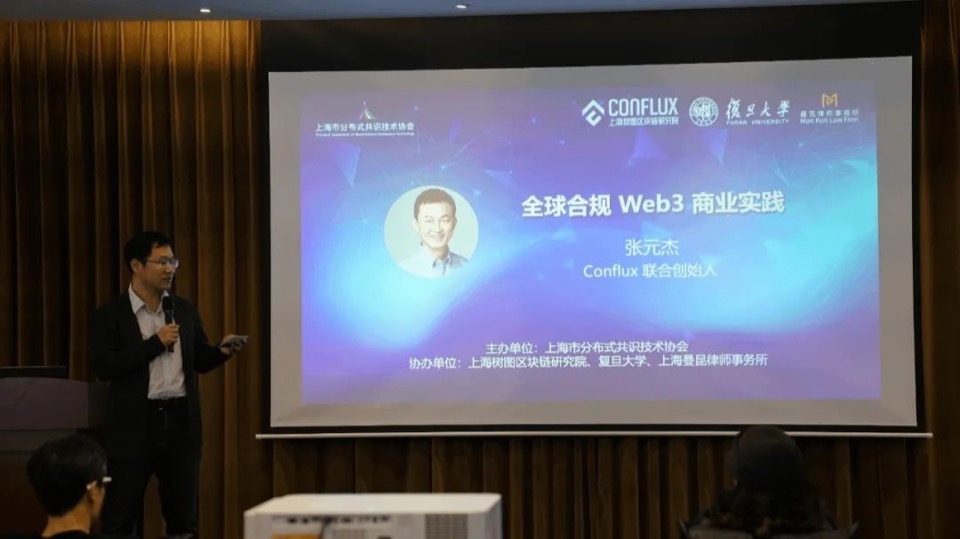
Mr. Zhang approached the topic from a geographical perspective, using Hong Kong as a primary case study to introduce frontier explorations in Web3 business practices there. Since late 2022, Hong Kong has progressively introduced a series of policies and legal frameworks targeting virtual assets, including exchange licensing and regulatory sandboxes for stablecoins. Mr. Zhang pointed out that Hong Kong’s development speed in global Web3 compliant business practices has been remarkable, establishing a complete legal and regulatory framework from scratch within two years, thereby positioning itself at the forefront globally. However, despite the increasingly refined regulatory and licensing regimes in Hong Kong, market participation and international recognition still require improvement.
Regarding specific cases, Mr. Zhang mentioned HashKey Exchange as the first exchange in Hong Kong to obtain a Virtual Asset Service Provider (VASP) license. Since obtaining the license, the exchange has gradually expanded its service scope, moving from serving accredited investors to fully opening up to retail clients. Additionally, OSL, another licensed exchange, primarily provides custody, large-block trading, and Software-as-a-Service (SaaS) solutions to institutional clients.
In the stablecoin sector, Mr. Zhang highlighted Hong Kong’s stablecoin sandbox initiative, which includes participation from companies such as JD Technology, HashKey Group, and Standard Chartered Bank. Although stablecoin testing is currently ongoing, future application scenarios are expected to expand into cross-border payments, supply chain finance, and local payments. Furthermore, he noted that Hong Kong’s stablecoin explorations could serve as an important bridge connecting with global markets, especially given the dominance of global USD stablecoins (such as USDT and USDC); HKD stablecoins have the potential to fill regional demand gaps.
Mr. Zhang concluded that although Hong Kong’s status in the global Web3 compliance landscape is gradually rising, greater efforts are needed in terms of trading volume and market acceptance. He expressed hope that further policy support and market openness would attract international capital and technological expertise, jointly promoting the deep integration of Web3 and compliant finance.
Sun Xiaohan: Pathways and Practices for Integrating Web3 Technologies with Compliant Finance
In the second keynote speech, Dr. Sun Xiaohan, Partner at Hongguan Investment Management, provided a detailed introduction to the current state and future pathways and practices for integrating Web3 technologies with compliant finance. Dr. Sun stated that since 2016, the development of the Web3 sector has transitioned from the “Fat Protocol” theory to the “Fat Application” stage, reflecting increasingly diverse user application scenarios where the value of a single chain no longer dominates. Meanwhile, the connection between Web3 technologies and the real world has gradually strengthened, such as through asset tokenization, the mapping of real-world assets (RWA), and the advancement of digital sovereign currencies by various countries.
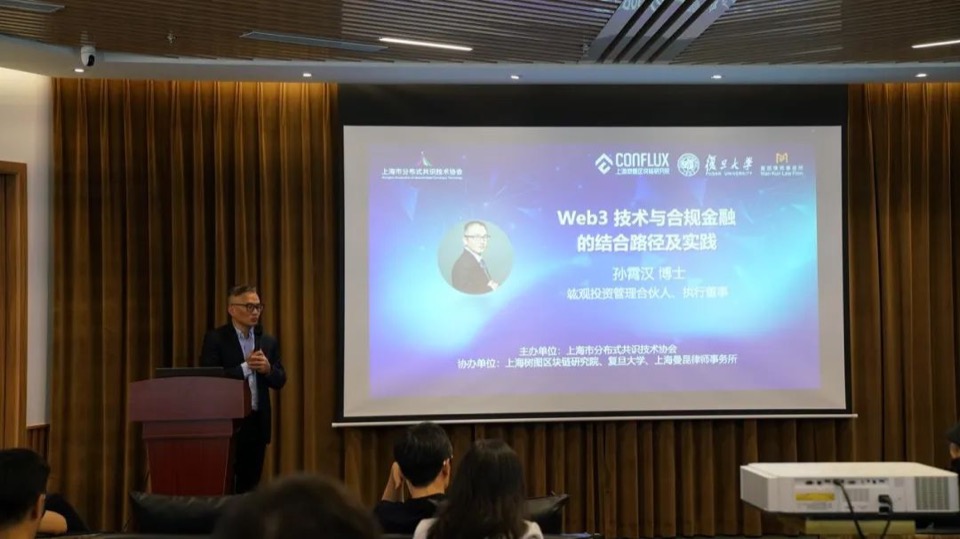
Dr. Sun pointed out that Web3’s innovations in finance are mainly manifested in several areas: the rise of decentralized finance (DeFi), asset tokenization, enhanced financial inclusion, the establishment of global payment networks, and financial product innovation (such as algorithmic stablecoins and derivatives). These innovations are based on the transparency and trustworthiness of blockchain technology, significantly improving the efficiency and security of financial operations.
Addressing Web3 compliance issues, Dr. Sun listed five common compliance challenges faced by project teams: adherence to laws and regulations, data protection, identity verification (KYC), technical security, and audit compliance. Among these, KYC and technical security compliance are the most critical and complex challenges. To address these challenges, Dr. Sun suggested that Web3 projects should comply with global regulatory requirements, implement stricter screening measures for users in specific high-risk regions, and adopt centralized identity verification systems to mitigate compliance risks. Additionally, technical security can be achieved through smart contract audits and compliance audits for data privacy.
Dr. Sun also shared practical application cases of the Digital Renminbi (e-CNY) and e-HKD, demonstrating specific implementations of compliant finance in areas such as cross-border payments, supply chain finance, and tokenized asset settlement. These practical projects, operating within compliance frameworks, have promoted the further application and development of Web3 technologies.
Qin Guanhao: Linking TradFi to DeFi: A New Model for Blockchain Capital Finance
In the third keynote speech, Dr. Qin Guanhao, Founder of Yangmei Technology, shared insights on new models linking traditional finance (TradFi) with decentralized finance (DeFi) and their associated compliance challenges. He pointed out that with the global development of the Web3 sector, the integration of traditional finance and DeFi has become an irreversible trend; however, many compliance obstacles and technical bottlenecks still need to be overcome in practical implementation.
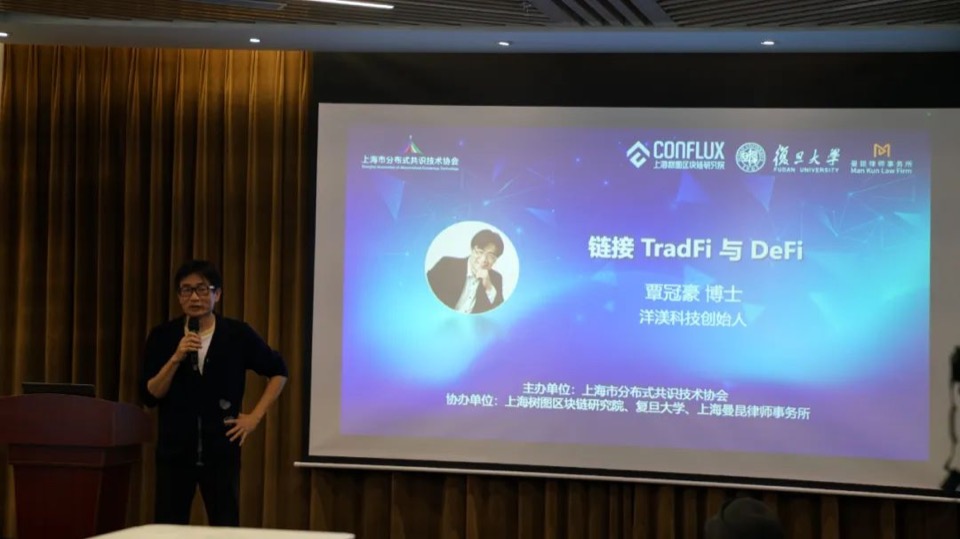
Dr. Qin explored several main models for connecting TradFi with DeFi. He believes that asset tokenization is one of the key technologies enabling the fusion of TradFi and DeFi. This approach can transform traditional assets (such as real estate, stocks, bonds, etc.) into digital assets on the blockchain, granting them higher liquidity and transparency. Furthermore, he noted that the application of smart contracts greatly simplifies the design and execution processes of financial products, improving efficiency while reducing risks. However, the actual implementation of these technologies still faces challenges related to compliance, technical security, and market trust.
Regarding compliance, Dr. Qin specifically mentioned that regulatory authorities’ acceptance of tokenized assets varies significantly, leading to differing compliance requirements across regions. To address this situation, he recommended that enterprises adopt different compliance strategies based on the specific regulations of the regions they operate in, such as strictly adhering to local regulatory frameworks in mature markets like the United States and Europe, while proactively planning compliance layouts in emerging markets to adapt to future policy changes.
On technical challenges, Dr. Qin pointed out that although smart contracts and blockchain technology can significantly enhance the efficiency of financial operations, their security issues cannot be ignored. In recent years, security incidents caused by technical vulnerabilities have occurred frequently. Therefore, Dr. Qin advised project teams to prioritize security audits of smart contracts during the technical development phase, while introducing multi-factor authentication and risk control measures to ensure the security of financial transactions.
Finally, Dr. Qin shared his experience from actual projects, focusing on cross-border payment application cases involving e-HKD and the Digital Renminbi. These projects demonstrated various implementation scenarios of Web3 technologies in the financial sector, including tokenized asset settlement, supply chain finance, and cross-border payment needs for individuals and enterprises. These practices prove that, under the guidance of compliance frameworks, Web3 technologies can effectively improve the service levels of traditional finance, bringing new innovation opportunities to the financial industry.
Pang Yinming: Web3.0 and PayFi
In the fourth keynote speech, Dr. Pang Yinming, Chairman and President of Lianji Technology, explored the innovative development and application prospects of payment businesses (PayFi) in the Web3.0 era. He pointed out that with the advent of Web3.0, traditional centralized payment systems (such as Alipay and WeChat Pay) cannot meet decentralized demands, necessitating the reshaping of payment systems through blockchain technology and smart contracts. The application of such technologies can achieve data evidence storage and traceability within distributed structures, enhancing the transparency and security of asset management.
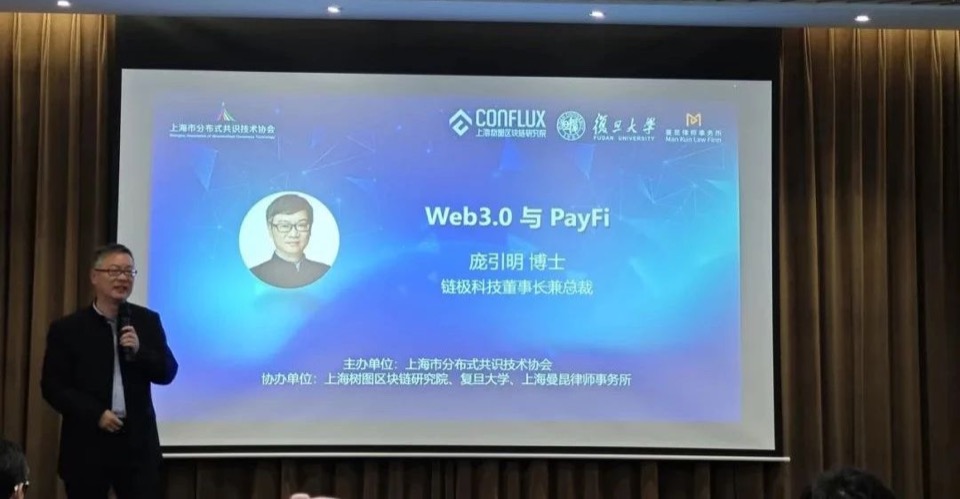
Dr. Pang shared practical application cases of Web3 payments in cross-border trade settlement, particularly in the “10+5” region and along the “Belt and Road” initiative. Blockchain-based payment networks can bypass traditional financial systems, improving transaction efficiency. He also mentioned that BRICS countries are exploring a multi-currency payment system based on blockchain and digital currencies to establish a more autonomous global trade settlement mechanism.
Regarding the implementation path of payment technologies, Dr. Pang proposed a three-step strategy: first, storing digital assets through wallets; second, establishing account systems to support third-party payment services; and finally, automating the payment process through smart contracts. This approach can effectively address current policy restrictions, providing new ideas for the promotion of Web3 payment businesses.
Dr. Pang also emphasized the importance of policy innovation, suggesting pilot programs for Web3 payments in areas such as the Shanghai Free Trade Zone to promote the development of digital finance. He expressed hope that Shanghai could become a leading global fintech hub and called on the younger generation to actively participate in Web3 innovation, driving the arrival of a new financial era.
Wang Pengli: Current Status and Difficulties of Web3 Compliance Implementation
In the fifth keynote speech, Wang Pengli, Founder of Xinwu Yitong Digital Technology, shared the current status of Web3 compliance development and its implementation challenges domestically. Combining his regulatory and industrial background, he elaborated on the main issues faced in promoting Web3 within China and proposed the core concept of data sovereignty.
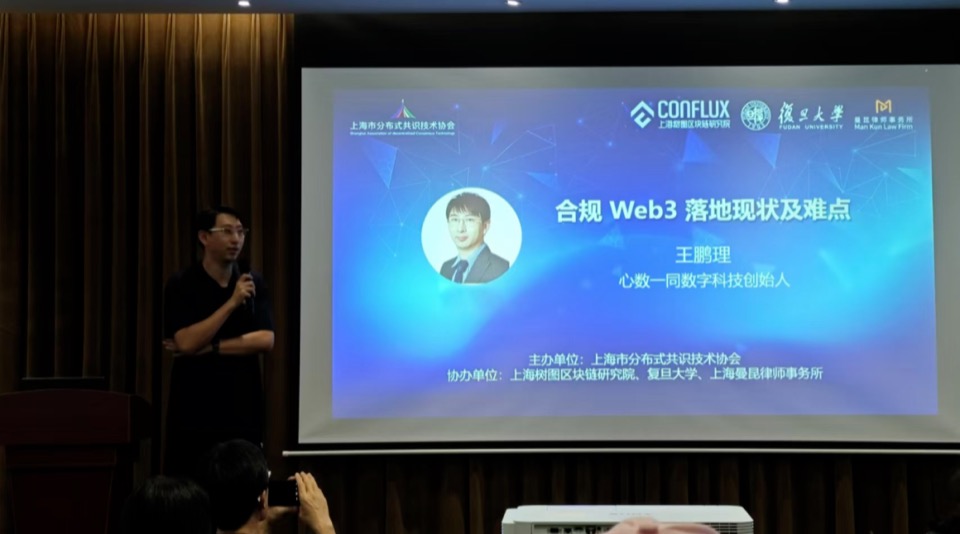
Mr. Wang pointed out that the main issue in the Web2 era was the lack of self-sovereign identity, leading to data sovereignty being controlled by centralized platforms. The core of Web3 lies in achieving data autonomy and returning ownership to users by building decentralized data infrastructure through blockchain technology. He believes that Web3 involves not only digital assets and cryptocurrencies but also the deep integration of data governance and services.
Regarding compliance, Mr. Wang mentioned that regulatory authorities maintain a cautious attitude toward Web3 while balancing fairness and efficiency. Although Web3 is regarded as key infrastructure for promoting the development of the digital economy, technological maturity and compliance remain significant challenges. Mr. Wang suggested addressing these issues by building distributed infrastructure that meets regulatory requirements and promoting the separation of data from services.
He also shared some practical cases, discussing the application potential of blockchain in cross-border data and asset transactions, as well as the policy risks involved. Particularly concerning data compliance and cross-border transactions, he emphasized that domestic enterprises must cautiously respond to international market compliance requirements while simultaneously promoting domestic policy innovation and the implementation of pilot projects.
Mr. Wang believes that the development of Web3 holds strategic significance for the construction of domestic data infrastructure. He called for breakthroughs in policies in key digital economy cities such as Shanghai to provide testing grounds for Web3 innovation, promoting China’s leadership in the global digital economy.
Key Summary of the Panel Discussion
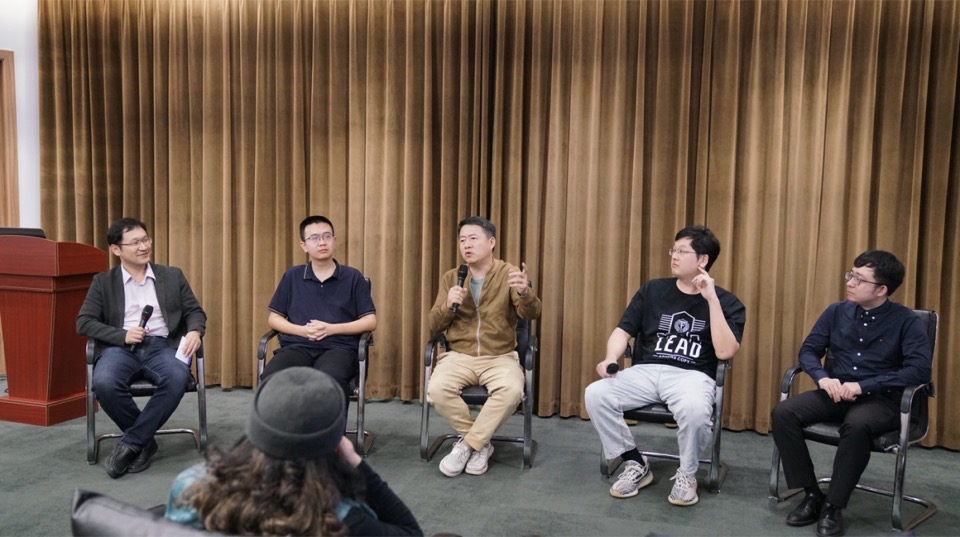
During the panel discussion, guests engaged in an in-depth exploration of the current status of Web3 compliance implementation and its future development pathways. The discussion covered multiple fields, including blockchain technology, investment strategies, legal compliance, and cybersecurity. Drawing on their practical experiences and professional knowledge, the guests offered valuable insights into the bottlenecks and breakthrough paths for Web3 development in China.
1. Li Chenxing
Li Chenxing, a young scientist at the Shanghai Tree Graph Blockchain Research Institute, shared the practical challenges of Web3 technologies in “last mile” applications. He believes that the implementation of Web3 relies not only on the realization of terminal applications but also on seamless integration with underlying infrastructure. Discussing data privacy and compliance, he pointed out that while blockchain achieves data evidence storage and distributed management, it also creates a contradiction between data transparency and user privacy protection. He mentioned some solutions, such as avoiding direct user participation in on-chain operations to reduce reliance on digital currencies, while utilizing cryptographic techniques like zero-knowledge proofs and homomorphic encryption to ensure data security and privacy. These measures not only help enhance blockchain application scenarios but also provide clear directions for future technological development.
2. Wang Yue
Wang Yue, Partner at Guanghe Ventures, analyzed the differences in the development of current Web3 projects domestically and internationally from the dual perspective of internet entrepreneurship and Web3 investment. He mentioned that Web3 projects in international markets are already progressing along the path of institutionalization and mainstream adoption, whereas domestic projects face major issues primarily due to uncertainty in the policy environment, especially the dual pressure regarding token issuance and compliance requirements. He pointed out that the biggest challenge for domestic entrepreneurs lies in the inability to balance innovation and compliance, making it difficult for projects to advance rapidly. In contrast, international markets tend to favor a “develop first, comply later” model. This difference in sequence places domestic projects at a disadvantage in competition. Therefore, he suggested that domestic entrepreneurs adopt more flexible strategies, attempting to gradually promote the internationalization of their projects through cooperation with overseas partners.
3. Niu Zhenghao
Niu Zhenghao, Head of the Cybersecurity Laboratory at Shanghai Fu’an Network Technology Co., Ltd., elucidated the unique challenges China faces in financial innovation and crypto asset regulation from the perspectives of cybersecurity and law enforcement. He stated that domestic regulatory authorities’ understanding of Web3 and crypto assets is not yet deep enough, and the legal and judicial systems often lack clear legal bases when handling related issues, leading to difficulties in enforcement and regulation. He recommended strengthening training for public security, procuratorial, and judicial systems to improve law enforcement personnel’s understanding of blockchain technology and crypto assets, drawing lessons from the practices of foreign law enforcement agencies such as the FBI collaborating with technology companies, thereby better addressing the risks and challenges brought by Web3 at both technical and legal levels. He also specifically noted significant differences in the handling procedures between reporting crimes in mainland China and Hong Kong, reflecting the different attitudes of the two regions towards crypto asset protection and regulation.
4. Mao Jiehao
Mao Jiehao, Head of Civil and Commercial Business at Mankun Law Firm, shared his practical experience in the field of Web3 legal compliance. He pointed out that unlike traditional legal business, compliance issues involved in Web3 are more complex, covering corporate compliance, token issuance, cross-border transactions, as well as the legality of new types of digital assets and token economies. Since the regulatory framework for tokens in China is not yet clear and remains relatively coarse, enterprises face considerable uncertainty in the compliance process. He mentioned that regulatory authorities adopt a “look-through” approach to tokens, meaning that whether fungible tokens, non-fungible tokens (NFTs), or other types of tokens, as long as they involve fiat currency exchange or financial transactions, they must adhere to strict legal supervision. Therefore, Mao Jiehao suggested that enterprises formulate compliance strategies based on their risk levels, such as targeting only overseas markets and implementing shielding measures for the domestic market to reduce compliance risks. He particularly emphasized that compliance is not merely about avoiding legal risks but is also an important means for enterprises to gain trust in their long-term development.
This event has been reported by well-known media outlets such as Yicai (First Financial Daily) and Hunan Daily. Selected report contents are as follows.



/ END.
Recommended Reading:
- Mankun Web3 Research: DePIN Promotes Network Democracy and Easier Compliance
- Is Using Overseas Credit Cards for Mainland Consumption a Reliable Way to Cash Out USDT? | Mankun Web3 Legal Education
*This article is an original work by Mankun Law Firm and represents only the personal views of the author. It does not constitute legal consultation or legal advice on specific matters. More Web3 practitioners are welcome to contribute articles or provide tips. For reprints and legal consultations, please add customer service contact: MankunLawFirm.