
Recently, the “gold booking price” matter has intensified. Several material suppliers have recently absconded, and it has been almost a month since the last absconding by Yuebaoxin. The string of collapses has not yet come to an end. In September, Lawyer Lü wrote an article (Gold prices surge, but a boss in Shuibei absconds? After being brought to justice, these criminal liabilities will follow!) introducing the origins and development of the gold booking price model and providing a preliminary analysis of the legal liability involved in this matter.

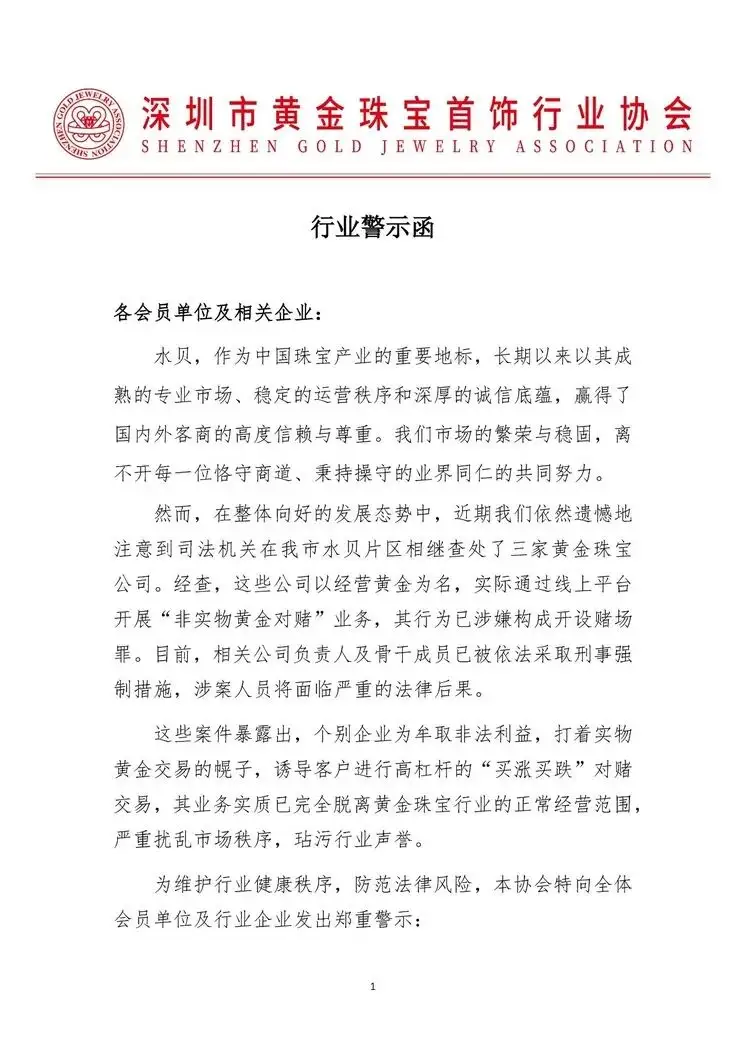
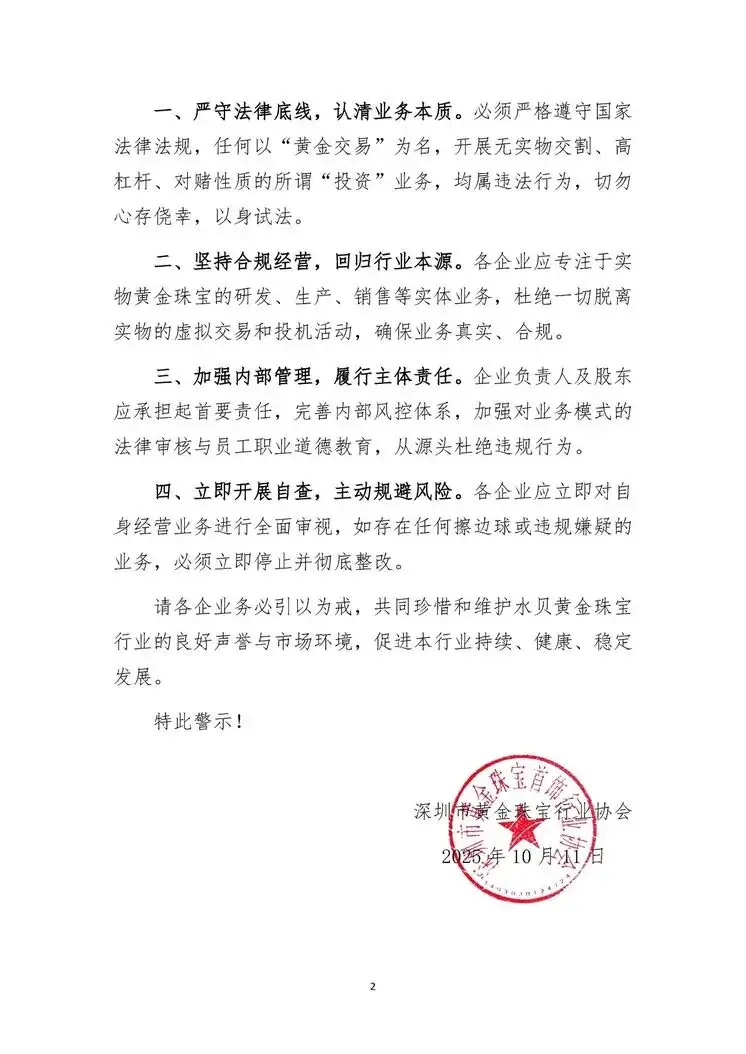
After the National Day holiday, the Shenzhen Gold and Jewelry Industry Association issued an industry warning letter. The warning letter stated that “judicial authorities have successively investigated and dealt with three gold and jewelry companies in the Shuibei area of our city. Upon investigation, these companies, under the guise of operating gold, in fact conducted ‘non-physical gold betting’ business through online platforms, and their conduct is suspected of constituting the crime of opening a casino. At present, the persons in charge of the relevant companies and key members have been subjected to criminal coercive measures in accordance with the law, and the persons involved will face serious legal consequences.” Why is the charge that of opening a casino rather than another offense? If the crime of opening a casino is established, what are the respective legal consequences for material suppliers and victims of illegal futures trading?
I. What is the crime of opening a casino?
The crime of opening a casino refers to the act of organizing gambling for the purpose of profit by providing a venue for gambling, setting gambling methods, and providing gambling tools, chips, funds, and the like.
Profiting from opening a casino includes two methods: first, the casino operator does not directly participate in gambling but profits by charging venue and equipment use fees or taking a cut; second, the casino operator directly participates in gambling, such as by setting up gambling machines such as game machines and slot machines or hiring personnel to gamble with customers.
Under Article 303, Paragraph 2 of the Criminal Law of China, “Whoever opens a casino shall be sentenced to fixed-term imprisonment of not more than five years, criminal detention, or public surveillance, and shall also be fined; if the circumstances are serious, the person shall be sentenced to fixed-term imprisonment of not less than five years but not more than ten years, and shall also be fined.”
The gambling we commonly see takes place in private homes, chess and card rooms, or private clubs, where several mahjong tables and poker tables are neatly arranged, with chips and cash on the tables (transfers are also common), the organizer collects a certain percentage of “water money” from each round on the side, and personnel are arranged to keep watch. Gamblers sit around a table, nervously staring at the cards, with occasional shouts of wins and losses.
In addition, some lawbreakers set up dedicated gambling websites or develop gambling apps. Users register accounts and recharge funds to obtain virtual chips and participate in various gambling activities such as football betting, horse betting, online mahjong, and card games. The websites update gambling odds and results in real time and have dedicated customer service personnel to handle recharge and withdrawal issues. Organizers profit by taking cuts and charging service fees. Such operations are highly concealed, involve a wide scope, and have relatively complex fund flows.

With the rise of online livestreaming, a relatively unusual case in the eyes of ordinary people is that Chen Moujie, CEO of the livestreaming platform Douyu, was convicted of the crime of opening a casino. Because streamers on the platform used “fan welfare club” lotteries, the platform became connected with organizing gambling. Between March 2017 and September 2020, streamers such as “Mou Mou Jiu Outdoor” and the game streamer “Jin Mou Mou Doxxx” used phrases such as “spend fifty thousand on a card and take it home” to attract viewers. Viewers spent 6 to 10 yuan to purchase designated virtual items to participate in lotteries and could obtain cash after winning. During that period, a total of 4,267 lottery sessions were organized, with more than 4.42 million participations and nearly 120 million yuan in gambling funds. Chen Moujie, as the platform's person in charge, was arrested in accordance with the law on suspicion of the crime of opening a casino. This case also became the first nationwide livestreaming platform gambling case supervised by the Ministry of Public Security.
From cases accessible to the general public to relatively unusual cases, it is difficult to deduce why this type of illegal gold futures trading constitutes the crime of opening a casino.
II. How Did the Supposed Illegal Gold Futures Scheme Become Operating a Casino?
The logic behind classifying the “gold reservation price” model as illegal gold futures is as follows:
First, it uses standardized contracts, for example, how much money is required and how many grams of gold constitute the minimum investment, and how much the initial deposit is—all have a uniform standard, making it convenient to manage uniformly through a standard-form contract. This design conforms to the definition of “standardized contract” in Article 2 of the Regulations on the Administration of Futures Trading, and also facilitates circulation and trading in the market.
Second, it transforms the deposit into margin, whereby only a very small amount of funds is needed to reserve one kilogram of gold—for example, the popular practice of reserving one kilogram of gold for RMB 10,000 or RMB 20,000. Here, the so-called deposit is in substance the concept of “margin” in futures: a trade can be made simply by paying margin, and if the margin ratio is insufficient, the client is reminded in real time to top up the margin, and when the margin falls below a certain limit, it will also result in the liquidation of the client’s margin—this is in substance a “margin call” (forced liquidation) in futures. This means leverage is added; based on the current Shuibei gold price (RMB 920 per gram), this in effect adds leverage of more than 90 or 40 times.
Third, it is not aimed at physical delivery, as the gains from the rise and fall of physical gold can be enjoyed merely through the act of “reservation,” and such gains are amplified through leverage. However, whether physical delivery occurs is not the focus of the materials dealers or the players.
Fourth, it adopts a centralized trading model,providing multiple clients at the same time with a uniform trading price (based on the Rongtongjin platform), trading rules and trading hours, and accepting their buy and sell orders, which in substance constitutes an organized, illegal centralized trading venue.
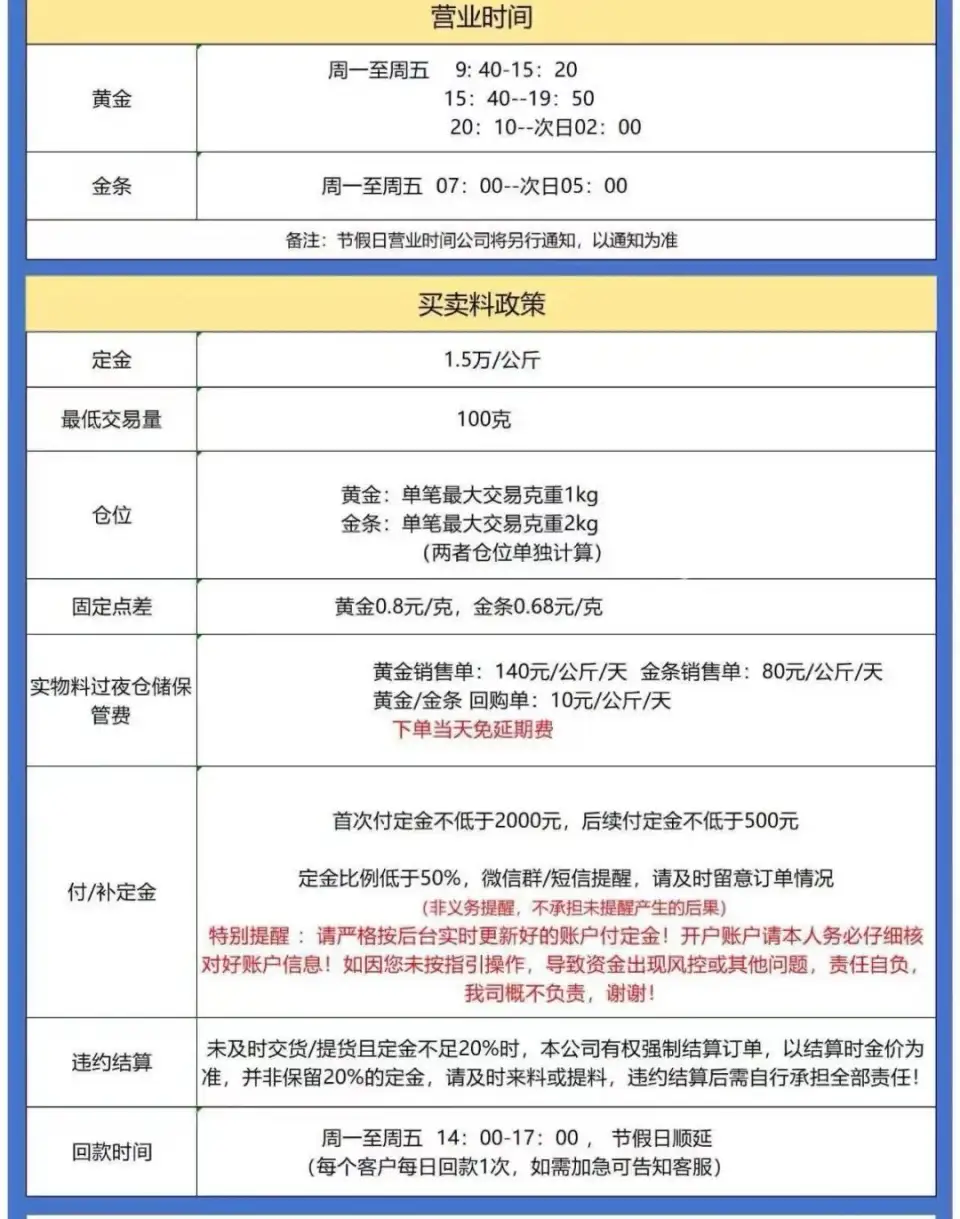
On the surface, the “gold reservation price” model in fact fits the logic of a futures product design very well, but because it lacks the corresponding qualification license, it constitutes illegal futures and needs to be regulated by the crime of illegal business operation.
But why has it evolved from illegal business operation into operating a casino?
In fact, it is because some companies have certain deeper-seated problems in the course of their operations.
First, the promotional and customer-acquisition personnel recruit participants in a crude and simplistic manner.The front-end customer-acquisition personnel of these companies conduct customer acquisition on social media and, in their promotions, advertise by means of crude and simplistic guessing of price rises and falls, similar to betting on big or small in a casino, gambling on win or lose. This reduction of the complexity of futures to crude and simplistic buying on a rise or buying on a fall appeals to players' gambling instincts to a considerable extent.

Second, the trading outcome is aleatory in nature.When many players participate in this model, they are merely tempted by profit and in fact have not carried out any expectation management of their own risks. They enter this market solely to speculate, to gamble big and make a quick profit.
Over the long term, the upward or downward trend of the gold price may leave traces that can be followed, but short-term gold price fluctuations are extremely difficult to predict, because leverage is generally set very high, with many currently at 40x or 90x leverage. That is to say, if investors bet on the wrong direction, a gold price fluctuation of merely 1-3% may cause a "margin call" (the fluctuation range for a margin call = 1 ÷ leverage multiple × 100%; for example, if a player guesses a rise, under 40x leverage, a 2.5% fall in the gold price will cause the player to suffer a margin call), and once a margin call occurs, it means the player's principal is reduced to zero.
It is entirely possible for the gold price to fluctuate within a range of 3% in the short term, and therefore this scheme of play becomes the following model.
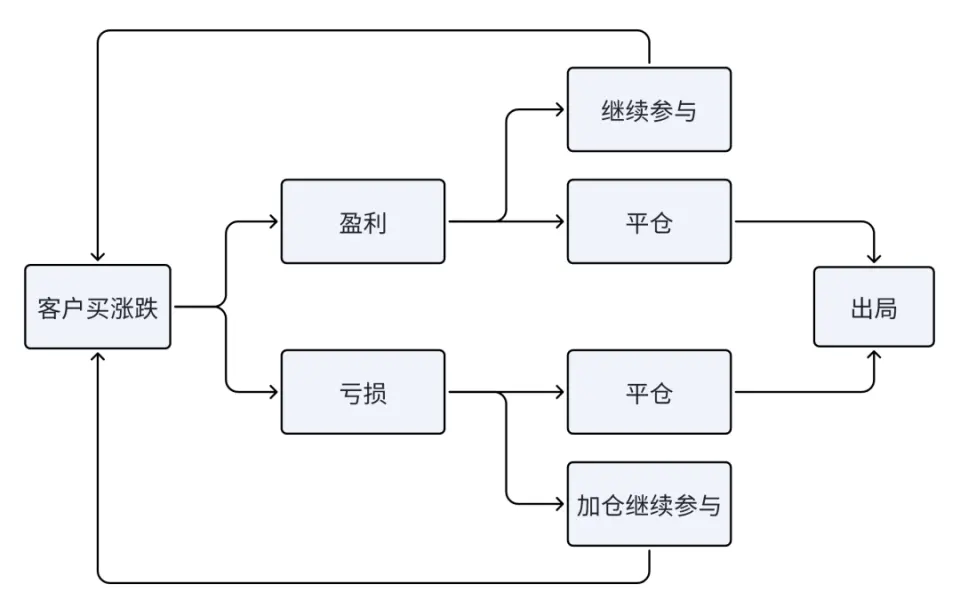
In the view of the public security authorities, this may constitute a disguised form of betting on big or small; whether the customer profits depends entirely on random market fluctuations, which conforms to the "aleatory" characteristic of gambling conduct.
Third, the material dealers profit and take a cut therefrom.Many material dealers are in fact the counterparties of customers; the material dealers engage in a "zero-sum game" with customers and profit thereby. In addition, when many companies carry out this business, the spreads and overnight fees they charge may be regarded as the casino's rake, and these are all manifestations of profiting from operating a casino.
Apart from theoretical reasons, there are also certain reasons in practice.
However, the author believes that characterizing such models as the crime of operating a casino leaves considerable room for defense and should not be applied mechanically across the board.
Moreover, at present the case has only been opened on the charge of operating a gambling establishment; whether the offence of operating a gambling establishment is constituted must ultimately be determined by a court judgment. We can therefore let the dust settle a little longer.
III. Can victims who participated in the “gold pre-order price” scheme still recover their losses?
There are two routes for victims to recover their losses:
The first is to bring a civil action. This is suitable for cases where there is relatively complete evidence and where there is a possibility of the arrangement being characterized as illegal futures trading, and where the gold materials dealer has not absconded. The key is to promptly preserve the contract, chat records and telephone recordings, and to file suit in court as soon as possible and apply for property preservation, so as to avoid a later collapse that breaks the dealer's cash flow and makes losses difficult to recover. If bringing suit oneself is difficult, one may engage a professional lawyer to find a way.
The second is to file a criminal report. If the gold materials dealer is convicted of the crime of illegal business operations or of fraud/contract fraud, victims of this type of “gold pre-order price” scheme will in all likelihood be able to obtain compensation, provided of course that the gold materials dealer can still raise the money; restitution is also an important condition for the dealer to reduce its sentence.

What is rather interesting is that if the gold materials dealer is convicted of the crime of operating a gambling establishment, then in theory the victims who participated in the “gold pre-order price” scheme instead become gamblers at the gambling establishment, and under our country's law gambling funds are to be confiscated. Although many players participate with a gambling mentality, they did not realize that the “gold pre-order price” scheme is a form of gambling. This is a theoretical question and, even more, a practical one, left for everyone to consider; if readers are interested, we can write further on it.

