

It is not about "discussing concepts," but rather returning to cash flows, regulatory boundaries, and implementable business structures.
Introduction
Recently, Attorney Liu Honglin, founder of Mankun Law Firm, was invited to share insights on "the commercial implementation of crypto payments" at CEIBS (China Europe International Business School). Unlike many discussions that remain confined to macro narratives, technological speculation, or regulatory sentiment, this session focused on a more pragmatic question:At this point in time, is crypto payment truly a viable business? If so, where does its cash flow originate, and what are the legal boundaries?
Against the backdrop of simultaneous changes in the global payment system, stablecoin infrastructure, and geopolitical financial landscape, crypto payments have long ceased to beWeb3a mere "conceptual tool" within niche circles. Instead, they are gradually entering real-world cross-border trade, cross-border settlement, and corporate fund flow processes. For entrepreneurs, investors, and legal practitioners, what truly matters is not whether one is "optimistic," but whether one can clearly understand their business structure, compliance thresholds, and practical pathways.

When evaluating a Web3 project, first assess whether it can generate sustainable cash flows
Returning to the essence of business, the core criterion for assessing whether a Web3 project is worth attention lies not in how novel its narrative is, nor in how complex its technological concepts are, but in whether it addresses genuine demand and can generate sustainable operating cash flows.
This logic of judgment has been repeatedly validated in traditional commerce: buying stocks is essentially buying a company; buying a company is essentially buying its future cash flows. This principle equally applies to the Web3 domain. Projects that truly withstand market cycles are often not those that are "best at storytelling," but those that are "most effective at embedding technology into real transaction scenarios."
Based on our engagement with numerous projects over the past few years, blockchain businesses capable of steadily generating cash flows are relatively scarce. Cryptocurrency exchanges constitute one category, while stablecoins and crypto payments form another. The former relies on trade matching and liquidity, whereas the latter depends on payment clearing and settlement efficiency, cross-border transfer capabilities, and the value of funding channels. It is precisely for this reason that crypto payments are becoming a sector increasingly reexamined by practitioners—it is no longer merely "infrastructure for the crypto community," but a business segment with a clear revenue model, genuine customer demand, and ongoing expansion.
Stablecoins are not just payment tools, but also part of the next-generation financial infrastructure
If discussions about stablecoins in the past focused primarily on transactional convenience, today their significance has clearly extended to deeper financial and strategic dimensions.
On the one hand, stablecoins are becoming a key vehicle for the global revolution in cross-border payment efficiency. In scenarios such as cross-border trade, international service settlements, and overseas supply chain payments, a single cross-border transfer under the traditional banking system often requires a waiting period of three to five days, accompanied by issues such as opaque intermediary bank routing, difficulties in confirming receipt, exchange rate fluctuations, and high transaction costs. By contrast, under a stablecoin payment structure, transfers on most major public blockchains can be completed within minutes, with per-transaction costs sometimes falling below USD 1. For commercial payments that are high-frequency, low-value, and span multiple time zones and regions, this improvement in efficiency is not merely a marginal optimization but a change of an order of magnitude.
On the other hand, stablecoins have gradually become critical infrastructure in global financial competition. Although both Bitcoin and stablecoins are based on blockchain technology, they differ fundamentally in terms of asset control: Bitcoin is directly controlled by the holder of the private key, whereas centralized stablecoins such as USDT and USDC retain the issuer’s ability to freeze and manage assets. This means that stablecoins are not inherently “decentralized”; rather, they possess distinct characteristics of financial infrastructure and may, in certain circumstances, serve as tools for sanctions, clearing, and payment control.
From this perspective, competition in the stablecoin sector is no longer merely commercial competition; it is competition over currency channels, payment sovereignty, and financial security. For Chinese enterprises, if global trade increasingly relies on on-chain settlement in the future, questions such as “who issues stablecoins,” “who controls the underlying channels,” and “who possesses freezing capabilities” will cease to be abstract issues and will instead become tangible operational risks and strategic concerns.
Opportunities in the Chinese Context: Encouraging Innovation While Clearly Recognizing Three Boundaries
When discussing Web3 and crypto payments in the Chinese context, the most common misconceptions are either to exaggerate the risks to the point of concluding that “nothing can be done,” or to imagine the policy environment as overly permissive, mistakenly believing that “one can proceed simply by repackaging the activity.” Neither interpretation is accurate.
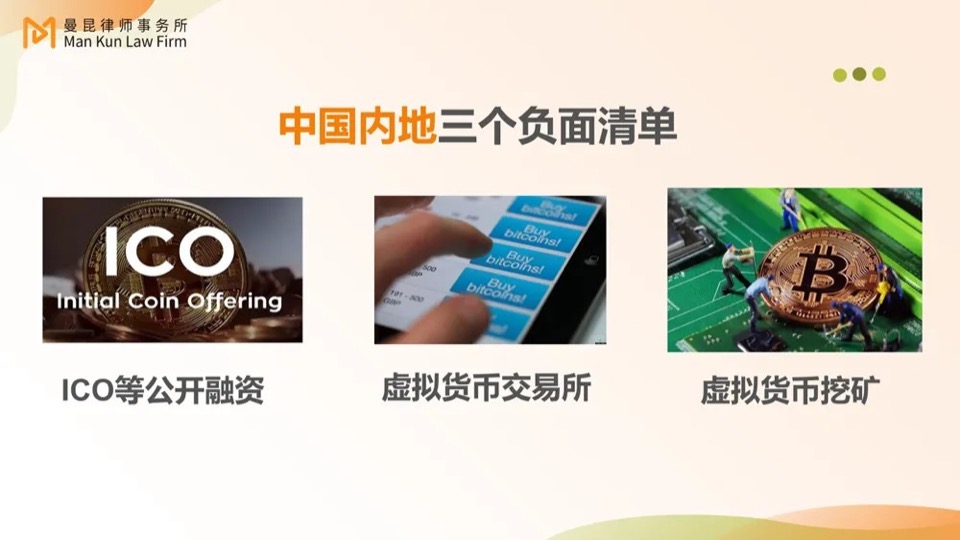
Based on our long-term practical observations, the current regulatory boundaries in mainland China relating to Web3 can be broadly summarized into three categories:
First, public token offerings for fundraising are prohibited. The core issue here lies not in the “token” itself, but in the nature of raising funds from the public. Whether in traditional finance or in the context of new digital assets, public fundraising is a highly sensitive and heavily regulated activity.
Second, cryptocurrency exchanges are not permitted to conduct marketing or business activities targeting users within mainland China. In other words, while exchange operations may be lawful overseas, their marketing, traffic redirection, customer acquisition, and business outreach must not extend into mainland China.
Third, energy-intensive mining activities, such as Bitcoin mining, are not practically feasible in mainland China, particularly models involving large-scale deployment of computing power, significant energy consumption, and organized operations.
Beyond these three boundaries, it does not mean that there is “no room at all.” On the contrary, substantial business opportunities remain explorable in areas such as underlying technologies, enterprise services, cross-border scenarios, compliance tools, payment interfaces, and risk management systems. Especially as stablecoins and cross-border payments progressively enter the stage of real-world application, the truly worthwhile endeavors are often not those that “touch the red lines,” but those that “serve genuine transactions.”
Genuine Demand Has Already Emerged
Regarding whether stablecoins have entered real-world commercial scenarios, market opinions often diverge sharply. Some argue that stablecoins remain confined to internal circulation within exchanges and among crypto users; others contend that they have already permeated specific segments such as foreign trade, cross-border e-commerce, and overseas service procurement.

From a practical perspective, the latter aligns more closely with reality.
The reason is not complex: in many cross-border trade scenarios, stablecoins are not used as “investment products” but rather as “more efficient settlement mediums.” This efficiency advantage is particularly direct in scenarios that are sensitive to settlement timing, where banking channels are unstable, and where traditional payment costs are relatively high.
However, such usage often possesses an inherent “low visibility.” If a stranger suddenly asks a merchant whether they are using stablecoins, most business operators, out of caution, will initially deny it. This is not because they are not using them, but because there is no need to voluntarily disclose this information externally. This is also why different research teams may reach entirely different conclusions within the same region and during the same period.
To truly understand this issue, one must look beyond “whether anyone publicly admits to it” and instead examine “whether there is a sufficiently strong efficiency driver.” If a tool can compress cross-border payments that originally take several days, involve high costs, and carry uncertainty into transactions completed within minutes at significantly reduced costs, then its adoption in real-world transactions is a matter of time, not probability.
In this sense, stablecoins are no longer merely entry-level tools for Web3 users; in certain scenarios, they are beginning to serve as realistic alternatives to traditional cross-border payments.
What truly deserves the attention of entrepreneurs is the opportunity for closed-loop intermediaries within the industry chain.
At the current stage, many entrepreneurs still tend to focus on grand propositions such as “building public blockchains,” “issuing stablecoins,” or “developing top-tier financial infrastructure.” However, the reality is that these areas have become highly capital-intensive, subject to strict regulation, and heavily dependent on resources, making them more suitable for large institutions, financial groups, or enterprises with strong endorsements.

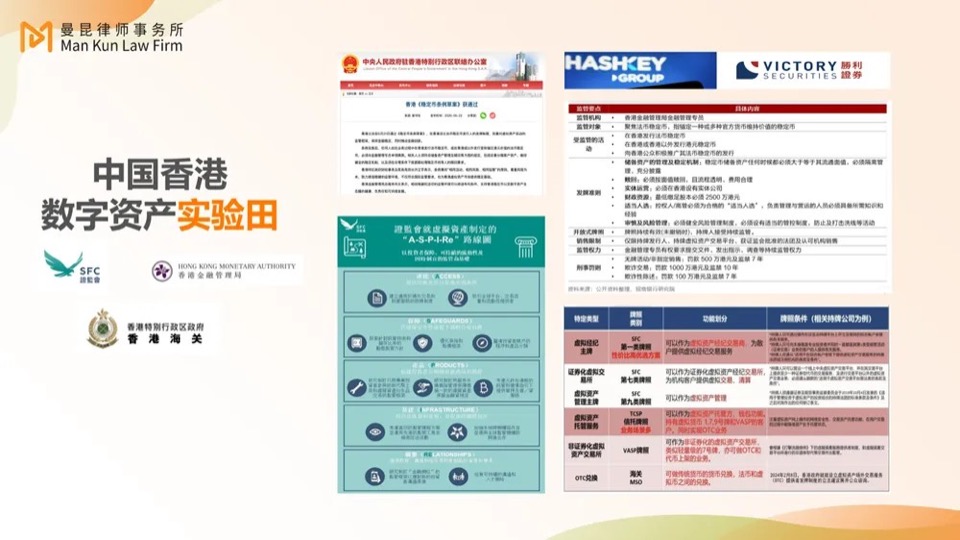
This is especially true for the layer of stablecoin issuance. As jurisdictions such as Hong Kong gradually advance their regulatory frameworks for stablecoins, those truly capable of applying for, undertaking, and operating such businesses over the long term typically need to possess simultaneously: real-world business scenarios, financial strength, systemic capabilities, compliance systems, and the ability to maintain long-term policy alignment. For most small and medium-sized entrepreneurial teams, this is not the optimal point of entry.
A more pragmatic approach is to identify “intermediary opportunities” along the entire crypto asset payment industry chain that already feature commercial closed loops and allow for relatively controllable management of legal risks. Such opportunities often do not directly collide with the most sensitive aspects of regulation, yet they can genuinely meet the service demands generated by industrial growth.
Three Verified Directions for Crypto Asset Payment Implementation
Based on current market practices, at least three business directions have demonstrated strong verifiability in terms of business logic and revenue models. For entrepreneurs, payment companies, or service providers seeking projects with sustainable cash flow, these three paths warrant close attention.
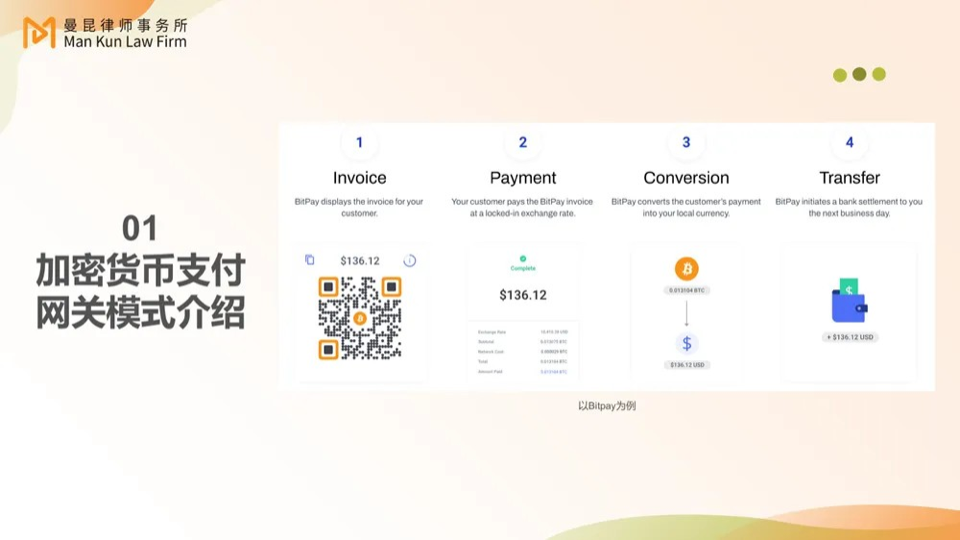
(1) Crypto Asset Payment Gateways: The Implementation Direction Closest to Traditional Payment Thinking
This model can be understood as an "on-chain aggregated payment collection interface." In scenarios such as cross-border e-commerce, overseas independent websites, digital goods sales, and globalized SaaS services, merchants may integrate stablecoin payment options on their checkout pages in addition to traditional methods such as credit cards and PayPal. Users can complete payments by scanning a QR code with their wallet or signing on-chain, delivering a user experience that closely resembles mature internet payment products.
For teams with experience in traditional payments, the advantage of this direction lies in the fact that it does not entail rebuilding an entirely new financial system; rather, it layers crypto payment integration capabilities on top of existing cross-border payment infrastructure. In other words, those who already possess merchant resources, payment scenarios, and settlement expertise are better positioned to enter this market.
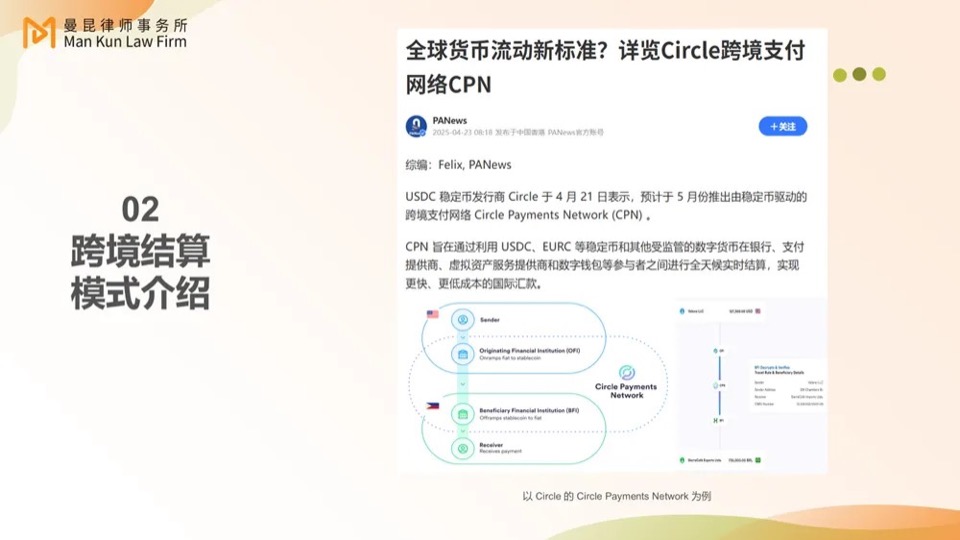
(II) The "Sandwich" Payment Structure: The Most Acceptable Solution for Ordinary Users
The so-called "sandwich" structure is essentially an intermediary bridging solution involving "fiat currency entry—stablecoin cross-border transfer—fiat currency exit." At the front end, users still see payments and receipts in their local fiat currency, while on-chain stablecoins serve solely as an intermediate clearing and settlement layer.
The greatest value of this model is that it "hides" the efficiency advantages of blockchain technology from the user's view, thereby significantly lowering the barrier to adoption. Payers are not required to hold crypto assets beforehand, and payees are spared the burden of managing on-chain assets, yet the entire cross-border transfer process can leverage stablecoins to achieve faster and lower-cost settlement.
From a product logic perspective, this structure has greater potential to enter large-scale, ubiquitous payment scenarios because it aligns more closely with the cognitive habits of ordinary users and traditional merchants.
(III) Crypto-Linked Cards: A High-Demand Direction for B2B and High-Net-Worth User Scenarios
The third category is the crypto-linked card solution, which has seen rapid growth in recent years. Its core value lies in directly connecting the "holding of crypto assets" with "real-world spending power." Users can top up their cards with crypto assets, and at the point of sale, the system automatically performs real-time conversion between crypto assets and fiat currency, completing the payment through existing card network schemes such as Visa, Mastercard, or UnionPay.
The appeal of such products stems from their ability to alleviate long-standing pain points for crypto users, including difficulties in cashing out, limited consumption options, and restricted usage scenarios. Furthermore, they enable richer user engagement strategies, such as cashback points, on-chain commissions, and token incentives, thereby upgrading the payment tool into a user growth instrument.
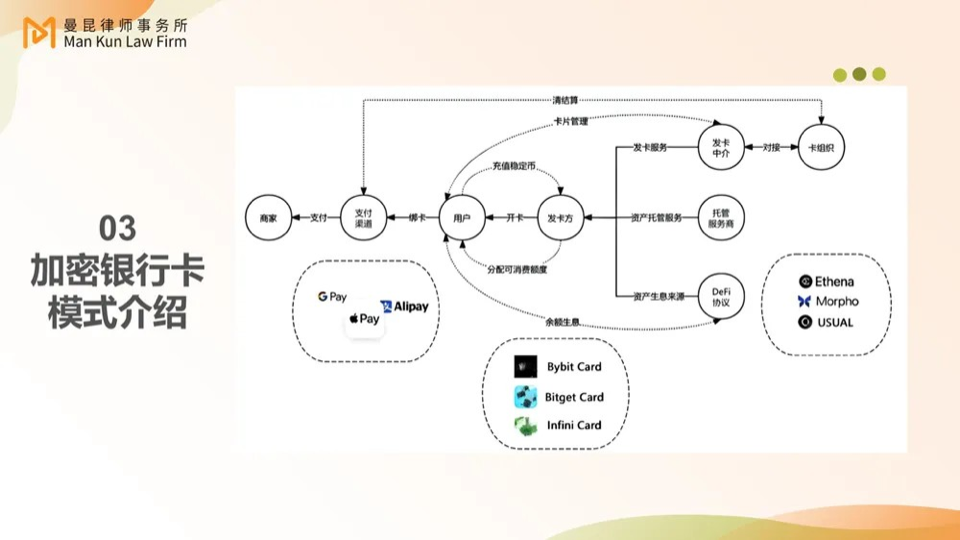
However, it must be emphasized that this direction involves relatively higher compliance complexity. It often entails multiple stages, including review of the source of topped-up assets, fiat conversion pathways, anti-money laundering monitoring, risk control rules, card scheme requirements, and compliance reviews by partner banks. Therefore, it is more suitable for teams with robust compliance and systemic capabilities.
The Core Barrier to Crypto Payments Has Never Been Merely Licensing
In market discussions, many people instinctively focus on "whether a license is held" when mentioning crypto payments. However, from a practical standpoint, while licensing is certainly important, it has never been the sole barrier, and in many projects, it is not even the most difficult hurdle.
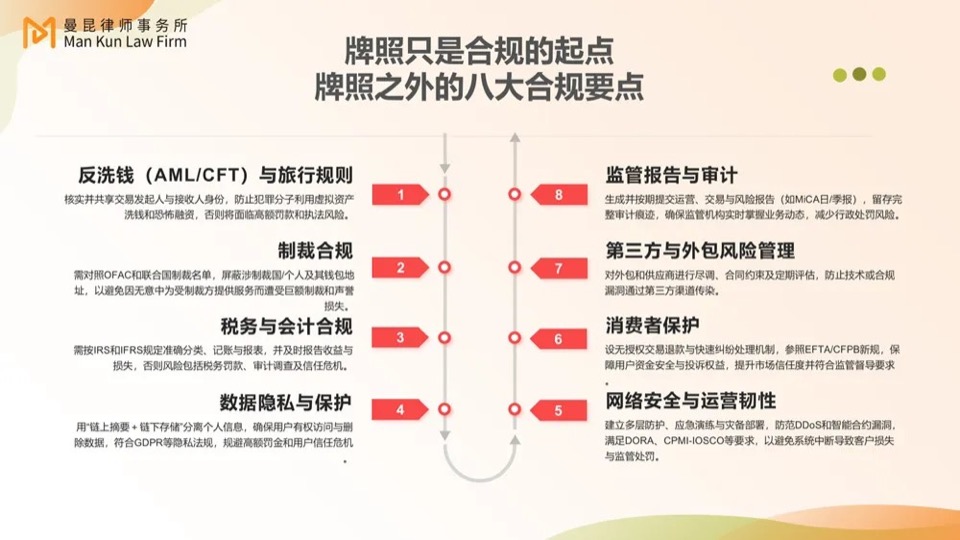
What truly determines whether a crypto payment project can operate sustainably over the long term often comes down to three core capabilities:
First, anti-money laundering (AML) and sanctions screening capabilities.For any business involving cross-border fund flows, once it enters real-world payment scenarios,KYC、KYBfunctions such as transaction monitoring, address risk identification, suspicious transaction alerts, and sanctions list screening are no longer “optional” but constitute foundational capabilities.
Second, tax and fund compliance handling capabilities.Whether for merchant collections, platform commissions, or cross-border service fee settlements, as long as genuine revenue is generated, issues such as tax recognition, revenue attribution, invoicing logic, settlement entity structuring, and fund path design will inevitably arise. Many projects do not fail due to their “business model,” but because they cannot ensure transparent and compliant fund flows.
Third, network and asset security capabilities.Crypto payments are not merely about front-end collection codes; they fundamentally involve a comprehensive security system encompassing wallet security, private key management, hot and cold wallet segregation, access control, abnormal transfer alerts, and protection against hacker attacks. In particular, once a project handles merchant funds or user assets, technical security itself becomes an integral part of compliance.
Therefore, any assessment claiming that “obtaining a license is sufficient to operate” is generally overly simplistic. The essence of crypto payments is a composite engineering endeavor integrating “finance + technology + compliance + operations.”
Conclusion: True opportunities belong to those who both understand the direction and adhere to boundaries
The reason crypto payments deserve continued attention is not because they are “new,” but because they are addressing a very traditional and pressing need—how to enable cross-border fund flows to be faster, cheaper, and more controllable.
In this sense, crypto payments are not merely a niche segment within the Web3 industry, but an important component in the evolution of the next-generation global payment and settlement system.
At the same time, this is inevitably a field that cannot be built on sentiment, concepts, or traffic alone. It requires participants to understand the essence of business, identify genuine demand and sources of cash flow, and possess sufficient legal awareness, regulatory judgment, and risk management capabilities.
For entrepreneurs,the most worthwhile endeavor today is often not to compete for the “issuance layer,” which is at the upstream end, heavily regulated, and capital-intensive. Instead, they should follow genuine transactional demand and enter the “connectivity layer,” “interface layer,” “clearing and settlement layer,” and “compliance tools layer,” which have been validated and offer sustained service value.
For investors,when assessing whether a project merits investment, it is advisable to return to the most fundamental criteria: Does it serve a scenario with inelastic demand? Does its cash flow derive from real transactions? Can its compliance structure withstand long-term pressure?
Only when a project can answer both “why users are willing to pay” and “why it is unlikely to encounter significant legal or operational issues” is it more likely to become a truly sustainable crypto assets payment business.
Further Reading: How to Build a Compliant Crypto Assets Payment Business Landscape?
As noted in the article, competition in crypto assets payments has long transcended the technical domain and entered a stage of comprehensive capability contest involving “finance + technology + compliance + operations.”
For founders, payment institution executives, and cross-border trade decision-makers immersed in the Web3 wave, recognizing trends is only the first step.How to achieve compliant implementation, how to mitigate money laundering risks associated with illicit and gray-market activities, and how to design efficient payment and collection architecturesare the key factors determining the project’s lifecycle.
Drawing on Mankun Law Firm’s extensive experience in Web3 legal practice, we have specially launchedCrypto Payment Compliance: Practical Closed-Door Workshop (Shenzhen)。

The course is currently in theearly-bird registration phase.Please scan the QR code to contact the Mankun Course Team.

Author
Liu Honglin, Founder of Mankun Law Firm. Member of the Young Lawyers Working Committee of the Shanghai Bar Association, Member of the Information Technology Working Committee of the Shanghai Bar Association, and Member of the Legal Technology Committee of the Shanghai Bar Association. Lawyer Liu Honglin has 10 years of experience in law and internet entrepreneurship. He previously served as Vice President of a legal technology company under Tencent’s strategic investment arm and as Legal Manager for a private equity fund at a listed company. He specializes in proposing practical, actionable solutions for cases from the perspectives of business models and legal practice, thereby maximizing commercial interests for clients.
About Mankun
Mankun Law Firm was established in 2015 as a boutique law firm in China focusing on the Web3 new economy and deeply engaged in the blockchain industry. The Mankun team members possess unique and diverse industry backgrounds, hailing from renowned legal service institutions, state judicial organs, internet technology companies, crypto asset institutions, and blockchain industry think tanks.
Based on a profound understanding of the new economy, continuous attention to and research on policies and regulations, and extensive practical experience, the Mankun team excels at providing comprehensive legal services to new economy enterprises in sectors such as Web3, blockchain, AI, NFTs, digital collectibles, crypto funds, crypto payments, DeFi, real-world assets (RWA), and GameFi. These services include business structure design, project financing and investment, transaction planning, operational compliance, resolution of complex civil and commercial disputes, prevention and control of criminal risks, and criminal defense.
Mankun Law Firm is headquartered in Shanghai, with branch offices in Hong Kong (China), Silicon Valley (USA), Shenzhen, Hangzhou, Zhengzhou, Chengdu, and other locations. To meet the global compliance development needs of Web3 industry clients, Mankun has established local offices in major global crypto-financial cities and selected local professional blockchain service partners, providing clients with professional legal and compliance services that combine global breadth with Chinese depth.
