

The Dazzling Array of Web3 Recruitment Opportunities
Amid the broader economic downturn, layoffs at major internet companies are no longer surprising, and job opportunities in the traditional internet sector are dwindling. Consequently, an increasing number of professionals from the traditional internet industry are considering a career shift into the Web3 sector.

*Sample Job Postings for Certain Web3 Projects
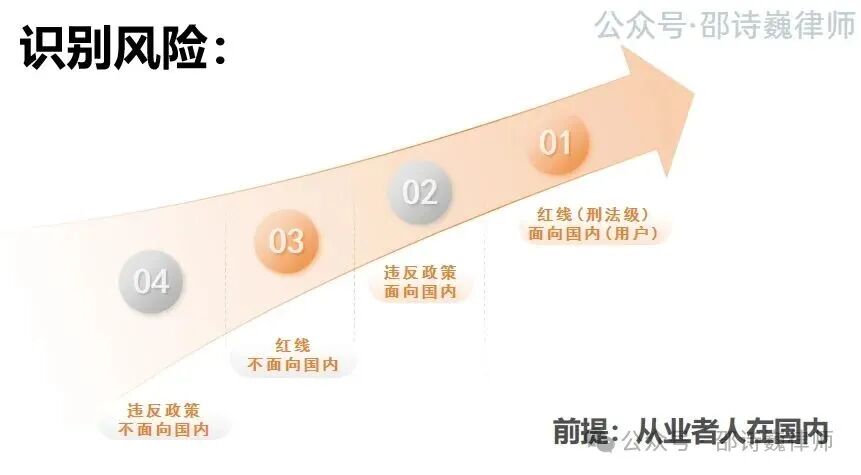
When searching for relevant information, prospective candidates encounter a plethora of such job postings. Generally, these positions offer attractive compensation and flexible working hours, appearing to be favorable employment options. However, Mankun Law Firm advises newcomers unfamiliar with Web3 to exercise caution when entering this industry. The Web3 landscape encompasses numerous sectors; certain sectors and companies must be strictly avoided by practitioners based in China.
A Red Line: Issuance and Fundraising of Virtual Currencies
Since the joint issuance of the "Announcement on Preventing Risks Associated with Token Issuance and Financing" by the People's Bank of China and six other departments in September 2017, the issuance and fundraising of virtual currencies in China have been clearly characterized as "illegal public financing activities conducted without approval." This stance was further supplemented and reinforced in September 2021 by the "Notice on Further Preventing and Disposing of Risks Related to Virtual Currency Trading and Speculation," jointly issued by the People's Bank of China, the Supreme People's Court, and eight other departments. From 2017 to the present, there have been over one hundred criminal cases of varying scales in China, involving charges such as "illegally absorbing public deposits" or "fundraising fraud."
A notable example is the "Light Cone Coin" issued by "Tianyi Jiahe" between 2017 and 2018. At its peak, tens of thousands of individuals held this token, and the responsible parties were ultimately imprisoned, with the activity classified as fundraising fraud. An earlier case involved the "Dasheng Coin" issued domestically by "Guozheng Company" between 2016 and 2017, which was similarly classified as fundraising fraud.
Therefore, newcomers to Web3 must first recognize this red line. A consensus has long been established within the cryptocurrency community: legitimate new token projects explicitly exclude users from China and renminbi (the legal tender) during their Initial Coin Offerings (ICOs), a concept derived from Initial Public Offerings (IPOs) in the securities industry. When domestic practitioners evaluate job opportunities, if they discover that a potential employer’s business may involve the issuance of virtual currencies within China, they must possess sufficient legal awareness to make prudent decisions.
High Risk: Exchange Operations
According to the "Notice on Further Preventing and Disposing of Risks Related to Virtual Currency Trading and Speculation" jointly issued in September 2021 by the People's Bank of China, the Supreme People's Court, and eight other departments, operations of virtual currency exchanges were formally declared illegal financial activities. This includes exchanging fiat currency for virtual currencies and exchanging one virtual currency for another. Around the time of this regulation, exchanges operating in China ceased operations one after another.

At that time, regulatory authorities from the central bank specifically summoned exchanges still operating within China, including Huobi, Binance, and OKX. These platforms each submitted plans to shut down their domestic operations and ultimately relocated entirely. Only a very small number of minor exchanges, which were essentially fraudulent schemes and failed to comply with legal requirements—such as the so-called Aston Exchange and the ICC investment platform—were ultimately concluded with convictions for fraud.
Currently, although major exchanges operate under licenses overseas and have achieved compliance, many developing exchanges lack such compliance awareness. When new practitioners notice that a potential employer’s business involves exchange operations targeting the Chinese market, they must remain vigilant and recognize the associated legal risks.
Extreme Caution: Virtual Currency Mining
Unlike the two risks mentioned above, the act of mining using mining rigs does not inherently involve various criminal risks under China’s financial regulations. However, in China, mining itself is suspected of violating the "Energy Conservation Law," potentially resulting in fines and mandatory shutdowns imposed by relevant authorities.
In fact, numerous mining farms in China have long been shut down under legal restrictions. In the early days, the Sichuan region had abundant hydropower resources, leading to low electricity prices. This facilitated the establishment of many large-scale mining farms; some even acquired small hydropower stations solely to power their mining operations. These scenarios are now things of the past. Consequently, there are currently no large-scale virtual currency mining farms capable of legitimate operation within China. However, some criminals have exploited this concept, leading to multiple cases of pyramid schemes centered around mining rig concepts in China. Therefore, when new Web3 practitioners observe that an employer is conducting mining operations domestically, they must promptly raise alarms, clarify the employer’s actual business nature, and avoid becoming unwittingly involved in legal troubles.
Careful Scrutiny: Avoid Involvement in "Money Laundering" Crimes
Unlike the first three risks, which can be identified with modest attention, determining whether an employer’s business involves "money laundering" crimes may be difficult for new Web3 practitioners to ascertain precisely before joining. Precisely because of this difficulty, extra care and scrutiny are required.
Globally, many Web3 businesses, due to their reliance on blockchain technology with strong decentralization effects, have been frequently implicated in "money laundering" crimes. In 2023, Binance, the world’s largest virtual currency exchange, handled over 60,000 cases in coordination with judicial authorities across various countries, most of which were related to the flow of illicit funds and "money laundering" offenses. Whether before or after commencing employment, if doubts arise regarding related business activities, the correct course of action is to promptly consult individuals capable of providing accurate advice.

As early as early 2023, Mankun Law Firm published an article titled "Common Methods of Money Laundering Using Virtual Currencies and Associated Criminal Legal Risks," which outlined the processes of virtual currency money laundering. We advise new Web3 practitioners to remain highly vigilant if they discover that a business model aligns with such patterns; caution ensures long-term safety.
Summary by Mankun Lawyers
When applying for various Web3 positions, new practitioners should, in addition to caring about compensation and days off like traditional employees, also pay close attention to the actual business scope of the employer. Admittedly, the Web3 field evolves rapidly, with new sectors and models frequently emerging. Unless one is a seasoned participant, making accurate judgments can indeed be challenging. When unable to determine the reliability of a job position, promptly consulting industry experts to protect oneself is the awareness every Web3 professional should possess.
/ END.
*This article is an original work by Mankun Law Firm. It represents only the personal views of the author and does not constitute legal consultation or legal advice on specific matters. We welcome more Web3 practitioners to contribute articles or report insights. For reprint permissions and legal consultations, please contact customer service: MankunLawFirm.
Author of this Article