
Must-Read for Beginners
Special Disclaimer: This article is an original work by Attorney Shao Shiwei. It reflects only the personal views of the author and does not constitute legal advice or a legal opinion on any specific matter. For article reprints, legal consultations, or business exchanges, please add: sswls66
With the rapid development of blockchain technology and the growing prosperity of the crypto asset market, numerous innovative business models have emerged in the Web3 space, among which "airdrop farming studios" are a typical example. These studios generate revenue for themselves and their clients by participating in promotional campaigns and airdrops launched by project teams.
Some individuals planning to establish airdrop farming studios have asked Attorney Shao whether such activities are permissible. Given the frequent online reports of individuals achieving overnight wealth through airdrop farming, many are naturally tempted. With some spare capital on hand, they consider partnering with friends to invest in this side venture, hoping to share in future profits if the model proves viable.
However, as newcomers to concepts such as the crypto circle, USDT, and Web3, they are uncertain whether establishing an airdrop farming studio carries legal risks, and if so, where the boundaries of such risks lie.
Therefore, what legal risks should be addressed during the operation of an airdrop farming studio?
By Attorney Shao Shiwei
01
What Is an Airdrop Farming Studio?
"Airdrop farming," or "airdrop hunting," refers to the practice whereby users interact with Web3 projects during their early operational phases to qualify for airdrops. After the project officially launches, the project team distributes token (Token) rewards to eligible users. Users may then monetize these tokens through over-the-counter (OTC) transactions or by selling them once listed on exchanges.
While it may appear that project teams are merely being exploited by users, this is not the case. To qualify for airdrop rewards, users must strive to meet the criteria set by the project team. By engaging in various interactions, users help identify vulnerabilities in the project while maintaining active participation. The project team then leverages this user interaction data to demonstrate metrics such as active user volume, transaction volume, transaction frequency, and total value locked (TVL) to investors, thereby securing higher levels of financing.
Although airdrops were originally designed as user incentive measures to reward early adopters, a specialized industry of airdrop farming studios has long emerged in China. These studios engage in batch account registration—often purchasing large quantities of "three-piece kits" (Gmail accounts, Twitter accounts, and Discord accounts), binding these accounts as required by project teams, and completing various tasks—to simulate user interactions in anticipation of potential future airdrops.
However, project teams often employ Sybil detection mechanisms to counter such practices by airdrop farming studios. If an account is identified as a Sybil account (typically referring to multiple fake identities or accounts created and manipulated by a single individual or entity for fraud or market manipulation, known as a Sybil attack), the user will be disqualified from receiving the airdrop.
02
What are the risks associated with airdrop-farming studios?
1. Where do the boundaries of legal risk lie?
Can airdrop-farming studios legitimately operate?This area currently constitutes a regulatory gap under PRC law. Pursuant to relevant PRC policy provisions, domestic initial coin offerings (ICOs) by project issuers are expressly prohibited. However, airdrop farming is conduct initiated by users and may be analogized to gaming scenarios, in which players, in accordance with platform rules, complete tasks in anticipation of receiving in-game item rewards airdropped by the platform. Moreover, what users obtain through such interactions are merely “points” rather than tokens, and project issuers make no definitive commitment to token distribution during the interaction phase. This approach, to some extent, circumvents ICO regulation.
Although the September 24, 2021 Notice (quoted below) explicitly identifies the legal risks of virtual currency investment and trading activities, its language is overly broad and vague. Does “airdrop farming” equate to “virtual currency investment and trading activities”? If so, in relation to any resulting disputes, should civil or criminal liability attach? We cannot draw a definitive conclusion from this provision alone.
Notice on Further Preventing and Disposing of the Risks of Virtual Currency Trading and Speculation (Yin Fa [2021] No. 237), Section IV: Participation in virtual currency investment and trading activities entails legal risks. Where any legal person, unincorporated organization, or natural person invests in virtual currencies and related derivatives in violation of public order and good morals, the relevant civil juristic acts shall be void, and any losses arising therefrom shall be borne by the investors themselves; where such conduct is suspected of disrupting financial order or endangering financial security, the relevant authorities shall investigate and deal with it in accordance with the law.
Therefore, we should not assess statically whether establishing an airdrop-farming studio per se presents legal risks. Rather, we must consider which counterparties the studio will engage with in carrying out these activities—employees, clients, and project issuers. In the course of interacting with these parties, certain uncertain and dynamic business and legal risks may arise.
2. Business risks of airdrop-farming studios
“Even a pig can fly if it stands at the eye of the storm.” Is now a good time to establish an airdrop-hunting studio? Probably not. According to an exclusive interview, airdrop-hunting studios first emerged around 2020 to 2021.[1] Early participants may have already secured substantial returns by participating in airdrops, but as more people flock to this sector, intensifying competition has also drawn the attention of project teams, hackers, and others.
Airdrop-farming studios do not operate under the idealized notion of “zero-cost farming,” whereby one batch-registers accounts, conducts interactions, and passively awaits returns. Instead, they incur significant costs in time, effort, and capital. Studios must source numerous projects and screen them, while behaving like genuine users by maintaining long-term attention to projects and conducting sustained interactions in accordance with each project’s requirements. Furthermore, certain projects require staking USDT, Ethereum, or other tokens in digital wallets. In addition, any on-chain interaction necessitates payment of gas fees. Finally, project issuers retain ultimate discretion over token distributions, including whether, how, and in what form tokens are distributed; such terms are not definitively established through legally binding instruments at the outset of a project. Consequently, it is not uncommon for project issuers to change policies abruptly or renege on prior representations, thereby “backstabbing” studios.
If any of the following circumstances occur, months or even years of diligent effort may yield no returns:
The project issuer ultimately does not distribute the airdrop;
Airdrop proceeds are lower than the gas fees incurred;
The account is flagged as a Sybil account (for example, consistency of on-chain interactions, transfers among multiple wallet addresses, and other circumstances that may lead project issuers to deem the account a Sybil);
Wallet theft (for example, leakage of private keys or seed phrases, installation of trojan malware, or accidental clicking of phishing links);
Failure to meet the project issuer’s minimum interaction requirements;
……
3. Potential dynamic legal risks for airdrop-farming studios
As discussed above, airdrop-farming studios face a certain degree of policy risk and are not a guaranteed windfall business. The timing of a project’s token launch and the ultimate amount of token rewards a studio may receive are uncertain. Accordingly, whether farming for oneself or on behalf of others, there are potential “dynamic” legal risks.
(1) If a studio hires individuals to farm airdrops on its behalf, the following risks may arise:
Employees may abscond with the crypto assets, or they may quietly install trojan malware in software or accidentally click phishing links, causing the studio’s hard-earned proceeds to vanish.
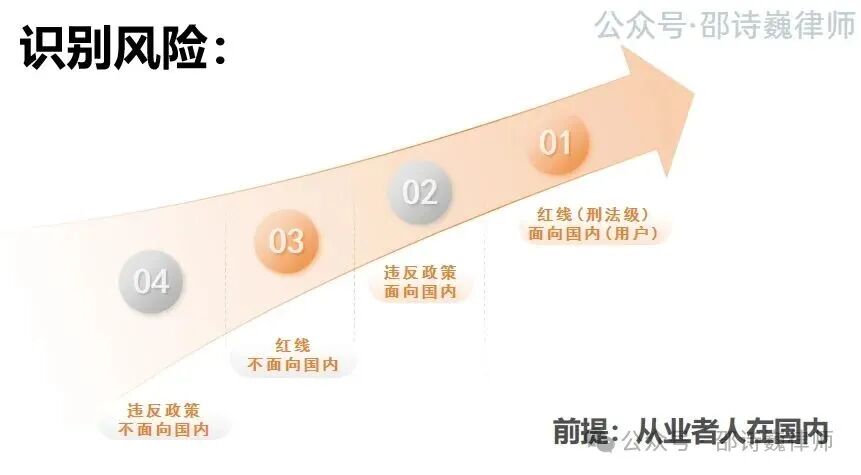
Can the studio report the incident to law enforcement at that point? The situation is nuanced: Is the studio considered a victim? Are the proceeds from airdrop farming lawful gains obtained through lawful means? Are such proceeds protected by law? In practice, such cases are commonplace:
(2) Because airdrops require users to continuously monitor project developments and involve a relatively high operational threshold, some studios, in addition to farming for their own profit, alsoprovide airdrop-farming services on behalf of users.
Given the time costs involved, it is reasonable for such proxy-farming services to charge a service fee. However, if no proceeds are ultimately obtained for various reasons and client relationships are not properly maintained, leading to a large number of users reporting fraud to authorities, it is unclear whether judicial organs would view this as absorbing user funds to engage in virtual asset investment and trading activities.
For example, in January 2024, the Fengtai Public Security Bureau in Beijing published a case study titled "First of Its Kind: Fengtai Economic Crime Investigation Division Solves Blockchain Game Fraud Case." According to industry insiders, the blockchain game involved was a bona fide Web3 project. The so-called "victims" were investors in the project. Due to certain disputes between the parties, the investors reported the matter as fraud, resulting in the project team being charged with the crime of contract fraud.
Furthermore, if user funds are misappropriated during the process of executing tasks on behalf of users ("proxy farming") and such misappropriation is discovered by the users (for various reasons, such as employee leaks or users' independent verification), the responsible party may face civil liability for breach of contract in less severe cases, or criminal liability in more serious cases. Even if the act was committed by an employee, from the perspective of legal liability, the ultimate responsibility typically rests with the business owner.

In summary, operating a farming studio for one's own profit entails primarily internal risks or losses. In contrast, proxy farming services involve potential losses to external third parties. Therefore, proxy farming carries relatively higher legal risks. If one insists on engaging in such activities, it is advisable for the studio to enter into written entrustment contracts with clients. Although such contracts may not completely eliminate or exempt the studio from its own risks, they can at least clearly define the obligations of both parties, enable users to fully understand the potential risks, filter out some irrational users, and reduce the likelihood of future customer complaints.
4. Legal Risks Associated with Fiat-to-Crypto and Crypto-to-Fiat Conversions
This risk is not limited to farming studios but applies to anyone engaged in fiat-to-crypto and crypto-to-fiat conversions. Token rewards distributed by projects must eventually be converted into fiat currency. If illicit funds are inadvertently received during this conversion process, consequences may range from the freezing of bank accounts in less severe cases to criminal risks, such as charges for aiding information network criminal activities or concealing or disguising the proceeds of crime, in more serious cases. For further details, please refer to Attorney Shao's previous articles; thus, no further elaboration is provided here. In short, exercise caution in selecting reliable counterparties for fiat-crypto conversions and conduct proper Know Your Customer (KYC) procedures.
03
Concluding Remarks
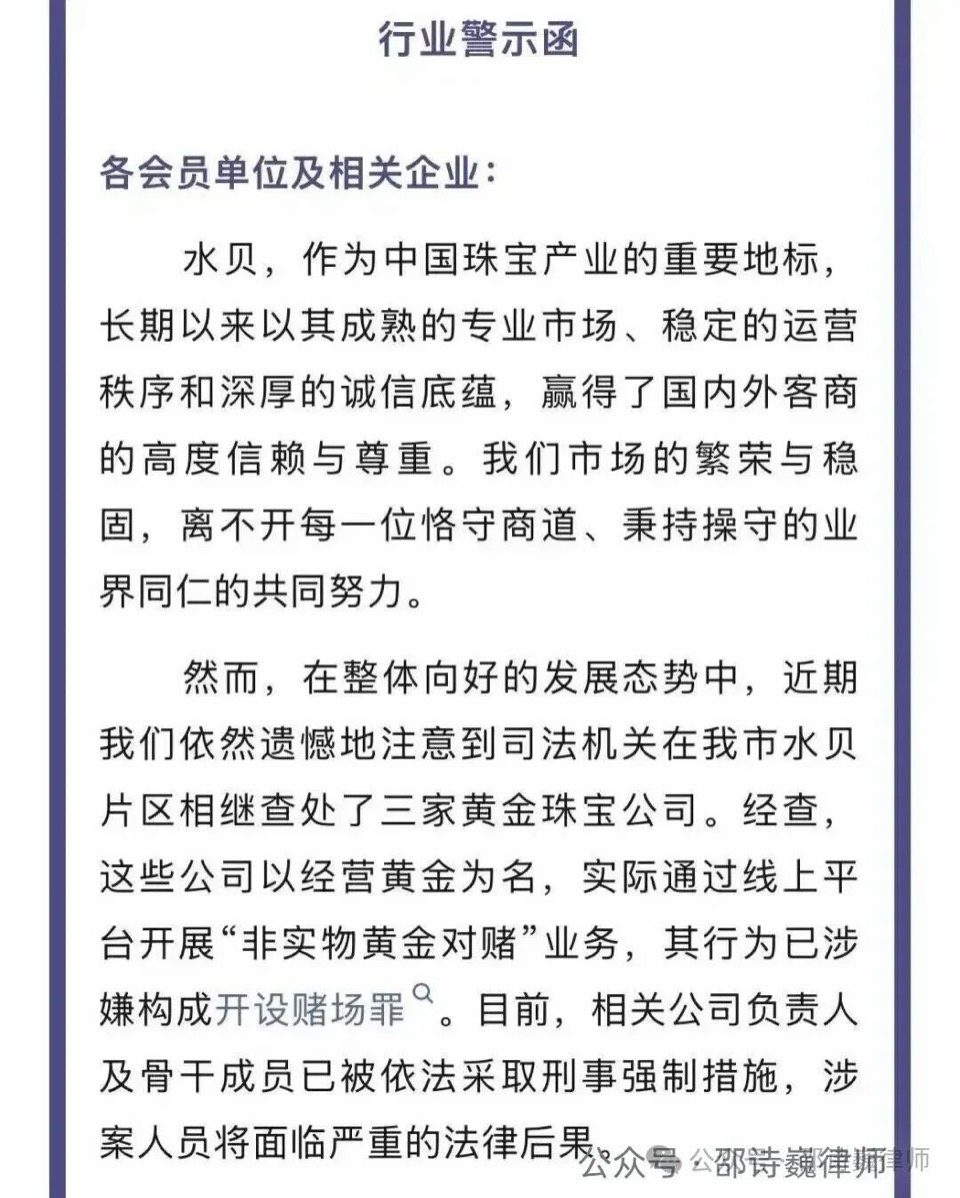
Overall, Web3 farming studios currently operate in a regulatory gray area. Studios must properly manage their relationships with project teams, clients, and employees. Last month, He Yi, co-founder of Binance, also expressed her views on farming studios (see figure below). Therefore, studios should recognize that as the market matures, early opportunities for excessive profits may diminish. Consequently, long-term and diversified business planning is essential.

[1] Interview with a Farming Studio: Unveiling the "Volume Manipulation" Underground in Web3 _ Tencent News https://new.qq.com/rain/a/20240701A067R600
Recommended Reading
What are the legal risks when crypto influencers promote projects for project sponsors?