

Financial Influencer’s Trade-Signal Services Investigated, Revealing the Legal Red Lines Behind Such Activities!
Introduction: When “Traffic” Collides with the Hard Wall of “Franchised Operations”
Online traffic is the internet’s wealth code, but once it crosses into finance, it trips over the legal red line of franchised operations.
Recently, according to an article on Sina Finance, a financial influencer with millions of followers was investigated for sharing investment insights? Under penetrative supervision, the conclusion was clear: “operating financial business without a license.” Some Web3 bloggers may still be wondering: “I promote overseas exchanges and post crypto-asset links; Chinese authorities can’t touch me?”
The answer is:They can, and enforcement is even stricter.
The franchise requirement for financial services is an ironclad rule. Consider two domestic cases to understand the real consequences of unlicensed “financial promotion”—
Case 1: [Crime of Illegal Business Operations] The Case of Wu, a Prominent Online Influencer
Facts:The defendant lacked qualifications for securities investment consulting. Nevertheless, leveraging his influence, he established paid “circles” on social media platforms and provided compensated stock-picking recommendations. This investment-advisory conduct, cloaked as “paid knowledge,” yielded illegal profits of more than RMB 12 million.
Outcome:The court held that he committed the crime of illegally operating securities business. He was sentenced to two years and four months’ imprisonment and fined RMB 13 million. Disgorging his ill-gotten gains was not enough.

Case 2: [Crime of Illegal Business Operations] The Case of Financial Blogger Xu
Facts of the Case:Compared with Wu, Xu’s model more closely resembles the trade-copying model in Web3. Knowing full well that the so-called “over-the-counter sub-accounting system” was illegal, he still directed his followers to open accounts and trade options. His revenue did not come from membership fees, but from a trading commission of RMB 20 per transaction, with the involved transaction volume exceeding RMB 16 million.
Outcome:He was likewise convicted and sentenced for the crime of illegal business operations.

A simple comparison clarifies the risks involved:
- First scenario: If an individual without a proper license charges fees to recommend lawful stocks or funds, this already constitutes illegal business operations, violates the Criminal Law, and is subject to severe penalties.
- Second scenario: In the Web3 sector, many activities themselves carry risks of being characterized as “illegal fundraising” or “illegal securities activities” under PRC law and are strictly prohibited. If, on top of this, one engages in practices such as “contract trade-copying” or “cross-border rebate commissions,” the issue goes beyond merely operating “without a license”; it directly crosses red lines expressly prohibited by law.
Thus, the conclusion is clear:The latter conduct is of a more serious nature and naturally entails greater legal risk.In simple terms: If recommending lawful products without a license is already unlawful, then operating in a prohibited field compounds the violation and leads to more severe consequences.
Deconstructing the Chaos: The “Surge” in Web3 Contract Trade-Copying and Rebate Commissions
The Web3 industry remains in its early stages of development, with most platforms in an expansion phase, launching various incentives and mechanisms to attract users. However, these mechanisms often face differing legal characterizations across jurisdictions, giving rise to corresponding risks. From the perspective of mainland Chinese law, there are currentlythreecommon but highly risky models:
1. The “Copy-Trading Based on Trading Volume” Model—Operating Others’ Assets Without a License
Some traders, not content with merely analyzing market trends, directly leverage exchanges’ copy-trading systems to attract followers who can replicate their trades with a single click, with the traders taking a 10%–30% commission on profits. Under this model, the assets under copy-trading often amount to tens or even hundreds of millions. While traders may view this as “helping their followers make money” while earning some income themselves, regulators regard it as the unauthorized operation of others’ funds, which may constitute illegal business operations.

2. The “Domestic User Acquisition with Commission Rebates” Model—Illegal Solicitation and Escalating Risks
When analyzing market trends in live streams, many streamers includeexclusive registration linksorcommission rebate codes, and sometimes even display their domestic social media accounts to build trust. Such conduct is clearly directed at users in mainland China and may legally constitute “illegal business solicitation within mainland China.” The use of domestic accounts further significantly increases the risk of being held legally liable.

3. Deepening Interest Alignment—From “Earning Commissions” to “Profiting from Client Losses”
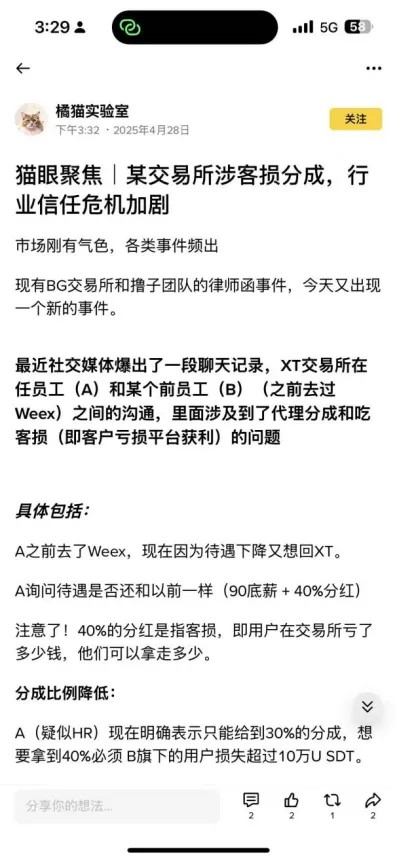
This isthe most dangerousoperational model. In the past, some key opinion leaders (KOLs) primarily profited from trading fees; although this practice itself may involve compliance violations, it did not directly target user losses as a source of profit. Currently, however, certain small-scale platforms have entered into "profit-sharing based on client losses" agreements with KOLs—meaning that the greater the users' losses, the higher the share of revenue the blogger receives. While you may believe the blogger is imparting investment techniques or providing copy-trading services to help you earn profits, their underlying motive may in fact be to appropriate your principal.
In-Depth Analysis: The "Three Criminal Red Lines" for Web3 Business Operations
As a lawyer who has handled a substantial number of related cases, I wish to state clearly: when you share acopy-trading linkorrebate link, you may in fact have crossed several clear red lines under criminal law. The following outlines the offenses most likely to be implicated and the logic for their determination:
1. Crime of Illegal Business Operations
Many people have argued that"virtual currencies are not money, but merely commodities", but this assertion has been seriously challenged following the issuance of the "September 24 Notice" in 2021. Current judicial practice tends to hold that if you induce individuals within mainland China to participate in such activities, engage in such activities as a profession, and are involved in large-scale fund settlements, courts are highly likely to determine that you are substantively engaged in "illegal payment settlement services" or "illegal operation of securities or futures business."
In short, once copy-trading or commission rebates reach a certain scale, criminal risk is already established.
2. Crime of Aiding Information Network Criminal Activities ("Bangxin Crime")
This is one of the offenses that public security organs have prioritized in recent years. As long as the platform you promote is involved in money laundering, fraud, or other illegal or criminal activities, or operates within mainland China without proper authorization, your promotional activities may be deemed as "providing promotional assistance for criminal activities." In handling such cases, judicial authorities often question:"As an industry insider, were you not aware that the state prohibits these platforms from conducting business within mainland China?"Under such circumstances, it is highly likely to be presumed that you"knowingly"provided assistance, thereby leading to conviction.
3. Fraud (the most serious red line)
If the platform you promote or the traders with whom you collaborate operate under a "customer loss-sharing" model—i.e., deriving profits from users' losses—the nature of the entire conduct may escalate from regulatory non-compliance to criminal fraud.
Under this model, the copy-trader fabricates the fact of "making money for you" while concealing the truth of "profiting from your losses." In judicial practice, such conduct is likely to be characterized asan accomplice to fraudOnce the amount involved reaches a certain threshold, the prison term often starts at ten years or more.
In addition, such conduct may also implicate other criminal risks, including the crime of money laundering and the crime of illegal trading in foreign exchange.
In summary:
From sharing links to receiving commissions, this is by no means a simple"promotional activity"Under the current legal framework, this may constitute a systematic and professionalized link in illegal and criminal activities. Each participant in every link may become part of the chain of criminal liability.
Mankun Compliance Guide: A "Risk Avoidance Handbook" for Digital Financial Intermediaries
As legal practitioners in the Web3 sector, we deeply understand practitioners' passion for and commitment to the industry, but we are even more reluctant to see talented creators fall into criminal risks due to a lack of understanding of legal boundaries. If you are still conducting business in related fields, please be sure to pay close attention to the following "risk avoidance guidelines":
1. Strictly Separate Content from Commercial Activities
Keep technology separate from commerce.If you are writing professional content such as industry analysis or technical interpretations, please do not include any"rebate codes," "registration links," or "invitation codes" in your articles.Once content appears alongside profit-driven promotion, its nature may shift from"knowledge sharing" to "non-compliant promotion",thereby giving rise to legal risks.
2. Clearly specify geographic restrictions on services
If you operate social media accounts or channels targeting overseas audiences, you should prominently state that "services are not provided to users within the mainland of China." While such disclaimers cannot completely eliminate liability, they can serve as important evidence of your "lack of intent to solicit within the mainland" in legal proceedings.
3. Clarify your sources of revenue
- If your income is tied to users' trading losses, cease such activities immediately, as this may constitute fraud;
- if your income derives from commission fees or profit-sharing from copy-trading, you must recognize that you are effectively supporting unlicensed quasi-financial activities, which inherently carry significant legal risks.
4. Establish baseline compliance standards for content
Avoid providing specific trading advice, issuing trade calls, or promising returns in live streams or public content. You may discuss technological trends (such as Layer 2 solutions or the integration of AI and Web3), but you must strictly avoid"principal-guaranteed, high-yield, copy-trading"and other sensitive expressions, as these terms are highly likely to trigger findings of financial regulatory violations.
Legal risks often stem from negligence in everyday details. As the industry matures and becomes more standardized, establishing compliance awareness in advance serves both to protect one’s own business and to uphold responsibility toward the industry ecosystem.
Conclusion: Traffic Can Be Monetized, but Must Be Approached with Reverence
Web3 is a field full of imagination, representing innovation in technology and production relations. However, regardless of how technology evolves, one principle remains unchanged:Financial business operations are prohibited without proper authorization, which constitutes a common baseline across jurisdictions worldwide.
Today, the legal boundaries for digital intermediaries are becoming increasingly clear and stringent. Traffic itself is not inherently wrongful; however, if it is used to guide others to participate in non-compliant financial activities, such traffic may transform from a mere communication tool into a vehicle for illegality or even criminal conduct.
The future of Web3 belongs to those who not only master technology but also deeply understand the rules and can navigate steadily within them. Mankun Law Firm will continue to monitor the intersection of technology and law, providing compliance support for industry innovation and exploring the future within established boundaries alongside builders.
Author
Zhao Xuan, Partner at Mankun Law Firm. Mr. Zhao graduated from the Law School of Tsinghua University and has represented clients in hundreds of complex commercial litigation and arbitration cases before courts at all levels, including the Supreme People’s Court, as well as major commercial arbitration institutions in Beijing, Shanghai, and other regions. Mr. Zhao has handled numerous legal matters involving internet companies, AI startups, and Web3 industry companies, covering areas including but not limited to corporate structuring, investment and financing, dispute resolution, and emerging legal issues.
Liu Chang, Researcher in the Web3 Compliance Research Group. Holding a Master of Laws degree, Mr. Liu is a seasoned compliance legal practitioner in the trust industry, with composite perspectives and practical experience in financial planning, wealth management, legal compliance, and risk control. Driven by interest, he continuously explores Web3, specializing in deconstructing and understanding various Web3 ecosystems through a Web2 lens, while inversely examining the financial ecosystems and product logic of the Web2 world to comprehend future trends in the financial landscape.
About Mankun
Mankun Law Firm was established in 2015 as a boutique law firm in China specializing in the Web3 new economy and deeply engaged in the blockchain industry. Members of the Mankun team possess unique and diverse industry backgrounds, hailing from renowned legal service institutions, state judicial organs, internet technology companies, crypto asset institutions, and blockchain industry think tanks.
Leveraging a profound understanding of the new economy, continuous attention to and research on policies and regulations, and extensive practical experience, the Mankun team excels at providing comprehensive legal services to new economy enterprises in sectors such as Web3, blockchain, AI, NFTs, digital collectibles, crypto funds, crypto payments, DeFi, real-world assets (RWA), and GameFi. These services include business structure design, project financing and investment, transaction planning, operational compliance, resolution of complex civil and commercial disputes, prevention and control of criminal risks, and criminal defense, all approached from the perspectives of business models and legal practice.
Headquartered in Shanghai, Mankun Law Firm has branch offices in Hong Kong (China), Silicon Valley (United States), Shenzhen, Hangzhou, Zhengzhou, Chengdu, and other locations. To meet the global compliance development needs of Web3 industry clients, Mankun has established local offices in major global crypto-financial cities and selected professional local blockchain service partners, thereby providing clients with professional legal and compliance services characterized by global breadth and Chinese depth.