

Lecturing on Web3 at Peking University
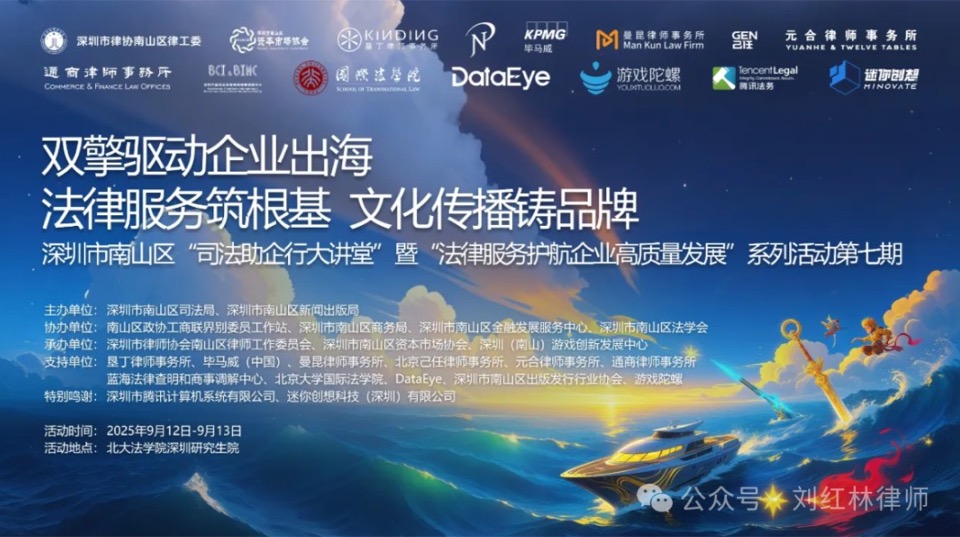
From September 12 to 13, the seventh session of the "Judicial Lecture Hall" and the "Legal Services Safeguarding High-Quality Enterprise Development" series, hosted by the Nanshan District Justice Bureau and the Nanshan District Press and Publication Bureau of Shenzhen, co-organized by the Workstation for Members of the Federation of Industry and Commerce Sector of the Nanshan District CPPCC, the Nanshan District Commerce Bureau of Shenzhen, the Nanshan District Financial Development Service Center of Shenzhen, and the Nanshan District Law Society of Shenzhen, and undertaken by the Nanshan District Capital Market Association of Shenzhen, the Nanshan District Lawyers Working Committee of the Shenzhen Lawyers Association, and the Shenzhen (Nanshan) Game Innovation Development Center, was successfully held at the Peking University International School of Transnational Law in Shenzhen.The seventh session of the "Judicial Lecture Hall" and the "Legal Services Safeguarding High-Quality Enterprise Development" series was successfully held at the Peking University International School of Transnational Law in Shenzhen.
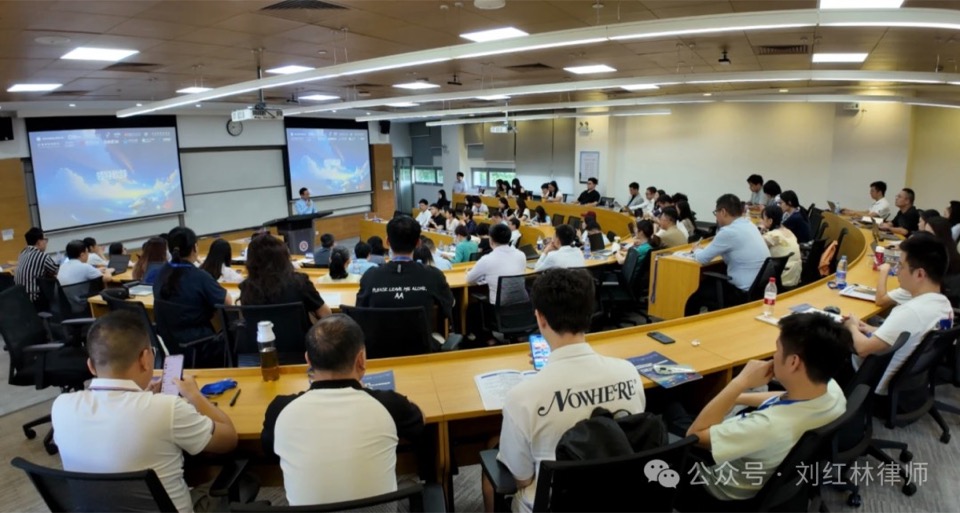
Mr. Liu Honglin, founder of Mankun Law Firm, shared insights on the topic of "Key Points of Legal Compliance for Blockchain Games". Mr. Liu focused on blockchain games, an emerging field in the Web3.0 era, and combined typical legal dispute cases involving blockchain to provide a clear and accessible analysis of the legal risks arising from game asset chains, such as illegal fundraising, gambling-related activities, money laundering, smart contract vulnerabilities, cross-border contract disputes, IP infringement litigation, and violations of cross-border data transfer regulations.Mr. Liu pointed out that for blockchain games going global, compliance must come first. Enterprises need to exercise extreme caution and fully consider the regulatory attitudes of various countries towards virtual assets and financial services at the initial stage of project architecture to avoid crossing red lines.

Below is the transcript of the core content of the course, shared with all partners.
Under the wave of Web3 technology, the gaming industry is undergoing a profound reconstruction of value. The long-standing pain points of traditional Web2 games, such as ambiguous asset ownership, dilution of user value, and closed ecosystems, are gradually being broken with the intervention of blockchain technology. With the core logic of "assets belonging to users and shared value," blockchain games redefine the relationship between games and users, and between platforms and ecosystems through mechanisms such as NFTs, decentralized trading, and Token incentives, becoming one of the tracks with the greatest potential for implementation in the Web3 field.
Core Dilemmas of Traditional Web2 Games: Value Imbalance Under Technical Limitations
For a long time, the business model and technical architecture of Web2 games have determined their ecological pattern of "platform centralization and user passivity." Three core dilemmas constrain the long-term development of the industry:
1. Ambiguous Asset Ownership: Users "Working for Others"
In traditional games, virtual assets such as accounts, characters, and items obtained by users through time and financial investment essentially belong to the game platform. Once the platform shuts down services, adjusts rules, or terminates operations due to poor management, the assets accumulated by users will instantly become "worthless." This problem is not an isolated case; from the wave of service suspensions in early PC online games to the lifecycle iterations of mobile games, countless users face the dilemma of "investment without return." The regret expressed by Ethereum founder Vitalik Buterin in his early years regarding deleted items in World of Warcraft is a typical microcosm of the contradiction in asset ownership in traditional games.
2. Imbalanced Value Distribution: Users Create Value but Struggle to Share Benefits
The profit logic of Web2 games heavily relies on user data and traffic, but users, as core participants in value creation, find it difficult to share in the dividends of platform growth. On one hand, users' gaming behaviors (such as battles, social interactions, and content production) bring active users and advertising revenue to the platform; on the other hand, users' promotional behaviors (such as inviting friends and sharing games) help the platform acquire customers at low cost. However, these contributions often only result in "symbolic rewards" such as small coupons or virtual items, which are seriously mismatched with the commercial value created by users for the platform.
3. Closed Ecosystems and Lack of Trust: Coexistence of Fragmentation and Black-Box Operations
Traditional games have obvious "ecological barriers": game assets across different platforms cannot be interoperable, and the data fragmentation between "domestic servers" and "international servers" further limits user experience. Meanwhile, the scarcity and issuance quantity of game items are unilaterally determined by the platform, and users cannot verify their authenticity. Problems such as "black-box operations" and "false limited editions" occur frequently, leading to a continuous decline in user trust in platforms.
Value Reconstruction in Blockchain Games: Ecological Innovation Driven by Technology
The decentralized, immutable, and traceable characteristics of blockchain technology provide new solutions for the gaming industry, reconstructing the value distribution and trust mechanisms of the game ecosystem from the underlying logic.
1. NFT Empowerment: Achieving "True User Ownership" of Game Assets
Blockchain games put virtual assets such as characters, items, and skins on the chain in the form of NFTs (Non-Fungible Tokens). Each NFT has a unique blockchain address and metadata, with clear and immutable ownership. Even if the game project team stops operations, users can still hold NFT assets through blockchain wallets and circulate or trade them on decentralized exchanges (DEX), fundamentally changing the traditional pattern where "assets depend on the platform."
2. Decentralized Mechanisms: Breaking Barriers and Reconstructing Transactions and Experience
- Global Access Without Thresholds:Users do not need to register with phone numbers or email addresses or undergo KYC (identity verification); they can log in to the game solely through a blockchain wallet, breaking free from geographical and platform restrictions;
- Cross-Chain Interoperability and Asset Liquidity:Based on cross-chain technology, users' NFT assets on one blockchain (such as Ethereum) can be transferred to games on other chains (such as Solana) for use, breaking ecological fragmentation;
- Decentralized Exchange (DEX):Trading of game assets does not rely on platform intermediaries; users can directly complete peer-to-peer transactions on-chain, reducing transaction fees and trust costs.
3. Innovation in Value Distribution: From "Play-to-Waste" to "Play-to-Earn"
Blockchain games achieve value sharing through a "dual-Token system" (utility Token + ecosystem Token):
- Utility Token:Used for in-game consumption (such as purchasing items or unlocking scenes), obtainable through gaming behaviors (battles, tasks), and supported for cashing out on exchanges;
- Ecosystem Token:Represents the "equity share" of users in the game ecosystem. Holding Tokens allows participation in voting on game rules and sharing in platform profit distributions, achieving value appreciation as the ecosystem grows.
This model converts users' "gaming time" into actual income. During the pandemic in 2020, a group of "game workers" even emerged in Southeast Asia who maintained their livelihoods through blockchain games (such as Axie Infinity), demonstrating the innovative nature of its value distribution.
4. Transparency and Traceability: Rebuilding User Trust Ecosystems
The immutable nature of blockchain makes game data "publicly verifiable": information such as the total issuance of items, NFT holding addresses, and transaction records can be queried through blockchain explorers (such as Etherscan), eliminating platform "black-box operations." Meanwhile, through on-chain data analysis, users can clearly identify issues such as "insider trading" and "false scarcity," fundamentally addressing the trust pain points of traditional games.
Three Implementation Paradigms for Blockchain Games
From the early "play-to-earn" model to the transformation of traditional enterprises, the practical paths of blockchain games are constantly enriching. Three typical cases reflect the evolutionary logic of the industry from radical exploration to pragmatic development.
- Axie Infinity: The Pioneer and Industry Benchmark of the "Play-to-Earn" Model
As a "phenomenal product" in blockchain games, Axie Infinity was developed by a Vietnamese team, with core gameplay centered on "virtual pet raising + battles." Users purchase Axies (virtual pets), obtain new Axies through breeding, participate in battles to earn Tokens (SLP), and exchange SLP for USDT or ETH for cash. Meanwhile, the project issues ecosystem Tokens (AXS), and holders can participate in governance and share in platform revenues.
During the pandemic in 2020, Axie Infinity exploded in Southeast Asian countries such as the Philippines and Vietnam, with peak daily revenue reaching $420 million (approximately 40 times that of Honor of Kings during the same period). A large number of people without income achieved daily incomes of $10–50 through "gold farming," making it the first large-scale verified case of the "play-to-earn" model. Its core value lies in transforming games from "entertainment consumption" into "value creation tools," proving the social value and commercial potential of blockchain games.
- StepN: Practitioner of Scenario Innovation — Cross-Border Integration of "Sports + Gaming"
StepN, developed by a Chinese team, positions itself around "Move-to-Earn," breaking the stereotype of blockchain games as "sedentary entertainment." After purchasing NFT sneakers, users accumulate "energy points" by walking or running, which can be exchanged for Tokens (GMT/GST) for cash. Meanwhile, StepN collaborates with brands such as Nike and Adidas to launch co-branded NFT sneakers, achieving a two-way closed loop of "To B brand marketing + To C user growth."
In 2021, the unit price of StepN's NFT sneakers once reached as high as $650, with some users investing millions of dollars to build "sneaker matrices," achieving daily revenues of thousands of dollars. Its innovation lies in combining blockchain games with healthy lifestyle scenarios, expanding the boundaries of blockchain applications; meanwhile, through the model of "physical brand collaborations + virtual assets," it lowered the threshold for traditional users to enter Web3.
- Boyaa Interactive: A Transformation Sample of Traditional Game Enterprises — Web3 Exploration Under a Compliance Framework
Boyaa Interactive was originally a chess and card game enterprise listed on the Hong Kong Stock Exchange (code: 00434.HK). In late 2023, it announced a comprehensive transformation to Web3. Approved by the Hong Kong Securities and Futures Commission, it purchased $200 million worth of Bitcoin and Ethereum, becoming one of the listed companies in Asia with the largest holdings of crypto assets. It also invested in and incubated early-stage blockchain game projects. After the transformation, Boyaa Interactive's market capitalization surged 12–13 times within half a year, and trading volume increased 50–100 times, making it a benchmark for traditional game enterprises' "compliant transformation to Web3." Its value lies in proving that blockchain games are not about "disrupting tradition" but can integrate with traditional businesses to achieve value increments through technological upgrades.
"Safe Zones" and "Minefields" in Blockchain Games
The development of blockchain games cannot be separated from the constraints of compliance frameworks. Especially in global markets with significant differences in regulatory policies, clarifying "what can and cannot be done" is a prerequisite for the healthy development of the industry. Combining global regulatory practices and domestic policy orientations, the compliance boundaries of blockchain games can be summarized as "three red lines" and "two types of risks."
1. Domestic Regulatory "Three Red Lines": Clearly Prohibited Areas
According to Chinese regulatory policies (the "September 4 Announcement" of 2017, the "Notice on Cracking Down on Virtual Currency Mining and Trading Speculation" of 2021, etc.), blockchain games in China must strictly avoid three areas:
- Prohibition of ICOs (Initial Coin Offerings):Fundraising from the public under the names of "game Tokens" or "ecosystem rights" is prohibited to prevent the risk of illegal fundraising;
- Prohibition of Domestic Cryptocurrency Trading:Games must not include functions such as "Token-to-fiat currency exchange" or "Token trading intermediaries," and overseas exchanges are not allowed to provide Token trading services to domestic users;
- Prohibition of Virtual Currency Mining:Involvement in mining mechanisms for cryptocurrencies such as Bitcoin and Ethereum is prohibited to avoid high energy consumption and financial risks.
It is worth noting that regulation is not a "complete ban." Domestic enterprises can explore "blockchain games without Tokens," such as putting items on the chain in the form of NFTs and conducting secondary trading on compliant platforms such as cultural property exchanges (relevant pilots have been launched in Guangzhou, Shanghai, and other places), leaving room for exploration in the industry.
2. "Two Types of Risks" in Overseas Operations: Easily Overlooked Compliance Traps
For blockchain game enterprises choosing to go global, they need to be wary of two major risks: "license dependence" and "localized compliance":
- License ≠ Compliance:Some enterprises believe that "obtaining financial licenses in regions such as Hong Kong and Canada" achieves compliance, but they neglect the risks in business operations. For example, when cooperating with community KOCs (Key Opinion Consumers), KOCs may exaggerate Token returns to attract new users. Once user complaints arise, the enterprise bears the primary responsibility;
- Differences in Localized Regulation:Different countries have different determinations regarding "multi-level incentives" and "Token attributes," with significant differences in judicial practice. The Shanghai No. 1 Intermediate People's Court supports the "execution of Bitcoin lending disputes" (converted to RMB at the price at the time of lending), while Zhejiang courts do not accept similar cases. Enterprises need to adjust their compliance strategies according to target markets.
Future Trends: New Paradigms of Stock-Token Linkage and User Incentives
As blockchain games mature, the dual-value carrier model of "equity + Token" is gradually becoming an industry consensus. This "coin-stock linkage" mechanism will redefine the incentive logic of the game ecosystem, promoting the industry's transformation from "traffic-driven" to "user co-creation."
1. Complementarity of Tokens and Equity: Dual-Value Driving the Ecosystem
- Positioning of Equity:Addresses the issues of "financing and ownership" for enterprises, targeting traditional capital such as VC and PE, supporting the compliant operations and infrastructure construction of enterprises;
- Positioning of Tokens:Addresses the issues of "user incentives and ecosystem co-construction," distributing Tokens through gaming and promotional behaviors, allowing users to share in the dividends of ecosystem growth.
Multiple cases globally have verified the feasibility of this model: NASDAQ-listed companies in the United States have acquired blockchain projects and integrated Tokens into their ecosystems; Hong Kong-listed companies have achieved linked growth in stock prices and Token values through "purchasing crypto assets + developing blockchain games."
2. Functional Token Design: Avoiding Security Attributes and Focusing on Ecosystem Value
To avoid Tokens being classified as "securities," the industry is gradually forming a consensus on the design of "functional Tokens":
- Scenario Binding:Tokens are used only for in-game functions (such as unlocking maps or enhancing character attributes) and do not possess rights such as "dividend rights" or "voting rights";
- Deflationary Mechanism:Enterprises use a certain proportion of game revenue to repurchase Tokens and "burn" them, enhancing Token value through supply and demand relationships rather than relying on "new user arbitrage";
- User Co-Creation:Token holders can participate in optimizing game rules (such as item design and event planning), achieving an ecological closed loop of "users as developers."
3. Return to Industry Value: From "Speculation-Driven" to "Experience-Driven"
Early blockchain games attracted a large number of speculators due to "high returns," leading to the problem of "emphasizing Tokens over gameplay." In the future, as traditional game manufacturers (such as Tencent and NetEase) enter the field, blockchain games will return to their "entertainment essence"—enhancing the fun of assets through NFTs and optimizing user experience through Tokens, rather than solely relying on the "money-making effect." This transformation towards being "experience-driven" will promote blockchain games from a "niche track" to the "mass market."
Blockchain Games Are Not Disruption, But Reconstruction
Blockchain games are not intended to replace traditional games, but to solve the value imbalance problems of the traditional industry through technological innovation— transforming users from "passive consumers" into "active participants and beneficiaries," and moving the game ecosystem from "platform centralization" to "user co-creation."From the "play-to-earn" enlightenment of Axie Infinity to the compliant transformation of Boyaa Interactive, every step of practice in the industry proves that the core value of blockchain games lies in using technology to reconstruct trust and value distribution, returning games to their "people-oriented" essence.
In the future, with the improvement of regulatory frameworks, the maturity of technology, and the enhancement of user awareness, blockchain games will no longer be "niche attempts in Web3" but will become one of the mainstream forms in the gaming industry.For practitioners, only by adhering to the bottom line of compliance, focusing on user value, and innovating gameplay experiences can they seize opportunities in this technological revolution and promote higher-quality development in the gaming industry.