

Includes three cases of non-prosecution
Special Disclaimer: This article is an original work by Attorney Shao Shiwei. It represents only the personal views of the author and does not constitute legal consultation or legal advice on specific matters. For article reprints, legal consultations, or professional exchanges, please add WeChat contact: sswls66.
Recently, many inquirers have asked: "I have heard that being a USDT merchant is quite profitable, and I see many people doing it online. Are there any legal risks?" Therefore, today I will discuss my views on the business of OTC merchants engaging in USDT arbitrage.
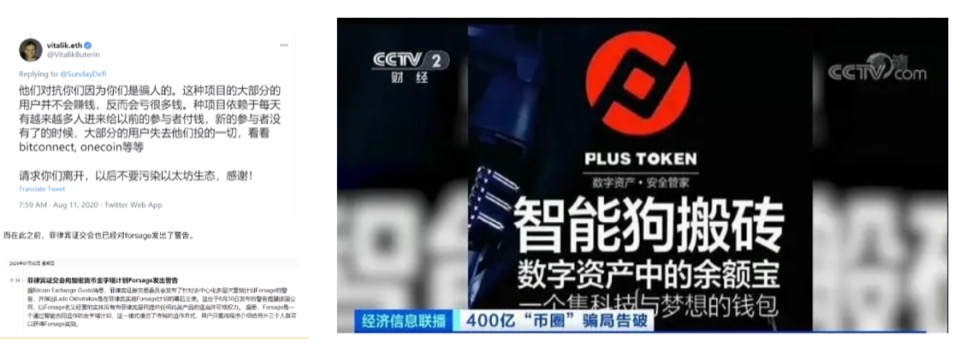
Represented by "pyramid scheme coins" such as OneCoin, these schemes operate under the banner of blockchain but are actually websites set up by criminal gangs, having no relation to blockchain technology.
I.What are the criteria for initiating a case for pyramid scheme crimes?
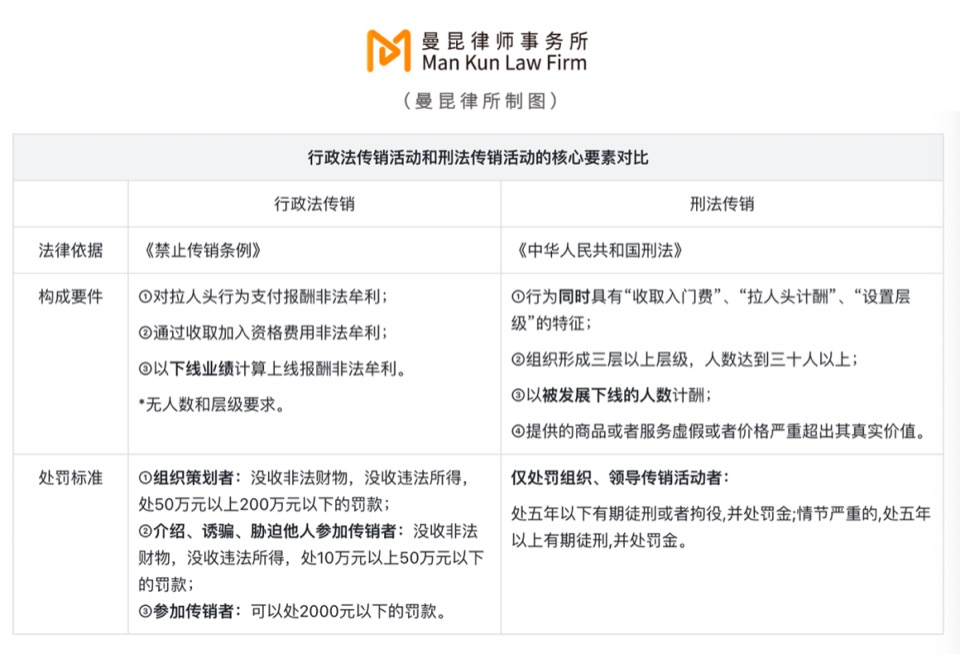
II、If the criteria for initiating a case are met but the conduct does not constitute a crime, what are the possible scenarios?
-
Case 1: FIS
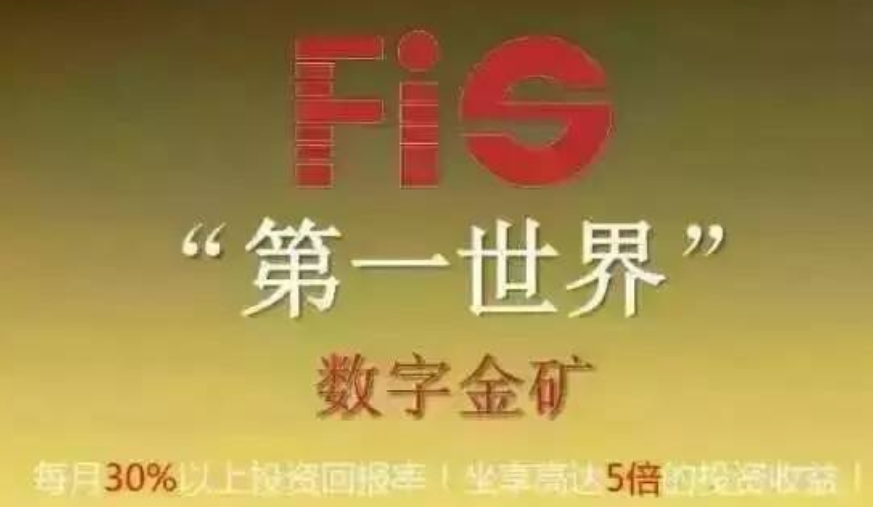

The subjects bearing responsibility for pyramid scheme crimes are the organizers and leaders of the pyramid scheme activities. Therefore, a key defense point for lawyers is that the suspect is not an "organizer or leader" in the case. Thus, during meetings with the client, lawyers will communicate to understand the role the individual played in the platform, such as whether they engaged in event planning, managed employees, served as external promotional lecturers, or the form of returns obtained from the platform, aiming to defend the actor as an "accessory" rather than a "principal offender."
-
Case 2: WoToken
It claimed to be a digital asset wallet capable of financial management, also known as a multi-currency blockchain wallet, equivalent to the "Alipay" of the crypto circle, offering monthly returns of 6%-20%, with flexible withdrawals and deposits.

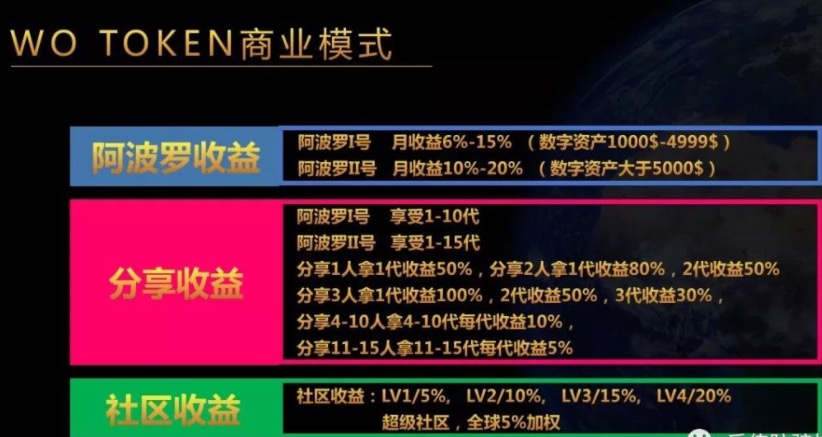
Platform Business Model: The platform required new members to deposit digital currencies worth more than USD 1,000 to activate the "Apollo Intelligent Robot," obtaining high static returns of 6%-20%. Members could obtain sharing returns, community returns, etc., based on the number of recruits developed according to hierarchical relationships.
Suspects Involved: [3] Lu MouMou, under the pretext that investing in the "WoToken Platform" could yield high dynamic and static returns, guided others to register as platform members through offline introductions, recommendations, and creating WeChat groups. The platform required members to obtain static returns by purchasing virtual currencies such as Bitcoin and Ethereum and depositing them into the platform. A hierarchy was formed in a certain order, using the number of recruits and investment amounts directly or indirectly as the basis for obtaining dynamic returns, thereby inducing participants to continue recruiting others. By the time of the incident, the non-prosecuted individual Lu Moumou had developed downlines spanning four levels with 35 persons.
The procuratorial organ held: Lu Moumou's criminal circumstances were minor; he was an accessory, had voluntarily surrendered, voluntarily pleaded guilty and accepted punishment, and obtainedforgivenessfrom relevant investors. A decision was made not to prosecute Lu Moumou.
[Analysis] This platform, under the guise of promoting goods and providing services to attract more members, added a fictitious prop product, the "Apollo Intelligent Robot," similar to the profit model in the PlusToken case. Using blockchain as a concept, it claimed that its developed "Apollo Intelligent Robot" had the function of arbitrage (i.e., simultaneously conducting arbitrage trading on different exchanges to earn price differences).
According to the provisions of the Criminal Procedure Law, for cases where a settlement agreement has been reached and the criminal circumstances are minor, the public prosecution authority may make a decision not to prosecute. Therefore, after a party is criminally detained, lawyers need to intervene in the case as soon as possible to understand the facts, assisting the party and their family in reaching a settlement with the victims. Obtaining a letter of forgiveness from the victims during the investigation or review for prosecution stages will have a positive impact on the direction of the case.
-
Case 3: MFC
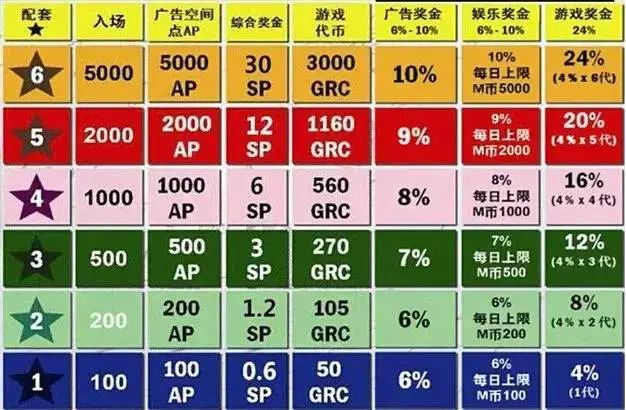
Supported by its affiliated industries, MBI Company, with the mface social platform as its core, publicly issued a limited quantity of sixty million virtual currencies called "Yiwu Coins" globally on the MFC Fuping Financial Management Platform.
Platform Business Model: MFC returns were divided into static investments and dynamic investments. Static investments included advertising slots (AP), GRC points exchanged from gifted USD, and dividend points (SP). Returns mainly came from the regular multiplicative splitting of GRC annually. GRC could be converted into M Coins and listed for sale at a 1:7 ratio, or directly consumed at physical stores via VISA cards to purchase goods. Dynamic investments were divided into three types of rewards: The first was the Advertising Reward, also known as the Direct Referral Reward, where MFC members received a reward of 6-10% of the new member's registration fee for each new member recommended; The second was the Balance Reward, also known as the Matching Reward, where the company gifted corresponding PV points to the left and right markets under an MFC member's account, with daily settlement of bonuses through PV matching, without clearing the larger district; The third was the Game Reward, also known as the Management Reward, where MFC members enjoyed a 4% commission on the matching bonuses generated by their downlines.
Suspect Involved: [4] Li Moumoujoined the MFC platform, successively recruited multiple individuals as downlines, and established WeChat groups with downline personnel,transmitting information within the pyramid scheme group, assuming coordination responsibilities in the pyramid scheme activities, and playing a role in expanding the pyramid scheme organization. By the end of 2016, due to the MFC platform's inability to fulfill payments, Li Moumou stopped recruiting downlines and dissuaded his downlines from continuing to recruit others. He only sought other platform members for relevant transactions on the pyramid scheme platform to cash out his virtual currencies on the platform. By the time of the incident, Li Moumou had invested funds totaling RMB 105,700, with a transaction volume of over RMB 500,000,making a profit of RMB 250,000, and directly or indirectly recruiting more than 30 downlines across more than three levels.
According to the provisions of the Criminal Procedure Law, if a suspect demonstrates repentance, the public prosecution authority may, considering other factors, make a decision not to prosecute. "Pleading guilty and showing repentance" must have corresponding evidence. This requires lawyers to understand the actor's behavioral performance throughout the case, communications with other upline and downline personnel, and, combined with their upbringing, education level, and cognitive level, to understand their subjective awarenessof the entire case, verifying clues corresponding to the actor's plea of guilt and repentance.
III、Conclusion
According to the relevant provisions of the "Criminal Procedure Law," non-prosecution by the procuratorate is mainly divided into three types: statutory non-prosecution, discretionary non-prosecution, and non-prosecution due to insufficient evidence (doubtful non-prosecution). Statutory non-prosecution applies when the circumstances are significantly minor, the harm is not substantial, and the act is not considered a crime. Discretionary non-prosecution applies when the criminal circumstances are minor, and according to the Criminal Law, criminal punishment is not required or is exempted, or when a settlement is reached and the criminal circumstances are minor, making criminal punishment unnecessary. Non-prosecution due to insufficient evidence applies when, after two supplementary investigations, the procuratorate still considers the evidence insufficient and makes a decision not to prosecute.
The criteria for determining statutory non-prosecution are relatively strict, and public prosecution authorities are cautious in this regard. Therefore, generally, procuratorates more frequently classify suspects under discretionary non-prosecution or non-prosecution due to insufficient evidence. Non-prosecution due to insufficient evidence requires analyzing whether the actor constitutes a crime based on the evidence of the entire case and legal provisions.

Recommended Reading
How to Determine the Value of Involved Coins in Virtual Currency Theft Cases?
Criminal Risks for OTC Merchants: The Crime of Illegal Business Operations (Part I)
Criminal Risks for OTC Merchants: The Crime of Illegal Business Operations (Part II)